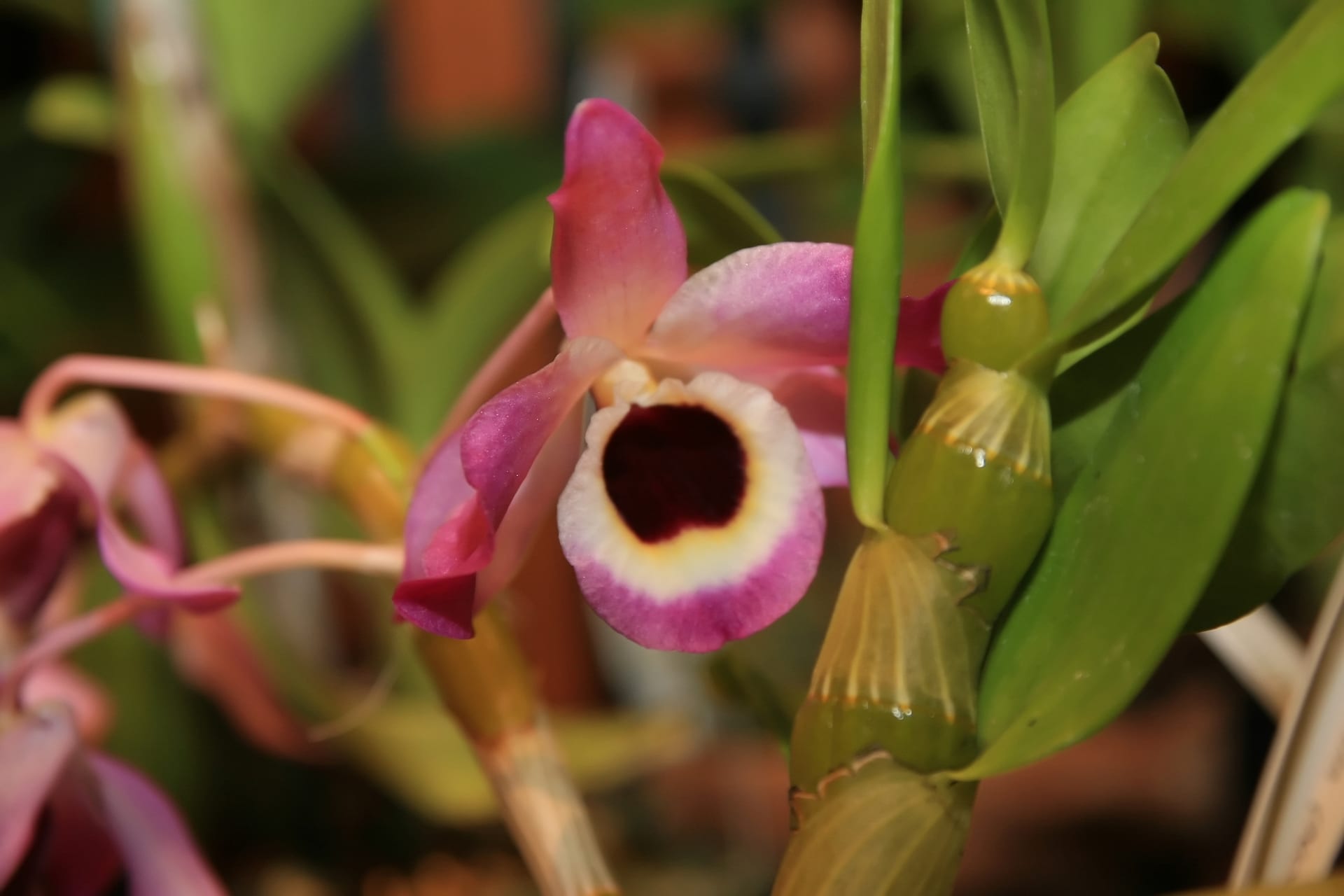
 © Photo by David J. Stang / CC BY-SA 4.0
Noble Dendrobium
Dendrobium nobile is the wild species behind the many Nobile-type Dendrobium hybrids grown today. Along its upright, yellow-tinged canes, waxy, fragrant flowers open in clusters of two to four at each node, ranging in color from white through pink to purple. Because the same plant can look different from one flowering season to the next, it has a lot of character for a single species. It's considered better suited to growers with some orchid experience, but division and keiki (side shoots that form along the cane) make it possible to renew and propagate a plant over many years, making it a natural next step after starter orchids.
View Noble Dendrobium encyclopedia →0% commission on your first sales!Register by September 30, 2026 and your first 2 plants are commission-free!
Grower Wanted!
List your plants on GrowerDirect and sell directly to customers nationwide!
6 Transparency Commitments from GrowerDirect
Growers disclose the following information for Orchids listings, guaranteeing transparency on variety, origin, light requirements, and growing difficulty.
- Variety Disclosed
- Real Photos
- Color Specification
- Origin Disclosed
- Light Requirements
- Difficulty Level Disclosed
Browse all 142 varieties
Light Requirements
Growing Difficulty
Verified growers wanted for Orchids
Growers are signing up now ahead of launch. Subscribe to be notified when new listings go live.
Getting alerts is free with a member account. When new listings match your saved search, we'll notify you by email and in-app.
Browse other categories
Noble Dendrobium key facts
- Growing Difficulty
- Intermediate
- Lifespan
- Perennial that can be renewed by division or keikis (little data on lifespan)
- Size
- Flowers up to about 7.5 cm across
- Watering
- Feed in the spring-summer growing season; stop from autumn
- Light & Placement
- Grow in good light from spring to autumn, shading only from harsh midsummer sun; too little light reduces flower buds.
- Watering
- Water generously in spring and summer; cut back sharply when leaves start yellowing in autumn.
- Temperature & Overwintering
- It ranges from cool hills to hot lowlands and is fairly adaptable. Expose it to cooler autumn temperatures, then bring it in before frost.
- Soil & Repotting
- Pot in sphagnum or bark in a smallish pot; repot after flowering as new shoots begin to grow.
- Dormancy Care
- A definite rest from water and fertilizer in autumn and winter decides how well it flowers the next spring.
About Noble Dendrobium
The wild species behind Nobile-type Dendrobium hybrids. Its upright, yellow-tinged canes bear waxy, fragrant flowers in clusters of two to four, ranging from white to pink and purple. Suited to growers with some orchid experience; propagate through division or keiki.
7 things to know before growing Noble Dendrobium
1Plenty of Sun From Spring to Autumn
From spring through autumn, grow it in a sunny spot; too little light makes it reluctant to set flower buds. Shade it only from the strongest midsummer sun. After letting it experience cooler temperatures in autumn, bring it indoors before the first frost.
2Adjust Watering by Season
Water generously while new growth is actively developing. From autumn onward, cut back gradually, and keep the plant on the dry side through winter — this dry rest period helps trigger flower buds.
3Use a Well-Draining Mix
Dendrobium nobile does best in a fast-draining medium such as sphagnum moss or bark. Constantly soggy potting mix can lead to root rot, so avoid letting it stay wet.
4Repot After Flowering
The best time to repot is right after flowering ends, before new roots start to grow. If you're dividing the plant, doing it at this point gives it the best chance to settle in quickly.
5Winter Chill and Dryness Matter
A cool, dry period in autumn and winter encourages Dendrobium nobile to set flower buds. If it's kept too warm and moist during this time, it tends to produce keiki (side shoots) instead of flowers.
6Choose a Plant Carefully
Look for canes that are plump and firm, without wrinkling or dark patches. Healthy leaf color and roots that are well anchored in the pot are also good signs.
7Renewed by Division or Keiki
After a few years, new canes form at the base and the plant grows larger, at which point it can be divided to start fresh plants. Keiki that appear along the canes can be cut away and potted once they've grown their own roots.
Frequently asked questions about Noble Dendrobium
- Q.Is this a good orchid for beginners?
- A.Dendrobium nobile is generally considered suited to growers with some orchid experience. If you're new to orchids, it may help to start with an easier species first and build up your skills before trying this one.
- Q.What do the flowers look like and smell like?
- A.The flowers have a waxy texture and a light fragrance. Colors range from white to pink to purple depending on the plant, and even the same plant can look a little different from one season to the next.
- Q.How many flowers does each cane produce?
- A.Flowers appear in clusters of two to four at each node along the cane. Since a single cane has several nodes, a well-grown plant can produce a good number of blooms overall.
- Q.Why does my plant grow keiki instead of flowering?
- A.If the plant is kept warm and moist through autumn and winter, it tends to produce keiki (side shoots) instead of flower buds. Giving it a cooler, drier period during this season encourages flowering instead.
- Q.How can I propagate this plant?
- A.Once the plant has grown large enough after a few years, you can divide it into separate plants. You can also cut away keiki once they've developed their own roots and pot them individually.
Handy Growing Tools for Noble Dendrobium
Learn more about Noble Dendrobium in the encyclopedia
View Noble Dendrobium encyclopedia entry →
Care difficulty, size, origin and light needs — all basics covered.
More in this category
Can't find the plant you're looking for?
Post your wishes for free and growers with matching plants will contact you with introductions.