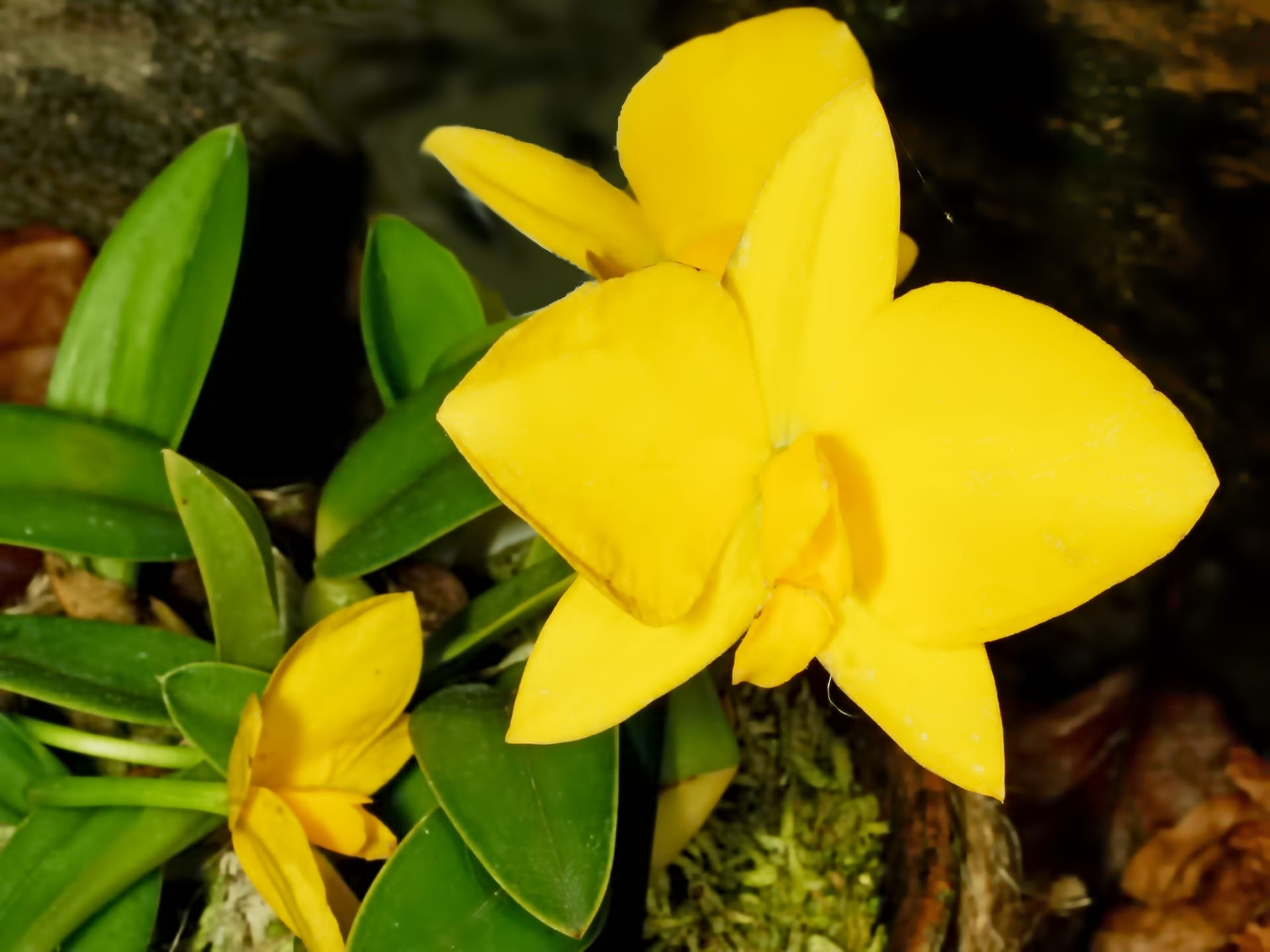
 © Orchi / CC BY-SA 3.0
Scarlet Cattleya
Cattleya coccinea is a diminutive Cattleya species native to the mountain forests along Brazil's Atlantic coast. Standing just 6 to 9 cm tall, this compact plant produces strikingly vivid scarlet-red flowers measuring 4 to 6 cm across, a bold display from such a small frame. Its pseudobulbs are only 3 to 4 cm long, and it is also known by its former name, Sophronitis coccinea, marking it as a distinctive presence within the Cattleya genus. Considered a challenging plant best suited to experienced growers, it rewards careful attention with blooms that make it a treasured addition to any collection.
View Scarlet Cattleya encyclopedia →0% commission on your first sales!Register by September 30, 2026 and your first 2 plants are commission-free!
Grower Wanted!
List your plants on GrowerDirect and sell directly to customers nationwide!
6 Transparency Commitments from GrowerDirect
Growers disclose the following information for Orchids listings, guaranteeing transparency on variety, origin, light requirements, and growing difficulty.
- Variety Disclosed
- Real Photos
- Color Specification
- Origin Disclosed
- Light Requirements
- Difficulty Level Disclosed
Browse all 142 varieties
Light Requirements
Growing Difficulty
Verified growers wanted for Orchids
Growers are signing up now ahead of launch. Subscribe to be notified when new listings go live.
Getting alerts is free with a member account. When new listings match your saved search, we'll notify you by email and in-app.
Browse other categories
Scarlet Cattleya key facts
- Growing Difficulty
- Advanced
- Lifespan
- Perennial (little data on lifespan)
- Size
- Plant 6-9 cm tall; pseudobulbs 3-4 cm; flowers 4-6 cm across
- Watering
- Dilute liquid fertilizer year round
- Light & Placement
- It likes bright light; give good light while avoiding harsh direct sun.
- Watering
- From cloud forest, it needs moist conditions; do not let the medium dry out completely.
- Temperature & Overwintering
- Its habitat averages about 27 °C in summer and 7 °C in winter. It prefers cool conditions and dislikes summer heat and stagnant air, so keep it cool and airy in summer.
- Soil & Repotting
- A miniature that grows on mossy branches; pot it small in sphagnum or mount it.
- Fertilizer
- Feed dilute liquid fertilizer regularly all year.
- Pests & Cautions
- Poor air movement weakens the plant; avoid stagnant, humid heat and keep air moving.
About Scarlet Cattleya
Cattleya coccinea is a small Brazilian orchid species standing 6 to 9 cm tall, known for its vivid 4 to 6 cm scarlet-red blooms. Also called Sophronitis coccinea, it suits experienced growers.
7 things to know before growing Scarlet Cattleya
1Bright, filtered light
Cattleya coccinea prefers bright, indirect light rather than intense direct sun. Strong summer sunlight can scorch the leaves, so a well-ventilated spot with filtered light, such as behind a sheer curtain, works best.
2Dislikes drying out
While many Cattleyas thrive on a wet-dry cycle, coccinea dislikes letting its growing medium dry out completely. Water as soon as the surface feels dry, keeping the medium lightly moist at all times.
3Mount it like an epiphyte
Given its small size of just 6 to 9 cm, this plant often does better mounted on cork bark or tree fern with sphagnum moss than potted in a large container. Its fine roots can dry out too quickly in coarse bark alone.
4Repot when new growth starts
Because its roots are easily damaged, repotting is best done just as new growth emerges after flowering. Keep repotting to a minimum to avoid stressing the plant.
5Watch out for summer heat
Coccinea tends to prefer somewhat cooler conditions than other Cattleyas. High heat and stagnant humidity in summer can weaken the plant, so choose a well-ventilated, cooler spot.
6Check the pseudobulbs
When choosing a plant, look for plump, well-filled pseudobulbs (around 3 to 4 cm) with multiple growths, which tend to be easier to grow on. Avoid plants with shriveled or overly dry pseudobulbs.
7Blooming takes a mature plant
Its flowers, at 4 to 6 cm across, are large relative to the plant's size, so blooming well requires a well-established specimen. Younger plants may flower sparingly at first, but the display improves as the plant matures.
Frequently asked questions about Scarlet Cattleya
- Q.Can beginners grow this orchid?
- A.This species is generally considered suited to experienced growers, requiring watering and temperature care different from other Cattleyas. It can be challenging for first-time orchid growers, though those with experience growing epiphytic orchids may find it more approachable.
- Q.How large does it grow?
- A.It is a small species, growing to about 6 to 9 cm tall with pseudobulbs around 3 to 4 cm. Despite its compact size, it produces flowers measuring 4 to 6 cm across.
- Q.Can it be grown the same way as other Cattleyas?
- A.Not exactly. Coccinea is sensitive to drying out and prefers cooler conditions than many other Cattleyas, so applying identical care can make it harder to grow well.
- Q.What do the flowers look like?
- A.It produces vivid scarlet-red flowers 4 to 6 cm across, large in proportion to the plant. Its former name, Sophronitis coccinea, reflects this striking flower color.
- Q.How often does it need repotting?
- A.Because the roots are easily damaged, frequent repotting should be avoided and kept to a minimum. When needed, the best time is just as new growth begins after flowering.
Handy Growing Tools for Scarlet Cattleya
Learn more about Scarlet Cattleya in the encyclopedia
View Scarlet Cattleya encyclopedia entry →
Care difficulty, size, origin and light needs — all basics covered.
More in this category
Can't find the plant you're looking for?
Post your wishes for free and growers with matching plants will contact you with introductions.