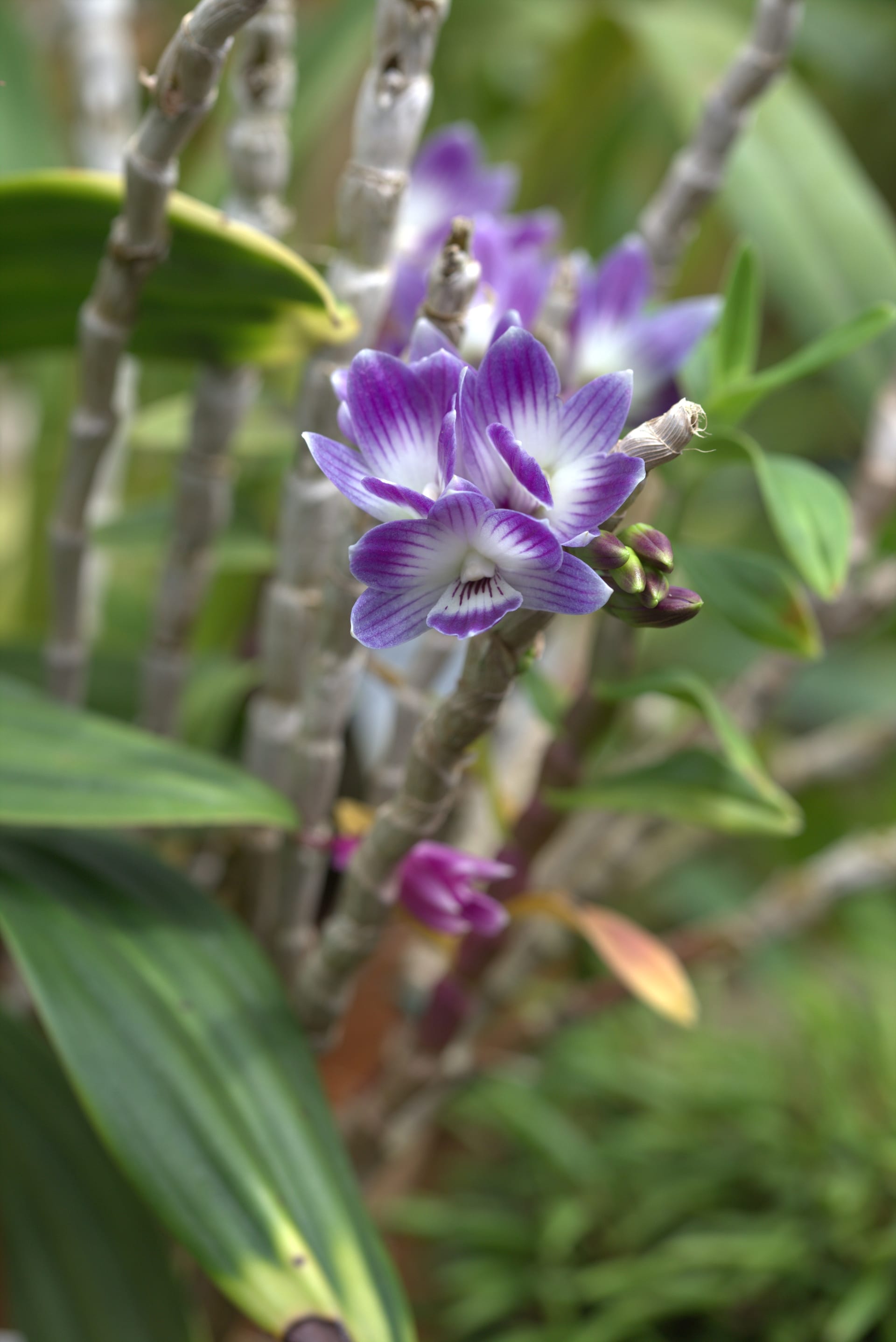
 © Averater / CC BY 3.0
Queen Victoria's Dendrobium
Dendrobium victoriae-reginae is an orchid prized for its unusual coloring: blue-violet petals that deepen toward the tips while the throat stays white. Its scientific name honors Queen Victoria. In the wild it grows only in the mossy forests of the Philippines, at elevations between 1,300 and 2,700 meters, where the air stays cool and moist year-round. Plants are small to medium in size, with flowers around 3 to 4 cm across. Because it needs conditions that mimic its cool, humid mountain habitat, it is considered a challenging species best suited to experienced growers. Its striking coloring and unusual native habitat make it a distinctive orchid.
View Queen Victoria's Dendrobium encyclopedia →0% commission on your first sales!Register by September 30, 2026 and your first 2 plants are commission-free!
Grower Wanted!
List your plants on GrowerDirect and sell directly to customers nationwide!
6 Transparency Commitments from GrowerDirect
Growers disclose the following information for Orchids listings, guaranteeing transparency on variety, origin, light requirements, and growing difficulty.
- Variety Disclosed
- Real Photos
- Color Specification
- Origin Disclosed
- Light Requirements
- Difficulty Level Disclosed
Browse all 142 varieties
Light Requirements
Growing Difficulty
Verified growers wanted for Orchids
Growers are signing up now ahead of launch. Subscribe to be notified when new listings go live.
Getting alerts is free with a member account. When new listings match your saved search, we'll notify you by email and in-app.
Browse other categories
Queen Victoria's Dendrobium key facts
- Growing Difficulty
- Advanced
- Lifespan
- Perennial (little data on lifespan)
- Size
- Small to medium; flowers 3-4 cm across
- Watering
- Very dilute liquid fertilizer while growing
- Light & Placement
- It prefers deep shade; keep it out of direct sun, in bright shade.
- Watering
- Keep the medium moist all year without letting it dry; it has no dry rest.
- Temperature & Overwintering
- A cool highland species that is sensitive to heat; keeping it cool and airy in summer matters most.
- Soil & Repotting
- Its roots grow buried in moss, so pot it in sphagnum or mount it with a pad of sphagnum.
- Pests & Cautions
- It suffers in stagnant humidity, so combine moisture with plenty of air movement.
About Queen Victoria's Dendrobium
Dendrobium victoria-reginae is an orchid native to mossy Philippine forests at 1,300-2,700m elevation, known for blue-violet petals with a white throat. Best suited to experienced growers.
7 things to know before growing Queen Victoria's Dendrobium
1Prefers cool, bright shade
In the wild it grows in high-elevation forest at 1,300-2,700m, so it dislikes direct sun and heat. Give it bright, filtered light like dappled shade, and move it somewhere cooler and well-ventilated during the hottest months.
2Never let it dry out
Because it comes from mossy forest habitats, this orchid dislikes dry air and prefers high humidity. Keep the growing medium constantly moist all year round, with no dry rest period. It suffers in stagnant, muggy air, so pair that steady moisture with plenty of airflow.
3Balance drainage and moisture
As an epiphytic orchid, it needs a growing medium that drains well while still letting air reach the roots. Sphagnum moss or bark mixes work well - the challenge is avoiding both waterlogged roots and excessive drying.
4Repot gently, sparingly
The roots are delicate, so repot when the plant is entering active growth and work quickly to minimize root damage. Plan on repotting every couple of years or so, once the growing medium starts to break down.
5Cool conditions year-round
Coming from a high-altitude habitat, summer heat and dry indoor air are its biggest challenges. In winter, avoid sudden temperature drops and drying heater airflow - maintaining a cool, humid environment throughout the year is the key to success.
6Check roots and leaves closely
When choosing a plant, look for firm leaves and healthy roots without discoloration or blackened tips. Plump, well-hydrated pseudobulbs are a good sign of overall condition.
7Cool conditions encourage blooming
Part of why this species is considered challenging is the difficulty of recreating the cool, stable conditions it needs indoors in order to flower. When conditions are right, it produces blooms with a striking blue-violet and white contrast.
Frequently asked questions about Queen Victoria's Dendrobium
- Q.Is this orchid suitable for beginners?
- A.Dendrobium victoria-reginae is considered a challenging species best suited to experienced growers. It requires a consistently cool, humid environment year-round, which makes it better suited to those who already have some orchid-growing experience.
- Q.How large does this plant get?
- A.It's a small to medium-sized orchid that doesn't take up much space. The flowers themselves are around 3 to 4 cm across, with a distinctive blue-violet and white color contrast.
- Q.Where should I place it in my home?
- A.It does best in bright, indirect light with good air circulation and cool temperatures. Since it naturally grows in mossy forests at 1,300-2,700m elevation, avoid hot, dry spots.
- Q.How often does it need watering?
- A.The rule is to keep the growing medium constantly moist throughout the year, with no dry rest period. Exact frequency depends on your conditions, so water before the medium starts to dry out, while keeping good airflow to prevent the plant from staying muggy.
- Q.Why might it fail to bloom?
- A.The most common reason is that the cool, stable environment it needs isn't being maintained. Heat, dryness, or sudden temperature swings can all prevent flowering, so it's worth reviewing where the plant is placed and how conditions change with the seasons.
Handy Growing Tools for Queen Victoria's Dendrobium
Learn more about Queen Victoria's Dendrobium in the encyclopedia
View Queen Victoria's Dendrobium encyclopedia entry →
Care difficulty, size, origin and light needs — all basics covered.
More in this category
Can't find the plant you're looking for?
Post your wishes for free and growers with matching plants will contact you with introductions.