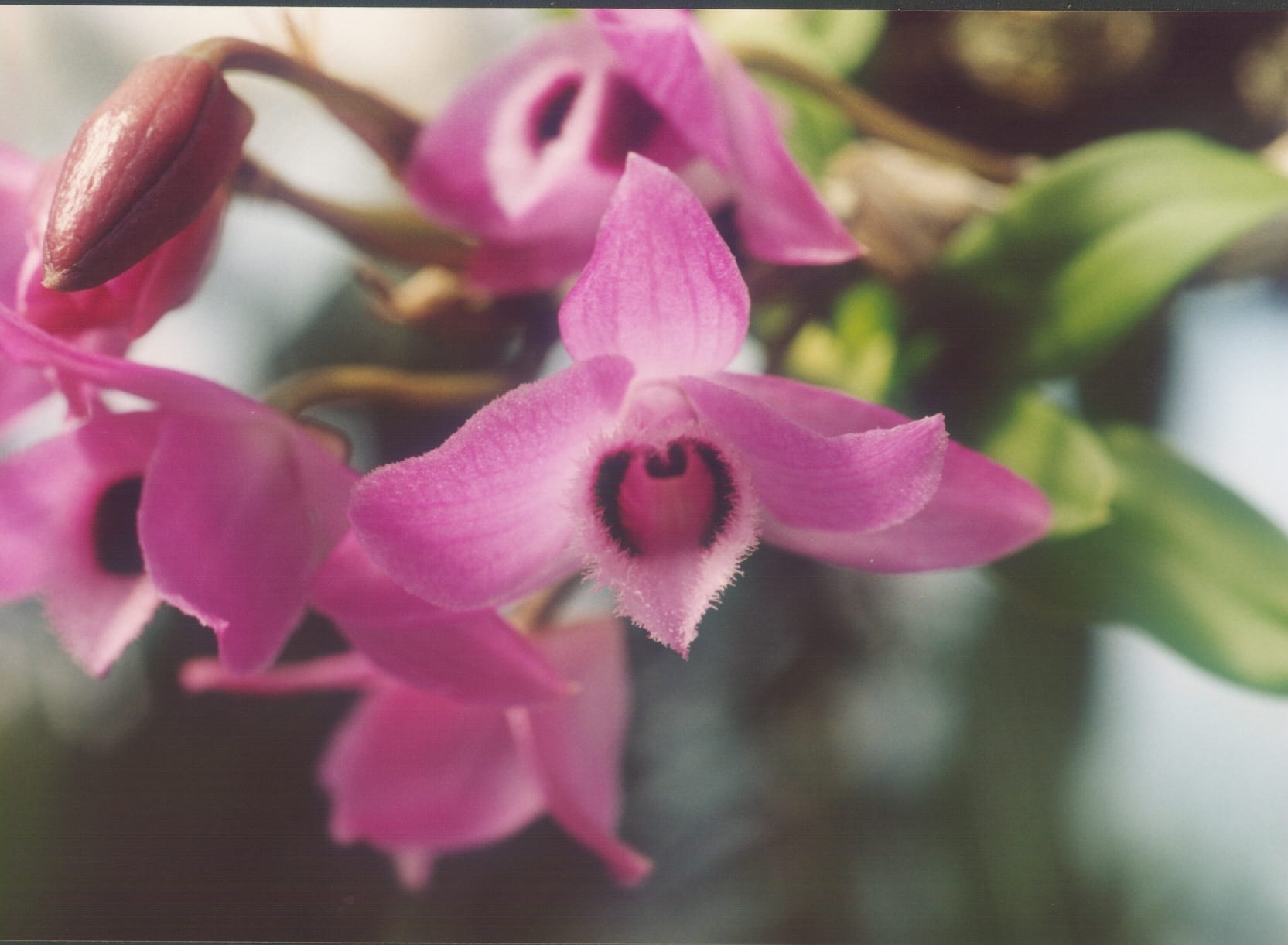
 © Arne and Bent Larsen, Haarby, Denmark / CC BY-SA 2.5 dk
Parish's Dendrobium
Dendrobium parishii is a mid-sized dendrobium that blooms along the leafless nodes of its canes, producing clusters of two to three rosy-purple flowers per node. The blossoms hold their form for an extended period, and many growers are drawn to their sweet fragrance, often compared to rhubarb or raspberry. The key to good flowering lies in giving the plant a clear seasonal rhythm: vigorous growth during the season, followed by a distinct cool, dry rest in winter. This perennial orchid can be divided and grown for many years, though it calls for a bit more experience than beginner-friendly houseplants. For growers willing to follow its seasonal cues, it rewards with fragrant, long-lasting blooms year after year.
View Parish's Dendrobium encyclopedia →0% commission on your first sales!Register by September 30, 2026 and your first 2 plants are commission-free!
Grower Wanted!
List your plants on GrowerDirect and sell directly to customers nationwide!
6 Transparency Commitments from GrowerDirect
Growers disclose the following information for Orchids listings, guaranteeing transparency on variety, origin, light requirements, and growing difficulty.
- Variety Disclosed
- Real Photos
- Color Specification
- Origin Disclosed
- Light Requirements
- Difficulty Level Disclosed
Browse all 142 varieties
Light Requirements
Growing Difficulty
Verified growers wanted for Orchids
Growers are signing up now ahead of launch. Subscribe to be notified when new listings go live.
Getting alerts is free with a member account. When new listings match your saved search, we'll notify you by email and in-app.
Browse other categories
Parish's Dendrobium key facts
- Growing Difficulty
- Intermediate
- Lifespan
- Perennial that can be kept for many years by division (little data on lifespan)
- Size
- Small to medium; flowers up to about 5 cm across
- Watering
- Dilute liquid fertilizer in the growing season
- Light & Placement
- Give some shade when new growth begins, then move it into brighter light as the season progresses to ripen the canes.
- Watering
- Water freely while growing and reduce watering once the new canes mature in autumn.
- Temperature & Overwintering
- Wild plants range from hot lowlands to cool hills; it is a fairly easy intermediate grower. Bring it indoors in winter.
- Soil & Repotting
- Pot in sphagnum or bark in a small pot or mount it; repot after flowering.
- Dormancy Care
- A drier winter rest makes the two-year-old leafless canes flower; do not cut them off.
About Parish's Dendrobium
Dendrobium parishii is a mid-sized orchid bearing clusters of long-lasting, rosy-purple flowers with a rhubarb-raspberry scent. Suited to growers with some orchid experience, it flowers best with a clear seasonal rhythm of growth and winter rest.
7 things to know before growing Parish's Dendrobium
1Bright, Filtered Light
Dendrobium parishii prefers bright, indirect light rather than intense direct sun, similar to light filtered through a sheer curtain. During the growing season, ample light and good air circulation help the canes mature fully and encourage better flowering.
2Alternate Wet and Dry
Water generously once the potting medium dries out during the growing season. In winter dormancy, cut back watering significantly and keep the plant on the dry side to encourage flower bud formation.
3Well-Draining Mix
A well-draining, airy epiphytic orchid mix such as bark works best. Roots that stay constantly wet are prone to rot, so aim for a medium that dries out readily between waterings.
4Repot After Flowering
Repot once flowering has finished, using sphagnum moss or bark in a fairly small pot, or mount the plant. Dividing the plant at the same time lets it settle in and resume growing with minimal setback.
5Give It a Real Winter Rest
A clear contrast between the growing season and winter dormancy is the key to good flowering. Keep the plant cool and on the dry side in winter to let it rest properly, which supports flower bud formation for the next season.
6Flowers Form Along Bare Canes
Clusters of two to three rosy-purple flowers appear at the nodes of leafless canes. The blooms are long-lasting and carry a fragrance reminiscent of rhubarb or raspberry.
7Choose Plump, Firm Canes
Look for plants with plump, firm canes free of wrinkling, which tend to grow more reliably. As a perennial, it can be divided and grown for many years.
Frequently asked questions about Parish's Dendrobium
- Q.Is Dendrobium parishii suitable for beginners?
- A.It's generally considered better suited to growers with some experience, since it calls for a clear seasonal rhythm between growth and winter rest. It's a good idea to understand its basic care needs before taking it on.
- Q.Why isn't my plant flowering?
- A.A lack of proper winter rest is a common reason for poor flowering. Let the plant grow vigorously during the season, then reduce watering and keep it cool in winter to encourage flower buds to form.
- Q.How large does it grow?
- A.It's a small-to-medium orchid, with flowers reaching up to about 5 cm across. Its compact overall size makes it manageable even in limited space.
- Q.Does it really have a noticeable scent?
- A.Yes, its flowers are often described as having a fragrance similar to rhubarb or raspberry. Both the appearance and scent of the blooms are part of its appeal.
- Q.Can it be divided?
- A.Yes, it's a perennial that can be divided and grown for many years. Once the canes have multiplied and the plant is well established, dividing it is a good way to propagate more plants.
Handy Growing Tools for Parish's Dendrobium
Learn more about Parish's Dendrobium in the encyclopedia
View Parish's Dendrobium encyclopedia entry →
Care difficulty, size, origin and light needs — all basics covered.
More in this category
Can't find the plant you're looking for?
Post your wishes for free and growers with matching plants will contact you with introductions.