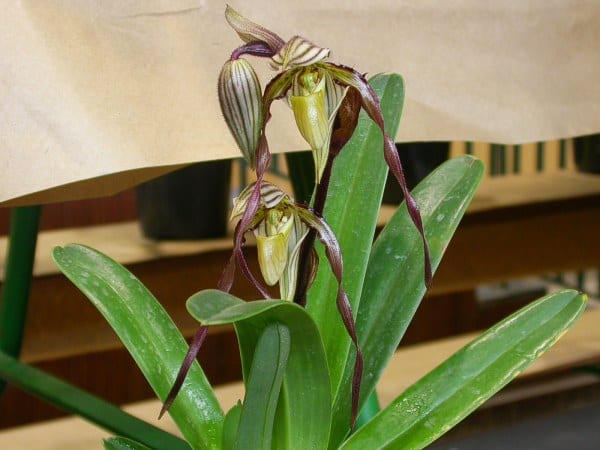
 © Dalton Holland Baptista / CC BY-SA 3.0
Philippine Paphiopedilum
Paphiopedilum philippinense is a large-growing slipper orchid native to limestone outcrops in the Philippines and northern Borneo. Its thick, glossy leaves fan out in rosettes of around nine, giving the plant real presence even before it flowers. Each bloom spike can stretch to about 60 cm and typically carries three to five flowers, with individual blooms reaching up to 22.5 cm across. The twisting petals and pouch-shaped lip give this species a striking, almost sculptural look that sets it apart from many other Paphiopedilums. It suits growers with some orchid experience, and as a perennial it can be divided and kept in cultivation for many years. Every Paphiopedilum species is listed in CITES Appendix I, which makes it an Internationally Endangered Species under Japan's Act on Conservation of Endangered Species (種の保存法). Transferring a plant within Japan, whether by sale or gift, requires a registration certificate under that Act, and this applies to plants propagated in Japan too. When buying, always confirm that the plant comes with its registration certificate.
View Philippine Paphiopedilum encyclopedia →0% commission on your first sales!Register by September 30, 2026 and your first 2 plants are commission-free!
Grower Wanted!
List your plants on GrowerDirect and sell directly to customers nationwide!
6 Transparency Commitments from GrowerDirect
Growers disclose the following information for Orchids listings, guaranteeing transparency on variety, origin, light requirements, and growing difficulty.
- Variety Disclosed
- Real Photos
- Color Specification
- Origin Disclosed
- Light Requirements
- Difficulty Level Disclosed
Browse all 142 varieties
Light Requirements
Growing Difficulty
Verified growers wanted for Orchids
Growers are signing up now ahead of launch. Subscribe to be notified when new listings go live.
Getting alerts is free with a member account. When new listings match your saved search, we'll notify you by email and in-app.
Browse other categories
Philippine Paphiopedilum key facts
- Growing Difficulty
- Intermediate
- Lifespan
- Perennial that can be kept for many years by division (little data on lifespan)
- Size
- Large; flower stem about 60 cm, flowers up to 22.5 cm across
- Watering
- Dilute liquid fertilizer in the growing season
- Light & Placement
- Give bright light out of direct sun.
- Watering
- In the growing season water thoroughly as the mix begins to dry.
- Temperature & Overwintering
- A warm grower from lowlands near the coast; keep it warm indoors in winter too.
- Soil & Repotting
- It grows on limestone outcrops. As the plant becomes large, use a roomy pot with a free-draining mix.
- Fertilizer
- Feed dilute liquid fertilizer regularly in the growing season.
- Pests & Cautions
- As an Appendix I species, always check the registration certificate under the Act on Conservation of Endangered Species when acquiring a plant.
About Philippine Paphiopedilum
A large slipper orchid from Philippine and Bornean limestone habitats, with thick glossy leaves and long flower spikes bearing 3-5 blooms up to 22.5cm wide. A perennial suited to growers with some orchid experience.
7 things to know before growing Philippine Paphiopedilum
1Bright Shade, Not Direct Sun
This species dislikes strong direct sunlight and prefers soft, filtered light, similar to what you'd get through a sheer curtain. Outdoors, use shade cloth to keep it in bright indirect light and prevent leaf scorch.
2Water Before It Dries Out
Coming from limestone habitats, this orchid does best when watered generously before the roots dry out completely. Water thoroughly until it drains from the pot, and avoid letting water sit in the saucer.
3Use a Free-Draining Mix
In the wild it grows on limestone outcrops. Because the plant gets large, pot it in a roomy container using a free-draining, airy mix such as bark and perlite.
4Repot Roughly Every Two Years
Repot about every two years, or whenever the mix breaks down or the roots fill the pot. Doing this as new growth starts after flowering puts less stress on the plant.
5Watch the Temperature Seasonally
Native to warm regions, this orchid isn't very cold-hardy. Bring it indoors to a warm spot in winter and avoid sudden temperature swings.
6Give It Room to Grow
This is a large-growing species with around nine leaves and flower spikes that can reach 60 cm. Plan for the space the mature plant and its flower spikes will need, not just the size of the pot.
7Choosing a Healthy Plant
Look for thick, glossy leaves without discoloration or damage. As an Appendix I species, it must come with a registration certificate under Japan's Act on Conservation of Endangered Species (種の保存法), so always confirm the certificate when acquiring one.
Frequently asked questions about Philippine Paphiopedilum
- Q.Is Paphiopedilum philippinense suitable for beginners?
- A.It's generally considered better suited to growers with some experience rather than absolute beginners. The watering and placement needs take a bit of practice, so it helps to be comfortable growing Paphiopedilum orchids first.
- Q.How big do the flowers get?
- A.Individual flowers can reach up to about 22.5 cm across. The flower spike itself grows to around 60 cm and typically carries three to five blooms.
- Q.How long can this orchid be kept alive?
- A.It's a perennial that can be divided and kept in cultivation for many years. There isn't much detailed data on its overall lifespan, but with good care it can keep flowering for a long time.
- Q.Does it always have exactly nine leaves?
- A.Around nine thick, glossy leaves is typical for this species. The actual number varies with the plant's age and growing conditions.
- Q.Is it better to grow this indoors or outdoors?
- A.It can be grown either indoors or outdoors as long as it gets bright light without direct sun. Since it's sensitive to cold, it's safest to bring it indoors during the colder months.
Handy Growing Tools for Philippine Paphiopedilum
Learn more about Philippine Paphiopedilum in the encyclopedia
View Philippine Paphiopedilum encyclopedia entry →
Care difficulty, size, origin and light needs — all basics covered.
More in this category
Can't find the plant you're looking for?
Post your wishes for free and growers with matching plants will contact you with introductions.