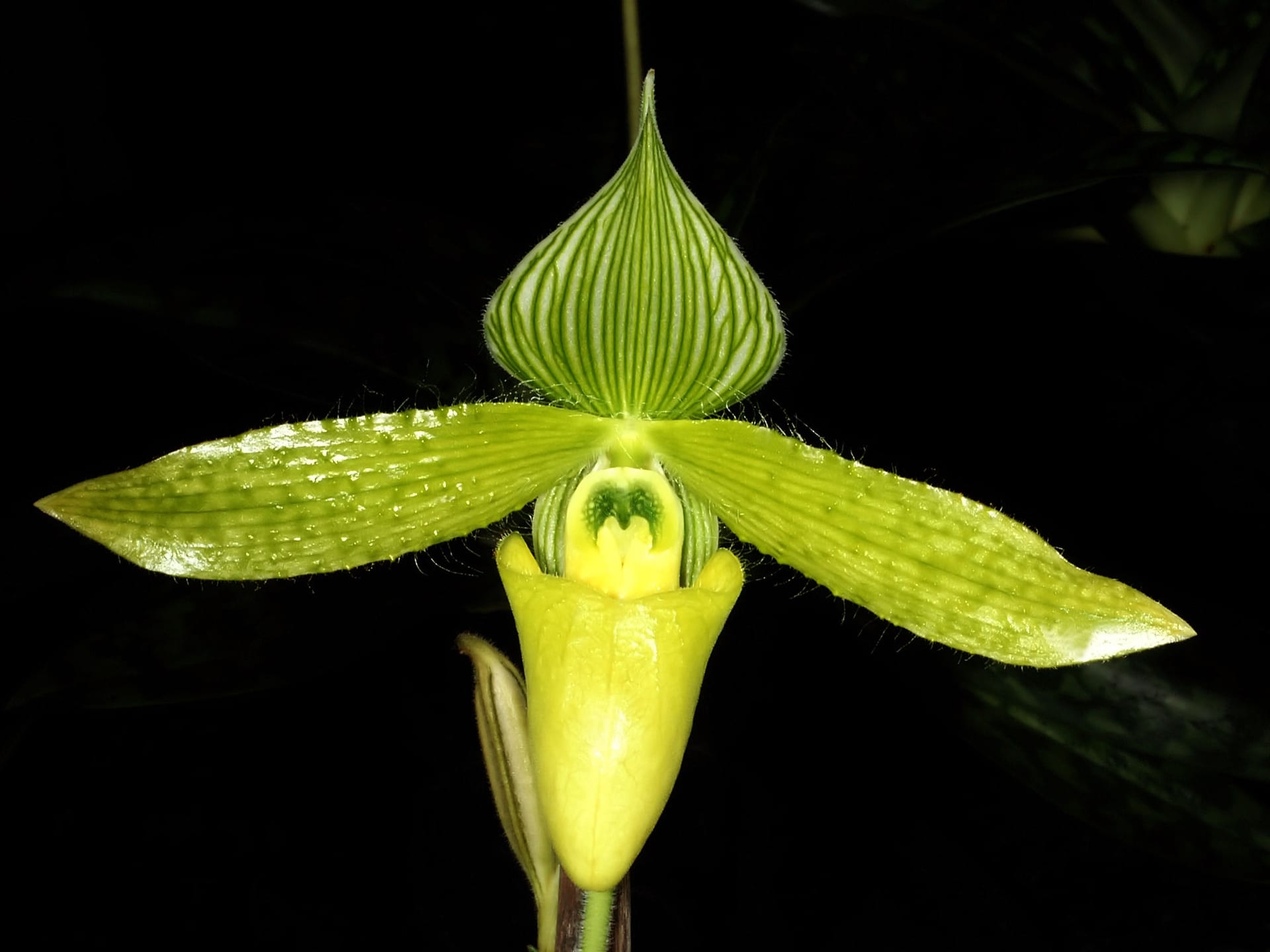
 © Orchi / CC BY-SA 3.0
Sukhakul's Paphiopedilum
Paphiopedilum sukhakulii is a slipper orchid species found only in a few mountain areas of northeastern Thailand. Its standout feature is a single flower, up to about 14cm across, with petals marked by dark spots on a green background that spread out horizontally to either side. The leaves carry a mottled pattern of light and dark green, so the plant remains attractive even when not in bloom. It has around six narrow leaves and a flower stem of about 25cm. It calls for some intermediate-level care, but as a perennial it can be divided and grown on for many years. Every Paphiopedilum species is listed in CITES Appendix I, which makes it an Internationally Endangered Species under Japan's Act on Conservation of Endangered Species (種の保存法). Transferring a plant within Japan, whether by sale or gift, requires a registration certificate under that Act, and this applies to plants propagated in Japan too. When buying, always confirm that the plant comes with its registration certificate.
View Sukhakul's Paphiopedilum encyclopedia →0% commission on your first sales!Register by September 30, 2026 and your first 2 plants are commission-free!
Grower Wanted!
List your plants on GrowerDirect and sell directly to customers nationwide!
6 Transparency Commitments from GrowerDirect
Growers disclose the following information for Orchids listings, guaranteeing transparency on variety, origin, light requirements, and growing difficulty.
- Variety Disclosed
- Real Photos
- Color Specification
- Origin Disclosed
- Light Requirements
- Difficulty Level Disclosed
Browse all 142 varieties
Light Requirements
Growing Difficulty
Verified growers wanted for Orchids
Growers are signing up now ahead of launch. Subscribe to be notified when new listings go live.
Getting alerts is free with a member account. When new listings match your saved search, we'll notify you by email and in-app.
Browse other categories
Sukhakul's Paphiopedilum key facts
- Growing Difficulty
- Intermediate
- Lifespan
- Perennial that can be kept for many years by division (little data on lifespan)
- Size
- Small; leaves up to 30 cm, flower stem about 25 cm, flowers up to 14 cm across
- Watering
- Dilute liquid fertilizer in the growing season
- Light & Placement
- It grows in dappled to moderate shade on the forest floor; keep it in bright shade out of direct sun.
- Watering
- It grows in moist streamside habitats, so water before the mix dries out.
- Temperature & Overwintering
- It is a warm to intermediate grower; keep it indoors somewhere warm in winter.
- Soil & Repotting
- It roots in sandy loam and leaf litter. Pot it in a free-draining yet moisture-retentive mix and repot after flowering.
- Fertilizer
- Feed dilute liquid fertilizer regularly in the growing season.
- Pests & Cautions
- As an Appendix I species, always check the registration certificate under the Act on Conservation of Endangered Species when acquiring a plant.
About Sukhakul's Paphiopedilum
Paphiopedilum sukhakulii is a Thai native slipper orchid whose spotted green petals spread horizontally into a single bloom up to 14cm across. Here are its key features and growing tips.
7 things to know before growing Sukhakul's Paphiopedilum
1Bright, Indirect Light
Keep the plant out of direct sun and place it in bright, filtered light, such as behind a sheer curtain. The leaves scorch easily, so extra shade is needed during the strong sun of summer.
2Watering: Avoid Full Drying
Water thoroughly once the surface of the mix starts to dry, and avoid letting it dry out completely. At the same time, guard against overwatering, since soggy roots can lead to rot, so keep air circulating around the pot.
3Soil: Balance Drainage and Moisture
In the wild, this terrestrial orchid grows on streamside forest floors, rooting into sandy soil and leaf mold. Pot it in a mix that both drains well and holds moisture, and don't let the mix dry out completely.
4Repot After Flowering
Repot after flowering has finished, once the growing medium starts to break down. When dividing the plant, handle the roots gently and make sure each new division keeps enough leaves and roots to stay healthy.
5Seasonal Care Matters
During the growing season from spring through autumn, maintain bright shade and adequate humidity, and in winter move the plant indoors to protect it from cold. Sudden temperature swings and dry air can both stress the plant.
6Check the Leaves and Registration Certificate
When selecting a plant, look for clear light-and-dark mottling on the leaves without discoloration or damage. As an Appendix I species, it must come with a registration certificate under Japan's Act on Conservation of Endangered Species (種の保存法), so always confirm the certificate when acquiring one.
7A Standout 14cm Bloom
Each flower stem produces a single large bloom up to about 14cm across. Avoiding direct sun and sudden changes in environment while it's in flower helps the bloom last longer.
Frequently asked questions about Sukhakul's Paphiopedilum
- Q.Can beginners grow Paphiopedilum sukhakulii?
- A.It's generally considered suited to intermediate growers, so complete beginners may find it a bit challenging. That said, anyone with some orchid-growing experience should find it manageable by following the basics of placement and watering.
- Q.How large does this orchid grow?
- A.It bears around six narrow, elliptic leaves, and its flower stem reaches about 25cm, carrying a single bloom up to about 14cm across.
- Q.How big are the flowers and what do they look like?
- A.Each flower stem produces a single large bloom up to about 14cm across. The petals are marked with dark spots on a green background and spread widely and horizontally to either side.
- Q.How many years can it be grown for?
- A.It's a perennial that can be grown for many years by dividing it periodically. Clear data on its lifespan is limited, but growers commonly keep it going long-term by dividing and renewing the plant over time.
- Q.When is the right time to repot or divide the plant?
- A.Repot after flowering has finished, once the growing medium starts to break down. When dividing the plant, take care not to damage the roots and make sure each division keeps enough leaves and roots.
Handy Growing Tools for Sukhakul's Paphiopedilum
Learn more about Sukhakul's Paphiopedilum in the encyclopedia
View Sukhakul's Paphiopedilum encyclopedia entry →
Care difficulty, size, origin and light needs — all basics covered.
More in this category
Can't find the plant you're looking for?
Post your wishes for free and growers with matching plants will contact you with introductions.