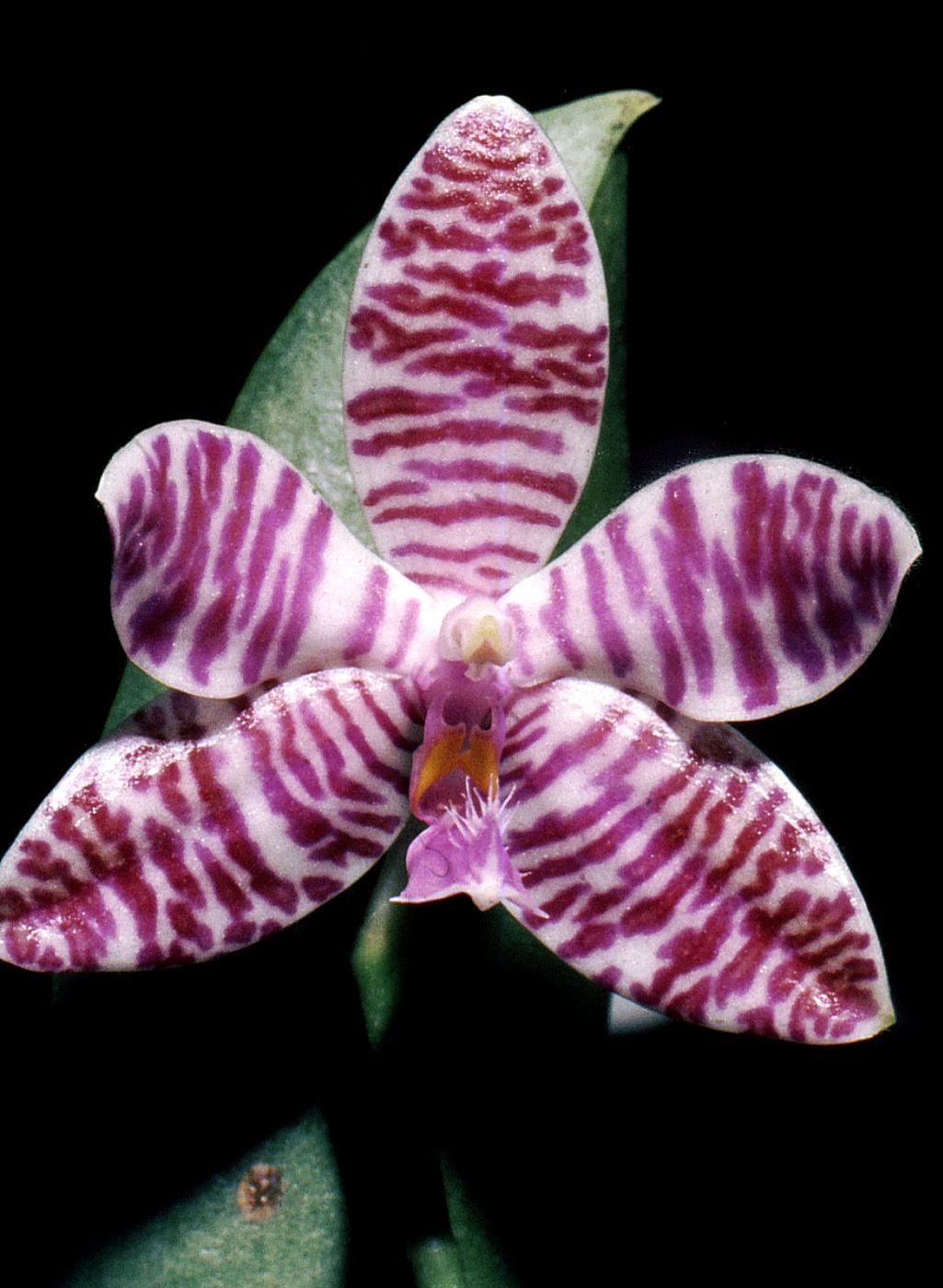
 © Orchi / CC BY-SA 3.0
Lueddemann's Phalaenopsis
Phalaenopsis lueddemanniana is a species orchid native to the Philippines, prized for its waxy, thick-textured flowers in shades of white to ochre overlaid with purple to reddish-purple spots and bands. Its sweet fragrance and excellent flower longevity make it a rewarding orchid to grow. The plant readily produces keikis (baby plantlets) at the tip of its flower spikes, letting growers propagate and renew their collection over time. Because it calls for some orchid-growing experience, it suits intermediate growers best.
View Lueddemann's Phalaenopsis encyclopedia →0% commission on your first sales!Register by September 30, 2026 and your first 2 plants are commission-free!
Grower Wanted!
List your plants on GrowerDirect and sell directly to customers nationwide!
6 Transparency Commitments from GrowerDirect
Growers disclose the following information for Orchids listings, guaranteeing transparency on variety, origin, light requirements, and growing difficulty.
- Variety Disclosed
- Real Photos
- Color Specification
- Origin Disclosed
- Light Requirements
- Difficulty Level Disclosed
Browse all 142 varieties
Light Requirements
Growing Difficulty
Verified growers wanted for Orchids
Growers are signing up now ahead of launch. Subscribe to be notified when new listings go live.
Getting alerts is free with a member account. When new listings match your saved search, we'll notify you by email and in-app.
Browse other categories
Lueddemann's Phalaenopsis key facts
- Growing Difficulty
- Intermediate
- Lifespan
- Perennial that can be kept for many years (little data on lifespan)
- Size
- Small to medium; leaves about 30 cm, flower stem about 40 cm, flowers 5-6 cm across
- Watering
- Dilute liquid fertilizer in the growing season
- Light & Placement
- It prefers low light; keep it in bright shade out of direct sun.
- Watering
- Water generously all year, without letting water sit in the crown.
- Temperature & Overwintering
- A warm grower from the lowlands; keep it warm indoors in winter too.
- Soil & Repotting
- It does well in a pot; use sphagnum or bark and repot as new roots start to grow.
- Fertilizer
- Feed dilute liquid fertilizer regularly in the growing season.
- Propagation
- Plantlets that form on the flower stem can be cut off and potted once they have grown a few roots.
About Lueddemann's Phalaenopsis
A Philippine species orchid with waxy, fragrant, spotted flowers. Learn about Phalaenopsis lueddemanniana's features, care basics, and common questions.
7 things to know before growing Lueddemann's Phalaenopsis
1Bright, Indirect Light
Lueddemanniana prefers bright, filtered light rather than direct sun, which can scorch its leaves. As an epiphytic orchid, it also benefits from good air circulation around the roots and foliage.
2Water with Clear Wet-Dry Cycles
Let the potting medium dry out near the surface before watering thoroughly, since this epiphytic orchid dislikes staying constantly wet. It appreciates higher humidity, so misting the leaves helps during dry seasons.
3Well-Draining Epiphyte Mix
Use a coarse, free-draining medium such as bark or sphagnum moss suited to epiphytic orchids. Since constantly damp roots can lead to root rot, choose a potting style that lets air reach the roots.
4Repot Every 2-3 Years
Repot once the medium breaks down and drainage worsens, ideally timed with the start of new root growth to minimize stress. Handle the roots gently, since Phalaenopsis roots are easily damaged.
5Protect from Winter Cold
As a tropical Philippine native, this orchid is sensitive to cold and should be kept indoors in a warm spot during winter. Avoiding sudden temperature swings and maintaining a stable minimum temperature helps keep the plant healthy.
6Watch for Keikis on the Spike
This variety readily produces keikis (baby plantlets) at the nodes of its spent flower spikes. Once a keiki develops enough roots of its own, it can be separated and potted up to grow into a new plant.
7Check Leaves and Roots When Choosing
Look for a plant with thick, firm leaves and healthy, well-developed roots, as this makes ongoing care easier. Since this is a small-to-medium orchid, it's also worth checking that the overall growth habit looks balanced.
Frequently asked questions about Lueddemann's Phalaenopsis
- Q.Can beginners grow this orchid?
- A.Phalaenopsis lueddemanniana is generally considered suitable for intermediate growers. Some prior experience with basic Phalaenopsis care will make it easier to succeed, so it may be a bit challenging as a first orchid.
- Q.How big are the flowers?
- A.The flowers measure roughly 5 to 6 cm across, placing this in the small-to-medium Phalaenopsis category. Flower spikes grow to about 40 cm and carry multiple thick, waxy blooms.
- Q.Does it have a fragrance?
- A.Yes, a sweet fragrance is one of this orchid's characteristic features. The intensity can vary somewhat by plant and environment, but it's usually noticeable up close while in bloom.
- Q.What should I do with the keikis on the flower spike?
- A.The keikis that form at the spike's nodes can simply be left in place and enjoyed as part of the plant's display. Once their roots have grown enough, they can be cut away and potted separately to grow as new plants.
- Q.How long can I grow this plant for?
- A.It's a perennial that can be grown for many years as the plant renews itself over time through offsets. Detailed lifespan data is limited, but with consistent care it can be enjoyed over the long term.
Handy Growing Tools for Lueddemann's Phalaenopsis
Learn more about Lueddemann's Phalaenopsis in the encyclopedia
View Lueddemann's Phalaenopsis encyclopedia entry →
Care difficulty, size, origin and light needs — all basics covered.
More in this category
Can't find the plant you're looking for?
Post your wishes for free and growers with matching plants will contact you with introductions.