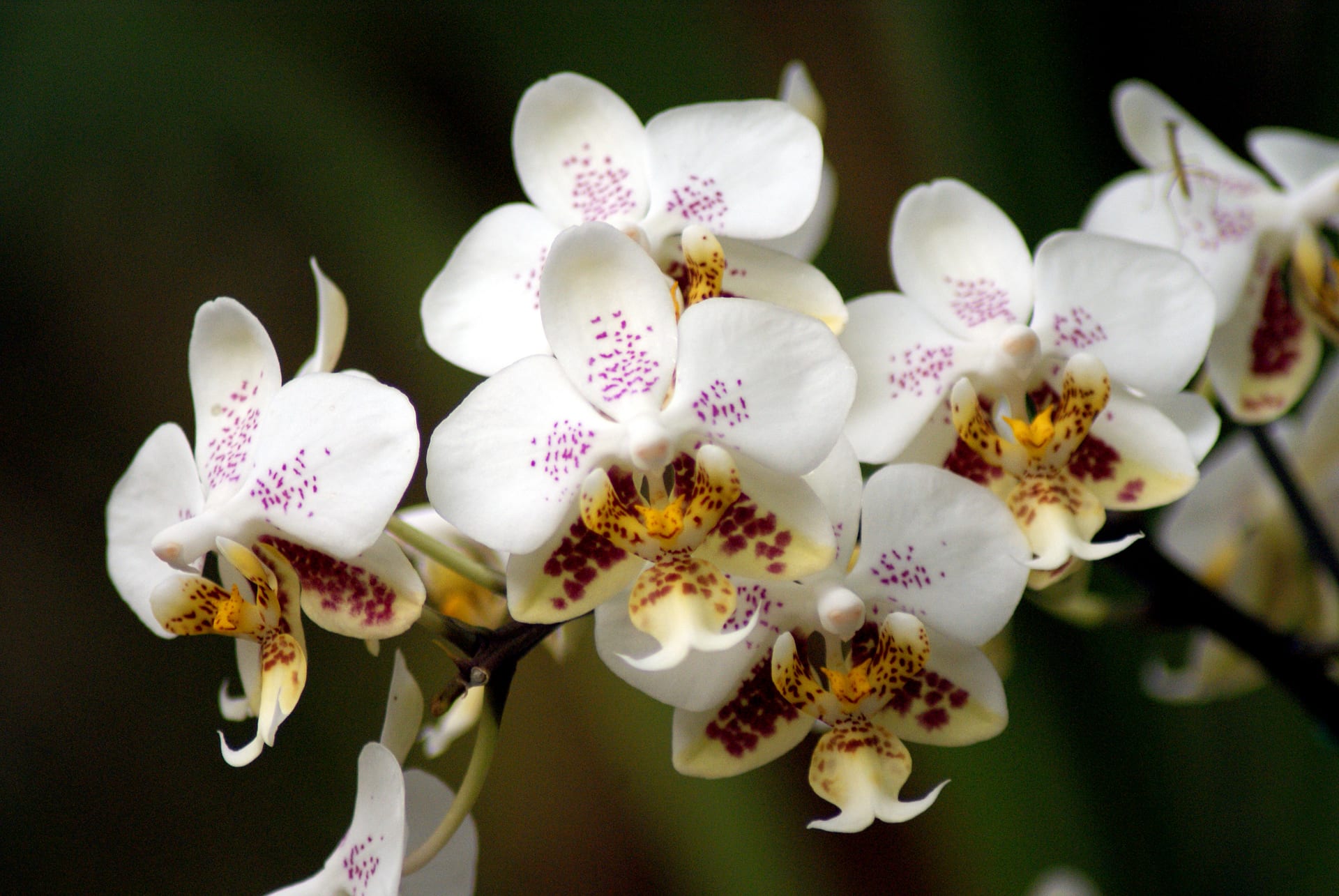
 © Elena Gaillard from New York, USA / CC BY 2.0
Stuart's Phalaenopsis
Stuart's Phalaenopsis is a species orchid native to Mindanao in the Philippines, prized for its distinctively mottled foliage. From winter into spring, it sends up branching flower spikes that arch gracefully under the weight of up to around 100 lightly fragrant blooms, each 5 to 9 cm across. Mature spikes can reach 90 cm in length, giving the plant an impressively full, cascading silhouette when in flower. As a perennial, it can be grown and renewed over many years with attentive care, and it rewards growers with some orchid experience with a truly striking display.
View Stuart's Phalaenopsis encyclopedia →0% commission on your first sales!Register by September 30, 2026 and your first 2 plants are commission-free!
Grower Wanted!
List your plants on GrowerDirect and sell directly to customers nationwide!
6 Transparency Commitments from GrowerDirect
Growers disclose the following information for Orchids listings, guaranteeing transparency on variety, origin, light requirements, and growing difficulty.
- Variety Disclosed
- Real Photos
- Color Specification
- Origin Disclosed
- Light Requirements
- Difficulty Level Disclosed
Browse all 142 varieties
Light Requirements
Growing Difficulty
Verified growers wanted for Orchids
Growers are signing up now ahead of launch. Subscribe to be notified when new listings go live.
Getting alerts is free with a member account. When new listings match your saved search, we'll notify you by email and in-app.
Browse other categories
Stuart's Phalaenopsis key facts
- Growing Difficulty
- Intermediate
- Lifespan
- Perennial that can be kept for many years (little data on lifespan)
- Size
- Medium; flower stem up to 90 cm, flowers 5-9 cm across
- Watering
- Dilute liquid fertilizer in the growing season
- Light & Placement
- It likes shade; keep it in bright shade out of direct sun.
- Watering
- Water evenly all year and keep humidity high.
- Temperature & Overwintering
- A warm grower from warm lowland forest; keep it warm indoors in winter too.
- Soil & Repotting
- It can be potted or mounted. Repot or mount while the root tips are actively growing, taking care not to damage the roots.
- Fertilizer
- Feed dilute liquid fertilizer regularly in the growing season.
- Enjoying the Flowers
- The long, hanging stem carries many flowers, so give it room to trail, for example in a hanging pot or on a high shelf.
About Stuart's Phalaenopsis
A species orchid from Mindanao, Philippines, with mottled leaves and long arching spikes bearing up to 100 fragrant, 5–9 cm blooms each winter through spring. Suited to intermediate growers; grown as a long-lived perennial.
7 things to know before growing Stuart's Phalaenopsis
1Bright, Indirect Light
Give it bright, filtered light rather than direct sun — something like light through a sheer curtain. Strong direct sunlight can scorch the leaves, so shade it during summer. Since it originates from Mindanao, keep it indoors and warm through winter, away from cold drafts.
2Water Consistently Year-Round
Water on a steady schedule throughout the year and keep humidity high. Just make sure water doesn't pool in the pot, and keep drainage and airflow good. Misting the leaves during dry periods also helps keep the plant comfortable.
3Use an Epiphytic Mix
In the wild it grows epiphytically on trees, so it does best in bark or sphagnum moss rather than ordinary soil. Keeping the roots exposed to air rather than buried is key to a healthy plant.
4Repot Every 2–3 Years
Repot roughly every two to three years, before the growing medium breaks down and drainage suffers. Doing this after flowering, as new roots begin to emerge, puts the least stress on the plant. Trim away any old or damaged roots while you're at it.
5Support the Long Spike
The branching flower spike arches downward and can reach around 90 cm at its longest. A light stake or an elevated, hanging position helps prevent breakage under its own weight and shows off the blooms. After flowering, cutting the spike back can help the plant focus its energy on itself.
6Keep It Warm Year-Round
Being native to a Philippine island, it has little tolerance for cold or sudden temperature swings. Keep it in a heated room through winter, away from cold windows and drafts. Direct airflow from air conditioning is best avoided too.
7Check Leaf Condition First
The mottled pattern on the leaves is a natural feature of this species, not a problem. Instead, check that leaves aren't yellowing or feeling soft and mushy before choosing a plant. Firm roots and a stable base at the center of the plant make for an easier start.
Frequently asked questions about Stuart's Phalaenopsis
- Q.Can beginners grow this orchid?
- A.This species is considered suited to intermediate growers rather than complete beginners. With attention to light and watering, though, someone gaining experience can grow it successfully over time.
- Q.When does it bloom?
- A.It blooms from winter through spring, producing a succession of lightly fragrant flowers along its branching spike.
- Q.How many flowers bloom at once?
- A.Under good conditions a single spike can carry up to around 100 blooms, each about 5 to 9 cm across.
- Q.Is the mottled leaf pattern a disease?
- A.No, the mottled pattern is a natural characteristic of this species, not a sign of disease — in fact, it's a helpful way to identify the plant.
- Q.How long can it be grown for?
- A.As a perennial, it can be grown and renewed over many years with proper care. That said, detailed data on its lifespan is limited, and it likely varies from plant to plant.
Handy Growing Tools for Stuart's Phalaenopsis
Learn more about Stuart's Phalaenopsis in the encyclopedia
View Stuart's Phalaenopsis encyclopedia entry →
Care difficulty, size, origin and light needs — all basics covered.
More in this category
Can't find the plant you're looking for?
Post your wishes for free and growers with matching plants will contact you with introductions.