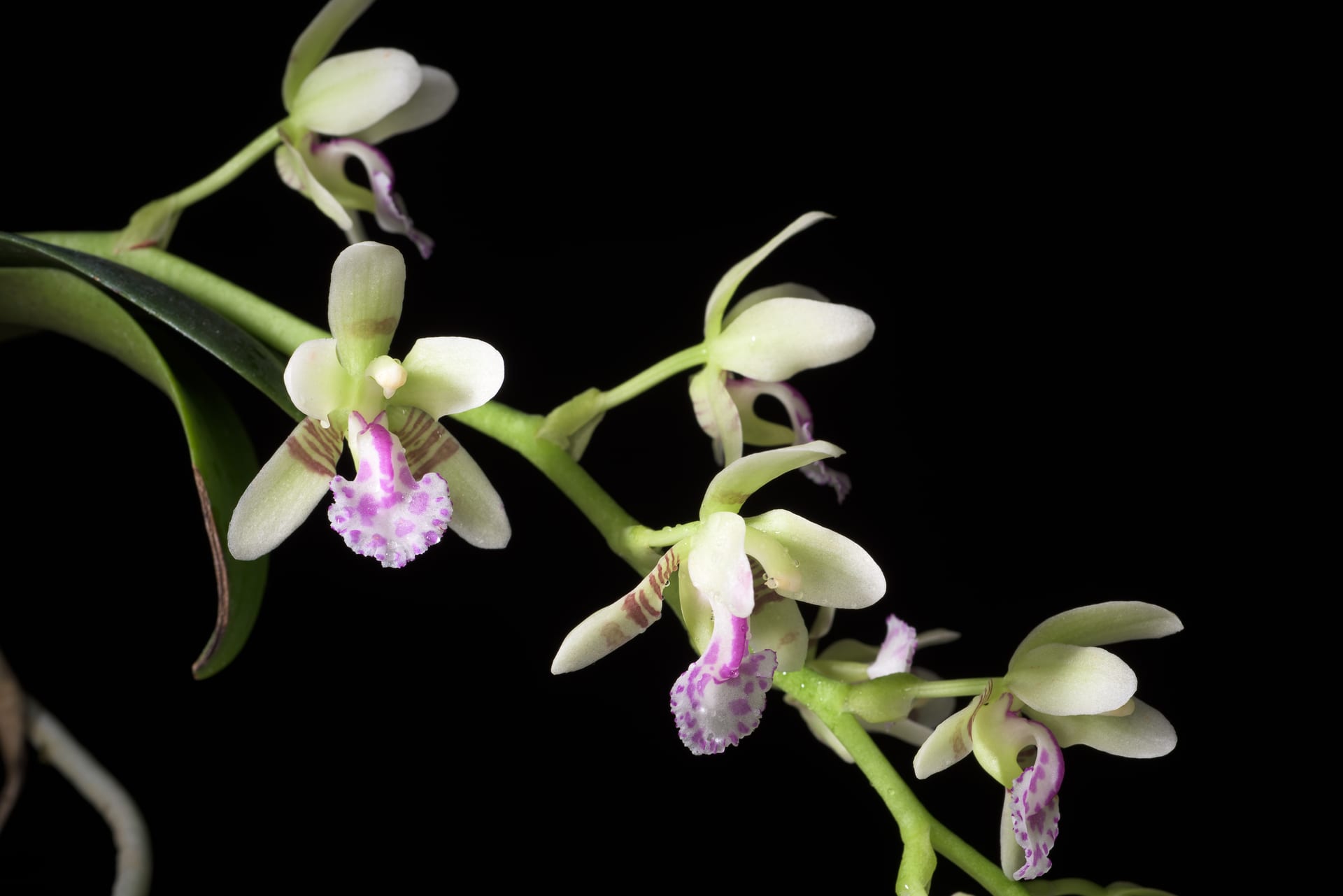
 © snotch from Sapporo, Hokkaido, Japan / CC BY 2.0
Nago Orchid
Nago Orchid takes its name from Mt. Nago on Okinawa's main island, where it was first found growing as a small epiphytic orchid native to Japan. Its thick, leathery leaves grow in two neat rows, and from early summer into summer it produces pale greenish-white flowers. Two features set it apart: reddish-purple horizontal bands on the lateral sepals, and a delicate, lemon-like fragrance that make it as enjoyable to smell as to look at. It calls for some intermediate-level care, but rewards patient growers who renew its growths over the years with a long-lived, characterful plant.
View Nago Orchid encyclopedia →0% commission on your first sales!Register by September 30, 2026 and your first 2 plants are commission-free!
Grower Wanted!
List your plants on GrowerDirect and sell directly to customers nationwide!
6 Transparency Commitments from GrowerDirect
Growers disclose the following information for Orchids listings, guaranteeing transparency on variety, origin, light requirements, and growing difficulty.
- Variety Disclosed
- Real Photos
- Color Specification
- Origin Disclosed
- Light Requirements
- Difficulty Level Disclosed
Browse all 142 varieties
Light Requirements
Growing Difficulty
Verified growers wanted for Orchids
Growers are signing up now ahead of launch. Subscribe to be notified when new listings go live.
Getting alerts is free with a member account. When new listings match your saved search, we'll notify you by email and in-app.
Browse other categories
Nago Orchid key facts
- Growing Difficulty
- Intermediate
- Lifespan
- Perennial that can be kept for many years (little data on lifespan)
- Size
- Small; leaves 6-13 cm, flower stem about 18 cm, flowers about 3 cm across
- Watering
- Dilute liquid fertilizer in the growing season
- Light & Placement
- Grow it in bright partial shade, avoiding strong direct sun.
- Watering
- Keep humidity fairly high and water as the medium begins to dry, with good airflow to prevent stagnation.
- Temperature & Overwintering
- It grows in warm-temperate mountain forest; protect it from frost and freezing in winter, for example indoors.
- Soil & Repotting
- Mount it, or pot it in a coarse, free-draining medium.
- Fertilizer
- Feed dilute liquid fertilizer regularly in the growing season.
- Pests & Cautions
- A Japanese native; choose nursery-propagated plants rather than wild-collected ones. Some prefectures restrict collecting wild plants by ordinance. It is listed as Endangered on the Ministry of the Environment Red List.
About Nago Orchid
Nago Orchid is a small epiphytic orchid native to Japan, first found on Okinawa's Mt. Nago. It bears pale greenish-white flowers with reddish-purple banding and a lemon-like scent, and suits growers with some intermediate experience.
7 things to know before growing Nago Orchid
1Bright, Filtered Shade
As an epiphytic orchid that naturally clings to tree trunks, Nago Orchid prefers bright, filtered light rather than direct sun — think the glow through a sheer curtain. Good air circulation helps keep its thick, leathery leaves healthy.
2Water Between Dry Spells
The roots dislike staying constantly wet, so water thoroughly once the growing medium has dried out, then let it dry again before the next watering. This dry-then-soak rhythm suits its epiphytic nature.
3Use an Epiphyte Mix
Since it's an epiphytic orchid, plant it in a well-draining, breathable medium such as sphagnum moss or bark. It also grows well mounted on a board or fern-fiber slab instead of a pot.
4Repot Outside the Bloom Season
Early summer through summer (June to August) is its flowering season, so avoid repotting during that time. Because the plant is small, avoid disturbing the root ball too much — trim any damaged roots and refresh the growing medium gently.
5Watch Heat and Cold
In hot, humid summers, keep the air moving so roots and foliage don't stay damp; in cold weather, bring the plant indoors or otherwise shield it from chilling. This seasonal attention is part of why the orchid is considered suited to intermediate growers.
6Check Leaves and Roots
When choosing a plant, look for thick, glossy leaves with little discoloration or damage. Firm, healthy roots are also a good sign for how well it will grow afterward.
7Enjoy Bloom Season Up Close
Flowers appear from early summer into summer, showing off reddish-purple bands on the lateral sepals and a refreshing lemon-like scent. Since each bloom is only about 3 cm across, it's worth observing them up close to appreciate the detail.
Frequently asked questions about Nago Orchid
- Q.Is Nago Orchid suitable for beginners?
- A.Nago Orchid is generally considered suited to intermediate growers, since its lighting and watering needs take a bit of practice. Once you get the basics down, though, it's manageable even without prior experience growing epiphytic orchids.
- Q.How large does this orchid grow?
- A.It's a small epiphytic orchid with a very short stem. Its flower stalks reach about 18 cm, and individual flowers are roughly 3 cm across.
- Q.What do the flowers look like?
- A.From early summer into summer, it produces pale greenish-white flowers. Their standout features are the reddish-purple horizontal bands on the lateral sepals and a lemon-like fragrance.
- Q.How many years can I grow this orchid?
- A.Nago Orchid is a perennial that can be grown for many years by periodically renewing its growths. Detailed data on its overall lifespan is limited, so it helps to keep an eye on the plant's condition as you go.
- Q.What growing medium and setup work best?
- A.As an epiphytic orchid, it does well in a well-draining, breathable medium like sphagnum moss or bark. Mounting it on a board or fern-fiber slab, rather than potting it, is also a common approach.
Handy Growing Tools for Nago Orchid
Learn more about Nago Orchid in the encyclopedia
View Nago Orchid encyclopedia entry →
Care difficulty, size, origin and light needs — all basics covered.
More in this category
Can't find the plant you're looking for?
Post your wishes for free and growers with matching plants will contact you with introductions.