Source: Wikimedia Commons
Nago Orchid
IntermediatePhalaenopsis japonica
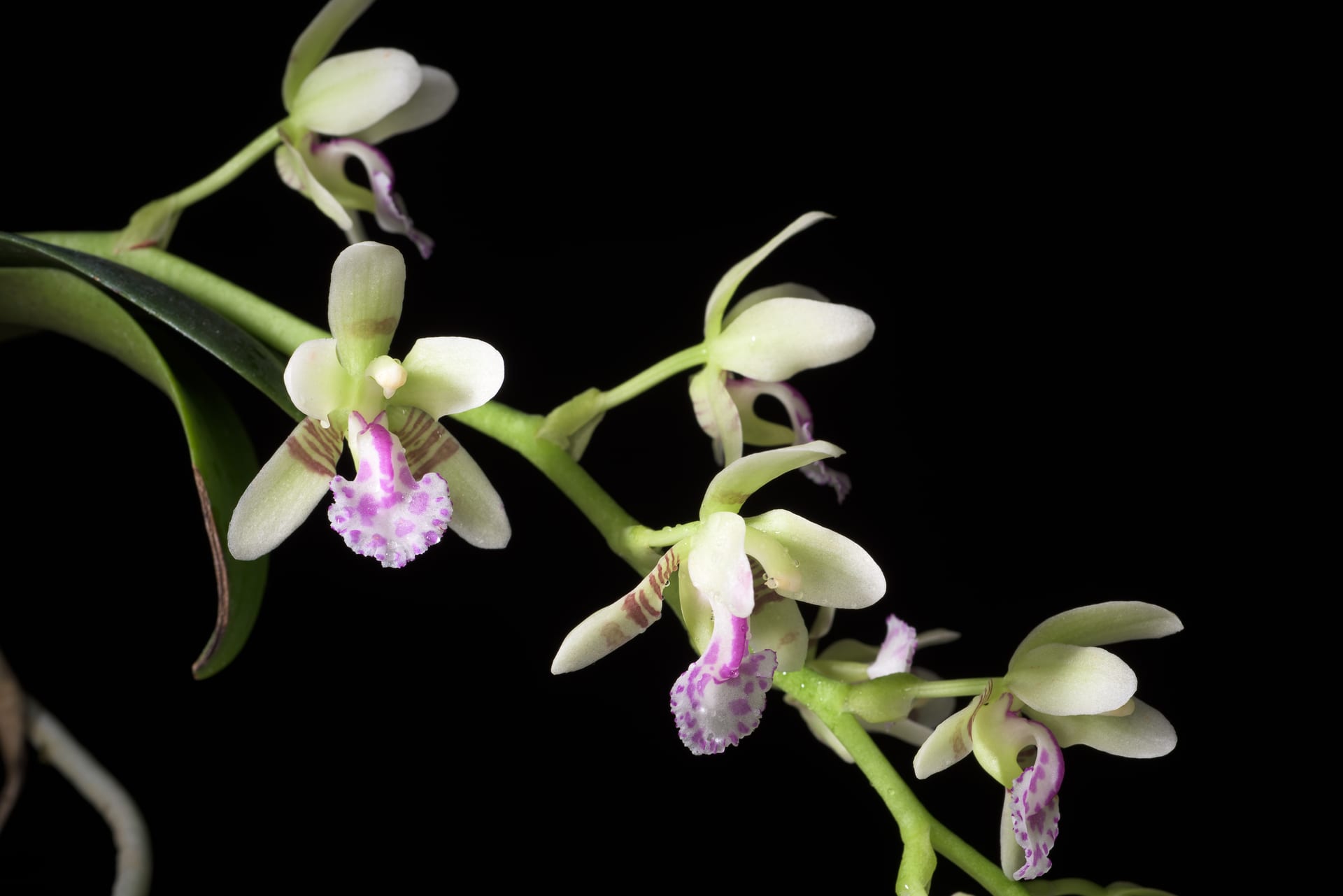
A small epiphytic orchid native to Japan, named after Mount Nago in Okinawa where it was found. It carries thick, leathery leaves in two rows and in early summer to summer opens pale greenish-white flowers with red-purple bars on the lateral sepals and a lemony scent.
About
Nago-ran (Phalaenopsis japonica) is a small epiphytic orchid named after Mount Nago on Okinawa Island, where it was found. Originally described as Aerides japonica, it was later moved to Sedirea (as Sedirea japonica) and then Hygrochilus, and is now placed in Phalaenopsis; some Japanese references still use Hygrochilus japonicus, and the name Sedirea remains common on sale labels. It grows from the Izu Peninsula westwards through the Nansei Islands, on Jeju Island in Korea and in southern China, on the canopy and thick branches of evergreen broadleaf mountain forest. The stem is very short, with thick, leathery, oblong leaves alternating in two rows. From June to August an arching stem about 18 cm long opens six to ten pale greenish-white flowers about 3 cm across in succession. The lateral sepals carry red-purple bars and the lip is spotted, and the flowers have a sweet lemon- or ginger-like scent. Poaching for horticulture has reduced it, it is rare even on Okinawa Island where it was found, and it is listed as Endangered (EN) on the Ministry of the Environment Red List. In Japan cultured plants are sold by wildflower and orchid nurseries.
Source: Wikipedia (CC BY-SA 4.0)
Size of the Nago Orchid
The Nago Orchid grows to Small; leaves 6-13 cm, flower stem about 18 cm, flowers about 3 cm across.
Basic Info
Origin
Japan (Izu Peninsula westwards to the Nansei Islands), Jeju Island and southern China
Lifespan
Perennial that can be kept for many years (little data on lifespan)
Size
Small; leaves 6-13 cm, flower stem about 18 cm, flowers about 3 cm across
Temperature
15〜30℃
Humidity
50〜70%
Watering & Fertilizer
Dilute liquid fertilizer in the growing season
Growing Tips
Light & Placement
Grow it in bright partial shade, avoiding strong direct sun.
Watering
Keep humidity fairly high and water as the medium begins to dry, with good airflow to prevent stagnation.
Temperature & Overwintering
It grows in warm-temperate mountain forest; protect it from frost and freezing in winter, for example indoors.
Soil & Repotting
Mount it, or pot it in a coarse, free-draining medium.
Fertilizer
Feed dilute liquid fertilizer regularly in the growing season.
Pests & Cautions
A Japanese native; choose nursery-propagated plants rather than wild-collected ones. Some prefectures restrict collecting wild plants by ordinance. It is listed as Endangered on the Ministry of the Environment Red List.
Nago Orchid FAQ
QWhat is the growing difficulty level for Nago Orchid?
Intermediate. A variety suitable for intermediate growers. Requires some cultivation experience and knowledge of environment management. Pay careful attention to temperature and humidity control.
QHow large does Nago Orchid get?
The mature size of Nago Orchid is Small; leaves 6-13 cm, flower stem about 18 cm, flowers about 3 cm across. This may vary slightly depending on cultivation environment and individual differences.
QHow should I water and fertilize Nago Orchid?
Nago Orchid: watering & fertilizer — Dilute liquid fertilizer in the growing season. Aim for appropriate frequency and amount.
QWhat is the typical price for Nago Orchid?
The price of Nago Orchid varies significantly by variety, characteristics, size, and lineage. Please check GrowerDirect's price guide for the latest market information.
Last updated: September 23, 2026
References & Sources
Edited & verified by: GrowerDirect Editorial Team
The classifications, regulations, and growing data on this page are created and verified based on the primary information database below.
Taxonomy & Authority
Regulations & Conservation Status
The whole orchid family is listed in CITES Appendix II (checked on Species+). International trade requires permits such as export permits, but no registration is needed to buy, sell or transfer plants within Japan. It is listed as Endangered (EN) on the Ministry of the Environment Red List. It is native to Japan and is not designated as a Nationally Rare Species under the Act on Conservation of Endangered Species (checked against the Ministry of the Environment list). Some prefectures restrict collecting wild plants by ordinance, so choose nursery-propagated plants rather than wild-collected ones.
Sources: Species+ (CITES) / Ministry of the Environment, Japan: list of Nationally Rare Species
Regulations may change. Always verify the latest information with the relevant authorities.
Related Species
Find listings for this species
Related Articles
Complete Guide to Growing Phalaenopsis Orchids | Tips for Beginners to Keep Them Blooming Long-Term
A beginner-friendly guide to enjoying popular gift Phalaenopsis orchids long-term, covering watering, placement, fertilizing, and post-bloom care. We also introduce temperature management and techniques to encourage new flower buds.
Moth Orchid Reblooming Technique | How to Make Flowers Bloom Again After They Fade
Explains how to rebloom moth orchids after flowers fade. Introduces how to cut flower stems, temperature management, watering and fertilizer adjustment, and creating an environment for successful reblooming.
How to Care for Phalaenopsis After Blooming | Tips for Encouraging Re-blooms
Learn how to prune orchid flower stems after blooming, proper care methods, and temperature and fertilizer management to encourage second blooms.
Denphale Care Guide: Tips for Enjoying Long-Lasting Cluster Flowers with Year-Round Warm Management
This guide explains the characteristics of Denphale, a warm-climate hybrid of Dendrobium, how it differs from Nobile types, temperature and watering management, and how to propagate using high growths.
Can't find the plant you're looking for?
Post your wishes for free and growers with matching plants will contact you with introductions.