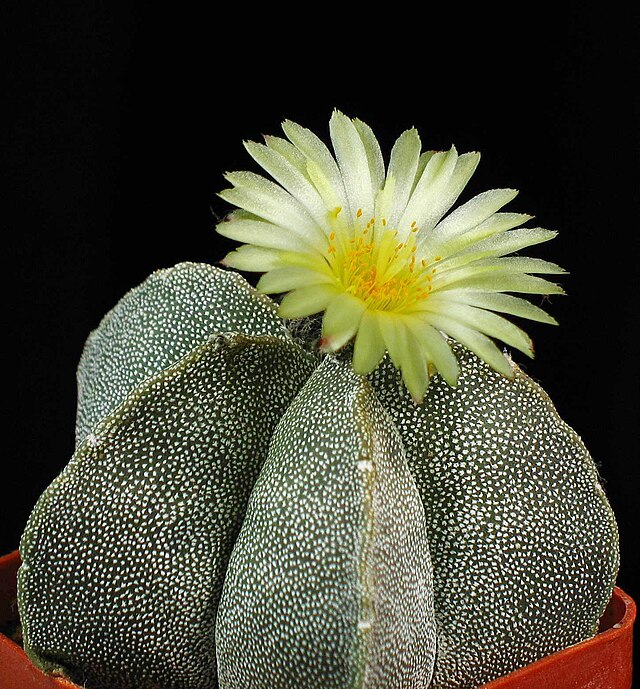
Source: Wikimedia Commons
Astrophytum
IntermediateA cactus with star-like shape and white flecks. Many popular varieties like Kabuto and Ranpo.
About
Astrophytum is a small cactus genus of six species native to the limestone deserts and semi-arid plains of northern Mexico and southern Texas. The genus is celebrated among collectors for its outstanding ornamental qualities: the star-shaped cross-sections suggested by the genus name (Greek for 'star plant'), and surface markings of white floccose dots. Prominent species include A. asterias (Sand Dollar Cactus or Bishop's Cap), A. myriostigma (Bishop's Miter), and A. ornatum (Star Cactus). A. asterias in particular, with its densely stippled surface and large yellow flowers, is considered one of the most desirable cacti and can command high prices. Mature plants are 5–30 cm across. All prefer full sun with light summer shading, excellent drainage in a slightly alkaline substrate, and seasonal watering. Growth is extremely slow. Grafting is commonly practiced to accelerate development.
Source: Wikipedia (CC BY-SA 4.0)
Lifespan of the Astrophytum
The Astrophytum lives Perennial (decades).
Size of the Astrophytum
The Astrophytum grows to 5-30cm.
Basic Info
Origin
North America
Lifespan
Perennial (decades)
Size
5-30cm
Temperature
5〜35℃
Humidity
30〜50%
Watering & Fertilizer
Minimal
Growing Tips
Light & Placement
Prefers direct sun, but shade it from harsh midsummer sun. Keep it in a bright, well-ventilated spot.
Watering
During the spring-to-autumn growing season, water 2-3 times a month once the soil dries. Withhold water in winter.
Soil & Repotting
Use an extremely well-draining mix, ideally one containing lime. This mimics its native limestone habitat.
Fertilizer
Fertilizer is barely needed. Growth is very slow, so if you feed at all, use only a tiny amount in the growing season.
Propagation
Usually raised from seed, though reaching flowering size takes several to over ten years. Grafting is widely used to speed up growth.
Astrophytum FAQ
QWhat is the growing difficulty level for Astrophytum?
Intermediate. A variety suitable for intermediate growers. Requires some cultivation experience and knowledge of environment management. Pay careful attention to temperature and humidity control.
QWhat is the lifespan of Astrophytum?
The average lifespan of Astrophytum is Perennial (decades). With proper cultivation environment and nutrient management, you can keep it healthy for a long time.
QHow large does Astrophytum get?
The mature size of Astrophytum is 5-30cm. This may vary slightly depending on cultivation environment and individual differences.
QHow should I water and fertilize Astrophytum?
Astrophytum: watering & fertilizer — Minimal. Aim for appropriate frequency and amount.
QWhat is the typical price for Astrophytum?
The price of Astrophytum varies significantly by variety, characteristics, size, and lineage. Please check GrowerDirect's price guide for the latest market information.
Last updated: June 23, 2026
References & Sources
Edited & verified by: GrowerDirect Editorial Team
The classifications, regulations, and growing data on this page are created and verified based on the primary information database below.
Regulations & Conservation Status
The family Cactaceae is listed in its entirety in CITES Appendix II. However, Astrophytum asterias is in Appendix I (since 1987; international commercial trade is in principle prohibited).
Sources: CITES Checklist — Cactaceae spp. (Appendix II, whole family)
Regulations may change. Always verify the latest information with the relevant authorities.
Related Species
Find listings for this species
Related Articles
How to Care for Astrophytum: Preventing Root Rot Through Watering Control and the Summer Type Dormancy Cycle
A guide to caring for Astrophytum cactus. Introduces seasonal care steps from watering and light management during the growing period, water restriction during dormancy, to the timing of resuming watering in spring.
Autumn Preparation Management for Summer-Type Succulents
A guide to autumn care for summer-type succulents, covering plant changes from September to November, timing for gradual watering reduction, placement and temperature management for transitioning plants indoors, autumn fertilizing and pest control, variety-specific care checkpoints, and preparation for winter dormancy.
Mealybug Control on Succulents | Complete Guide to Early Detection, Removal, and Prevention
Mealybugs hide easily at the base of succulent leaves and on new growth. This guide covers their characteristics, the environments where they thrive, tips for early detection, removal methods using cotton swabs and alcohol, and daily care practices to prevent recurrence.
Summer and Winter Type Succulents: Growth Cycles and Watering Management Strategy
This article explains the differences in growth types of succulent plants, their annual growth cycles, seasonal watering management strategies, common failures, and countermeasures.
🩺 Common diseases
Can't find the plant you're looking for?
Post your wishes for free and growers with matching plants will contact you with introductions.