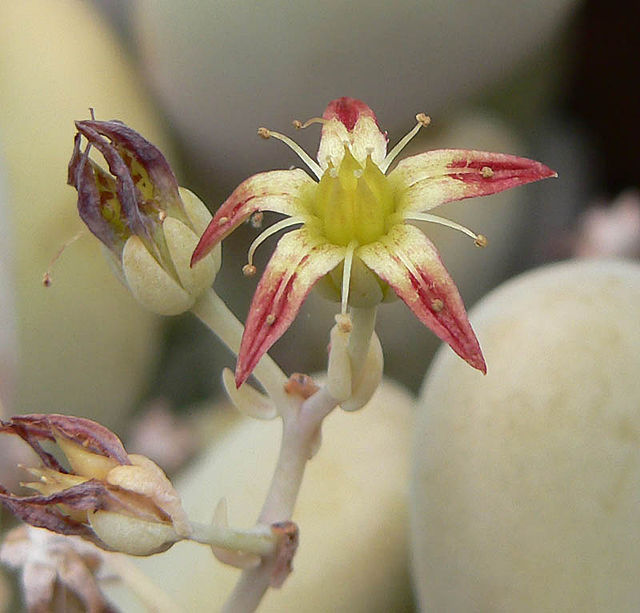
Source: Wikimedia Commons
Graptopetlum
BeginnerHardy succulent with Oborozuki as representative. Beautiful silver-grey leaves. Easy leaf propagation. Perfect for beginners.
About
Graptopetalum is a genus of succulent plants in the family Crassulaceae, native to Mexico and southern Arizona. The most widely cultivated species, G. paraguayense (Ghost Plant), forms attractive rosettes of silvery-grey to pale pink leaves that shift in color with light intensity and temperature, often developing warm pink or lavender tones in cooler months. Mature rosettes typically measure 5–20 cm across. The genus is notable for its exceptional drought tolerance and hardiness, with many species surviving light frost. Plants prefer full sun; low light leads to etiolation. Watering two to three times per month is generally sufficient. Leaf propagation is remarkably easy, with fallen leaves readily producing new plantlets. Graptopetalum is also a parent of the popular intergeneric hybrid genus Graptoveria.
Basic Info
Origin
Mexico and southern Arizona
Lifespan
10+ years
Size
5-20cm
Temperature
0〜35℃
Humidity
30〜50%
Growing Tips
Sunlight
Loves sunlight. Grows outdoors
Watering
2-3 times monthly. Very drought-tolerant
Cold tolerance
Tolerates down to about 0°C
Propagation
Dropped leaves root on their own — amazing propagation
Notes
Tends to stretch without enough light
Graptopetlum FAQ
QWhat is the growing difficulty level for Graptopetlum?
Beginner. A variety suitable for beginners. No special equipment or experience is required—you can grow it without problems by setting up a basic cultivation environment.
QWhat is the ideal temperature for Graptopetlum?
The ideal temperature for Graptopetlum is 0〜35℃. Recommended humidity is 30〜50%. Avoid sudden temperature changes and maintain a stable environment.
QWhat is the lifespan of Graptopetlum?
The average lifespan of Graptopetlum is 10+ years. With proper cultivation environment and nutrient management, you can keep it healthy for a long time.
QHow large does Graptopetlum get?
The mature size of Graptopetlum is 5-20cm. This may vary slightly depending on cultivation environment and individual differences.
QWhat is the typical price for Graptopetlum?
The price of Graptopetlum varies significantly by variety, characteristics, size, and lineage. Please check ボタちょく's price guide for the latest market information.
Last updated: June 23, 2026
References & Sources
Edited & verified by: BoTachoku Editorial Team
The classifications, regulations, and growing data on this page are created and verified based on the primary information database below.
Primary sources
Regulations & Conservation Status
Sources: CITES Appendices — taxon not listed
Regulations may change. Always verify the latest information with the relevant authorities.
Related Species
Find listings for this species
Related Articles
How to Create Succulent Massed Plantings | Tips for Mixed Containers and Seasonal Management
Techniques for creating massed succulent plantings by combining multiple varieties in a single container. This guide provides practical explanations of the complete process: variety selection, soil and container choice, layout design, planting methods, and seasonal care.
Tips for Bringing Out Beautiful Fall Colors in Succulents | Seasonal Color Development Through Care Methods and Variety Selection
The secret to succulents' beautiful fall and winter colors. This guide explains the mechanisms of color development, light, temperature, and watering management to bring out vibrant autumn hues, and recommendations for the best colored varieties.
A Complete Guide to Growing Aloe | Sunlight, Watering, and Propagation by Offsets
From the basic characteristics of aloe, a drought-hardy succulent, to detailed guidance on sunlight, watering, repotting, propagation through offset division, and root rot prevention.
Case Study: Restoring Etiolated Succulents | Before-and-After Recovery Procedures by Symptom Pattern
Succulent etiolation requires different approaches depending on symptom severity. This article breaks down four patterns—mild, moderate, severe, and partial etiolation in cluster plantings—with specific before-and-after recovery procedures in each case.