How to Create Succulent Arrangements: Tips for Grouping Plants and Seasonal Management
Techniques for creating succulent arrangements by combining multiple varieties in a single container. Practical explanation of every step, from variety selection through soil and container choice, layout design, planting methods, and seasonal care.
Key Takeaways
Techniques for creating succulent arrangements by combining multiple varieties in a single container. Practical explanation of every step, from variety selection through soil and container choice, layout design, planting methods, and seasonal care.
Related Species
Creating a succulent arrangement means combining multiple varieties in a single container and cultivating them over time. Compared to single plants, arrangements create stronger visual impact, and color combinations condense a succulent garden into a palm-sized world. Because arrangement creation involves a "design" aspect, it requires a deep understanding of plant characteristics.
Success in arrangement creation depends on three key factors: variety selection, soil and container choice, and layout design, plus seasonal management. If any one of these is neglected, creating a beautiful arrangement becomes difficult. This article explains the complete process of arrangement creation for beginners to intermediate growers, based on practical knowledge.
Selection Criteria for Suitable and Unsuitable Varieties
Before beginning an arrangement, choosing which varieties to use determines much of the success. Not all succulents are suitable for arrangement creation.
Characteristics of varieties suited to arrangement creation:
- Moderate growth speed: Some varieties won't be overshadowed by light, and the grouping maintains cohesion
- Compact width: Roots don't spread excessively, making coexistence in the container easier
- Diverse color range: Rich seasonal color changes contribute to the overall color balance of the arrangement
- High moisture tolerance: Able to adapt to the high humidity environment unique to arrangements
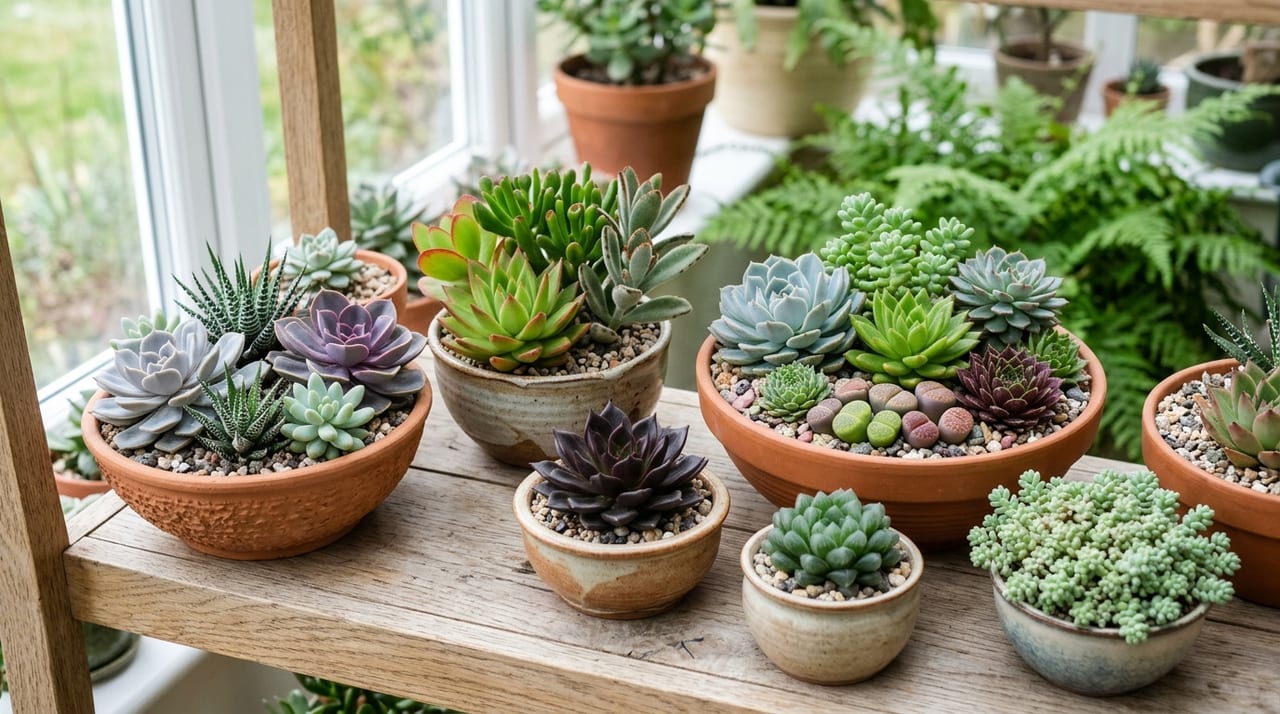
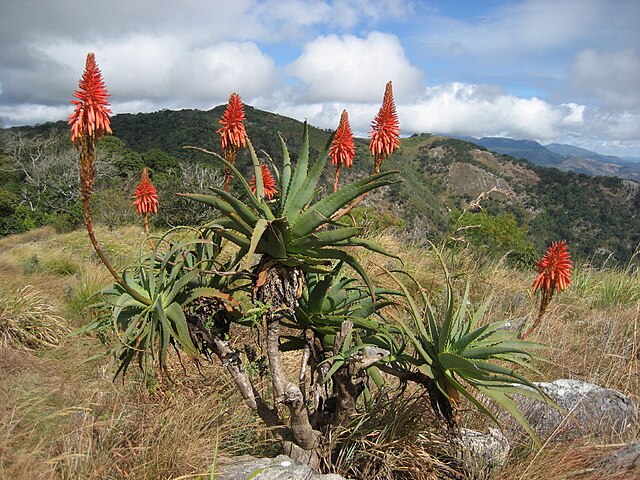
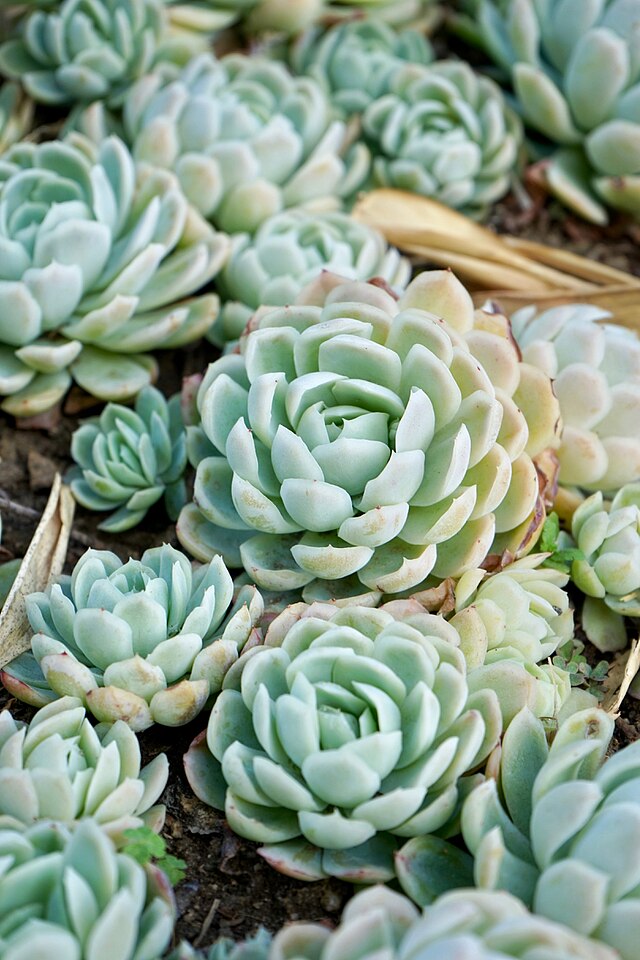
As specific recommended varieties, Echeveria leads the way. It maintains an elegant rosette form while displaying stable growth speed. Varieties like Chiapensis and Linseyana are beautiful with their red-purple coloring in the seasons. Aloe species are also suitable for arrangements; Aloe berna and Aloe frutescens are compact and perfect for creating "depth" in the arrangement.
Crassula species are also excellent. Crassula cooperi develops a pale red tone, while Crassula perforata maintains a jade-green color, making color contrast with Echeveria very effective.
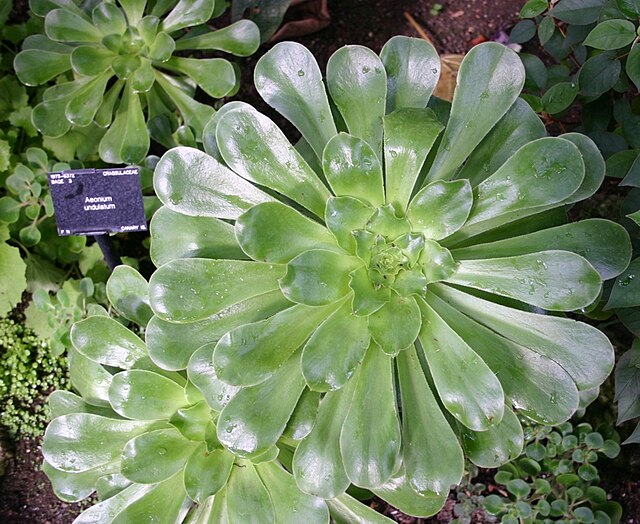
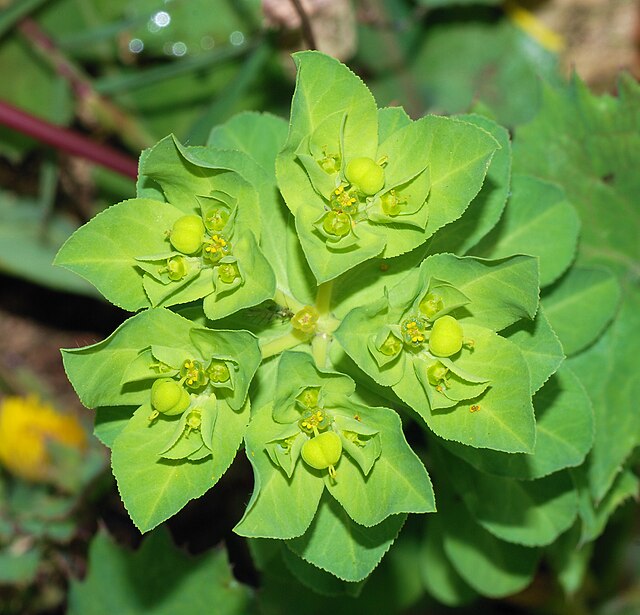
Varieties to avoid: Some Euphorbia species and Aloe varieties with excessively long sword-shaped leaves. These overwhelm other varieties and destroy visual unity. Soft-textured Aeonium arboreum also tends to rot in the high-humidity environment of arrangements and should be avoided.
Soil, Container, and Layout Design
The foundation of arrangement creation rests on three elements: soil, container, and layout.
Soil composition requires balancing drainage and water retention:
- Red lava soil (small grain): 40%
- Akadama soil (small grain): 25%
- Potting soil (sand base): 20%
- Perlite: 10%
- Pumice: 5%
This mixture maintains proper drainage while accommodating the high root density unique to arrangements.
Container selection principles must strictly follow a "shallow and wide" format. Deep pots create excess moisture at the bottom and accelerate root rot. A flat pot approximately 20–30 cm in diameter and 8–12 cm deep is optimal for arrangements. Terracotta or ceramic materials are preferable.
Layout design should be planned by sketching the overall composition on paper before planting. Three typical approaches exist:
- Pyramid type: Tall varieties in back, progressively shorter toward the front. Creates dimension with natural visual flow
- Circular gradient type: High-stature variety in center, low-growing varieties arranged toward the perimeter. Beautiful from all 360 degrees
- Triadic color type: Color contrast created with complementary varieties. Yellow versus purple, red versus green—creates sophistication
Planting and Arrangement Techniques
After layout design is complete, planting begins. Mistakes here directly lead to plant loss later.
Before planting, all seedlings should have their roots organized. After purchase, use tweezers to remove old soil from the roots and spread them out. Neglecting root organization dramatically increases root rot risk in the arrangement environment.
Planting sequence:
- Fill the container with soil to 80% capacity
- Begin planting from the back rows forward
- When planting each variety, press down so roots adhere firmly to the soil
- Proceed sequentially toward the front
- Fill gaps with fine-grain soil
Plant spacing is extremely important. Beginners tend to crowd plants too densely. Spacing less than 1 cm creates poor air circulation and promotes dampness. Ideal spacing depends on the mature size of each variety, but 2–4 cm is optimal.
Immediately after planting, do not water at all. From planting to 3–7 days is the period when roots establish in the soil. After about 10 days, give the first light watering.
Seasonal Care: Watering, Fertilizing, and Light
Managing an arrangement requires greater precision than single-plant care. Multiple root systems exist within the container, and water distribution easily becomes uneven.
Spring (March–May) is the growth initiation period. Water after the soil surface dries completely (once or twice weekly). Apply diluted liquid fertilizer once or twice monthly. Avoid high-nitrogen fertilizers, which cause excessive growth.
Summer (June–August) focuses on water restriction and sun protection. From mid-June, reduce watering to once or twice monthly, keeping the container half-dry. Avoid direct sun and provide 30% shade. Stop fertilizing completely.
Fall (September–November) is a growth period again. Return to watering once or twice weekly, and resume fertilizing in October. Increased autumn light causes Echeveria to turn red-purple and Crassula to develop deep red tones, deepening the colors across the entire arrangement.
Winter (December–February) reduces watering to a minimum of once or twice monthly. In regions with freeze risk, consider moving indoors. Stop fertilizing completely.
Succulent Arrangement Development Timeline
Arrangement creation is an artwork that evolves over time. The typical timeline is as follows:
Stage 1 (0–3 months): Establishment period Roots re-establish and each plant adapts to the container environment. No major shape changes occur, and plants may shrink slightly. Check for any abnormalities approximately once weekly.
Stage 2 (3–6 months): Cohesion formation period By early summer, each variety deepens its root system, and the entire arrangement begins to function as a single ecosystem. Colors gain depth, leaf thickness increases, and the arrangement gains volume as a unified composition.
Stage 3 (6 months–1 year): Completion period The arrangement matures fully and reveals its true value. Colors reach their deepest hues, plant forms become refined, and the entire container appears as one unified "artwork." An arrangement at this stage maintains its beauty for 3–5 years with proper continued care.
Summary
Creating succulent arrangements exists at the boundary between plant cultivation and sculptural art. The importance lies not simply in "growing," but in "creating" over time.
The path to success begins with variety selection, continues through soil and container choices and layout design, and is achieved through precise seasonal management. Common mistakes beginners make are overcrowding plants and continuing to water during summer when watering should stop. Arrangement maturity requires time, and the decision to restrict water in response to seasonal changes is essential.
Through working with excellent varieties from the GrowerDirect catalog—Echeveria, Aloe, Crassula, and others—the process of developing a single arrangement over the course of a year becomes an experience that fuses the essential beauty of succulents with the sensibility of the grower.