Case Study: Reviving Etiolated Succulents | Symptom-Based Before & After Recovery Steps
Succulent etiolation requires different treatment depending on severity. This guide presents four symptom patterns—mild, moderate, severe, and partial etiolation in cluster plantings—with specific before-and-after recovery procedures.
Key Takeaways
Succulent etiolation requires different treatment depending on severity. This guide presents four symptom patterns—mild, moderate, severe, and partial etiolation in cluster plantings—with specific before-and-after recovery procedures.
Related Species
Etiolation Patterns Are Not Uniform
While succulent etiolation (elongation caused by insufficient light) is often dismissed with the phrase "just behead it," the reality is that the manifestation of etiolation varies greatly depending on the plant's condition. In some cases, only the internodes stretch slightly; in others, the stem becomes thin and spindly with tiny leaves. This article organizes recovery procedures for each symptom pattern with practical examples and introduces the approach suited to each situation.
Pattern 1: Mild Etiolation (Slightly Widened Internodes)
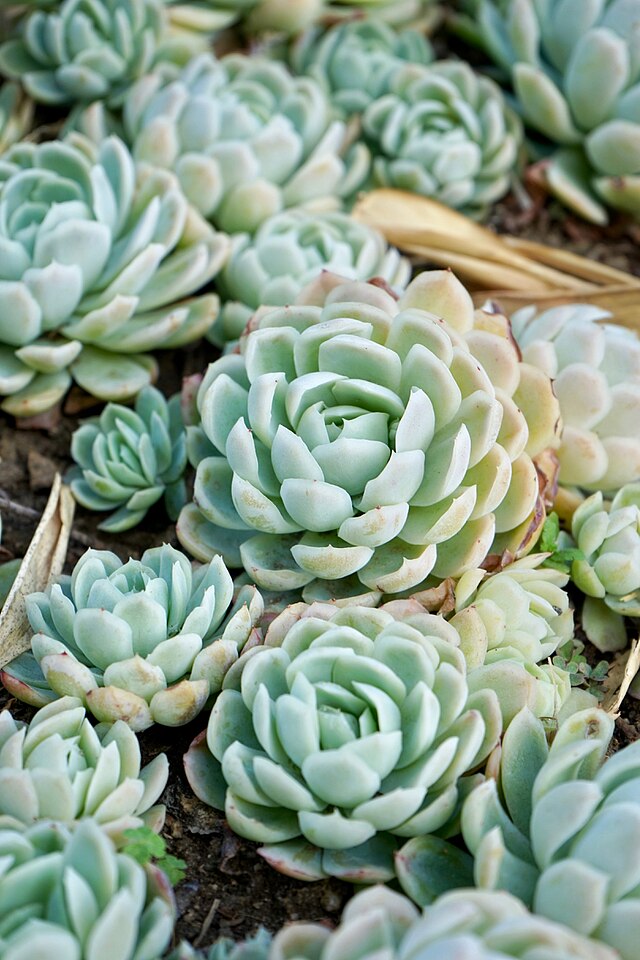
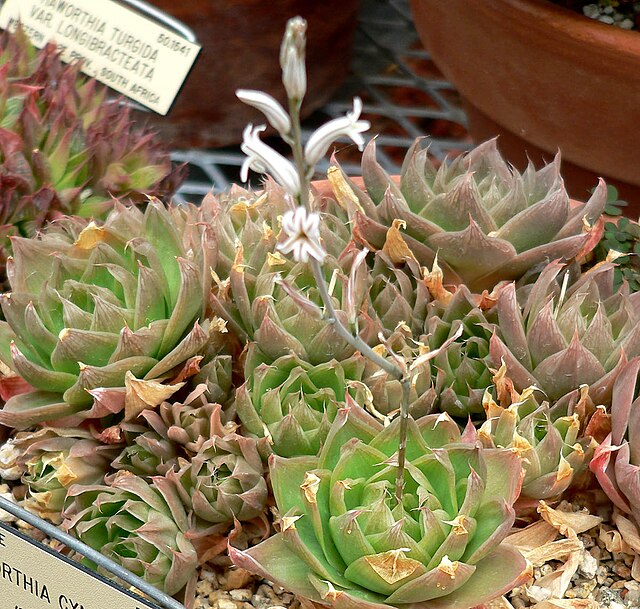
Symptoms: The rosette shape is still intact, but the spacing between leaves is wider than usual, making the plant appear vertically stretched. Leaf color is also slightly pale with a loose appearance. This is commonly seen in rosette-type species like Echeveria and Haworthia.
In this pattern, aggressive pruning is usually unnecessary. First, reassess the light conditions and relocate the plant to a brighter environment (such as a windowsill behind a sheer curtain or a bright semi-shaded outdoor spot). Reduce watering frequency slightly and shift management toward "tightening" the plant. As new leaves emerge, the elongation gradually resolves on its own.
The key is not to force the already-stretched parts back to their original form. The basic strategy for mild etiolation is what might be called "preventive course correction"—waiting for new growth to restore compact shape.
Pattern 2: Moderate Etiolation (Stem Clearly Elongated, Lower Leaves Dropping)
Symptoms: The stem has stretched several centimeters or more, with lower leaves dying and dropping, exposing bare stem. The rosette shape remains at the top but the overall plant balance is compromised.
For this pattern, beheading is an effective reshaping strategy. Cut the upper rosette section where a few healthy leaves remain, allow the cut surface to dry for several days to a week, then plant it in fresh soil. The cut portion—the "head"—develops roots and restarts as a new plant.
Meanwhile, the lower stem (parent plant) usually generates new offshoots over time. As these babies grow, the result is one plant becoming two or more. The moderate pattern is a classic case where etiolation can be reframed from "failure" to "an opportunity to propagate."
Pattern 3: Severe Etiolation (Thin, Elongated Stem with Extremely Small Leaves)
Symptoms: The stem is greatly elongated and becomes very thin, with leaves noticeably smaller and weaker than normal. This typically occurs after prolonged insufficient light. Species with upright growth habits, like Crassula, are prone to this severe pattern.
Recovery takes longer in this pattern. Begin with beheading to separate healthy portions, but the thin, weakened stem has less vigor for rooting. Allow a longer drying period for the cut surface, use well-draining soil to avoid excess moisture, and keep the plant in bright shade during the rooting phase. Once established, gradually increase light exposure.
Complete recovery to the original form in a single beheading is often difficult with severe etiolation. Plan for a long-term process spanning multiple growth cycles as the plant gradually regains its compact form.
Pattern 4: Partial Etiolation in Cluster Plantings
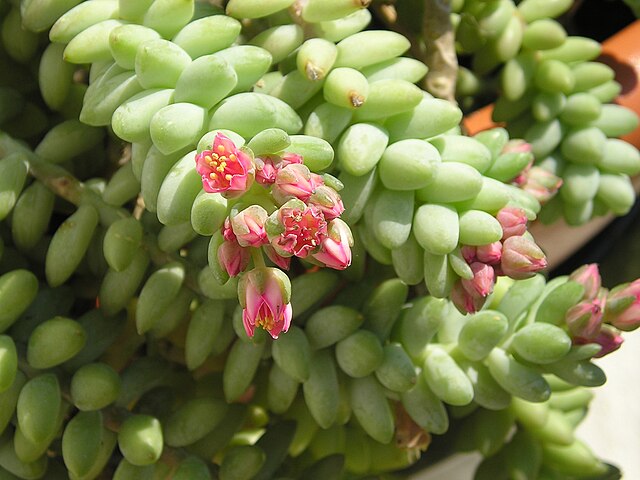
Symptoms: Within a cluster or grouped planting, only some offshoots are etiolated while others maintain balance. This usually results from uneven light distribution across the group. Even in trailing clusters like String of Pearls, interior plants can become elongated due to shading.
In this case, separating the etiolated rosette(s) from the cluster for individual care is effective. The affected rosettes are often shaded by neighboring plants, so moving them alone to a brighter spot accelerates recovery. When separating, gently work away the soil without forcefully pulling to avoid injuring the parent plant and neighboring roots.
Common Prevention Points Across All Patterns
Regardless of the symptom pattern, there are shared principles for preventing recurrence.
- Track seasonal light changes: Etiolation is especially prone during winter and the rainy season when daylight hours are short. Make it a habit to review plant placement periodically.
- Adjust watering frequency by growth and dormancy seasons: Overwatering accelerates etiolation. Stick to the basic cycle of watering only after the soil dries completely.
- Rotate pots to expose all sides to light: When light comes from one direction (like a windowsill), plants can grow unevenly toward that light. Regularly rotating the pot promotes more uniform growth.
Etiolation is a symptom every succulent grower encounters, but knowing the pattern-specific approach lets you recover your plants methodically and confidently. In fact, the process of reviving an etiolated plant and reshaping it into an even more compact form is an excellent opportunity to hone your succulent cultivation skills.
Judgment Criteria from Case Studies
The common thread across all four patterns is the principle: "adjust your approach to match the severity of etiolation." Mild cases need only management adjustments, but moderate to severe cases call for more active intervention—beheading or separation. Identifying which pattern your plant fits into is the critical first step to reshaping efficiently and effectively. Rather than rushing to apply a one-size-fits-all remedy, discerning the symptom stage and choosing the appropriate method results in faster recovery and ultimately guides your plant toward an even more beautiful form.
If you're uncertain about reshaping after etiolation, consulting with the succulent growers on GrowerDirect about your plant's condition and the right timing for beheading is an option worth considering.