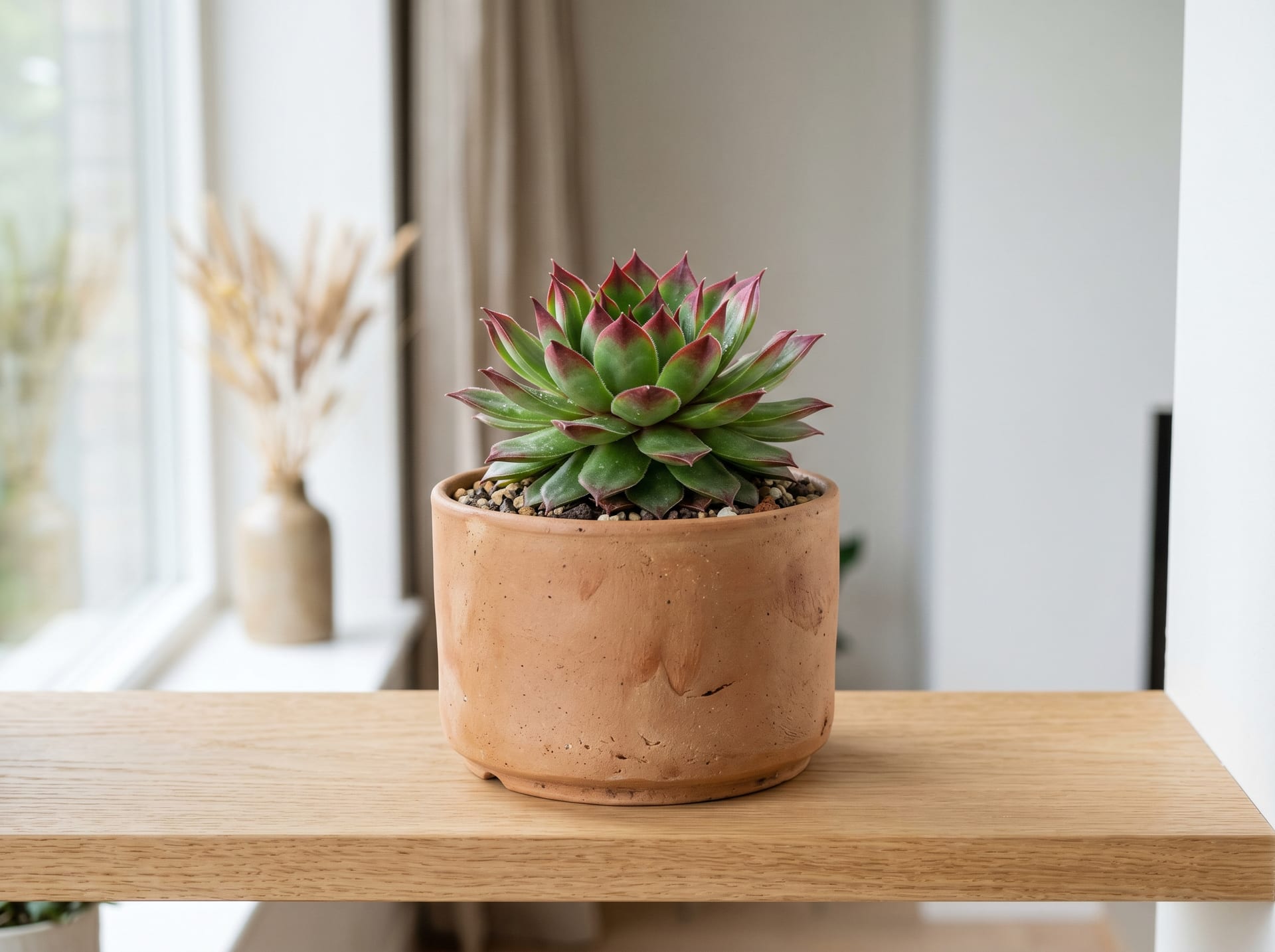
AI-generated image
Sempervivum (Hen and Chicks)
BeginnerEuropean succulent with extreme cold tolerance. Survives -20°C and grows outdoors year-round. Proliferates via offsets.
About
Sempervivum is a genus of succulent plants in the family Crassulaceae, native to the mountain ranges of Europe including the Alps, Carpathians, and Caucasus. The genus name, meaning 'always living' in Latin, reflects the plant's extraordinary resilience. Rosettes of fleshy leaves range in color from green to deep red, purple, and brown, with coloration intensifying in cold weather. Mature rosettes are 3–15 cm across. After flowering, the monocarpic parent rosette dies, but is replaced by numerous offsets produced on runners. Plants are ideal for rock gardens, walls, and alpine troughs, preferring gritty, well-draining soil and full sun.
Lifespan of the Sempervivum (Hen and Chicks)
The Sempervivum (Hen and Chicks) lives 10+ years.
Size of the Sempervivum (Hen and Chicks)
The Sempervivum (Hen and Chicks) grows to 5-15cm.
Temperature & humidity for the Sempervivum (Hen and Chicks)
The Sempervivum (Hen and Chicks) tolerates temperatures of -20〜30℃.
Most species tolerate temperatures well below −20°C and can be grown outdoors year-round in temperate climates, requiring virtually no supplemental watering when established in the ground.
Basic Info
Origin
mountain regions of Europe, including the Alps, Carpathians, and Caucasus
Lifespan
10+ years
Size
5-15cm
Temperature
-20〜30℃
Humidity
30〜50%
Growing Tips
Light & Placement
Loves sun and suits year-round outdoor growing. Plant it in sunny, well-drained spots such as rockeries, stone walls, or an alpine rock garden.
Watering
Rainwater alone is fine (outdoors)
Temperature & Overwintering
Exceptionally hardy, tolerating lows below -20°C, so it overwinters outdoors as it is. The manageable range is -20 to 30°C.
Soil & Repotting
Prefers well-drained sandy soil. Excess moisture causes root rot, so for pots mix in pumice or similar to improve drainage.
Propagation
It sends out plenty of runners; detach and plant the offsets to multiply. The mother rosette dies after flowering, so keep the offsets to renew the clump.
Notes
Actually struggles with hot humid Japanese summers
Sempervivum (Hen and Chicks) FAQ
QWhat is the growing difficulty level for Sempervivum (Hen and Chicks)?
Beginner. A variety suitable for beginners. No special equipment or experience is required—you can grow it without problems by setting up a basic cultivation environment.
QWhat temperatures can Sempervivum (Hen and Chicks) tolerate?
Sempervivum (Hen and Chicks) tolerates temperatures of -20〜30℃. This is the tolerated range, not the ideal growing temperature. Keep conditions well inside it and avoid sudden temperature changes.
QWhat is the lifespan of Sempervivum (Hen and Chicks)?
The average lifespan of Sempervivum (Hen and Chicks) is 10+ years. With proper cultivation environment and nutrient management, you can keep it healthy for a long time.
QHow large does Sempervivum (Hen and Chicks) get?
The mature size of Sempervivum (Hen and Chicks) is 5-15cm. This may vary slightly depending on cultivation environment and individual differences.
QWhat is the typical price for Sempervivum (Hen and Chicks)?
The price of Sempervivum (Hen and Chicks) varies significantly by variety, characteristics, size, and lineage. Please check GrowerDirect's price guide for the latest market information.
Last updated: June 23, 2026
Growing Specifications
- Hardiness (RHS)
- H7
Sources: RHS Find a Plant
References & Sources
Edited & verified by: GrowerDirect Editorial Team
The classifications, regulations, and growing data on this page are created and verified based on the primary information database below.
Primary sources
Regulations & Conservation Status
Sources: CITES Appendices — taxon not listed
Regulations may change. Always verify the latest information with the relevant authorities.
Related Species
Find listings for this species
Related Articles
Sempervivum Care Guide | Enjoying Hardy Succulents Outdoors
A comprehensive guide to growing Sempervivum that tolerates temperatures as low as -20°C. From outdoor ground planting methods and variety selection to summer care tips and propagation from offsets, we'll share the appeal of succulents that can be enjoyed even in cold regions.
Autumn Preparation Management for Summer-Type Succulents
A guide to autumn care for summer-type succulents, covering plant changes from September to November, timing for gradual watering reduction, placement and temperature management for transitioning plants indoors, autumn fertilizing and pest control, variety-specific care checkpoints, and preparation for winter dormancy.
Mealybug Control on Succulents | Complete Guide to Early Detection, Removal, and Prevention
Mealybugs hide easily at the base of succulent leaves and on new growth. This guide covers their characteristics, the environments where they thrive, tips for early detection, removal methods using cotton swabs and alcohol, and daily care practices to prevent recurrence.
Summer and Winter Type Succulents: Growth Cycles and Watering Management Strategy
This article explains the differences in growth types of succulent plants, their annual growth cycles, seasonal watering management strategies, common failures, and countermeasures.
🩺 Common diseases
Can't find the plant you're looking for?
Post your wishes for free and growers with matching plants will contact you with introductions.