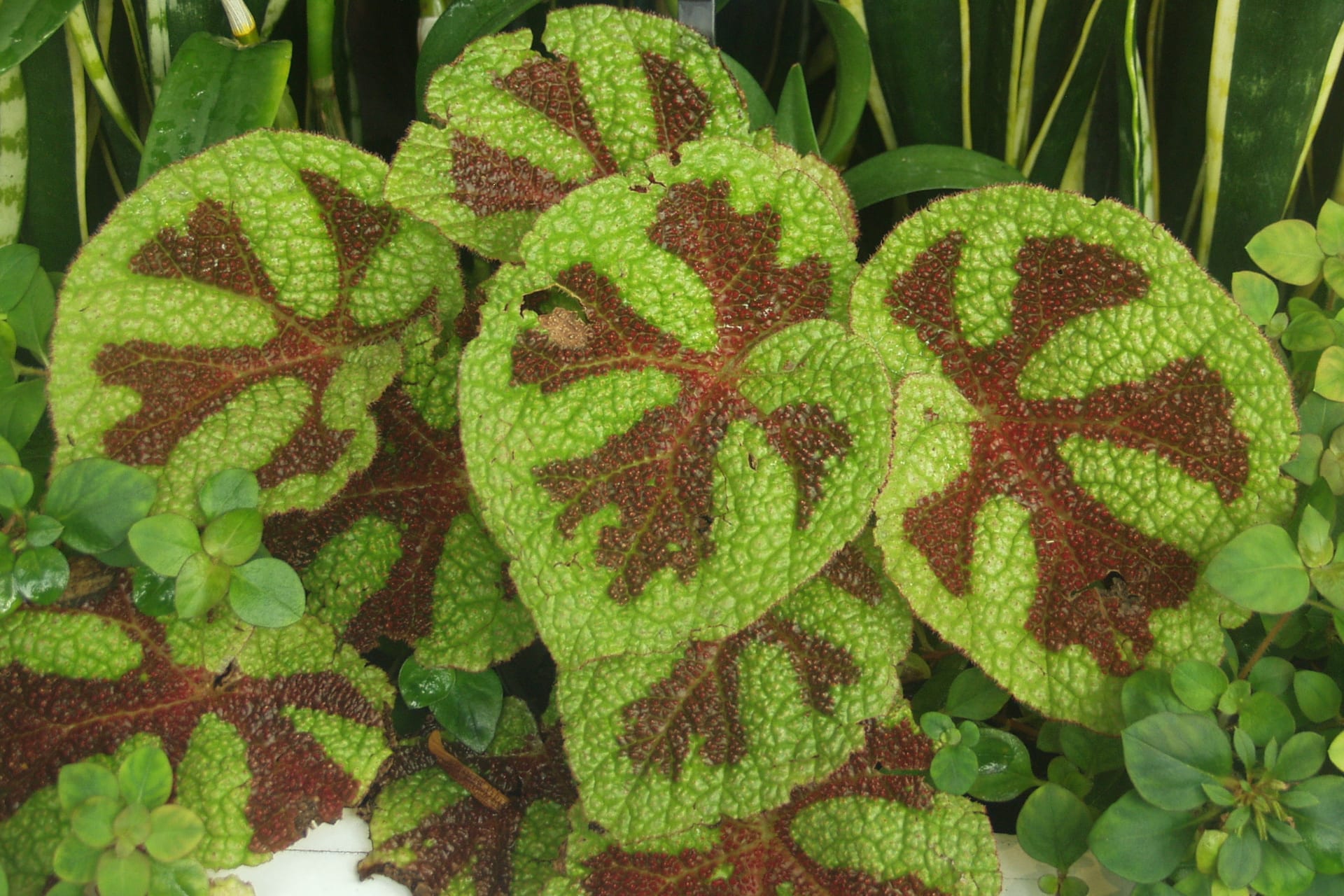
 © Cbaile19 / CC0
鐵十字秋海棠
Begonia masoniana is a rhizomatous begonia named for the dark brown, cross-shaped marking that sits at the center of each wrinkled green leaf — the pattern behind its English name, Iron Cross Begonia. The leaf surface is covered in fine texture and reddish hairs, so its look shifts subtly with the light. Native to southern China and northern Vietnam, it's a perennial that grows to about 30–50cm tall. Grown mainly for the sculptural beauty of its foliage rather than flowers, it suits anyone looking for a distinctive houseplant with real character. It's generally considered a variety for intermediate growers, which makes the process of raising it part of the appeal.
View 鐵十字秋海棠 encyclopedia →成交手續費 0%!2026年9月30日前註冊,前 2 株免佣金!
生產者 招募中!
在 GrowerDirect 上架,直接銷售給全國的客戶吧!
GrowerDirect承諾的 6 項透明性重點
在觀葉植物出品時,生產者明示下列資訊。確保品種、產地、所需光量和栽培難度的透明度。
- 品種明示
- 實物照片
- 色澤
- 產地明示
- 所需光量
- 難度明示
查看全部139個品種
已註冊的生產者(搶先看)
鐵十字秋海棠的基本資料
- 栽培難度
- 適合中級者
- 壽命
- 多年生草本
- 體型
- 株高30~50厘米
- 適宜溫度
- 21〜23℃
- 澆水
- 生育期施用稀薄液肥
- 光照與放置位置
- 明亮的間接光或透過蕾絲窗簾的光線。以朝東、南或西的窗邊為目標。
- 澆水
- 生育期間保持土壤均勻濕潤。生長減緩期待表面幾乎乾燥後再澆水。避免將水灑在葉片上。
- 溫度和越冬
- 喜歡21~23℃左右的溫度,無法承受13℃以下的環境。冬季應在溫暖的室內管理。
- 培養土和換盆
- 使用保水性介質,但避免過度潮濕。可將盆栽放在裝有水的礫石盤上以增加濕度。
- 繁殖方法
- 可通過莖插或葉插進行繁殖。
- 病蟲害和注意事項
- 保持葉片乾燥可有效預防白粉病。也要注意斑點細菌病和根莖腐爛、蚜蟲、粉介殼蟲和紅蜘蛛。秋海棠屬含有水溶性草酸鹽,狗和貓食入後會引起嘔吐和流涎。
關於鐵十字秋海棠
Begonia masoniana, the Iron Cross Begonia, is known for the dark cross-shaped mark on its wrinkled, hair-covered leaves. A rhizomatous perennial reaching 30–50cm, it's an intermediate-level houseplant grown for its distinctive foliage.
開始照料鐵十字秋海棠前需要了解的7件事
1Bright, Indirect Light
Bright, indirect light suits this begonia best — direct sun can scorch its textured leaves. Too much sun can also dull the contrast of the cross-shaped pattern, while a spot that's too dark leaves the coloring weak. Aim for somewhere between a sheer curtain and a shaded windowsill.
2Adjust Watering by Season
Keep the mix evenly moist while it is actively growing, and when growth slows, water once the surface is nearly dry. Wet leaves invite powdery mildew, so water at the base rather than over the foliage.
3Moisture-Retentive Soil
Use a moisture-retentive mix, but avoid waterlogging. If humidity is low, set the pot on a tray of wet gravel.
4Plant the Rhizome Shallow
The rhizome of Begonia masoniana spreads horizontally along the soil surface, so it does best in a shallow pot rather than being planted deep. Once the rhizome reaches the edge of the pot, it's time to move it into a slightly larger, similarly shallow container. Handle the rhizome gently when repotting, loosening the soil rather than pulling at it.
5Warmth and Humidity in Winter
This begonia is cold-sensitive, so keep it in a warm spot indoors through winter and away from cold windowsills or drafts. Rather than misting the leaves directly, raising humidity around the plant — with a humidifier or a pebble tray — helps it through dry spells. Growth slows in the cooler months, so ease off on watering frequency as well.
6Choosing a Healthy Plant
When choosing a plant, look for one with plenty of leaves showing a crisp, well-defined cross pattern — that's the look this variety is known for. Check that the leaves are free of dark blotches or water-soaked patches, and that the rhizome feels firm. Even a plant with fewer leaves will fill out over time as long as the rhizome itself is healthy.
7Propagating by Leaf or Division
Propagation is usually done by leaf cuttings or rhizome division. For leaf cuttings, nick the main veins of a leaf and lay it flat on soil — new plantlets emerge from the cuts. Division involves cutting a rhizome that has grown long enough into sections, each planted in its own pot, which tends to establish as a new plant more quickly.
鐵十字秋海棠的常見問題
- Q.Is this begonia suitable for beginners?
- A.Begonia masoniana is generally considered a variety for intermediate growers, since watering and placement need a bit of fine-tuning. That said, anyone with some houseplant experience should be able to manage it once they get the basics down.
- Q.Does it produce flowers?
- A.Under good growing conditions it can produce small whitish flowers, though this variety is grown mainly for its leaf pattern and texture rather than its blooms. Focusing your care on leaf health, rather than trying to encourage flowering, tends to keep it looking its best.
- Q.Does the cross-shaped pattern change as the plant grows?
- A.The intensity and contrast of the cross pattern can shift somewhat depending on the plant's condition and how much light it receives. Strong light or prolonged dryness can make the pattern look faded, so keeping placement and watering consistent helps preserve its markings.
- Q.Why are the leaves turning brown and dying back?
- A.This can happen from overwatering and root rot, from letting the soil dry out too much, or from leaf scorch caused by direct sunlight. Start by checking the soil moisture and light exposure, and remove any damaged leaves while you adjust conditions.
- Q.Can it be kept alongside other houseplants?
- A.Since it shares a preference for bright indirect light and moderate humidity with many houseplants, it can usually be grouped with others in a similar spot. It dislikes staying too wet, though, so it's safer to water it separately from plants that need more frequent watering.
鐵十字秋海棠栽培的實用工具
在圖鑑中詳細了解鐵十字秋海棠
查看鐵十字秋海棠的圖鑑條目 →
收錄栽培難度、尺寸、原產地、日照等基礎資料。