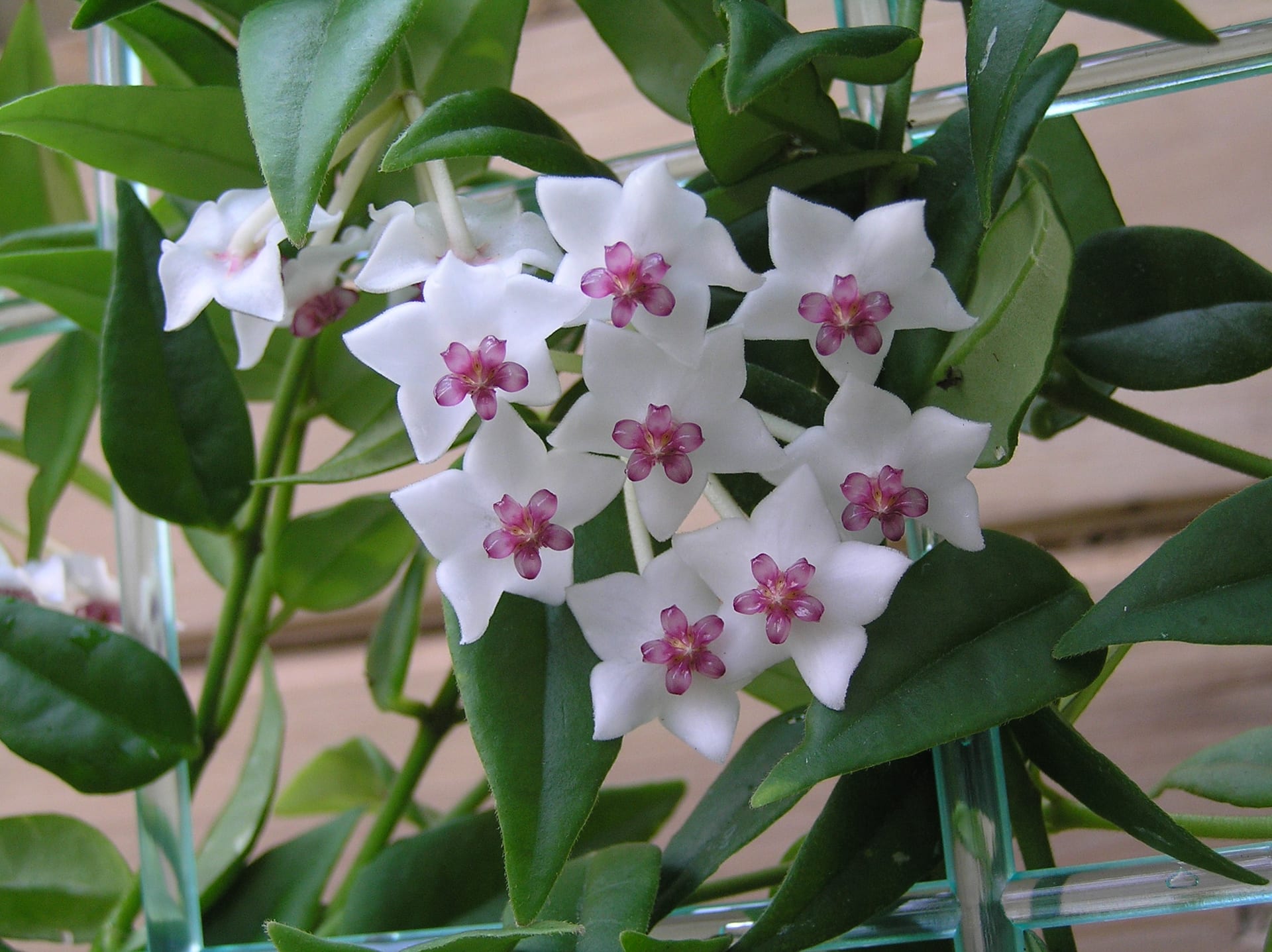
 © 阿橋 HQ / CC BY-SA 2.0
蠟蜜花
Hoya bella is a small, epiphytic hoya native to Myanmar, with slender trailing stems set with tiny lance-shaped leaves. Its charm lies in clusters of white, star-shaped flowers with a deep reddish-purple center and a sweet fragrance. Since the stems cascade gracefully to about 30-60cm, it suits a hanging basket or a shelf where the growth can spill downward. Considered an intermediate-level plant, it rewards attention to drainage and airflow, hallmarks of good epiphyte care, with years of blooms as a long-lived perennial. Variegated forms are sold under the name 'Seven Stars.'
View 蠟蜜花 encyclopedia →成交手續費 0%!2026年9月30日前註冊,前 2 株免佣金!
生產者 招募中!
在 GrowerDirect 上架,直接銷售給全國的客戶吧!
GrowerDirect承諾的 6 項透明性重點
在觀葉植物出品時,生產者明示下列資訊。確保品種、產地、所需光量和栽培難度的透明度。
- 品種明示
- 實物照片
- 色澤
- 產地明示
- 所需光量
- 難度明示
查看全部139個品種
已註冊的生產者(搶先看)
蠟蜜花的基本資料
- 栽培難度
- 適合中級者
- 壽命
- 多年生著生植物
- 體型
- 枝條下垂長度約30~60公分
- 適宜溫度
- 24〜29℃
- 適宜濕度
- 50〜60%
- 澆水
- 生長期施以稀釋的液體肥料
- 光線與擺放位置
- 喜好明亮的間接光線,開花需要充足的光照。早晨和傍晚的弱直射日光能促進開花,但中午的直射日光會導致葉片灼傷。
- 澆水
- 由於葉片略帶肉質能儲存水分,應在培養土乾透後再澆水。過度潮濕或排水不良會導致根腐爛和葉片黃化。
- 溫度與越冬
- 喜好24~29℃左右的溫暖環境和50~60%的濕度。冷風會傷害葉片,因此冬季應將其置於室內遠離窗戶的溫暖位置。
- 培養土與換盆
- 使用排水良好的壤質培養土,採用吊盆方式將枝條向下垂落栽培。
- 繁殖方法
- 春季至夏季採取莖段進行扦插繁殖。
- 病蟲害與注意事項
- 需注意粉介殼蟲、介殼蟲和紅蜘蛛。花蕾出現後不應移動或轉動花盆。花謝後的花梗在翌年仍會開花,故不應修剪。據北卡羅來納州立大學資料,對犬和貓無毒。
關於蠟蜜花
A growing guide to Hoya bella, an epiphytic plant from Myanmar with trailing stems and fragrant star-shaped flowers. Covers light, watering, and soil tips for this intermediate-level houseplant.
開始照料蠟蜜花前需要了解的7件事
1Light and Placement
As an epiphyte, Hoya bella prefers bright, filtered light and good air circulation. Direct sun through unshaded glass can scorch the leaves, so a spot with bright, indirect light suits it best.
2Watering Balance
Its succulent-like leaves store moisture, so water thoroughly only after the soil surface has dried out. Keeping the soil constantly wet can lead to root rot, so err on the side of underwatering.
3Well-Draining Soil
Being an epiphyte, Hoya bella does best in a fast-draining mix blended with orchid bark or perlite. A standard potting soil alone tends to stay too wet for its roots.
4Pot and Training
Since the stems trail down to roughly 30-60cm, Hoya bella looks best in a hanging basket or on a tall shelf where the growth can cascade. Repot into a slightly larger pot once roots fill the container.
5Don't Move While Budding
Like many hoyas, Hoya bella is said to drop its buds if the pot is turned or moved while buds are forming. Once flower buds appear, it's best to leave the plant undisturbed in the same spot until it blooms.
6Leave the Old Flower Stalk
After the flowers fade, avoid cutting off the old flower stalk (peduncle); new blooms often emerge from the same spot again in a later season, so it's best left in place.
7Choosing a Healthy Plant
When choosing a plant, look for glossy leaves, sturdy stems, and closely spaced nodes, which tend to grow more robustly. You can choose between the plain green form or the variegated 'Seven Stars.'
蠟蜜花的常見問題
- Q.How large does Hoya bella grow?
- A.The trailing stems typically extend to about 30-60cm. Being a compact hoya, it fits well on a tabletop or in a hanging basket even in limited space.
- Q.Can beginners grow Hoya bella?
- A.It's generally considered an intermediate-level plant, but it's manageable once you get the hang of careful watering and using a fast-draining mix. Avoiding overwatering is the key point.
- Q.What does the flower smell like?
- A.The white, star-shaped flowers give off a sweet fragrance. How strong it is can vary by plant and environment, and some report it seems more noticeable at certain times of day.
- Q.What is the plant called 'Seven Stars'?
- A.The variegated form of Hoya bella is sold under the name 'Seven Stars.' Basic care is the same as the plain green form, though slightly brighter light helps keep the variegation vivid.
- Q.What does it mean that this plant is an epiphyte?
- A.In the wild, it grows by attaching its roots to tree trunks or rocks rather than rooting in ordinary soil. At home, it's commonly grown in a pot with a fast-draining epiphyte mix.
蠟蜜花栽培的實用工具
在圖鑑中詳細了解蠟蜜花
查看蠟蜜花的圖鑑條目 →
收錄栽培難度、尺寸、原產地、日照等基礎資料。