Agave titanota Variety Guide | Characteristics and Selection Tips for FO-076, Hakugyei, and Caesar
A comprehensive comparison of popular Agave titanota varieties. Explains the characteristics of saw teeth, growth rates, market values, and selection tips for FO-076, Hakugyei, Caesar, Hime Ganryū, Hades, Red Catweazle, and more.
Key Takeaways
A comprehensive comparison of popular Agave titanota varieties. Explains the characteristics of saw teeth, growth rates, market values, and selection tips for FO-076, Hakugyei, Caesar, Hime Ganryū, Hades, Red Catweazle, and more.
Related Species
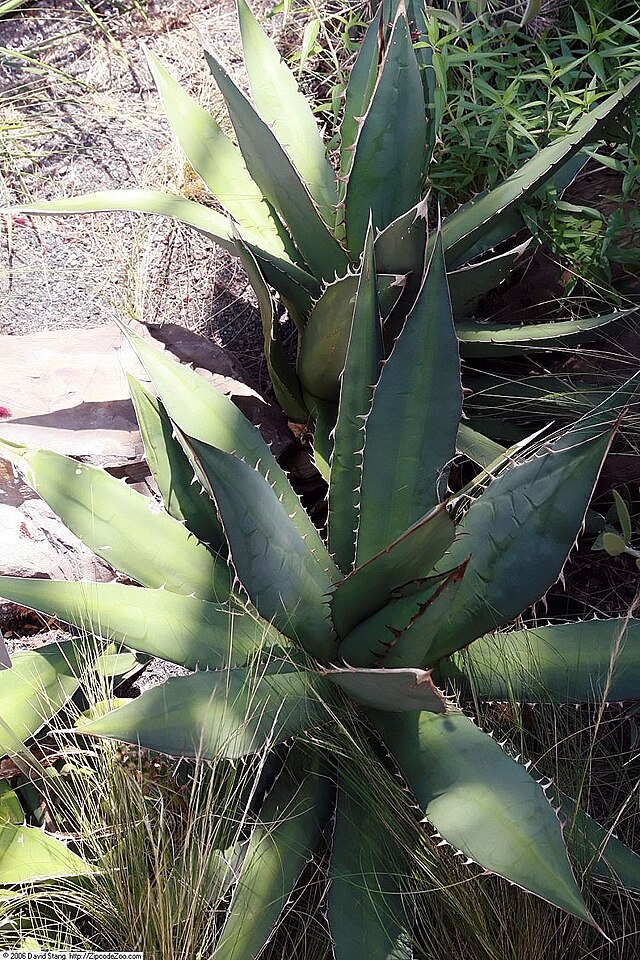
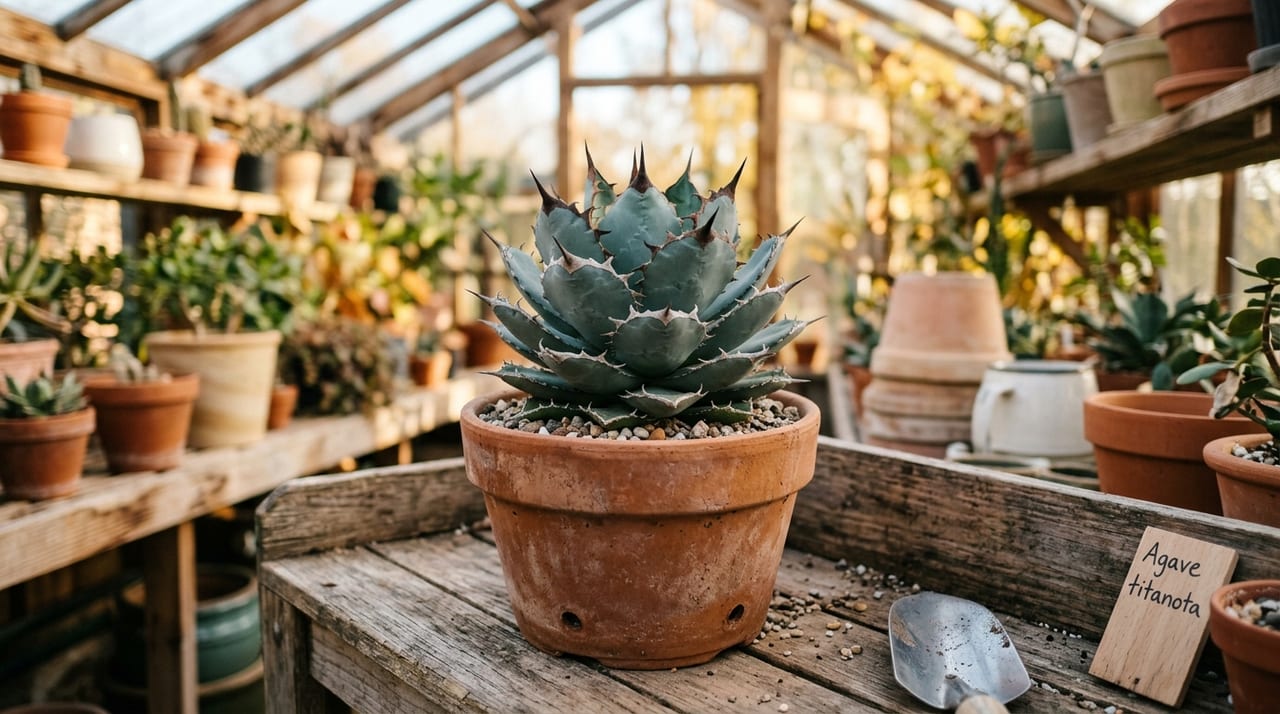
Agave titanota (Agave titanota) is an agave native to the limestone terrain of Oaxaca, Mexico, and is celebrated as the "King of Agave" for its powerful saw teeth and tightly formed rosette shape. Even in 2026, collector enthusiasm continues to deepen rather than fade, and numerous varieties and selected individuals are distributed both domestically and internationally. This article provides a comprehensive guide covering the basic knowledge of titanota, characteristics and market values of major varieties, and cultivation methods to bring out its true potential.
Basic Characteristics and Appeal of Titanota
The greatest appeal of titanota lies in the rich individual variation it displays. Even in its native habitat, leaf shape and the strength of saw teeth vary significantly depending on the collection site, altitude, and soil conditions—each individual "titanota" has a distinct character. This very diversity is what captivates collectors.
Basic Profile
- Origin: Mexico (limestone terrain near Oaxaca)
- Growth speed: Slow (only a few new leaves per year)
- Final size: 30–80 cm diameter (varies significantly by variety and management)
- Cold hardiness: −5 to −10 °C approximately (varies by variety)
- Sunlight: Prefers strong light. Insufficient sunlight causes leaf elongation and dulls the appearance of saw teeth.
Because titanota grows slowly, larger specimens become increasingly rare and valuable. Well-developed specimens cultivated over decades are sometimes treated as "living art," combining horticultural appeal with collector's item status. If you are beginning to cultivate titanota, be sure to also check out the Agave Beginner's Cultivation Guide.
Explanation of Main Varieties and Selected Individuals
FO-076
FO (Field Office) numbers are identification codes for individual populations collected and documented in the wild. FO-076 is one of the most highly regarded titanota lines among collectors, characterized by short, dome-shaped leaves and thick, powerful saw teeth. It matures compactly, making it well-suited to container growing. Domestic seed-grown stock has steadily increased in distribution, and as of 2026, acquisition difficulty has slightly decreased.
- Market value: 5,000–20,000 yen for young plants; premium large specimens often exceed 50,000 yen
Hakugyei (White Whale)
This variety is striking for its pale, bluish-white leaf color and white-to-cream saw teeth. The entire rosette glows with a bright, luminous appearance, radiating the presence of a "white giant." Growth among titanota is somewhat slow; consequently, large specimen distribution is limited. Light exposure significantly affects the whiteness of leaf color, so it is important to manage the plant in the strongest possible direct sunlight.
- Market value: Young plants typically 8,000–25,000 yen
Caesar
A selected variety distinguished by thick, robust saw teeth and long spines, with an appearance that embodies "strength." It enjoys steady support from collectors who favor a wild aesthetic. Domestic seed propagation has progressed well, ensuring a relatively stable supply, making it a frequently chosen entry-level titanota variety.
- Market value: Young plants typically 5,000–15,000 yen
Hime Ganryū
A compact variety of titanota that remains noticeably smaller than standard forms. Despite its compactness, the saw teeth are well-defined and leaves are tightly packed. It is ideal for collectors with limited space, such as balconies or windowsills, and is also a manageable variety for those growing titanota for the first time.
- Market value: Young plants typically 3,000–10,000 yen
Hades
A notable variety with increasing distribution as of 2026, popular for its deep blue-green leaf color and well-formed rosette shape. The glossy leaf surface shines beautifully when lit, offering high ornamental value; moreover, growth speed is slightly faster than other titanota, making it easier to cultivate. Price stabilization is progressing as distribution increases, though high-quality individuals still command premium prices.
- Market value: Young plants typically 10,000–30,000 yen (prices tend to stabilize as distribution increases)
Red Catweazle
A highly individual and rare variety whose saw teeth display red-to-orange tones. The vibrant contrast with green leaves distinguishes it clearly from other titanota and commands strong visual presence. The unique name also generates attention and social media appeal. Since this variety is primarily distributed as imported stock, attention to Agave root management after purchase is important.
- Market value: Young plants tend to command premium prices of 15,000–40,000 yen
Key Points for Growing Titanota
While titanota is often introduced as an "easy-to-grow succulent," achieving its true form requires attention to several important factors. With proper management of light, water, and soil—three critical elements—you can fully enjoy a tightly formed rosette with expressive saw teeth.
Sunlight and Placement
Strong light is essential, so place the plant in direct sunlight as much as possible. Insufficient light causes leaf elongation and loss of saw teeth expression and rosette form. An outdoor location with good sun exposure is ideal; if growing indoors, consider using a plant growth light. From spring through autumn, a south-facing sheltered location or rooftop where at least six hours of direct daily sunlight can be secured is optimal.
Watering and Soil
Use highly draining soil (akadama, pumice, or Hyuga soil) and ensure water drains completely to the pot base. Water 2–3 times per month during the growing season (spring through autumn); in winter, either withhold water or keep watering minimal. Excess moisture causes root rot, so the key is striking a balance: "dry thoroughly, then water generously." Unglazed or terracotta pots have excellent air permeability and pair well with titanota, so they are recommended.
Tips for Promoting Growth
- Secure sufficient direct sunlight during the spring-to-autumn growing season
- Increase watering frequency during the growing season to encourage active root activity
- Apply diluted liquid fertilizer (containing nitrogen) about once per month
- Select a pot size appropriate to the plant size to prevent root binding
- During the rainy season, use rain protection to avoid excess moisture and ensure good air circulation
Points for Selecting Titanota Varieties
Having clear selection criteria when expanding your collection helps minimize indecision.
- If prioritizing saw tooth shape: Varieties like FO-076 and Caesar, with short, thick teeth, receive consistent favorable evaluation
- If emphasizing leaf color beauty: Varieties with distinctive color, such as Hakugyei or Hades, stand out for ornamental value
- If space is limited: Starting with compact varieties like Hime Ganryū makes management easier and allows enjoyment of multiple varieties
- If seeking rarity or investment value: Rare varieties like Red Catweazle have limited distribution; securing premium specimens is difficult, so value tends to be well-maintained
For detailed information on variety-specific pricing and market trends, see the Agave Market Price and Valuation Guide.
GrowerDirect's Safety and Trust System
While Agave titanota benefits from robust distribution, mislabeled varieties and poorly managed specimens do occasionally reach the market. Especially when purchasing expensive selected individuals or rare varieties, sourcing from a trustworthy grower is paramount.
On GrowerDirect, established agave specialists and enthusiasts with domestic track records list items directly. You can review a grower's profile and transaction history, and can ask the grower directly about variety details, cultivation conditions, and management methods. The ability to clarify any questions before purchase helps prevent troubles such as "the variety I received was not what I expected."
As of 2026, domestic seed-grown stock distribution is steadily increasing, and opportunities to acquire premium specimens at more accessible prices are expanding. To reliably obtain a specimen with strong collection value, please take advantage of GrowerDirect.