Dutch Aquascaping Plant Selection Guide | Composing Orderly Beauty
A guide to selecting aquatic plants suitable for Dutch-style aquascaping. Learn about color placement, terrace structures, and trimming techniques.
Key Takeaways
A guide to selecting aquatic plants suitable for Dutch-style aquascaping. Learn about color placement, terrace structures, and trimming techniques.
Related Species
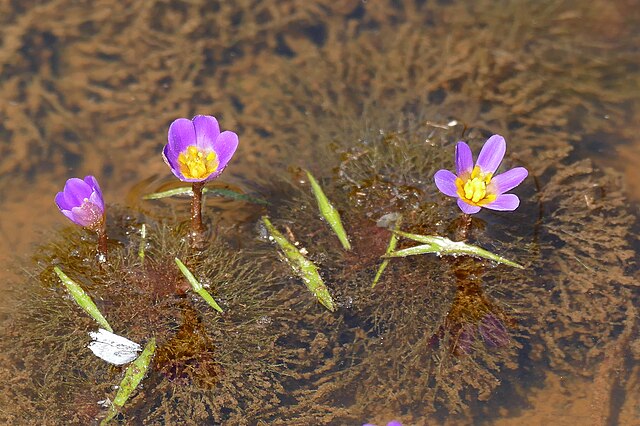
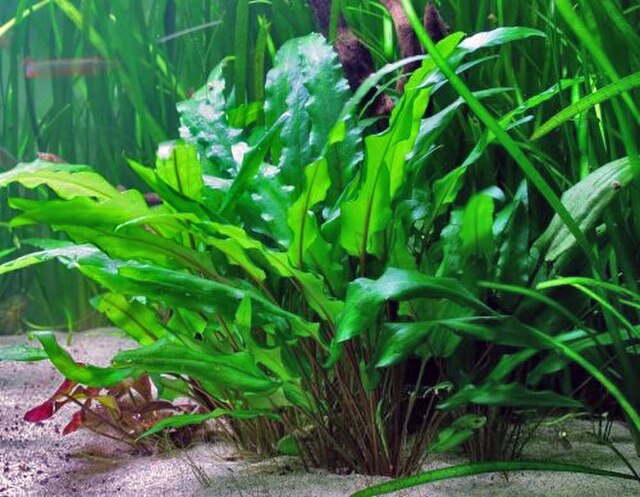
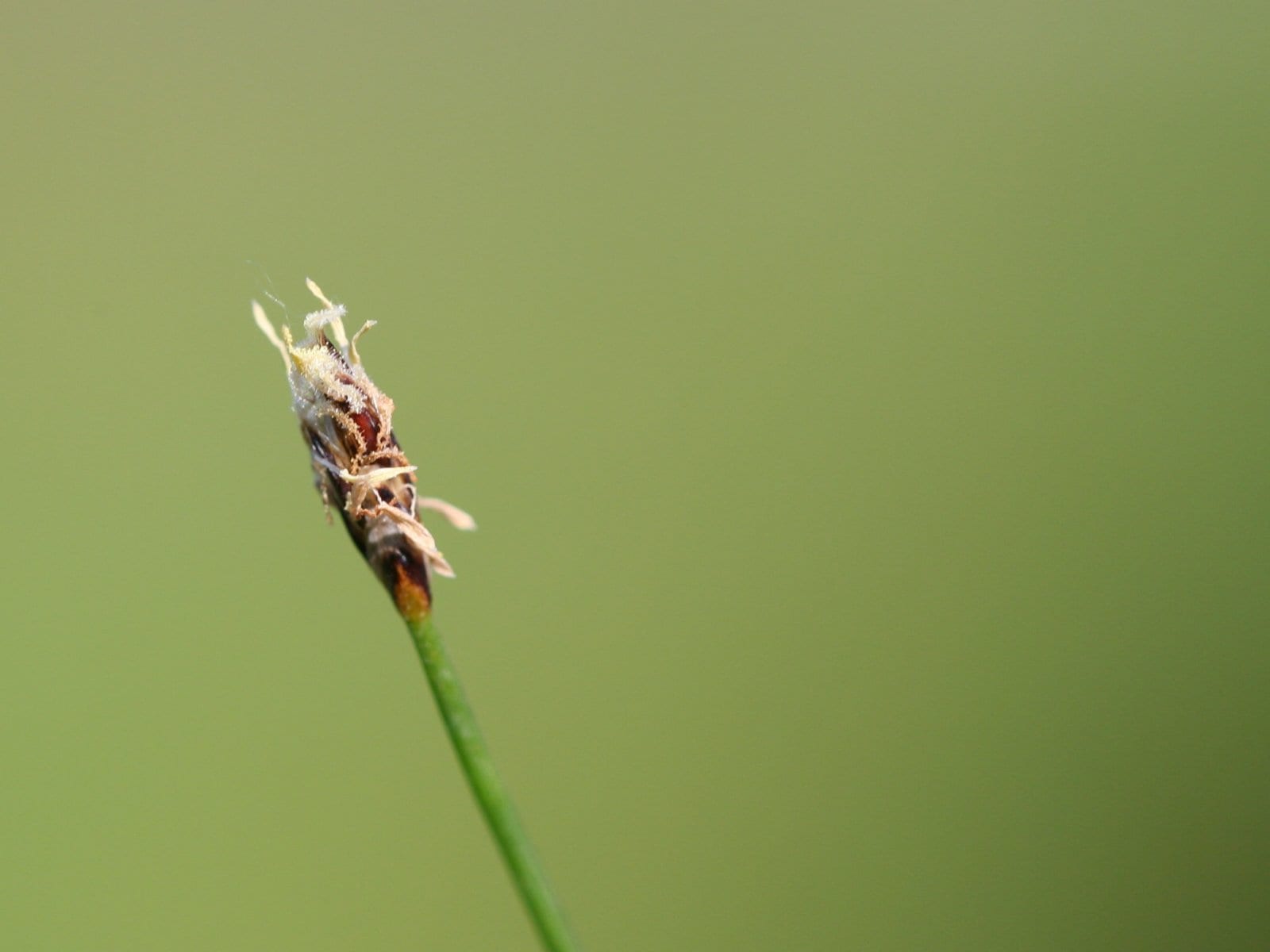
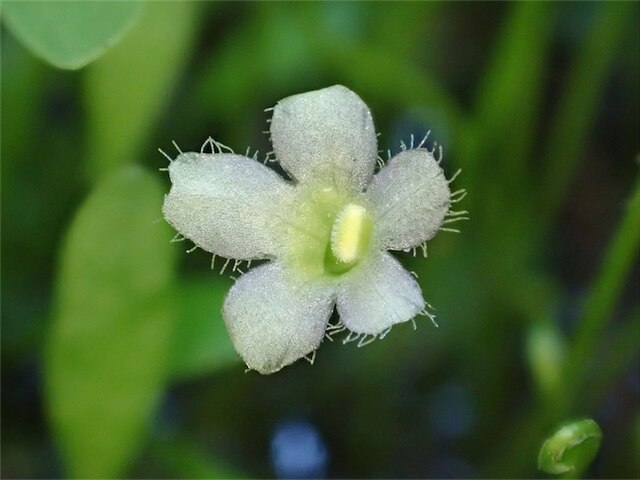
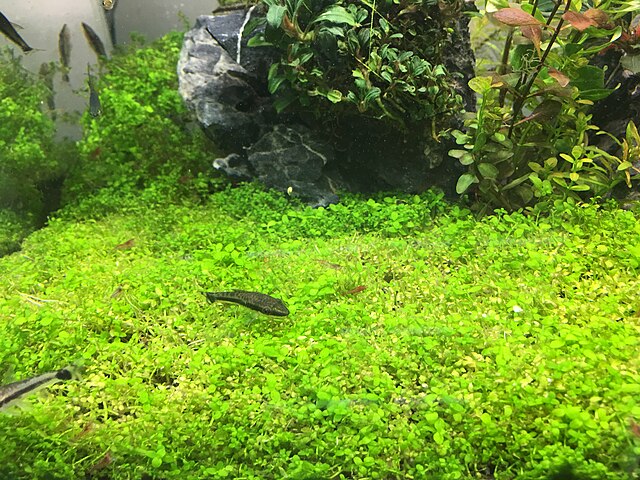
Dutch aquascaping is a traditional aquatic plant layout technique that originated in the Netherlands. Brightly colored plants are arranged in neat rows, creating an underwater garden landscape that has captivated aquarists worldwide. Unlike nature aquariums that capture natural scenes, Dutch-style aquascaping pursues artistic form created by the human hand. This is the essence of the Dutch approach.
This article explains Dutch aquascaping from its fundamental concepts through to practical plant selection, placement tips, and daily maintenance methods—in a way that's easy to understand even for beginners.
The Three Core Principles Behind Dutch Style
① Creating Depth with the Leiden Street
The concept of "Leiden Street" is essential when discussing Dutch aquascaping. This refers to a planted area that extends diagonally from the back of the tank toward the front, serving as a visual pathway that draws the viewer's eye toward the rear of the tank.
Whether this line is clearly established has a major impact on the overall completion of a Dutch layout. Pay careful attention to planting density and color while positioning plants in a way that is linear yet not overly rigid, and orderly without appearing chaotic.
② Creating Visual Contrast Through Color
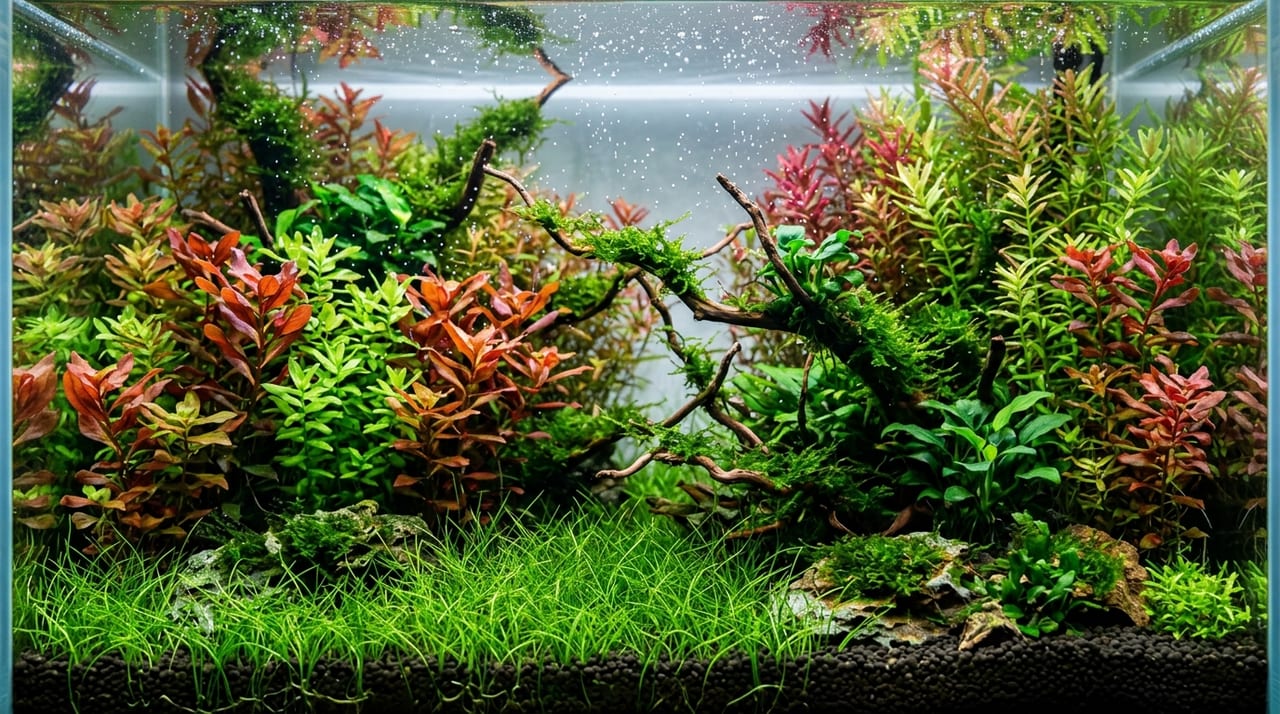
The greatest appeal of Dutch aquascaping is the contrast created by the colors of aquatic plants. By placing plants of different color families—such as red, green, and yellow-green—next to each other, each color is enhanced, creating striking visual impact.
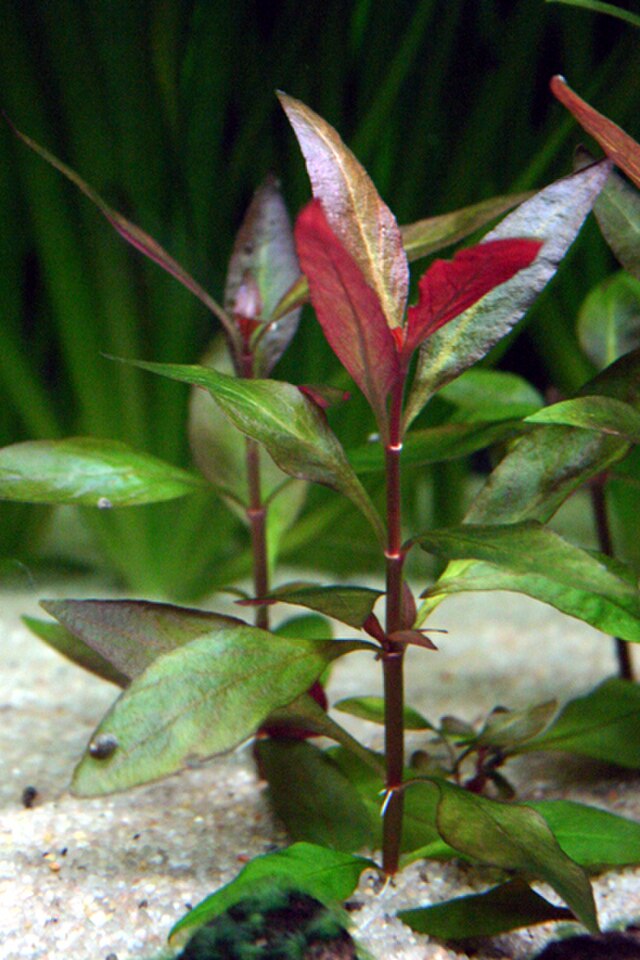
- Red species: Rotala macandra, Ludwigia grandulosa, Alternanthera reineckii
- Green species: Limnophila sessiliflora, Hygrophila difformis, Cabomba
- Yellow-green species: Rotala sp. green, Myriophyllum matogrossense
The basic approach is to group same-color plants together, then create contrast between these color groups. Mixing multiple colors in a single area creates a scattered impression, so maintaining color cohesion is key.
③ Creating Dimensionality Through Terrace Structure
A terrace structure that progressively increases plant height—foreground, midground, and background—gives the entire tank depth and three-dimensionality. By using low-growing ground cover plants in the foreground and tall stem plants in the background, you create beautiful layering like a stepped field.
Position-Based Plant Selection Guide
Choosing plants becomes easier when you consider both where you'll place them and what colors you want. Use the guide below to select plants that suit your tank size and lighting environment.
Foreground (Front of tank · Low plants)
Ground cover species that spread across the substrate are ideal for the foreground.
- Glossostigma: Requires strong light but is popular for creating a green carpet effect
- Hair grass (Eleocharis): Creates a delicate, natural appearance
- Cuba pearl grass: Creates dense foreground coverage, but requires CO₂ injection and high light intensity
Midground (Center of tank · Medium height)
The midground is a crucial position that anchors the overall composition. Varying leaf shape and color increases the sense of depth.
- Cryptocoryne species: Hardy and easy to care for, with deep green coloring that stabilizes the midground
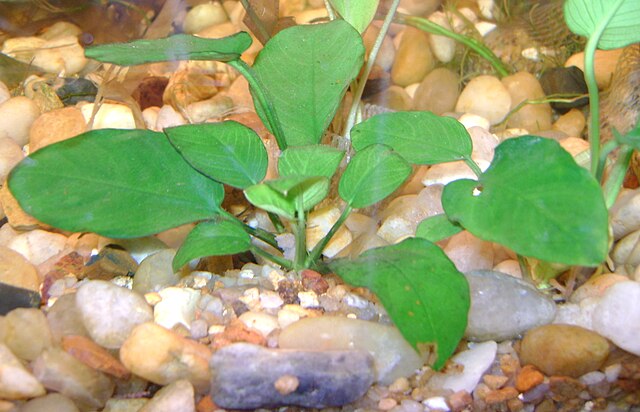
- Anubias nana: Can be attached to driftwood or stone, and works well as a focal point planting
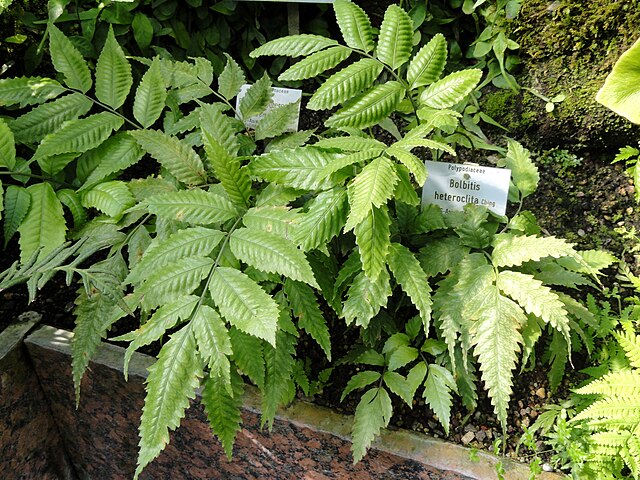
- Bolbitis heudelotii: Its unique fern-like leaf shape provides accent
Background (Rear of tank · Tall plants)
The background is where you can maximize color contrast. The standard approach is to alternate red and green species.
- Rotala macandra: A representative species that develops deep red coloring under strong light and CO₂ injection
- Ludwigia grandulosa: The undersides of leaves display vibrant red-purple, creating striking presence
- Limnophila sessiliflora: Bright green that sets off red-species plants
- Cabomba caroliniana: Feathery leaves sway gently with water flow, creating a soft impression
Management Tips for Water Quality, Lighting, and CO₂
To maintain Dutch aquascaping beautifully, establishing proper growth conditions for your plants is essential.
Lighting
Ensure sufficient light intensity so plants can photosynthesize effectively. Select LED lighting appropriate for your tank size and aim for 8 to 10 hours of light per day. Too little light reduces plant coloration, while excessive light promotes algae growth.
CO₂ Injection
Many aquatic plants, especially red stem plants, struggle to display their full beauty without CO₂ supplementation. Introducing a fermentation or pressure-fed CO₂ system and injecting at a rate of 1 to 2 bubbles per second significantly improves plant growth and coloration.
Water Quality
A pH of 6.5–7.0 and temperature of 24–26°C (75–79°F) is ideal for most aquatic plants. Regular water changes (once per week, replacing approximately one-third of the water) prevent nitrate accumulation and keep plants healthy.
Trimming Techniques for Maintaining Beauty
Even after Dutch aquascaping reaches its ideal state, continuous trimming is necessary. In fact, regular trimming to refine the layout's form is one of the pleasures of this style.
Shaping Plant Groups
Each group of plants should be trimmed into a rounded, dome-like shape. Creating neat curves establishes clear boundaries between groups and gives the overall layout an orderly appearance.
Trimming Timing
Trimming frequency depends on plant species, but generally every 2 to 4 weeks is recommended. Stem plants like Rotala and Limnophila grow quickly, so frequent trimming keeps the layout beautiful longer.
Reusing Trimmed Plants
The stem tips you cut during trimming can be replanted directly into the substrate to take root again. This allows you to increase your plant stock without additional expense—a very practical approach.
GrowerDirect's Trust and Safety Framework
Finding a reliable source for high-quality aquatic plants is a critical consideration when taking on Dutch aquascaping. Plants from home improvement stores and mass retailers sometimes include specimens in poor condition, which can affect the final result of your layout.
GrowerDirect lets you purchase aquatic plants directly from growers who specialize in cultivating them, so you can obtain high-quality, healthy specimens. Because it's a transaction where you know the grower's face, you can also ask freely about plant care methods and growing environments—giving beginners confidence to get started.
When purchasing multiple plants together, dealing directly with growers also makes it possible to consult about the specific species and quantities you need for your layout. As the first step in building a beautiful Dutch aquascape, be sure to use GrowerDirect.