Why Aquatic Plants Turn White or Yellow—Identifying Iron Deficiency and Treatment with Liquid Fertilizer
Most cases of aquatic plant shoots turning white or yellow are caused by iron deficiency. This guide explains how to identify iron deficiency, the difference between ferrous and ferric iron, proper dosing and frequency of liquid fertilizers, and the risks of overdosing.
Key Takeaways
Most cases of aquatic plant shoots turning white or yellow are caused by iron deficiency. This guide explains how to identify iron deficiency, the difference between ferrous and ferric iron, proper dosing and frequency of liquid fertilizers, and the risks of overdosing.
Related Species
How Iron Deficiency Affects Aquatic Plants
During aquatic plant cultivation, new shoots sometimes turn white or leaves yellow while the veins remain green. This symptom, known as "chlorosis," is a classic sign of iron deficiency in aquatic plants.
Iron (Fe) is an essential mineral for chlorophyll (photosynthetic pigment) synthesis and plays a central role in the electron transport chain of photosynthesis. When deficient, the effect first appears during new leaf development. This is because iron is a "poorly mobile nutrient." Iron fixed in older leaves does not readily translocate to new growth, so symptoms appear most prominently in fast-growing new shoots.
Identifying the Cause by Leaf Discoloration Patterns
Leaf discoloration in aquatic plants occurs in several patterns. Observing the pattern is crucial to determine whether iron deficiency is the culprit.
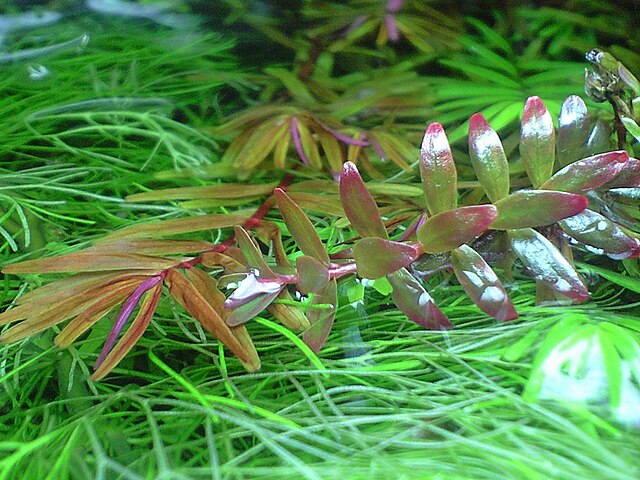
Interveinal Chlorosis Veins remain green while only the tissue between veins turns yellow or white. This is the classic iron deficiency pattern. Frequently seen in fast-growing stem plants like Rotala and Pearl grass.
Complete Whitening/Pale Yellow of New Shoots Newly emerging leaves become almost entirely white or pale yellow. Indicates severe iron deficiency or combined manganese deficiency. More common under intense lighting and continuous CO₂ injection where consumption increases.
Uniform Yellowing of Entire Leaf When the entire leaf, including veins, yellows uniformly, suspect nitrogen or magnesium deficiency before iron. Nitrogen deficiency begins with older leaves turning yellow—a key difference from iron deficiency.
By checking where discoloration starts (new or old growth) and the state of leaf veins, you can narrow down which nutrient is deficient.
Tank Conditions That Lead to Iron Deficiency
Tap water contains trace amounts of iron, but several factors in aquariums render iron unavailable.
High pH At pH 7.5 or above, iron ions oxidize and precipitate easily, becoming inert before plant roots or leaves can absorb them. Special care is needed in non-soil (aquascaped) tanks or those with high carbonate hardness.
Increased Consumption from Intense Lighting and CO₂ Injection The stronger the light and the more abundant the CO₂ supply, the faster plants grow and the more iron they consume. With lighting rated at 150W or equivalent on a 60cm standard tank, added iron often cannot keep pace.
Substrate Iron Depletion Substrates contain iron initially but become depleted after 1–2 years of use. In tanks without bottom fertilizer tablets, iron supply from roots drops to nearly zero.
Frequent Water Changes Large water changes twice or more per week cause fertilizer loss despite liquid supplementation. Adjusting fertilizer frequency and water-change timing is essential.
Supplementing with Liquid Fertilizer: Selection and Application
The most rapid way to restore iron is liquid micronutrient fertilizer. Knowing the features of representative products helps.
Chelated Iron (EDTA-Fe, DTPA-Fe) Most commercial liquid fertilizers use chelated iron—iron ions encased in organic molecules for stability. Absorption rates are high in neutral to slightly acidic tanks. EDTA-Fe is effective at pH 6.5 or below (mostly inert near pH 7); DTPA-Fe remains stable close to pH 7. EDDHA-based products are needed above pH 7.5.
Using Representative Products
- Tropica Specialised Fertiliser: Focused on micronutrients (iron, manganese, zinc, copper, etc.). Add once weekly, strictly following labeled dosage.
- ADA Step 2: Micronutrient supplement centered on iron. Designed for ADA tank systems.
- Seachem Flourish Iron: High-concentration iron-only liquid fertilizer. Easy to use as a booster alongside existing all-in-one fertilizers.
The basic rule is "small amounts added regularly." Adding the full dose at once risks algae blooms. Simultaneous phosphate addition causes iron precipitation, so staggering application timing is wise.
Combining with Bottom Substrate Fertilization
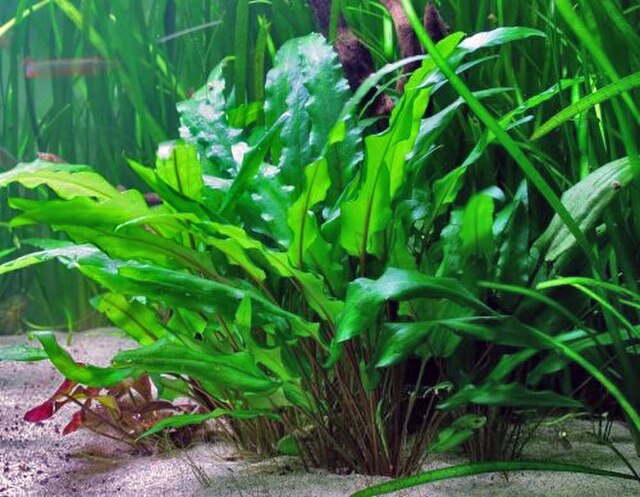
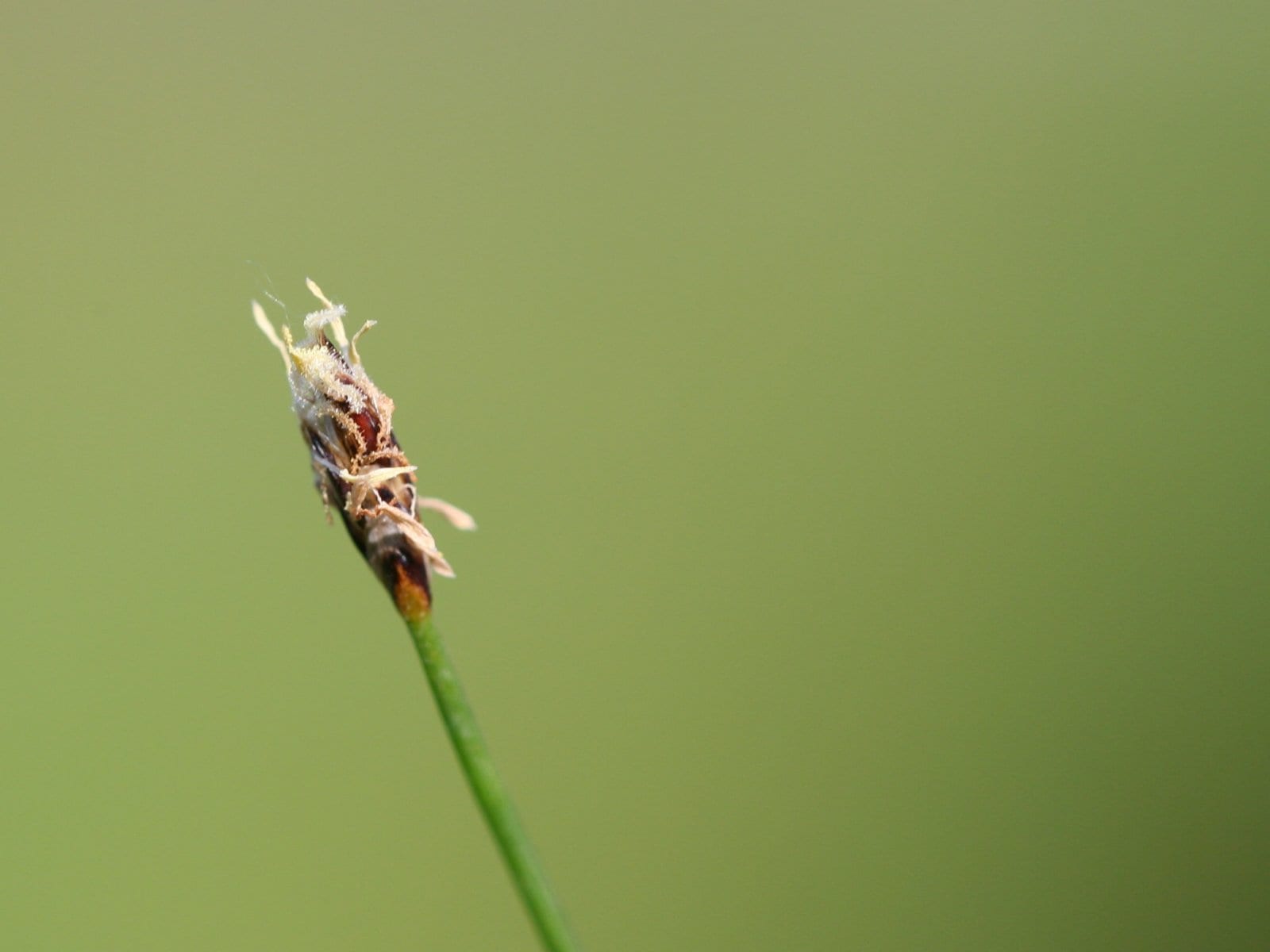
Relying solely on liquid fertilizer for iron risks diffusion into the water column where algae utilize it. For root-feeding plants (Hair grass, Cryptocoryne, Amazon sword species, etc.), substrate fertilization is effective.
Burying commercial fertilizer tablets (Tropica Plantcare Tabs, Seachem Flourish Tabs, etc.) near plant roots supplies iron directly to roots without cloudifying the water. Plan to replace tablets roughly every 3–4 months. With thin substrates (3 cm or less), effectiveness drops, so in stem-plant-focused tanks, combining with liquid fertilizer is practical.
Confirming Improvement and Precautions
After adding liquid fertilizer, visible improvement typically appears 3–7 days later. If new shoots show greener color or white leaves stop bleaching, iron replenishment is working. However, leaves already whitened rarely recover. Judge progress by newly unfolding leaves.
If no improvement appears, review the following:
- Check pH: If pH is 7.8 or above, iron likely precipitated. Consider substrate replacement or CO₂ injection to lower pH.
- Balance of Light and CO₂ vs. Consumption: Added iron may not match consumption rates. Try increasing dose by 1.5× and observe.
- Interaction with Other Nutrients: Extreme potassium or nitrogen deficiency can create "antagonism" where plants cannot utilize added iron. Combining all-in-one and micronutrient fertilizers is standard practice.
Iron management is a delicate aspect of aquatic plant cultivation, but mastering symptom reading lets you respond swiftly when whitening or yellowing appears. Daily observation and record-keeping are the shortest path to a thriving planted tank.