Aquatic Plant Nutrient Deficiency Guide | Identifying the Cause from Leaf Symptoms and Proper Treatment Methods
A detailed guide to identifying the causes of aquatic plant nutrient deficiency (nitrogen, phosphorus, iron, potassium, etc.) based on leaf symptoms such as yellowing, hole formation, and wilting, and explaining treatment methods using liquid fertilizers and substrate fertilizers organized by symptom.
Key Takeaways
A detailed guide to identifying the causes of aquatic plant nutrient deficiency (nitrogen, phosphorus, iron, potassium, etc.) based on leaf symptoms such as yellowing, hole formation, and wilting, and explaining treatment methods using liquid fertilizers and substrate fertilizers organized by symptom.
Related Species
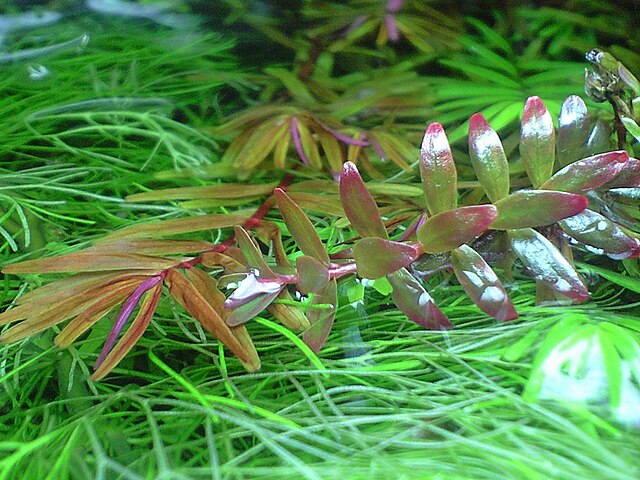
Signs from Aquatic Plants | Reading Nutrient Deficiency Symptoms Correctly
Identifying the cause of declining aquatic plants is one of the most challenging tasks in aquarium management. Yellowing leaves, holes appearing, stopped growth—these symptoms are all an SOS from the plants saying "we lack nutrients," but the appropriate treatment depends entirely on which nutrient is deficient.
Nutrients required by aquatic plants can be divided into two main groups: macronutrients (nitrogen, phosphorus, potassium) and micronutrients (iron, magnesium, calcium, etc.). Since each deficiency produces distinct patterns in the leaves, careful observation of symptoms is the first step toward an accurate diagnosis. CO2 deficiency can also produce symptoms similar to nutrient deficiencies, so consulting the aquatic plant CO2 injection guide alongside these observations will improve diagnostic accuracy.
Reading Nutrient Deficiency from Leaf Yellowing and Whitening
Yellowing leaves in aquatic plants (chlorosis) is the most common sign of nutrient deficiency, but different patterns of yellowing point to different causes.
| Yellowing/Whitening Pattern | Suspected Deficiency | Characteristics and Treatment |
|---|---|---|
| Entire leaf yellows uniformly | Nitrogen (N) Deficiency | Since nitrogen is a component of amino acids, proteins, and chlorophyll, its absence reduces photosynthetic capacity and causes pale leaf color. Even in high-tech aquariums with CO2 injection, low-fish tanks often experience nitrogen deficiency; improvement is visible within days by supplementing nitrogen with liquid fertilizer. |
| Yellowing begins from old leaves (lower leaves) | Phosphorus (P) Deficiency or Nitrogen Deficiency | Since phosphorus is involved in energy metabolism (ATP production), its absence slows overall growth and shifts leaf color from dark green to yellow-green. Phosphorus deficiency often occurs in aquariums where phosphorus is intentionally restricted for algae control. |
| Whitening/yellowing begins from new leaves (near the apical meristem) | Iron (Fe) Deficiency | Iron is essential for chlorophyll synthesis, but oxidizes quickly and precipitates easily in water; regular supplementation with divalent iron (Fe²⁺) liquid fertilizer is effective. Symptoms are particularly pronounced in species with high iron requirements, such as rotala and glossostigma. |
For management focused on coloration, rotala cultivation and coloration techniques is also helpful as a reference.
Symptoms of Holes in Leaves and Decaying Margins
Irregular holes appearing in leaves or the edges crumbling away in a ragged pattern are characteristic signs of potassium (K) deficiency. Potassium is involved in osmotic regulation of cells and enzyme activation; when deficient, cell walls become fragile and susceptible to physical damage.
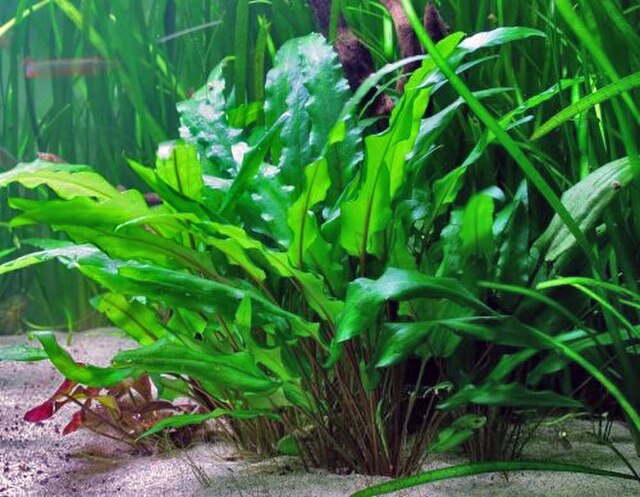
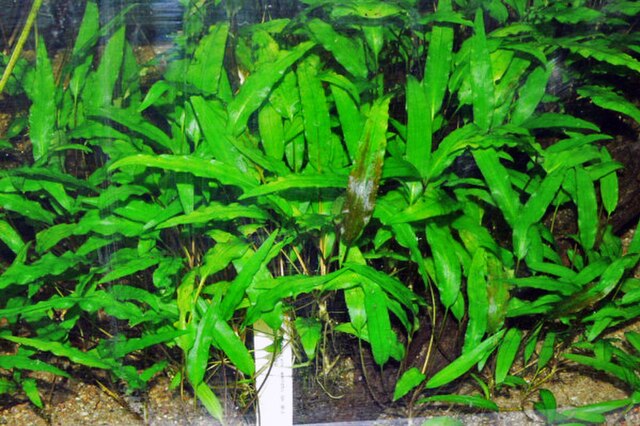
In particular, species prone to "crypts melting" such as Cryptocoryne wendtii show symptoms with temperature or environmental changes, but chronic potassium deficiency often triggers these episodes. In aquariums using RO water (distilled water) or with frequent water changes, potassium tends to wash out; adding specialized potassium liquid fertilizer (potassium sulfate-based) one to two times per week is an effective routine.
Additionally, calcium (Ca) deficiency can also cause necrosis at the edges and tips of leaves. Since calcium is a component of cell walls, this deficiency tends to occur in soft-water setups. Either add a small amount of oyster shell or coral sand to stabilize KH, or use a mineral supplement containing calcium and magnesium.
Growth Stoppage and Leaf Distortion Indicating Micronutrient Deficiency
When aquatic plant growth suddenly stops or new leaves become small and curled, suspect micronutrient deficiency (especially manganese, zinc, and boron). Though required in small amounts, their absence directly affects cell division and enzymatic reactions.
Magnesium (Mg) Deficiency appears as "interveinal chlorosis"—yellowing between the leaf veins. When the veins (green lines) remain but only the area between them turns yellow, this pattern is characteristic of magnesium deficiency. While uncommon in hard-water regions, it can occur in soft-water setups or early in substrate use (substrate adsorbs Mg). A practical solution is to dissolve a small amount of magnesium sulfate (Epsom salt) and add it to the water.
For comprehensive micronutrient supplementation, commercial trace fertilizer products (TROPICA Specialised, ADA Step 2, etc.) are the most reliable choice. Managing individual elements like copper, zinc, boron, and molybdenum is difficult, so using specialized products to cover a broad spectrum is the practical approach. However, since copper is toxic to fish and shrimp, overdosing requires strict caution.
Procedure for Diagnosing Deficiency Symptoms and Precautions
When symptoms appear, immediately adding fertilizer can backfire. First, work through the following checks in order.
- Check lighting and light intensity: If light is insufficient, fertilizer will not be absorbed even if added, since photosynthesis cannot occur. Cross-reference the light requirements of your aquatic plants with actual lighting duration and intensity.
- Check CO2 dosage: CO2 is the material for photosynthesis; if deficient, the absorption efficiency of all nutrients drops. Calculate CO2 concentration from pH and KH, or verify with a CO2 indicator. Detailed dosing guidelines are compiled in the complete guide to CO2 injection in aquatic plant aquariums.
- Measure water quality (pH and hardness): When pH is high (7.5 or above), many micronutrients such as iron and manganese become insoluble and unavailable for uptake by plants. pH 6.5–7.0 is the optimal range for aquatic plant cultivation.
- Check substrate (soil) condition: Substrate fertility is depleted within one to two years. Substrate fertilization (embedding solid fertilizer) is an effective treatment.
- Review water change frequency: Excessive water changes cause nutrient runoff. A general guideline is once weekly, 1/3 water change, but high-tech tanks with dense plant stands require increased supplementation. For distinguishing between nutrient deficiency and algae occurrence, which is easy to confuse, see the complete guide to algae control in aquatic plant aquariums.
Summary | Symptom Observation and Systematic Approach Are Keys to Success
Aquatic plant nutrient deficiency can always be improved with proper observation and a step-by-step approach. Accurate diagnosis requires combining multiple symptoms: the yellowing pattern (overall, old leaves, or new shoots), the location of holes or decay, and growth momentum.
Adding many types of fertilizer at once makes it impossible to determine what worked, so the basic principle is "add one type at a time and observe for one week." Recording before and after photos of symptoms in a notebook or smartphone will speed up future interventions.
Aquatic plant nutrient management may seem difficult, but by developing the habit of reading leaf signals, you can detect problems early and maintain a beautiful aquascape long-term. If you want to reliably obtain healthy aquatic plants, selecting quality specimens directly from growers in the aquatic plant category is also an option.