Bonsai Watering Guide | Proper Care Methods to Prevent Wilting and Root Rot
Bonsai watering follows the principle of "water thoroughly when dry." This guide explains the moisture requirements by tree species, seasonal frequency changes, and signs of overwatering and underwatering. Master watering, and you master bonsai care.
Key Takeaways
Bonsai watering follows the principle of "water thoroughly when dry." This guide explains the moisture requirements by tree species, seasonal frequency changes, and signs of overwatering and underwatering. Master watering, and you master bonsai care.
Related Species
Why Bonsai Watering Is Challenging
Many people who have experienced killing their bonsai cite watering failure as the cause. Whether you overwater or underwater, bonsai will die—making watering truly "the heart of bonsai management."
The reason it's difficult is that trees, which naturally spread their roots across vast soil, are confined to very small pots. Because the soil volume is limited, it dries quickly, yet depending on pot shape and placement, drainage can be poor and roots become damaged. Even watering "once a day" means completely different things in mid-summer versus winter. This article explains the proper approach to watering based on tree species, season, and environment. If you're new to bonsai, reading the bonsai buying guide alongside this will help you anticipate watering requirements when choosing your tree species.
Basic Watering Principles and Verification Methods
The fundamental principle of bonsai watering is "water thoroughly when the soil surface becomes dry." "Thoroughly" means watering until water flows clearly from the drainage holes at the bottom of the pot. Merely sprinkling water on the surface ("trickle watering") doesn't reach the roots and causes them to develop only in the upper soil layer.
Three Approaches to Checking Dryness
- Touch the soil surface with your finger to determine if it's dry
- Lift the pot—if it feels light, water is needed (with experience, you'll develop a feel for this with your hands)
- Insert a bamboo stick into the soil—if the tip is moist, watering isn't yet necessary; if it's dry, it's time to water
For beginners, the bamboo stick method is most reliable. Using a dedicated "moisture meter" (available for a few dollars) is also an effective approach.
Best Time to Water
Morning is ideal. If the soil remains wet overnight, disease-causing pathogens are more likely to proliferate. In summer heat, water early in the morning before temperatures rise, and if needed, add supplemental watering in the evening (after temperatures cool). Avoid watering during the heat of the day—the water temperature inside the pot can spike and damage roots.
Moisture Requirements by Tree Species and Management Points
Bonsai species have vastly different water requirements. This is essential information to confirm at purchase.
Water-Loving Species (Watch for Underwatering)
Species like Japanese maple, maple, willow, and moss-covered bonsai need water as soon as the soil surface begins to dry. Japanese maple is especially prone to leaf scorch and premature defoliation from drought stress in summer, requiring thorough moisture supply.
Drought-Tolerant Species (Watch for Overwatering)
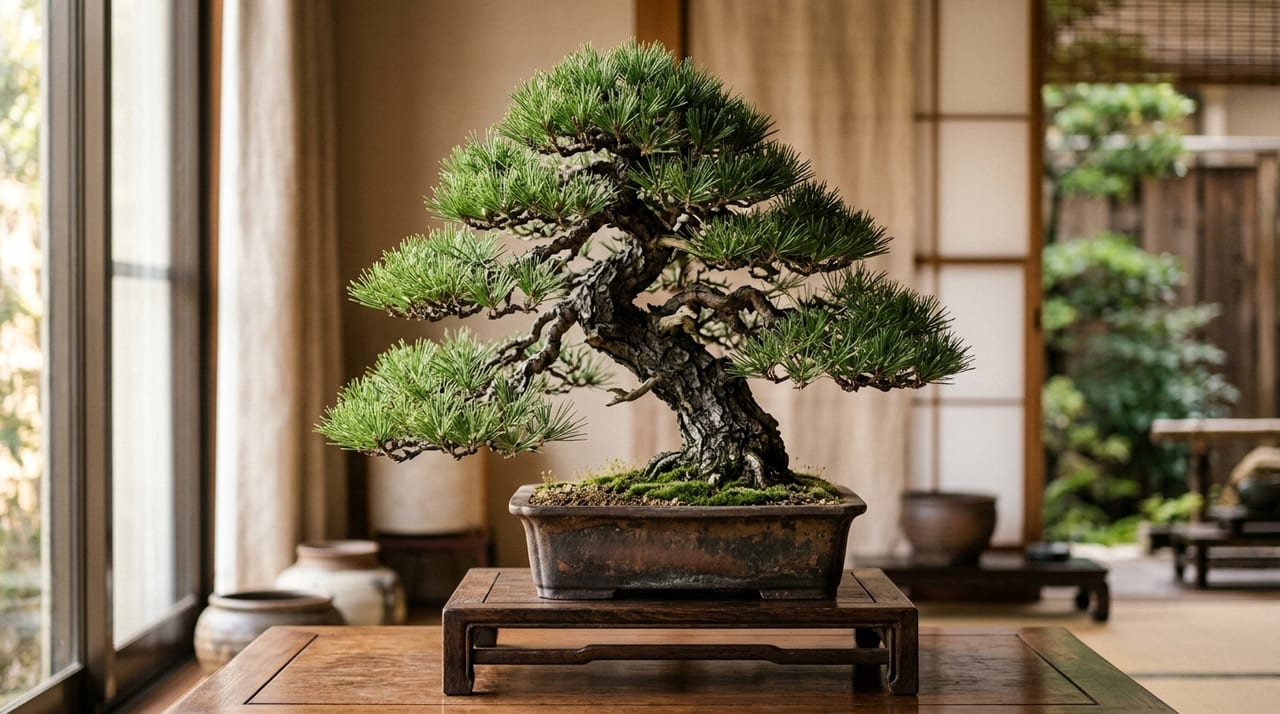
Pines (black pine, red pine, five-needle pine), hinoki cypress varieties, and similar species prefer oxygen-rich soil. Water only after the surface soil is thoroughly dry—constant moisture causes root rot. During winter dormancy, reduce watering significantly.
Standard Species
Plum, cherry, zelkova, peach, persimmon, and most broadleaf trees do well with basic "water when soil surface dries" management. However, seasonal adjustments are necessary. Understanding each species' growth pace makes watering planning easier—see bonsai growth speed and cultivation timeline for reference.
Seasonal Watering Frequency and Practical Management
Bonsai's water consumption varies greatly with temperature, sunlight, and wind. "Once per day" or similar guidelines are merely reference points—daily observation is essential.
Spring (March–May): Beginning of the Growth Phase
As new buds emerge, water consumption increases rapidly. March still allows conservative watering, but from April onward, water once or twice daily. Soil dries faster, so make checking it every morning a habit. Flowering bonsai (plum, cherry) require careful attention to prevent drought stress during blooms.
Summer (June–August): The Greatest Challenge
Water consumption peaks, and this is where beginners most often fail. Small pots can dry completely in half a day. Morning and evening watering becomes standard, and misting the foliage (leaf watering) is effective on extremely hot days.
If drought stress occurs in mid-summer, leaves scorch and appear burned, and in severe cases, the tree can suffer fatal damage within hours. During vacations or outings, consider automated watering systems or moving the tree to a semi-shaded location.
Autumn (September–November): Gradually Reduce Watering
As temperatures drop, water consumption decreases. Once daily is the baseline, then adjust based on soil conditions. From October onward, deciduous trees' water needs decline further as leaves begin to color.
Winter (December–February): Excess Moisture Is the Enemy
Deciduous trees enter dormancy and water needs drop significantly. Check soil every 2–3 days and water only after it's completely dry. Evergreens also slow their growth, so the same approach applies.
Freezing is a particular concern. If temperatures plummet after watering, ice can form inside the pot and damage roots. On days frost is forecast, water in the late morning after temperatures rise, and avoid watering from late afternoon onward. Moving trees under eaves or indoors is also an effective strategy. If you're in a cold region like Tohoku, check bonsai winter care: Tohoku and Sendai climate guide for region-specific precautions.
Signs of Overwatering and Underwatering and Emergency Solutions
Recognizing the signs and responding quickly is key to keeping your bonsai alive.
Overwatering Signs
- Leaves yellow and drop (even evergreens show abnormal defoliation)
- New buds fail to emerge; overall vitality is weak
- Soil remains wet days later
- Foul odor from the drainage holes
If overwatering is suspected, first stop watering and move the tree to a well-ventilated, semi-shaded location. If symptoms don't improve, remove the tree from the pot to inspect roots. Remove blackened, foul-smelling rotted roots with clean scissors, dry the tree, and repot in fresh soil mix.
Underwatering Signs
- Leaves wilt and curl inward
- Leaf edges and tips turn brown and die
- Soil hardens completely and repels water
For severe drought, "bottom watering" is effective. Fill a bucket with water and submerge the entire pot for 30 minutes to an hour to allow water absorption from below. Simply pouring water on the surface may not penetrate hardened soil.
Techniques to Improve Watering Quality
Using Leaf Watering (Leaf Misting)
Misting leaves with a spray bottle reduces transpiration, prevents pests and diseases, and removes dust. This is especially helpful during summer dry periods or when indoors with low humidity. However, avoid misting during strong direct sunlight, which can cause leaf scorch; mist during cool morning or evening hours.
Water Quality and Tool Selection
Tap water is fine for most purposes. If chlorine is a concern, let tap water sit in a bucket overnight to allow it to dissipate. Rainwater is also a gentle, soft-water option.
A hose with an adjustable spray nozzle is more convenient than a watering can. Choosing a fine mist setting allows even watering without disturbing the soil. If you're also reconsidering fertilizer application, see bonsai fertilizer guide for reference.
Always Empty the Drainage Tray
Leaving water in the drainage tray causes roots to sit in constant moisture (waterlogging), leading to root rot. Always empty the tray after watering.
Summary
Bonsai watering is a nuanced skill that varies by tree species, season, weather, pot size, and location. However, once you master the basics, it's not particularly difficult.
First, develop the habit of checking soil conditions daily. Cultivate the sense to read the signals your plant sends—leaf vigor, soil color, pot weight. These two practices will get you through most of bonsai care.
Watering is not a chore but a daily dialogue with your tree. This sustained attention is what makes the journey of long-term bonsai cultivation rewarding. As 2026 progresses, continue building sustainable watering habits while enjoying the changing seasons.