Complete Beginner's Guide to Carnivorous Plant Setup | Environment Building and Tips to Avoid Failure
A complete guide to building a carnivorous plant cultivation environment from scratch. Covers the fundamentals of soil, water quality, and humidity management, plus common pitfalls beginners encounter and how to avoid them.
Key Takeaways
A complete guide to building a carnivorous plant cultivation environment from scratch. Covers the fundamentals of soil, water quality, and humidity management, plus common pitfalls beginners encounter and how to avoid them.
Related Species
If you're going to grow carnivorous plants, your initial environment setup is everything. Humidity, light, soil, water quality—when all these elements come together, your carnivorous plants will perform at their best. This guide will help you avoid the traps that beginners commonly fall into, and shows you concrete, efficient, low-cost methods for setting up a stable cultivation environment.
Essential Item Checklist
Carnivorous plant cultivation starts with choosing the right pot and basic items. If you can prepare the following setup, even a beginner can create a stable environment.
- Pots and containers: First, pot selection is critical. For carnivorous plants, a breathable material is ideal. Terracotta pots have excellent drainage, but dry out quickly and are not suitable for water tray systems. Plastic pots, on the other hand, are lightweight and easy to handle, and when combined with a water tray, they maintain stable humidity more easily.
- Soil setup: The most important element for carnivorous plants is inorganic, mineral-free soil. A standard mix is 1:1 fine-grade akadama clay and vermiculite, or peat moss and perlite. One critical point to note: commercial "succulent soil" or "houseplant soil" contains fertilizer, so avoid these. High fertilizer content makes carnivorous plants prone to root rot.
- Watering and water tray system: The most important environmental factor for carnivorous plants is maintaining a constantly moist state. The typical houseplant approach of "water when soil dries out" is forbidden for carnivorous plants. Instead, use a water tray system. Place a shallow tray with 2–3 cm of distilled water and set the pot on top. The critical point is the water quality used in the tray. Minerals in tap water (particularly calcium and magnesium) accumulate in carnivorous plant roots and cause them to die. Always use distilled water (processed through reverse osmosis) or ion-exchange water.
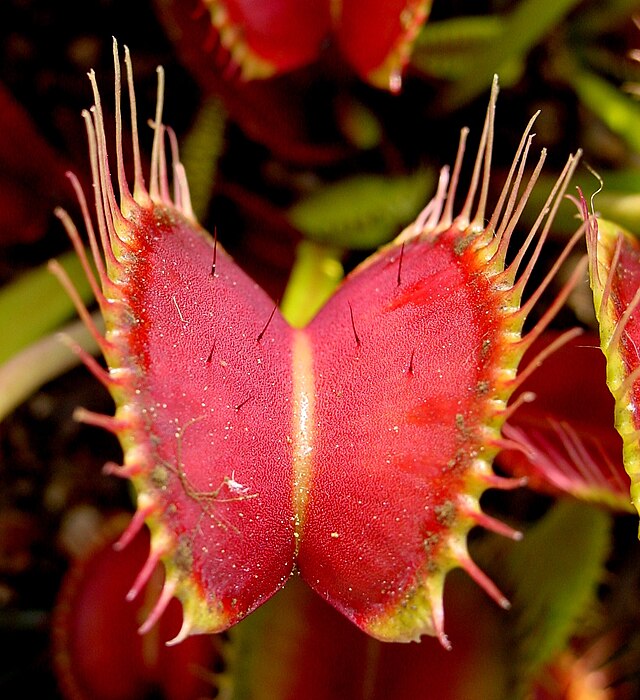
- Misting and humidity system: Carnivorous plants require a high-humidity environment. Particularly, the insect-trapping parts (Venus flytrap's trapping leaves, sundew's sticky tentacles) lose function when air humidity is low. Daily misting one to two times is ideal, but hand spraying is labor-intensive. A humidifier with an automatic misting function or a spray nozzle with a timer is recommended.
Stepwise Variety Selection—A Learning Roadmap from Beginner to Intermediate
Carnivorous plants vary greatly in cultivation difficulty depending on the species. For steady skill development, stepwise variety selection is essential.
- Stage 1: The First 3 Months—"Easy Beginner Species": The Venus flytrap is the easiest carnivorous plant to grow. The trapping motion is observable, and the satisfaction of cultivation is high, making it ideal for beginners. Similarly, Cephalotus (Australian pitcher plant) suits beginners well. Both require only a water tray system and normal light levels to grow stably.
- Stage 2: After 2–3 Months—Challenge "Moderate-Difficulty Popular Species": With three months of experience, you can move on to Nepenthes species. Nepenthes teaches deeper lessons about temperature and humidity management. For beginners, stick to larger, hardy species. Hybrid varieties are sensitive to environmental stress and carry higher failure risk.
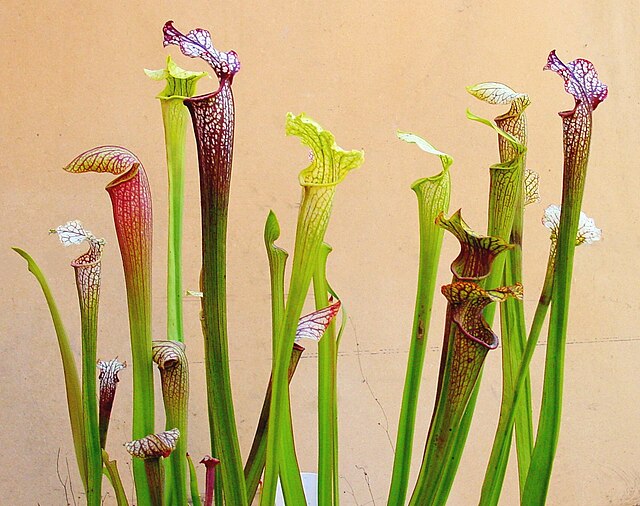
- Stage 3: After 6 Months—Progress to "High-Difficulty Rare Species": Move on to the diverse Drosera (sundew) species or Sarracenia that require recreating wetland ecosystems. These require complex dormancy management and seasonal adjustments, but offer a richer cultivation experience in return.
Practical Environmental Setup—Managing Light, Temperature, and Humidity
To build an environment where carnivorous plants thrive, you must manage three elements simultaneously: light, temperature, and humidity.
| Environmental Factor | Target | Notes |
|---|---|---|
| Light environment | 8–12 hours daytime | Investing in LED plant lights (especially red-blue blend types) allows you to adapt to low-light windowsill environments. When using direct sunlight from a window, use shade cloth (30–50% light transmission) in summer midday to prevent leaf burn |
| Temperature management | Daytime 20–28°C, nighttime 15–22°C | This day-night temperature difference promotes trap activity and growth. In winter, avoid dropping below 15°C; tropical species like Nepenthes see sharply increased root rot risk below 10°C |
| Humidity and air circulation | 75–95% humidity | High-humidity environments are prone to rot and mold. Using a small fan (low speed) to create gentle air flow prevents surface moisture buildup while maintaining high humidity |
Common Early-Stage Failures and How to Avoid Them
Knowing the pitfalls beginners fall into lets you avoid them with high probability.
- Failure Pattern 1: Adding fertilizer: The general rule that "plants need fertilizer" backfires with carnivorous plants. Carnivorous plants obtain necessary nutrients by capturing insects. Adding fertilizer over-stimulates roots and promotes rot.
- Failure Pattern 2: Forcing the trap mechanism: The insect traps of Venus flytraps and Nepenthes are designed with high energy efficiency. Repeatedly opening and closing them out of curiosity exhausts the plant and kills it. Especially in the first month after purchase, keep activation checks to a minimum and avoid unnecessary stimulation.
- Failure Pattern 3: Watering frequency errors: Even with a water tray system, some anxiously add water daily. If the soil remains constantly moist, no additional watering is needed. Simply top up the water tray when the level drops.
- Failure Pattern 4: Ignoring winter dormancy management: Many carnivorous plants experience a temporary dormancy period in winter. Heating and adding humidity during this time stresses the plant against its natural rhythm. Respect dormancy as "part of the plant's life cycle" and observe quietly—this is the key to success.
Budget-Conscious Environment Setup—An Efficient Investment Strategy
You can build a carnivorous plant cultivation environment without expensive equipment. Use a staged investment approach to minimize costs.
| Period | Details | Cost |
|---|---|---|
| Initial investment (minimum) | Soil (akadama, perlite), water tray, distilled water supply, spray bottle, humidity meter | ¥10,000–15,000 |
| 3 months later (recommended) | Basic humidifier with auto-misting, or spray nozzle with timer. Consider LED plant lights if light is insufficient | ¥5,000–20,000 |
| 6 months onward (advanced stage) | High-quality LED plant lights, heater and thermostat for temperature management. Investment at this stage dramatically improves cultivation stability | ¥20,000–50,000 |
| Monthly running costs | Distilled water, electricity (LED, humidifier, heater), soil replacement (1–2 times annually) | ~¥2,000–4,000/month |
With total investment of around ¥2,000–4,000 per month, you can maintain a cultivation environment sufficient for serious hobby-level cultivation.
Integrated Management When Growing Multiple Species
When beginners grow multiple species simultaneously, you can streamline management by leveraging shared environmental elements.
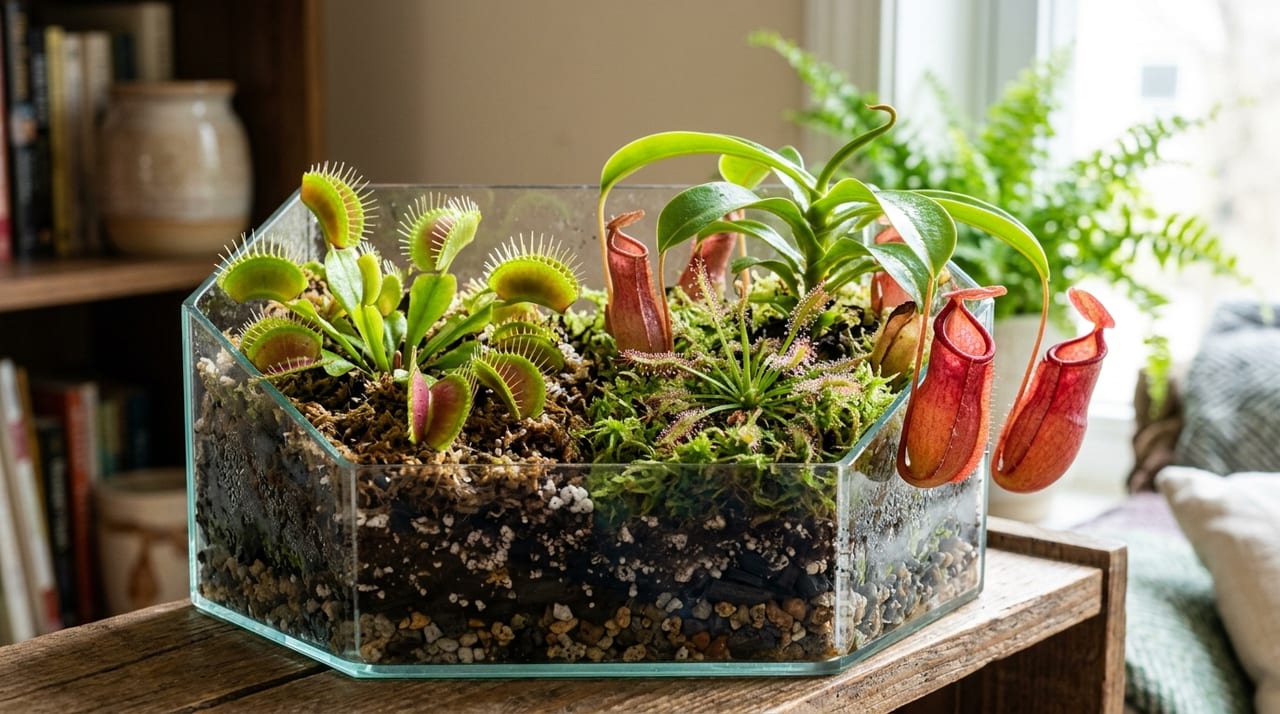
Venus flytrap, Cephalotus, and Nepenthes all require humidity above 75% and distilled water trays. In other words, a single shared "high-humidity tray environment" lets you manage multiple species simultaneously. However, temperature preferences differ slightly by species, so optimize positioning within the tray—place cooler-preferring species like Venus flytrap at the front and heat-loving Nepenthes toward the back.
Species requiring even higher humidity, like sundew, can be placed in a separate small humidity box, partially isolating some environments to lower overall management complexity.
Once you correctly complete the initial carnivorous plant setup, subsequent management becomes far simpler. If you follow the stepwise variety selection and environment-building principles outlined in this guide, even beginners will achieve reliable success within a few months.