Introduction to Tissue Culture of Carnivorous Plants | Fundamentals of Aseptic Culture and Propagation
For those interested in tissue culture of carnivorous plants. This article explains the fundamental knowledge of tissue culture that you can start at home, from the basics of aseptic technique, how to prepare culture media, selecting explants, to the procedures and precautions for cultivation.
Key Takeaways
For those interested in tissue culture of carnivorous plants. This article explains the fundamental knowledge of tissue culture that you can start at home, from the basics of aseptic technique, how to prepare culture media, selecting explants, to the procedures and precautions for cultivation.
Related Species
What is Tissue Culture?
Tissue culture is a technique in which small tissue fragments of plants are grown on sterile media to produce large quantities of seedlings. It has been in practical use in agriculture and horticulture for several decades, and is used in mass production of bananas and orchids. In the world of carnivorous plants, it is increasingly being utilized for conservation of rare species and clonal propagation of superior individuals.
Many people have the impression that it is a technique only experts can do, but if you understand the basic principles and procedures, you can definitely try it at home. In this article, we explain tissue culture of carnivorous plants from its significance to actual procedures, incorporating the latest knowledge as of 2026, in an easy-to-understand way for beginners.
Why Tissue Culture is Effective for Carnivorous Plants
Many carnivorous plants grow more slowly than common plants, and there is a challenge that propagation efficiency through division alone is low. For example, some varieties of Nepenthes (pitcher plants) can take several months from cuttings to develop roots.
The reasons tissue culture is particularly effective are as follows.
- Clonal propagation is possible: While seedlings from seeds show genetic variation, tissue culture can mass-produce seedlings with traits identical to the parent plant
- Conservation of rare and endangered species: Even species that are almost impossible to collect from nature can be propagated and preserved in nearly unlimited quantities once tissue is obtained
- Disease and pest-free seedlings: Because they are grown in a sterile environment, the risk of viruses and fungi is reduced
- Year-round propagation: Not dependent on outdoor conditions, seedlings can be supplied consistently throughout the year
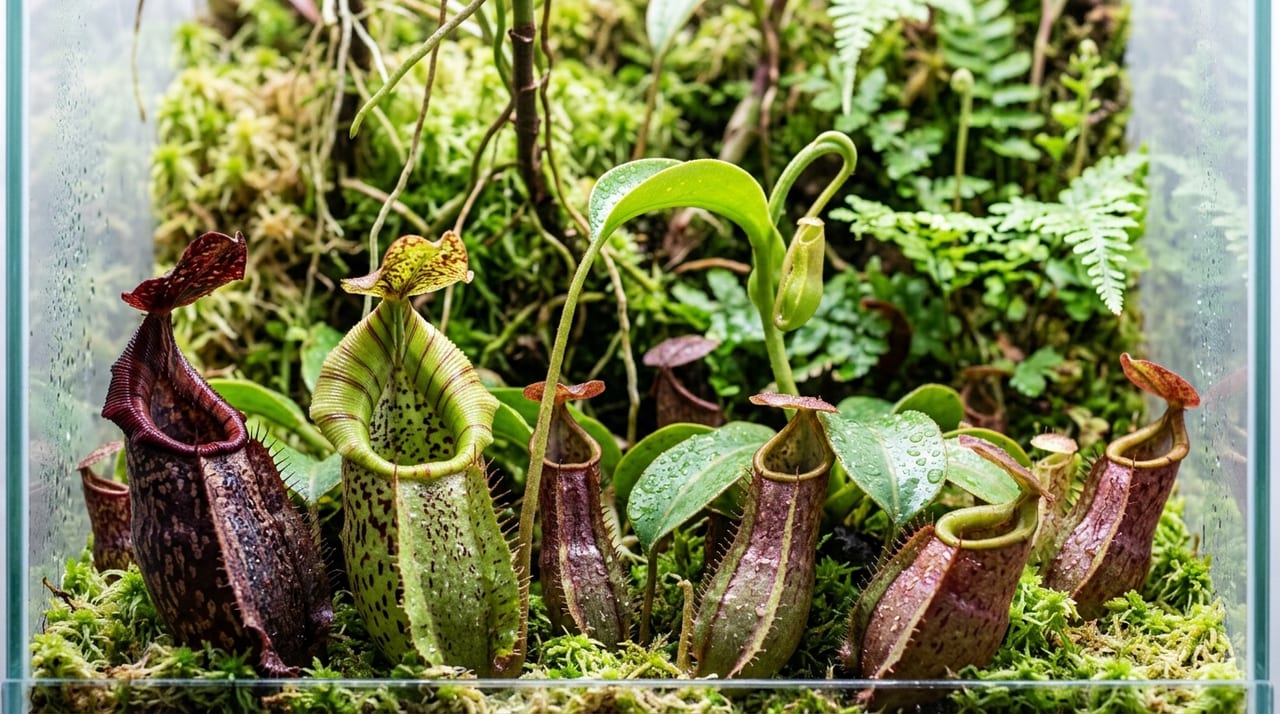
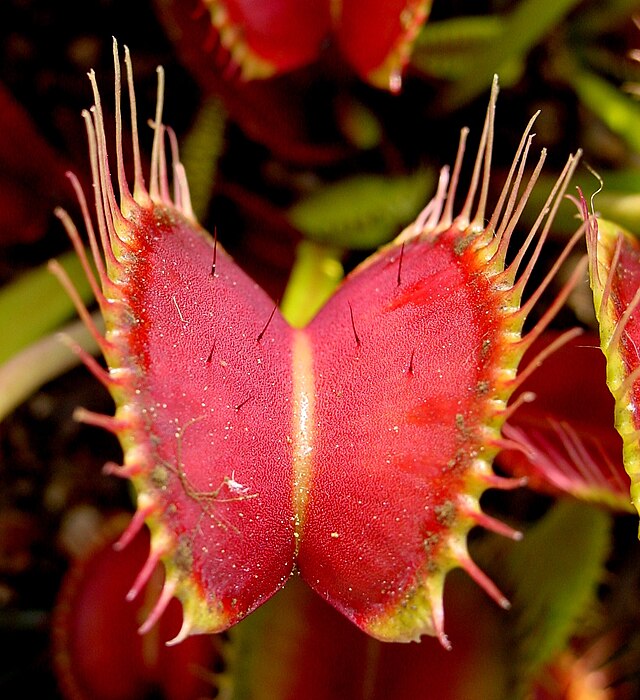
Tissue culture has been successfully applied to many carnivorous plants including Nepenthes, Drosera (sundew), and Dionaea (Venus flytrap), and many of the seedlings sold commercially are derived from tissue culture. These are also called "mericlone seedlings," characterized by high uniformity in quality.
Essential Equipment and Setting Up the Work Environment
When starting tissue culture at home, you don't need to invest in expensive equipment from the start. It is more practical to begin with readily available tools and gradually upgrade your environment as you gain successful experiences.
List of Essential Equipment
- Clean box (sterile work space): Can be made by modifying a storage container, or substituted with a commercial simple clean bench
- Pressure cooker (for sterilizing media and equipment): A household model is sufficient. Choose one rated for 121°C
- Culture vessels (for culturing explants): Heat-resistant containers such as jam jars or glass storage containers
- Tweezers and scalpel (for cutting and transplanting explants): Use fine-pointed ones and flame-sterilize before use
- Alcohol lamp (for flame-sterilizing equipment): A gas burner can also be used
- Disinfectant ethanol (for sterilizing work surface and equipment): Use 70–80% concentration
- Sodium hypochlorite (for surface sterilization of explants): Commercial household bleach can be diluted and used
It is important to choose a room with limited ventilation and wipe down the work surface with ethanol before starting. To stabilize the air inside the clean box, complete your preparations 15–30 minutes before beginning work.
Formulating and Sterilizing Culture Media
Culture media is equivalent to "soil and fertilizer" for plants. It is a critical factor that greatly affects the success or failure of tissue culture.
Formulating Based on MS Medium
The most widely used basal medium is Murashige and Skoog (MS) medium. It is sold as a powder and is used by dissolving it in water. Since carnivorous plants naturally live in nutrient-poor environments, low-concentration media diluted to 1/2–1/4 of standard MS medium is appropriate.
A typical formulation example is as follows.
- MS medium powder (amount according to dilution ratio)
- Sucrose: 20–30 g/L (as carbon source and energy source)
- Agar or gellan gum: 6–8 g/L (for solidifying media)
- Plant hormones: Add auxin (for promoting root development) or cytokinin (for promoting shoot multiplication) according to purpose
- Adjust to volume with distilled water
After formulation, adjust the pH to 5.5–5.8. Confirm with a pH meter or litmus paper, and make fine adjustments with potassium hydroxide solution or hydrochloric acid. Then distribute into culture vessels, cap with aluminum foil or silicone caps, and sterilize in a pressure cooker at 121°C for 15–20 minutes. After sterilization, allow to solidify at room temperature and store in a cool, dark place until use.
Procedures from Explant Preparation to Starting Cultivation
An explant is a tissue fragment of a plant used for culture. Proper selection and careful sterilization greatly affect the success rate.
Collecting and Sterilizing Explants
- Collect from healthy parent plants: Young leaves without disease, stem tips, and flower stems are suitable. Younger tissues tend to have higher regeneration capacity than older tissues
- Rinse with running water: Carefully remove dirt and insects from the surface
- Ethanol treatment: Immerse in 70% ethanol for about 30 seconds to disinfect the surface
- Sodium hypochlorite treatment: Immerse in 1–2% solution for 10–15 minutes. This step is critical for eliminating contaminating microorganisms from the explant
- Rinse with sterile water: Wash away chemicals with sterile water at least 3 times
Transplanting into Culture Vessels
Perform the following steps inside the clean box.
- Flame-sterilize tweezers and scalpel in an alcohol lamp, cool, then use
- Cut the explant to approximately 5–10 mm and place it on the surface of the media (do not insert too deeply)
- Seal the container quickly
- Begin cultivation under bright, indirect light at around 25°C
Within 2–4 weeks, cell proliferation and shoot (bud) formation can be observed. The proliferated tissue is transferred to fresh media (subculture) every 4–8 weeks. For example, relatively hardy species such as Nepenthes ventricosa show stable proliferation and are suitable for first attempts.
Measures Against Contamination (Microbial Contamination)
The main cause of failure is contamination by unwanted microorganisms. Make sure to adhere to the following points.
- Open and close containers quickly, near a flame
- Thoroughly wash hands and wear gloves
- Quickly isolate and discard any contaminated containers
GrowerDirect's Secure and Safe System
Tissue culture is a deep and complex technique, but it is also a wise choice to start from the entry point of "first trying to grow cultured seedlings." On GrowerDirect, you can directly purchase high-quality carnivorous plant seedlings propagated by specialized growers with expertise and knowledge in tissue culture.
The distinctive feature of GrowerDirect is the ability to communicate directly with growers. You can ask growers directly about points where beginners particularly struggle, such as acclimatization methods for cultured seedlings (the process of transitioning from sterile culture containers to normal cultivation environments) and tips for managing each species. When you select seedlings while cross-referencing species-specific encyclopedia information for Nepenthes, Drosera, and Venus flytrap, cultivation after purchase becomes smoother.
Additionally, all sellers have been screened and registered, and you can verify transaction history and ratings, so even those purchasing tissue-cultured carnivorous plant seedlings for the first time can use the service with confidence. Rare varieties and hard-to-obtain species can also be found from the extensive lineup unique to grower-direct sales. We encourage you to take your first step into the world of tissue culture through GrowerDirect.