Commiphora Growing Guide | Enjoy Myrrh Trees Styled as Bonsai
Explains Commiphora (myrrh tree) varieties and cultivation methods. Introduces care techniques for Burseraceae caudex plants, tree styling, and propagation by cuttings.
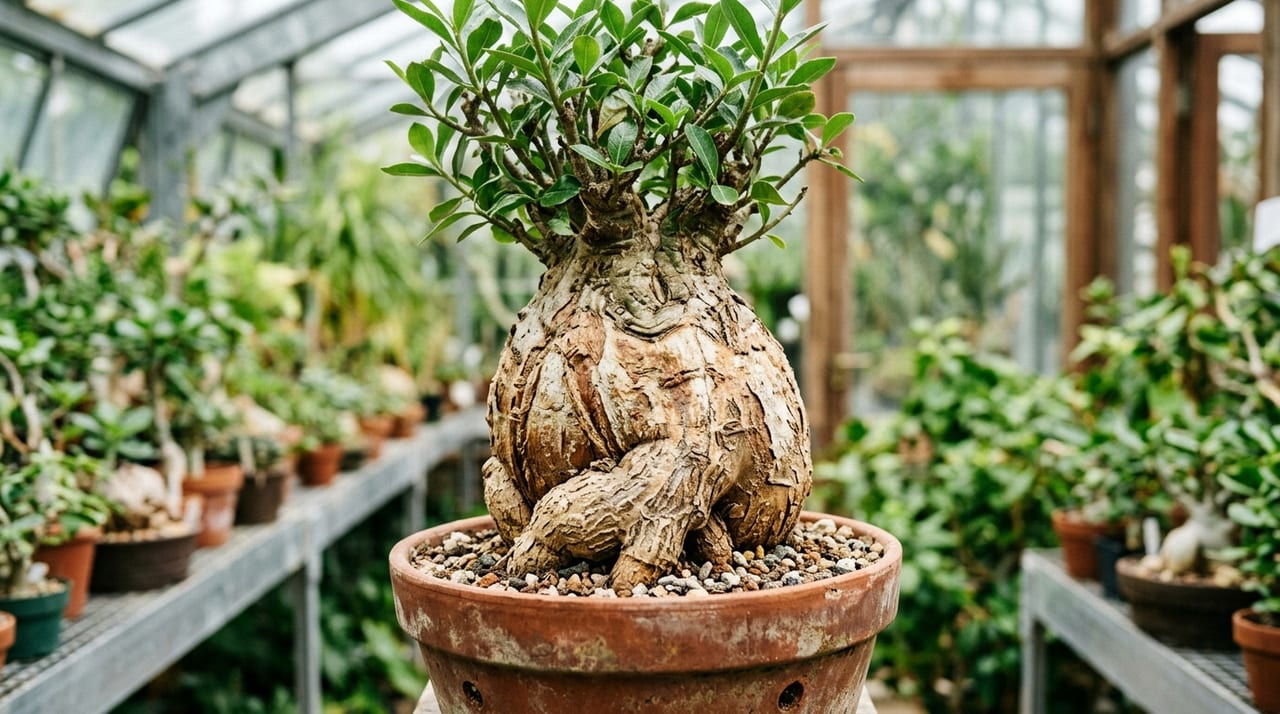
Key Takeaways
Explains Commiphora (myrrh tree) varieties and cultivation methods. Introduces care techniques for Burseraceae caudex plants, tree styling, and propagation by cuttings.
Related Species
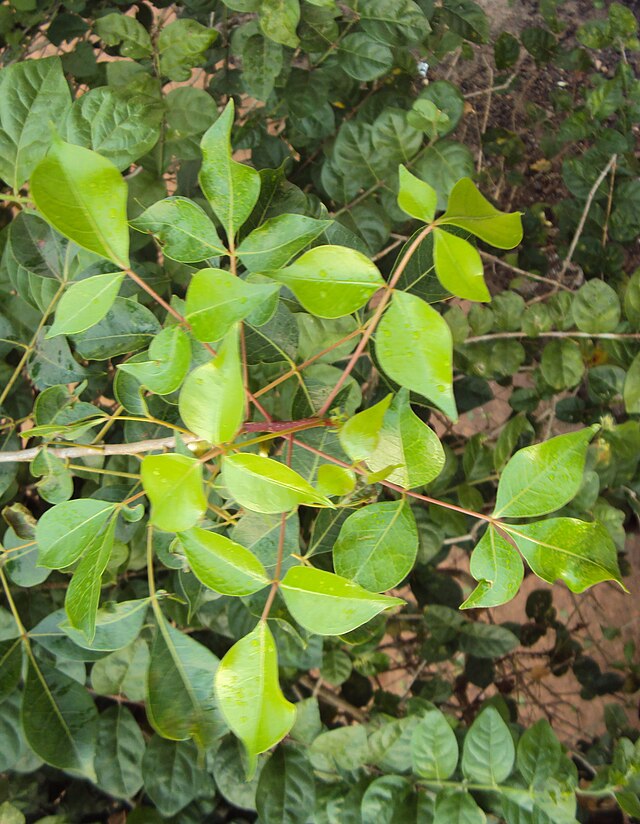
Commiphora (Commiphora) is a caudex plant belonging to the Burseraceae family, and like Boswellia, it has been known since ancient times as the source of resin (myrrh). In recent years, it has gained rapid horticultural attention as a caudex plant, and its popularity is growing among advanced collectors because of its distinctive bark texture and delicate branching pattern, which possess a bonsai-like beauty. Here, we explain the basic cultivation methods for Commiphora.
Main Commiphora Varieties
Over 200 species of Commiphora are known, but the varieties available in horticulture are limited.
- Commiphora kataf (C. kataf): A medium-sized species native to East Africa, characterized by thick stems and peeling bark. Among Commiphora species, it is relatively hardy and ideal as a beginner variety. As it grows, the stem takes on a grayish-brown, textured appearance.
- Commiphora wildii (C. wildii): Native to Namibia, it is popular with bonsai enthusiasts for its distinctively twisted stem. The leaves are thin and delicate, expanding only during summer. It is a somewhat small variety that can be enjoyed at tabletop size.
- Commiphora monoica (C. monoica): One of the most widely distributed species, growing wild from Africa to India. It is hardy and highly adaptable, but the supply in Japan is limited.
- Commiphora myrrha (C. myrrha): The species that is the primary source of myrrh, and a variety with high historical and cultural value. Cultivation is somewhat challenging, but there is the reward of being able to harvest resin.
- Commiphora crenatodendata (C. crenatodendata): A rare species from Madagascar, valued for its green stems and unique form. Madagascan Commiphora species are diverse and highly collectible.
Growth Environment and Light Management
Like Boswellia, Commiphora prefers a dry, warm environment.
- Light: Provide maximum light year-round. Direct sunlight outdoors is ideal during the growing season (May–October). Insufficient light causes branches to become elongated and slows stem thickening. Adequate light is essential for developing Commiphora's beautiful tree form.
- Air circulation: In its native habitat, Commiphora grows in airy, dry locations and dislikes humid environments. Outdoor cultivation poses no problem, but for indoor management, use a fan or circulation device to provide constant air movement.
- Temperature: Tolerant of high heat and grows vigorously even above 35°C. Conversely, it is sensitive to cold; most varieties drop leaves below 10°C, and risk death below 5°C. Always bring plants indoors for winter and maintain a minimum of 10°C or higher.
- Lighting: For indoor cultivation, use a plant growth LED to provide 12 or more hours of illumination. Since Commiphora prefers strong light, use high-power LEDs if possible and position them close to the plant.
- Rainy season: It is important to keep the plant out of rain. Commiphora tends to be even more sensitive to excessive moisture than Boswellia, and prolonged rain exposure creates a high risk of root rot and stem decay. Manage the plant under rain protection or move it to shelter under eaves.
Watering and Growing Medium
Watering Commiphora requires a clear distinction based on the growth cycle.
- Watering during the growing season (May–October, when new leaves are developing): Water only after the soil is completely dry. It is safer to be more conservative than with Boswellia; as a guideline, wait 1–2 days after the soil dries before watering. A typical frequency is about once per week.
- Watering during dormancy (November–April): Basically withhold water. Watering a plant that has dropped its leaves and entered dormancy directly causes root rot. Only in cases where the stem becomes severely wilted, provide minimal water about once monthly.
- Growing medium: Use an ultra-draining mix. The basic formula is pumice 4 : Hinomaru soil 3 : hard red clay 2 : charcoal 1. Use no organic matter. Since Commiphora roots are fine and delicate, small to medium grain size is appropriate for the growing medium.
- Pot: A small pot is safest. Large pots hold more soil, which takes longer to dry, making them unsuitable for Commiphora. Select a pot one size larger than the caudex, and upsize when roots fill the pot.
Tree Shaping and Pruning Techniques
One of the greatest pleasures of growing Commiphora is creating a bonsai-like tree form.
Commiphora naturally produces beautiful branching, but pruning further refines the tree shape. Pruning in early growth season (May–June) promotes rapid wound healing and encourages new branch extension through summer.
When branches are cut, a clear to yellowish resin sometimes seeps from the cut surface. This is the source of myrrh. Pruning while enjoying the fragrance of the resin is a unique experience of growing Commiphora.
For tree style, consider referencing Japanese bonsai forms such as bunjingi (literati style: thin, tall trunk with small leaf crown) or kengai (cliff style: drooping form). Commiphora's natural curves and distinctive bark texture harmonize beautifully with Japanese aesthetic sensibilities.
Avoid wiring thick branches, as this risks breakage; wire only young branches. Use guy wire for branch guidance and slowly adjust direction for safety.
Frequently Asked Questions and Practical Tips
Q. Can it be propagated by cuttings? A. Yes, but with the limitation that the caudex grows slowly. Cutting-grown plants retain branch characteristics, so stems tend to remain thin without significant thickening. For a true caudex appearance, growing from seed is more reliable.
Q. I can't predict when leaves will emerge and fall. A. Commiphora produces and sheds leaves in response to water and temperature. Rather than day length, resuming watering is the trigger; if you begin watering after temperatures stabilize at the start of the growing season, budbreak will occur at that time. Leaf drop is not necessarily a sign of trouble.
Q. When is the best time to shape the tree? A. Prune in the first half of the growing season (from when buds begin to break through midsummer). Pruning during dormancy may leave wounds that don't heal, risking dieback from those points. After cutting, place the plant in a dry location to allow the cut to dry before returning to normal care.
Propagation Methods and Sourcing Tips
Commiphora can be propagated by two methods: cuttings and seed.
| Method | Characteristics | Timeline |
|---|---|---|
| Cuttings | During the growing season, take 10–15 cm cuttings, dry the cut end for several days, then insert into the growing medium. Rooting rates vary by variety, but Commiphora kataf and similar species root readily from cuttings. However, cutting-derived plants have the disadvantage of forming caudex poorly. | Rooting takes 3–6 weeks; during this time, keep the soil surface lightly moist. |
| Seed | Relatively easy if fresh seed is available. To develop a thick caudex, seed-grown plants (grown from seed) are the right choice—roots naturally thicken at the base, forming an increasingly robust caudex with age. Sow in 25–30°C conditions, maintaining appropriately moist soil. | Germination occurs in 1–4 weeks. |
Commiphora has limited availability and species identification can be challenging. On GrowerDirect, you can purchase from growers who specialize in Commiphora with accurate variety information and receive cultivation advice. It is a reliable option for securing rare varieties.