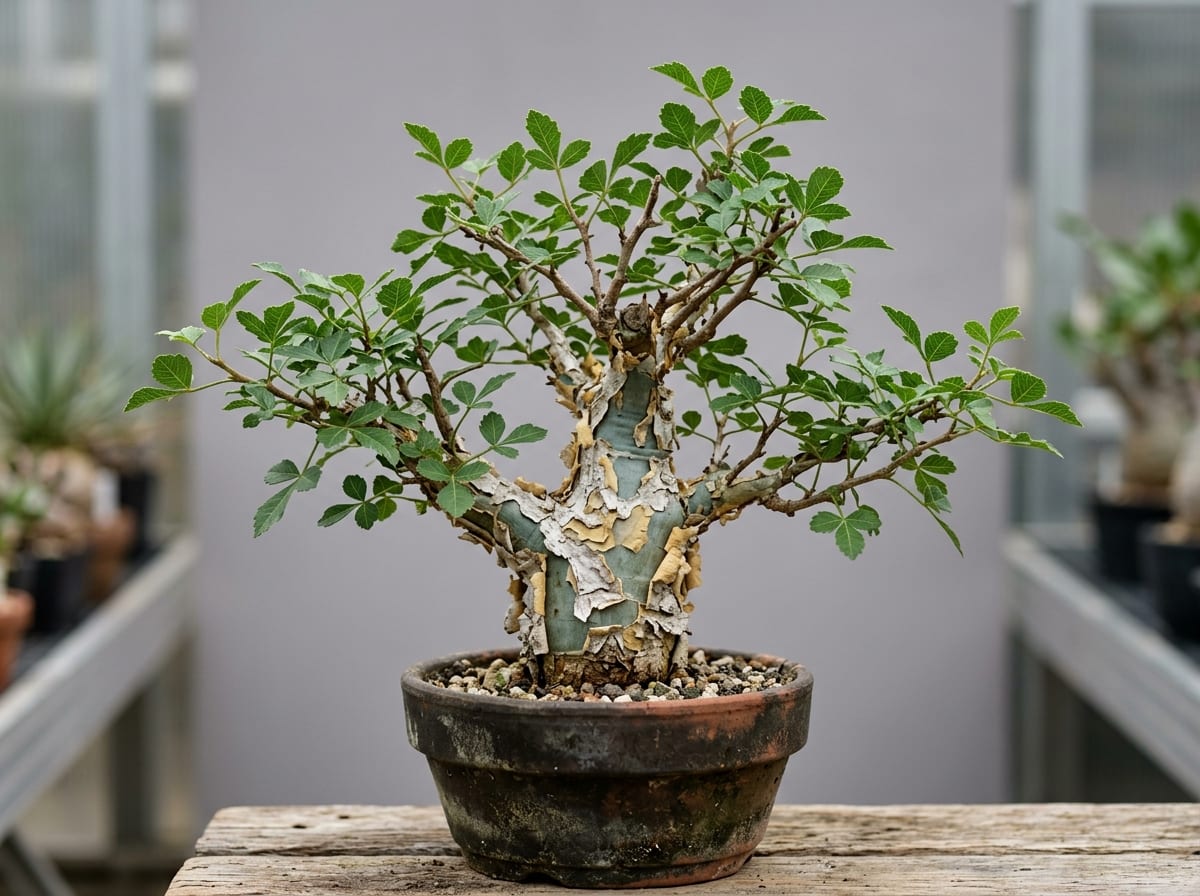
AI-generated image
Commiphora kataf
IntermediateCommiphora kataf
A myrrh relative whose whitish to yellowish bark peels in papery flakes to reveal a bluish under-bark. Its three-parted leaves vary greatly in hairiness and in the shape of their teeth.
About
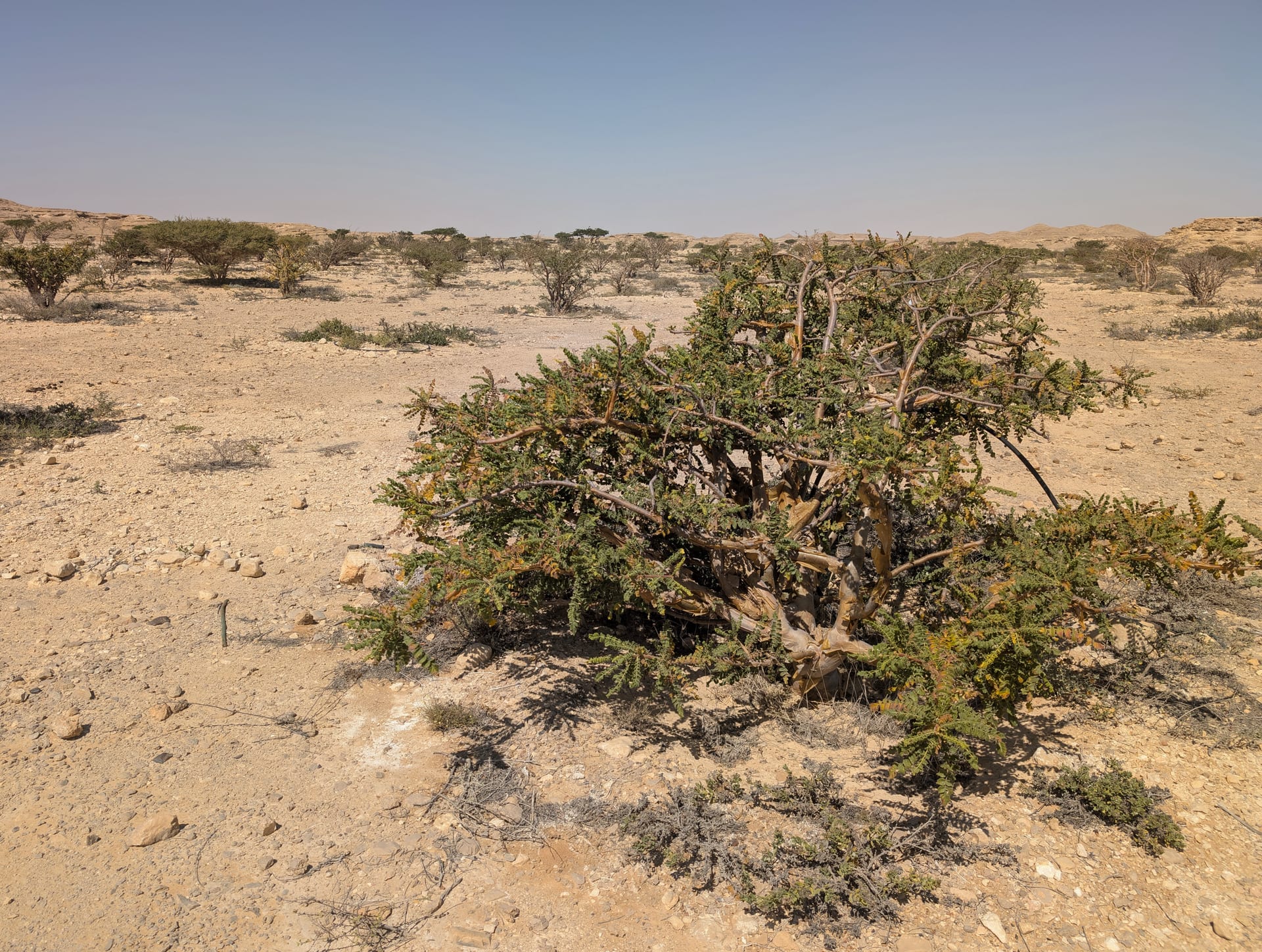
Commiphora kataf is a woody member of the Burseraceae and a relative of myrrh. It ranges widely from Sudan, Ethiopia, Eritrea, Somalia, Kenya and north-eastern Tanzania to the south-western Arabian Peninsula (Saudi Arabia, Yemen), growing in dry woodland and bushland and on rocky limestone hills at 75-1,560 m. In habitat it is an unarmed small tree to 8 m, occasionally 10 m. The whitish to yellowish bark peels in papery flakes to reveal a bluish under-bark, and the wood and bark are strongly aromatic and exude a gum resin. Leaves are trifoliolate (rarely five leaflets) and extremely variable in hairiness, leaflet shape and teeth; GBIF treats names such as C. holtziana as synonyms of this species. Branches root and sprout readily and pruning scars close quickly, so it is popular as bonsai material. In Japan it is the most widely traded Commiphora, sold as "Kataf" or "Pure Kataf" rooted plants and imported specimens through online shops and auction sites; seed of subsp. turkanensis is also offered.
Source: Wikipedia (CC BY-SA 4.0)
Size of the Commiphora kataf
The Commiphora kataf grows to To 8 m (occasionally 10 m) in habitat; can be kept small in a pot.
Basic Info
Origin
North-east and east tropical Africa (Sudan to NE Tanzania) and the SW Arabian Peninsula
Lifespan
Long-lived tree (little published data)
Size
To 8 m (occasionally 10 m) in habitat; can be kept small in a pot
Temperature
10〜35℃
Watering & Fertilizer
A little during the growing season
Growing Tips
Light & Placement
It prefers a sunny position. It grows vigorously, so give it full sun outdoors in the growing season.
Watering
Water when dry while in leaf. Most losses come from winter overwatering; the soft wood rots if kept wet in the dry season.
Temperature & Overwintering
It is frost-sensitive; overwinter it indoors away from frost with little water.
Soil & Repotting
Use a free-draining mix. It forms spreading fine roots rather than a deep taproot, so shallow pots work.
Pruning & Shaping
It tolerates hard pruning and its cuts and bark heal quickly, so it can be cut back and trained like a bonsai.
Propagation
Propagate by seed or cuttings; branches root readily.
Commiphora kataf FAQ
QWhat is the growing difficulty level for Commiphora kataf?
Intermediate. A variety suitable for intermediate growers. Requires some cultivation experience and knowledge of environment management. Pay careful attention to temperature and humidity control.
QHow large does Commiphora kataf get?
The mature size of Commiphora kataf is To 8 m (occasionally 10 m) in habitat; can be kept small in a pot. This may vary slightly depending on cultivation environment and individual differences.
QHow should I water and fertilize Commiphora kataf?
Commiphora kataf: watering & fertilizer — A little during the growing season. Aim for appropriate frequency and amount.
QWhat is the typical price for Commiphora kataf?
The price of Commiphora kataf varies significantly by variety, characteristics, size, and lineage. Please check GrowerDirect's price guide for the latest market information.
Last updated: September 23, 2026
References & Sources
Edited & verified by: GrowerDirect Editorial Team
The classifications, regulations, and growing data on this page are created and verified based on the primary information database below.
Taxonomy & Authority
Accepted name: Commiphora kataf (Forssk.) Engl.
Synonyms: Amyris kataf Forssk., Commiphora holtziana Engl., Commiphora erythraea (Ehrenb.) Engl., Commiphora somalensis Engl., Commiphora kataf subsp. turkanensis J.B.Gillett
Authority databases: GBIF · GBIF
Nomenclature follows global taxonomic authority databases.
Regulations & Conservation Status
Not listed in CITES (checked on Species+). No special procedure is needed for transfers within Japan.
Sources: Species+ (CITES): Commiphora kataf
Regulations may change. Always verify the latest information with the relevant authorities.
Related Species
Find listings for this species
Related Articles
Commiphora Growing Guide | Enjoy Myrrh Trees Styled as Bonsai
Explains Commiphora (myrrh tree) varieties and cultivation methods. Introduces care techniques for Burseraceae caudex plants, tree styling, and propagation by cuttings.
How to Grow Uncarina | Differences Between the Madagascar Endemic Species Grandidieri and Roeoesliana
An explanation of the appeal and cultivation methods of the Madagascar endemic caudex plant Uncarina genus. We introduce the differences between Uncarina grandidieri and roeoesliana, seedling cultivation, and repotting timing.
Complete Guide to Choosing Caudex Plants as Gifts | Recommended Varieties by Occasion and How to Include Care Notes
A guide to choosing caudex plants as gifts organized by occasion. We introduce how to select varieties based on the recipient's cultivation experience and how to include care notes for long-term enjoyment.
Diagnosing and Treating Poor Root Development in Caudex Plants | Causes and Solutions for Roots That Won't Emerge or Won't Grow
A detailed guide to root emergence problems in caudex plants. From diagnosis methods to solutions, practical techniques for promoting healthy root development are introduced.
🩺 Common diseases
Can't find the plant you're looking for?
Post your wishes for free and growers with matching plants will contact you with introductions.