A Guide to Making Orchids Bloom | Flowering Conditions and Post-Bloom Care
This guide explains the conditions for making different types of orchids bloom (temperature differences, light, and fertilizer). It introduces techniques for promoting flower bud differentiation, care during blooming, post-bloom flower stem handling, and management methods for the next blooming cycle.
Key Takeaways
This guide explains the conditions for making different types of orchids bloom (temperature differences, light, and fertilizer). It introduces techniques for promoting flower bud differentiation, care during blooming, post-bloom flower stem handling, and management methods for the next blooming cycle.
Related Species
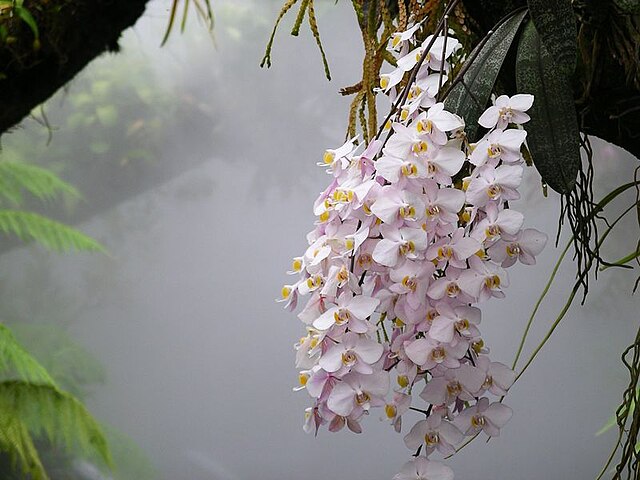
There are over 25,000 species of orchids worldwide, and due to their beauty and diversity, they are also called the "queen of flowers." However, when people actually try growing them, many struggle with problems such as "the flowers won't bloom" or "they bloomed once but won't bloom again." Orchid blooming requires more than just watering and fertilizing—it demands management based on an understanding of the mechanisms specific to each variety. This article provides a clear explanation for beginners, covering everything from the basic conditions for orchid blooming to variety-specific triggers, fertilizer selection, and post-bloom care.
Four Essential Conditions for Blooming
All orchid varieties share a "foundation for blooming." Understanding these fundamentals is the first step toward successful flowering.
1. Healthy Roots and Established Growth
Roots are the lifeline of orchids. If roots are damaged or the soil becomes waterlogged and rots, the plant directs all its energy to survival, leaving no resources for flower bud differentiation. It's important to inspect roots during annual repotting and remove any rotted roots with sterilized scissors. Healthy roots display a green to white color with firm texture.
2. Adequate Light
Orchids accumulate energy through photosynthesis and use it to form flower buds. Insufficient light weakens the plant structure, making blooming difficult regardless of temperature management efforts. While light preferences vary by variety, the general guideline is bright shade to semi-shade. Direct sunlight causes leaf burn, so filtered light through a sheer curtain is ideal.
3. Adequate Fertilization During the Growing Season
Providing ample nutrition during the growing season (spring through autumn) leads to blooming in the next season. If the plant is not well-developed during this period, flower buds may not emerge even if temperature changes are applied in winter. During the growing season, pseudobulbs (stem swellings) should develop thick and leaves should be deep green—the ideal state.
4. Temperature Fluctuation According to Variety (Most Critical Point)
For most orchids, temperature fluctuation is the greatest trigger for blooming. By exposing the plant to specific temperature ranges during specific periods, it senses "winter has arrived = it's time to bloom for spring." This process is called "flower bud differentiation." Neglecting temperature management results in no blooms even with a healthy plant, making this the most critical factor to watch.
Variety-Specific Flowering Triggers and Care Calendar
Different orchid varieties have different "switches" that trigger blooming. We'll explain the most representative varieties in detail.
Phalaenopsis (Moth Orchid)
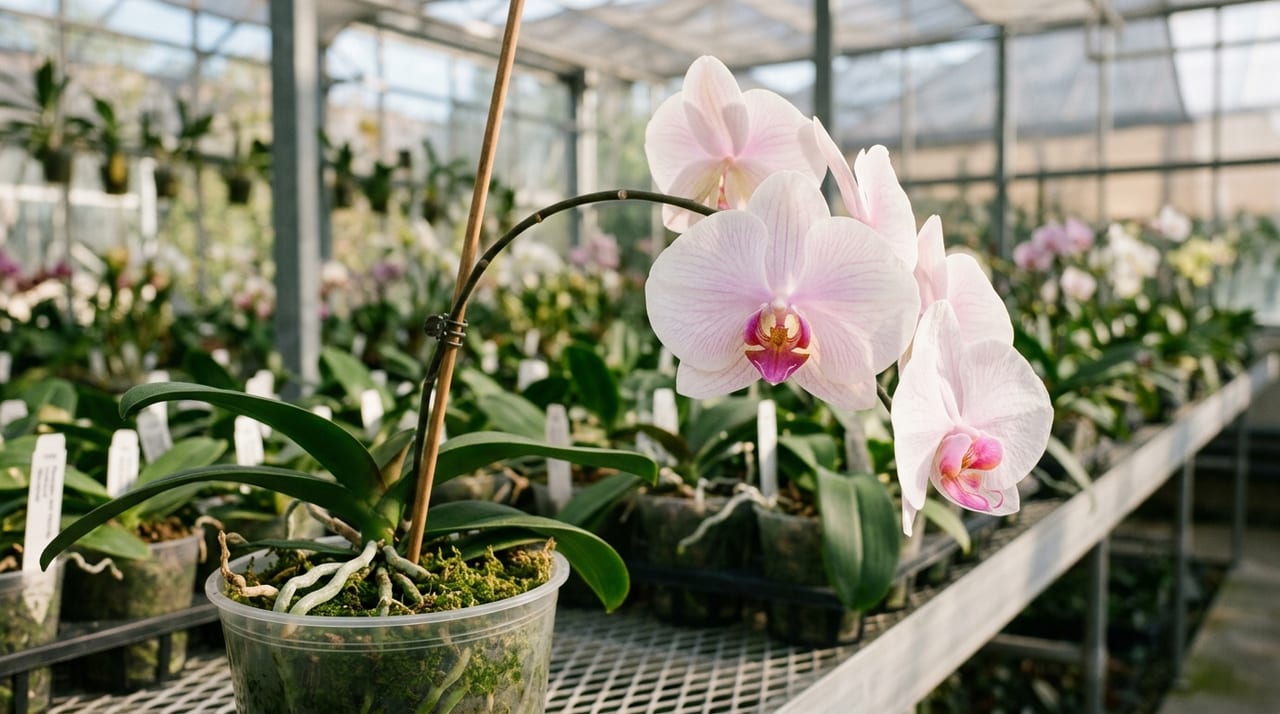
Phalaenopsis is triggered to bloom by day-night temperature differences. If exposed for 2–4 weeks in autumn (September–November) to daytime temperatures around 25°C and nighttime temperatures of 15–18°C, flower bud differentiation begins. In air-conditioned indoor environments, achieving a day-night temperature difference is difficult, so moving the plant to the windowsill only at night is an effective strategy. However, windowsills in winter can drop below 10°C at night, so monitor actual temperatures with a thermometer. Once flower buds appear, maintain stable room temperatures and avoid sudden temperature changes.
Dendrobium
For Dendrobium, low-temperature treatment in autumn through winter is key to blooming. Exposing the plant to temperatures around 10–15°C for several weeks induces flower buds. Managing it outdoors under an eave or in a cool, frost-free location is effective. For Nobile Dendrobium, the pseudobulbs must be well-developed before low-temperature treatment. Underdeveloped pseudobulbs tend to produce "high eyes" (plantlets) instead of flower buds. While high eyes can be used for propagation, prioritize pseudobulb development if you want flowers.
Cymbidium
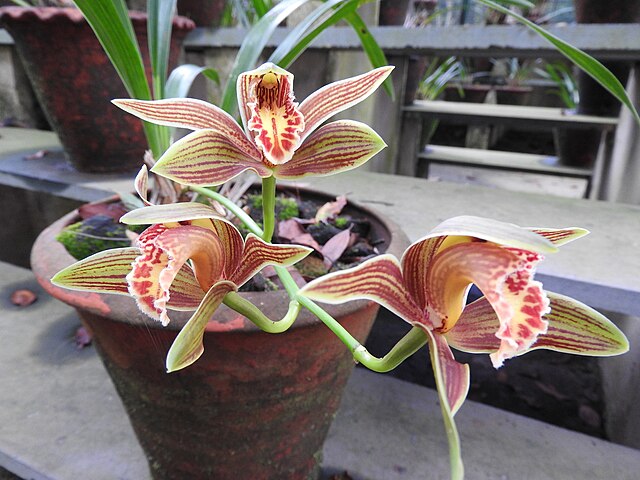
Cymbidium flower buds are induced by outdoor temperature fluctuations in summer through autumn. It's important to place it outdoors from late summer through autumn, exposing it to cool morning and evening air. Temperatures above 30°C during the day inhibit flower bud formation, so provide semi-shade during summer.
Cattleya
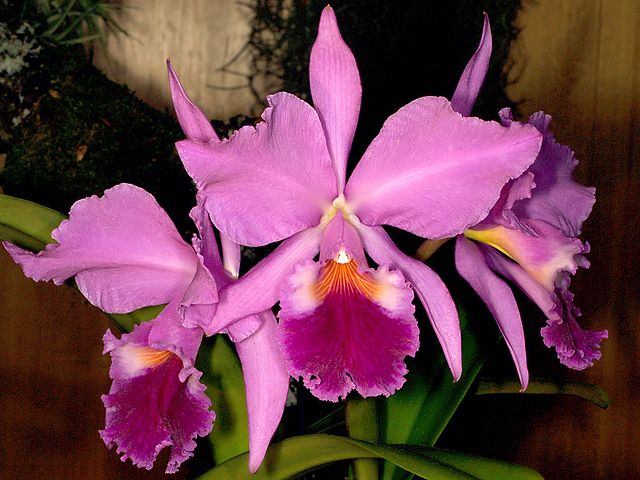
For Cattleya, both pseudobulb development and autumn low temperature plus drying are required for blooming. After a new pseudobulb (sheath) matures, combining autumn low temperatures (around 15°C) with a 2–4 week drying period (reduced watering) promotes flower bud formation. During the drying period, don't completely stop watering; instead, maintain just enough moisture so the leaves show slight wrinkling.
Strategic Fertilizer Use to Promote Blooming
The type of fertilizer and timing of application significantly affect blooming success. Avoid using the same fertilizer year-round.
| Period | Fertilizer Type | Purpose |
|---|---|---|
| Spring–Summer (Growing Season) | Nitrogen-rich fertilizer (N:P:K ≈ 5:5:3) | Plant and root development |
| Late Summer–Autumn | Flower fertilizer high in phosphorus and potassium (N:P:K ≈ 3:5:5) | Promote flower bud differentiation |
| During Blooming | No fertilizer needed | Prevent flower depletion |
| Winter (Dormancy) | Cease fertilizing | Allow plant rest |
The basic principle is to apply fertilizer in diluted form. Start at about half the recommended concentration and adjust based on plant response. Overfertilizing causes root burn and salt damage, so practice "less but consistent" fertilization.
Post-Bloom Care and Pruning
Post-bloom care is an important step that determines next year's blooming.
How to Prune Flower Stems
- Phalaenopsis: Cutting the stem 1–2 nodes above the base can produce secondary flower spikes from those nodes. However, this places significant stress on the plant, so if it's weak, cutting at the base for complete removal promotes faster recovery.
- Dendrobium and Cattleya: Cut the flower stem at the base. Secondary blooms are unlikely, so prioritize plant recovery.
- Cymbidium: Cut the flower stem at the base to direct the plant's energy toward new growth.
Always apply fungicide (such as sulfur powder or Topsin-M paste) to cut surfaces to prevent pathogen entry.
Post-Bloom Fertilizing and Repotting
Resume liquid fertilization after blooming ends to promote plant recovery. Repot every 2–3 years, refreshing old bark or potting medium with new material. Root-bound conditions and degraded potting medium reduce aeration and cause root rot, so don't miss repotting opportunities.
GrowerDirect's Safety and Reliability System
To successfully grow orchids, obtaining a healthy plant from the start is crucial. At GrowerDirect, you can purchase plants with flower buds or those currently in bloom directly from specialist growers. Since there are no middlemen, you can directly ask growers about plant cultivation conditions and care methods, ensuring confident purchases.
GrowerDirect provides comprehensive transaction support. Payment terms are arranged directly between the grower and the buyer, and buyer personal information is strictly protected. A support window for product issues is also available, so even first-time orchid buyers can use the service with confidence.
Browse the orchid category, which offers diverse varieties including Phalaenopsis, Cattleya, Dendrobium, and Cymbidium, to find your perfect plant. Starting with a healthy plant lets you experience the joy of orchid blooming faster and more reliably.