Light and Illumination Guide for Phalaenopsis and Orchids | Lux Standards and Placement by Type
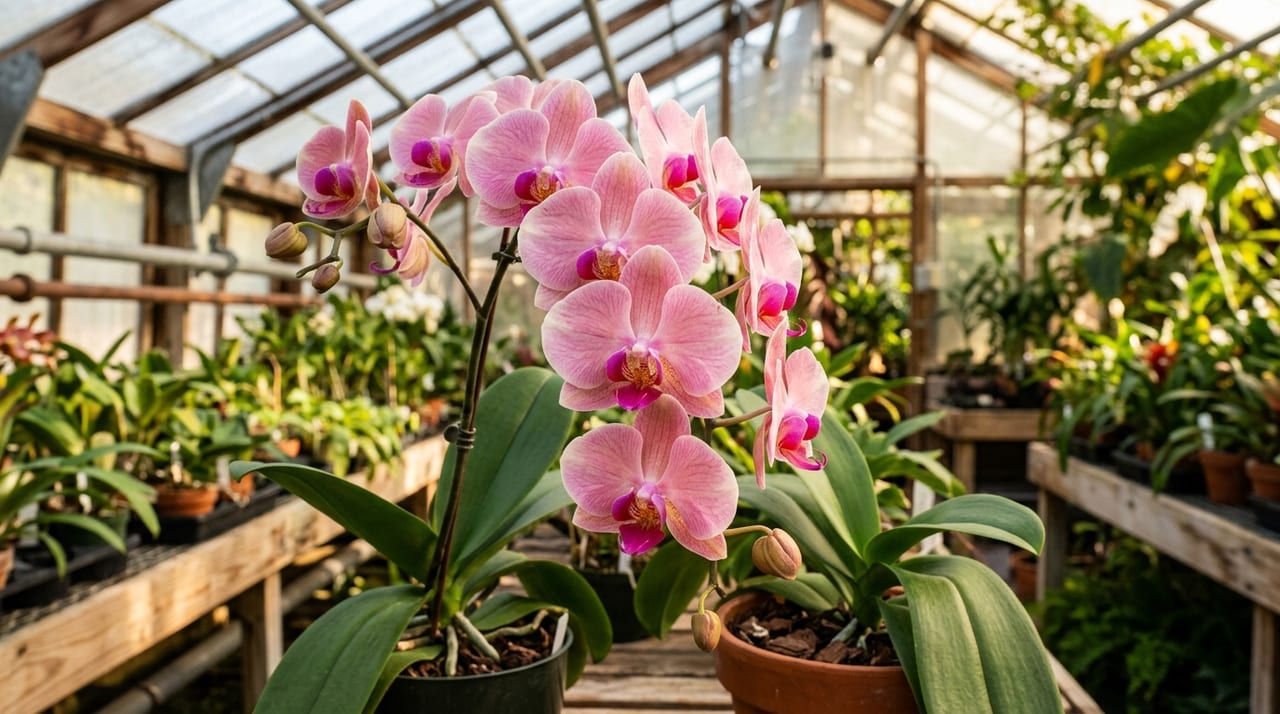
Phalaenopsis orchids are low-light plants requiring 3,000–10,000 lux, thriving best by east- or south-facing windows behind sheer curtains. Direct sunlight causes leaf burn within hours. This article also explains light requirements and placement for Cattleyas and Cymbidiums.
Key Takeaways
Phalaenopsis orchids are low-light plants requiring 3,000–10,000 lux, thriving best by east- or south-facing windows behind sheer curtains. Direct sunlight causes leaf burn within hours. This article also explains light requirements and placement for Cattleyas and Cymbidiums.
Related Species
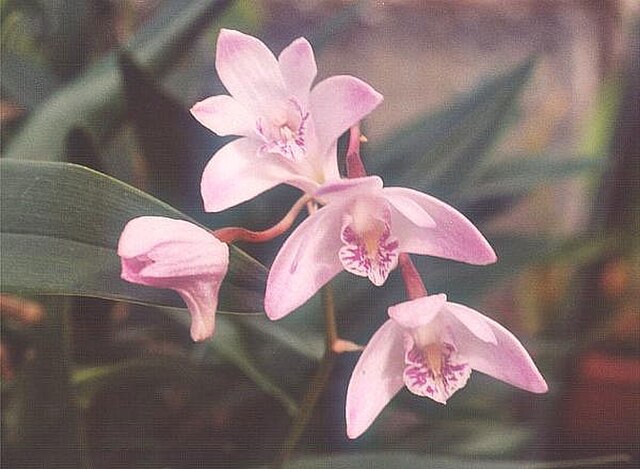
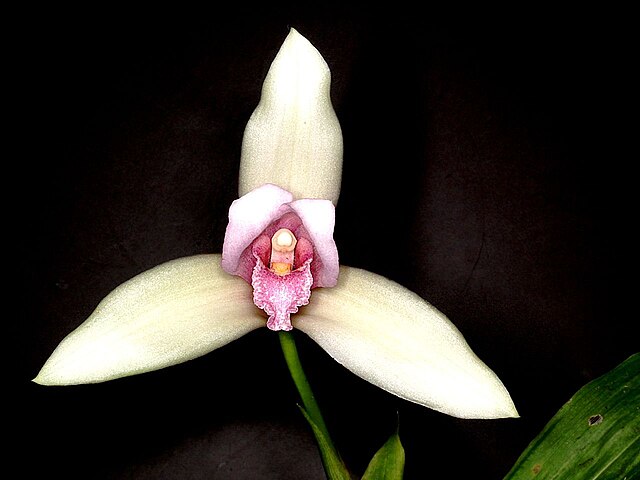
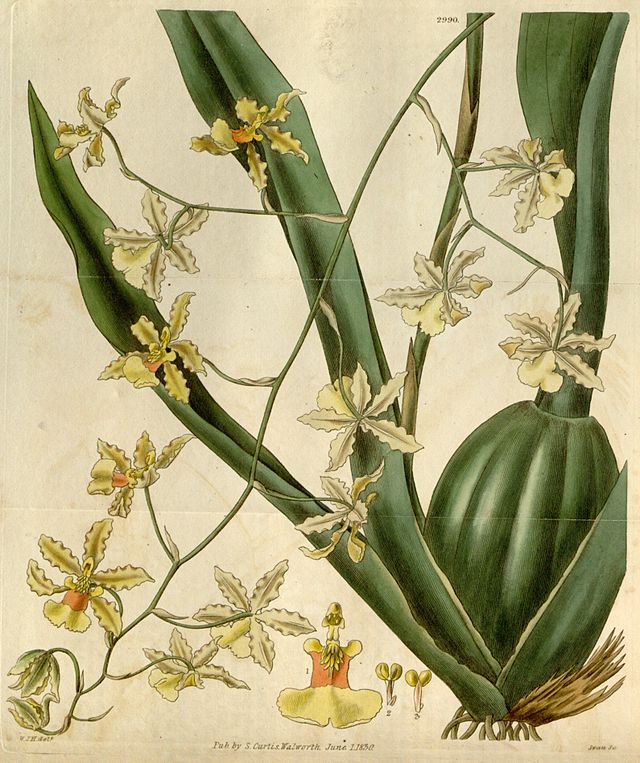
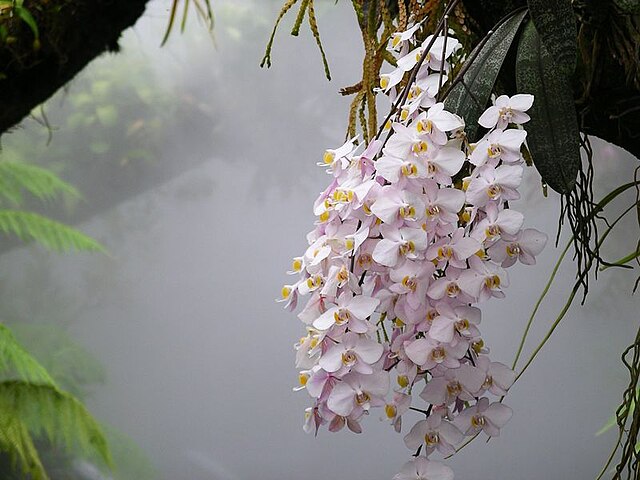
Orchids are said to comprise approximately 25,000 species worldwide, representing unparalleled diversity in the plant kingdom. However, the first obstacle many enthusiasts encounter in cultivation is "light management." Insufficient light prevents flowering, while excessive light burns leaves and weakens the plant—light is as critical to orchids as water and fertilizer. This article organizes the varying light preferences by variety and clearly explains practical light management methods tailored to the season and indoor environment.
Fundamental Concepts of Light Requirements for Orchids
Orchids' light requirements are expressed in units of illumination (lux). On a sunny day outdoors, illumination exceeds 100,000 lux, but a window behind sheer curtains provides approximately 5,000–10,000 lux, while north-facing indoor areas drop to around 1,000 lux.
Orchids are broadly classified into three groups based on their light preferences.
- High light (30,000–50,000 lux): Cymbidiums and some Dendrobiums. Bright light equivalent to semi-shade outdoors is required.
- Medium light (10,000–30,000 lux): Cattleyas, Oncidiums, and Lycaste. Best managed by bright windows or in shaded outdoor areas.
- Low light (3,000–10,000 lux): Phalaenopsis orchids and Paphiopedilums. Can be cultivated even in bright indoor shade.
Whether light is sufficient can be determined by leaf color. Deep green indicates insufficient light, while yellow-green to bright green suggests adequate light. If yellowing or bleaching begins to appear, the light may be too intense. Developing a habit of regularly observing leaf color improves the precision of light management.
Variety-Specific Placement Guide
Phalaenopsis Orchids
Phalaenopsis orchids, popular as gifts, naturally grow as epiphytes on rainforest tree trunks. They prefer soft, dappled light and are extremely sensitive to direct sunlight.
The ideal placement is by an east- or south-facing window behind sheer curtains. Summer requires particular care, as even a few hours of direct sunlight causes leaf burn.
We often receive questions like "Can they grow in poorly lit rooms?" The truth is: you can maintain foliage with standard indoor lighting alone, but if you want them to bloom again the following year, light is insufficient. Room lighting typically falls below 1,000 lux, far short of the 3,000–10,000 lux Phalaenopsis requires. If you want blooms in a north-facing room or away from windows, the practical solution is to provide plant growth lights for 10–12 hours daily, positioned 30–50 cm above the plant. Standard fluorescent or ceiling lights indoors lack both sufficient intensity and appropriate wavelengths for growth; if you're aiming for blooms, choose proper grow lights.
Cattleyas
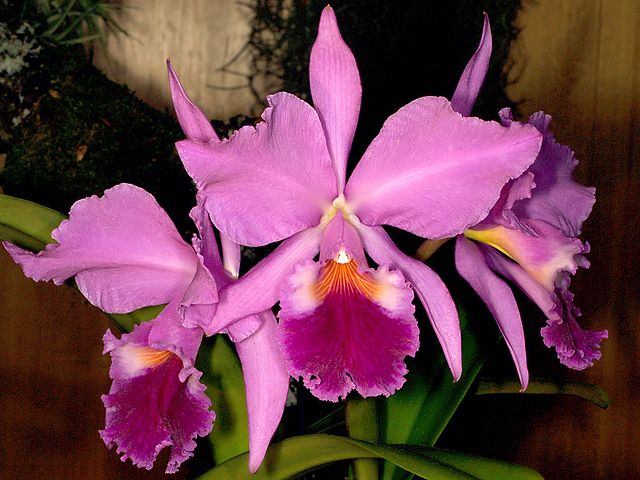
Cattleyas, called the "queen of orchids" for their showy large blooms, prefer medium light. From spring through autumn, they thrive at bright windows (with 30–50% shading); in winter, they can tolerate direct sunlight.
Combining a south-facing window with shade cloth is the easiest management approach. Adequate light dramatically improves blooming; however, avoid intense western sun in summer. Varieties with thicker, harder leaves tend to tolerate light better.
Cymbidiums and Dendrobiums
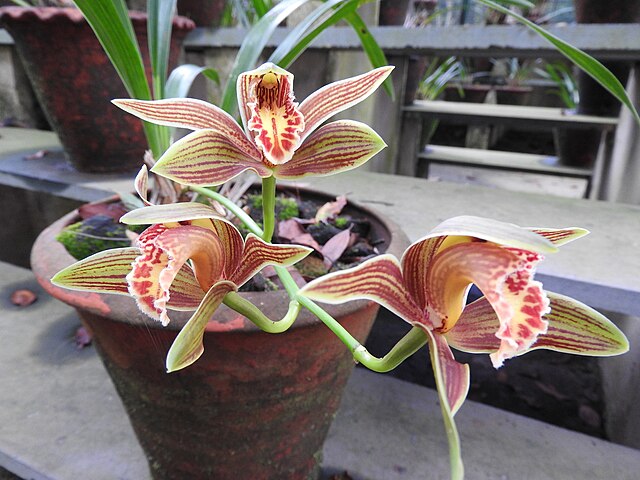
Cymbidiums, which peak in autumn through winter, and spring-blooming Dendrobiums both require ample light. The more light, the fuller the plant and the better the flower bud formation.
From spring through autumn, management in outdoor semi-shade (approximately 50% shading) is ideal. Japanese summer sun is too intense, so shade cloth or nets are needed for adjustment. In autumn, securing a temperature difference between day and night (10°C or more) and adequate light are key to flower bud formation.
Paphiopedilums
Paphiopedilums, characterized by their distinctive slipper-shaped lip, are shade-dwelling orchids native to high-altitude rock crevices and forest floors. Light-averse, they are among the few orchids that can grow by a north-facing window or under indoor lighting alone.
However, despite their shade tolerance, they deteriorate without any light. The key is to secure approximately 8–10 hours of weak light daily, using fluorescent or LED lighting as a supplement.
Seasonal Light Management Calendar
Light management for orchids varies greatly by season. Understanding the year-round management cycle allows for timely adjustments.
- Spring (March–May): A transitional period in which light is gradually increased to acclimate plants from winter's weaker light without sudden exposure to strong light. For outdoor cultivation, begin adjusting shading in April onward based on sun intensity.
- Summer (June–September): The season requiring the most shading. Aim for 50–70% shade, particularly guarding against intense sun after the rainy season ends. In high-temperature, high-humidity environments, also manage ventilation.
- Autumn (October–November): A critical period in which to secure light while leveraging day-night temperature differences to induce flower buds. For Cymbidiums and Cattleyas, light and temperature differences during this period determine the following year's bloom.
- Winter (December–February): Move plants indoors to the brightest location (such as a south-facing window). As daylight hours decrease, supplement with LED lighting as needed.
Using LED Plant Grow Lights Indoors
In apartments with poor light or regions with prolonged winter sunlight shortages, LED plant grow lights become powerful allies. Used properly, they enable healthy orchid cultivation even where natural light is limited.
Selecting Grow Lights
When choosing grow lights suitable for orchids, check the following.
- Wavelength: Full-spectrum types containing red (around 660 nm) and blue (around 450 nm) wavelengths effective for plant photosynthesis are ideal.
- Illumination: Aim for 3,000–8,000 lux for Phalaenopsis and Paphiopedilums, 10,000–20,000 lux for Cattleyas.
- Heat dissipation: Even LEDs generate heat in enclosed spaces, so select products with superior heat dissipation design.
Installation and Operating Tips
- Lighting distance: Install 30–50 cm above the plant to prevent leaf burn.
- Operating hours: Aim for 12–16 hours daily; using a timer for automatic control simplifies management.
- Light-dark cycle: Orchids also need nighttime darkness. Continuous 24-hour lighting is counterproductive; always include an off period.
- Phalaenopsis and Paphiopedilum orchids can bloom sufficiently under LED grow lights alone.
Summary
Light management for orchids begins with understanding each variety's characteristics. From species preferring soft light like Phalaenopsis to those requiring intense light like Cymbidiums, light preferences vary greatly even among orchids.
What matters are three things: "knowing the appropriate light for your variety," "adjusting flexibly by season," and "listening to the plant's needs through leaf color and condition." Even if it seems difficult at first, by observing the plant and making gradual adjustments, anyone can cultivate healthy orchids.
In GrowerDirect's orchid category, you can purchase plants directly from growers—from easy-to-grow varieties to rare specimens for experienced cultivators—each lovingly raised by its producer. Telling the grower about your home's lighting before purchase often results in personalized variety recommendations suited to your environment. Please find the perfect plant for your space.