Rose Hybridization & Breeding Beginner's Guide | How to Create Your Own Original Variety
A guide to rose hybridization from fundamentals to practical steps. From pollen collection and artificial pollination through seed collection, germination, and seedling selection, this article provides a detailed walkthrough of how amateur breeders can create original rose varieties.
Key Takeaways
A guide to rose hybridization from fundamentals to practical steps. From pollen collection and artificial pollination through seed collection, germination, and seedling selection, this article provides a detailed walkthrough of how amateur breeders can create original rose varieties.
Related Species
Rose Hybridization——The Joy of Creating "Your Own Single Bloom"
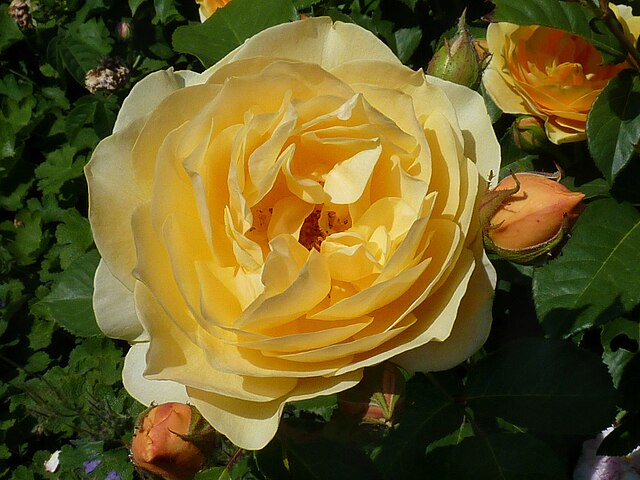
More than 30,000 rose varieties exist in the world today, and nearly all of them were born through human-directed hybridization. Historic beauties like "Peace," a defining rose of the 20th century, or "Graham Thomas," the flagship of English roses, show how a single cross can transform gardens worldwide. Amateur gardeners hybridizing in their home gardens have contributed many varieties that reached the market—it is not only the domain of professional breeders.
Rose hybridization requires no special equipment. Tweezers, a small brush, tissue paper, zippered bags—you can begin with tools found in any household. Of course, the probability of achieving the exact flower you envisioned is extremely low, and whether you will meet "the one" among hundreds of seedlings comes down partly to luck. Yet the emotion of watching a seed you created germinate and produce its first flower is incomparable to any other gardening experience.
This article provides a systematic explanation of everything an amateur breeder should know: the fundamentals of rose hybridization, practical procedures, seedling cultivation, and selection methods.
Understanding Rose Flower Structure
Before beginning hybridization, you must correctly understand the structure of a rose flower.
Stamens (Stamen)
The numerous yellow, rod-shaped organs arranged in the center of a rose bloom are stamens. The anther (or anther sac) at the tip contains pollen. One to two days after the flower opens, the anther splits and pollen becomes exposed. The pollen appears as a yellow to orange powder that adheres when touched with a finger.
Pistil (Pistil)
The columnar organ at the center of the stamens is the pistil. The stigma at its tip is the part that receives pollen. When receptive, the stigma secretes a mucilaginous substance that becomes sticky. This "stickiness" signals the optimal pollination window.
Receptacle (Hip Base)
The enlarged portion at the base of the petals and stamens is the receptacle. When pollination succeeds, it swells into a rose hip (fruit). Inside, seeds (technically achenes) form. For information on harvesting and using collected hips, see Rose Hip Harvest and Utilization Guide.
Petal Count and Hybridization
Single-flowered roses (five petals) have numerous stamens and abundant pollen, but in double-flowered varieties, petal doubling reduces stamen count, and fully double varieties may produce almost no pollen at all. Moreover, highly doubled varieties may have degraded pistil function and cannot be used as seed parents. When planning crosses, account for this consideration.
Planning Your Cross
Clarify Your Goal
Rather than hybridizing haphazardly, it is important to be clear about "what kind of rose you want to create." Consider goals such as:
- A disease-resistant variety with strong fragrance
- A compact, repeat-blooming variety suited to container cultivation
- A unique flower color (for example, deep purple with blue undertones, or true blue tones)
- A cold-hardy English rose type
Selecting Parent Varieties
Rose genetics are complex and do not follow Mendelian inheritance in simple ways. Most traits involve multiple genes and are quantitative. However, remember these basic principles:
Seed parent (maternal plant): The plant that bears rose hips. Choose a robust variety that sets seed readily. Pollen parent (paternal plant): The source of pollen. Choose a variety that produces abundant, high-quality pollen.
The same combination can yield different results depending on which parent is the seed parent (due to cytoplasmic inheritance effects). Therefore, it is recommended to attempt reciprocal crosses (A×B and B×A). Many amateur breeders select a vigorous climbing rose like "New Dawn" as one parent, aiming to boost disease resistance or repeat-blooming traits in their line. For climbing rose training and support methods, see Complete Guide to Climbing Roses.
Checking Compatibility
Most rose varieties can hybridize with one another, but fertility drops when ploidy levels (chromosome numbers) differ. Most modern roses are tetraploid (2n=28), while wild species and old garden roses include diploid (2n=14) types. Crosses between diploid and tetraploid show lower success rates but are not impossible. For information on historic old rose lineages, see The Charm and Cultivation of Old Garden Roses.
Pollen Collection and Storage
Timing for Collection
The optimal time to collect pollen is one to two days after the flower opens, when the anther begins to split. Early morning to mid-morning, in dry conditions, is best. Avoid rainy or high-humidity days, as pollen becomes damp and loses viability.
Collection Method
- Remove all petals from the flower whose pollen you wish to collect
- Using tweezers or your fingertips, remove the anthers and place them on a clean plate or paper
- Leave in a dry, room-temperature location for half a day to one full day, allowing the anthers to dry thoroughly
- Once dry, gently rub the anthers between your fingers; the yellow pollen will fall out as a powder
Pollen Storage
Pollen shows the highest pollination success when used immediately after collection, but storage is possible.
Short-term storage (1–2 weeks): Place in a small, sealed container with silica gel and refrigerate around 5°C. Long-term storage (several months to one year): Place thoroughly dried pollen in a small zippered bag along with silica gel and freeze at -18°C or below. Before use, allow 30 minutes at room temperature before opening to prevent condensation.
Pollen stored long-term loses viability and should be applied in greater quantity than fresh pollen.
Artificial Pollination Procedure
Preparing the Seed Parent (Emasculation)
Successful hybridization requires "emasculation"——removing the stamens from the seed parent to prevent unwanted self-pollination.
- Begin when the seed parent's bud is swollen and petal color has begun to show (one to two days before opening)
- Gently remove the petals, exposing the stamens and pistil
- Using tweezers, remove all stamens (anthers) carefully, taking great care not to damage the pistil
- Place a breathable bag (tea bag, non-woven fabric bag, etc.) over the emasculated flower to prevent unintended pollination by insects
Timing of Pollination
One to three days after emasculation, the stigma begins secreting mucilage. This "stickiness" signals the optimal pollination window. When you feel tackiness by gently touching the stigma with a finger, proceed with pollination.
Pollination Method
- Prepare stored pollen or fresh pollen freshly collected from anthers
- Apply pollen generously to the tip of a fine brush (a detail brush works best)
- Gently apply the pollen to the stigma of the seed parent. The key is to coat all stigma tips evenly
- After pollination, replace the protective bag for two to three days
Keep Records
Always record your crosses. Write the following information on a tag or label and attach it to the flower stem:
- Date of cross
- Seed parent variety name
- Pollen parent variety name
- Cross number (assigned by you)
Detailed records in a garden notebook or spreadsheet prove invaluable for later analysis of cross results.
Rose Hip Maturation and Seed Collection
Confirming Fruit Set
When pollination succeeds, the receptacle gradually swells. Noticeable enlargement should be visible within two to three weeks. If there is no change, the cross likely failed; try again with a different flower.
Rose Hip Maturation
Rose hips typically mature three to five months after pollination (timing varies by variety). Signs of maturity include:
- Color changes from green to yellow, orange, then red
- Slight wrinkling appears on the surface
- Pressing lightly yields to slight softness
It is common to harvest before complete red ripening (at the orange-to-red-beginning stage). Over-ripened hips may lose seed viability.
Extracting Seeds
- Cut the rose hip lengthwise with a knife
- Remove the seeds (achenes) inside. One hip yields several to dozens of seeds
- Rinse away the fruit flesh in water, separating seeds only
- Soak seeds in water; discard floating seeds, which likely lack viability (use seeds that sink)
Stratification and Germination
Rose seeds exist in a "dormant" state and will not germinate if sown directly. Germination requires "stratification"——exposure to a cold, moist environment for a set period.
Stratification Method
- Mix seeds into moistened vermiculite or peat moss
- Place in a zippered bag, seal, and refrigerate at 3–5°C
- Refrigerate for six to ten weeks (varies by variety)
- Open the bag once weekly to check conditions; remove any mold
- If growing medium dries, lightly mist
Germination
Once stratification is complete, sow the seeds.
- Fill a clean seed tray with seed-starting mix (equal parts small red lava rock and vermiculite)
- Place seeds one centimeter apart and cover with approximately 5mm of medium
- Wet from below until the entire medium is moist
- Place in a bright indoor location (20–25°C). Avoid direct sunlight
- Germination takes two weeks to three months. Expect wide variation by variety, so be patient
Not all seeds from a rose cross will germinate. Seeds that fail to germinate are perfectly normal.
Seedling Cultivation and First Bloom
Care After True Leaf Emergence
Once seedlings have three to five true leaves, transplant into individual pots (7.5–9cm). Use a mix of small red lava rock, leaf mold, and perlite in a ratio of 5:3:2.
Key management points at this stage:
- Light: Grow in partial shade, gradually increasing light exposure
- Watering: Water thoroughly once the soil surface dries. Excess moisture causes damping-off
- Fertilizer: Apply dilute liquid fertilizer (half normal strength) every two weeks
- Pests and disease: Young seedlings are prone to powdery mildew; preventive fungicide sprays are recommended (see also Rose Pest and Disease Control Guide)
First Bloom
Seedlings often produce their first flowers just three to six months after germination. This reflects the trait in rose seedlings of relatively early flower bud initiation.
However, first flowers often do not reflect the variety's true character. Petal count may be lower, and flower form may be unstable. Two to three years of cultivation is necessary to see the true flower.
First bloom marks the first selection stage. Remove any plants that clearly diverge from your goal, appear weak, or show severe disease. However, remain cautious in judgment——plants that appear "disappointing" at this stage may develop differently in years two and three.
Selection——Finding "Your Own Single Bloom"
Selection Criteria
Identifying the potential show rose among hundreds of seedlings is the most critical and challenging phase of breeding. Conduct multi-stage selection using these criteria:
First selection (year one of seedling growth)
- Eliminate extremely weak plants or those with severe disease
- Retain plants with noteworthy flower form and color
- Typical elimination rate is 70–80% of total
Second selection (years two to three)
- Confirm repeat-blooming (repeat-flowering habit)
- Stability of flower form
- Balance of vigor and tree shape
- Disease resistance (observe under cultivation without fungicides; see also Rose Organic Pest Control Guide)
- Quality and intensity of fragrance
Third selection (years three to five)
- Multi-year stability
- Vase life as a cut flower
- Propagation ability by cutting and grafting
- Adaptability testing in different growing environments
Professional Breeder Numbers
For reference, here are typical figures for professional rose breeders leading up to new variety release:
- Annual crosses: thousands to tens of thousands
- Seedlings cultivated: tens of thousands
- Final selections released per year: approximately one to five varieties
- Time from cross to release: eight to ten years
Amateurs need not work at this scale, but the principle of "sow abundantly and select rigorously" remains the same.
Propagating and Fixing Selected Lines
Once you find a plant you love, propagate it to establish it as a variety.
Propagation by Cutting
The most accessible method. Cut semi-ripe wood (shoots from after bloom) into 10–15cm lengths, remove lower leaves, apply rooting hormone, and insert into clean cutting mix. Roots form within two to three months, yielding own-root plants. For detailed instructions, see Propagating Roses by Cutting.
Budding and Grafting
Grafting onto rootstock (Rosa multiflora or Rosa canina) allows more vigorous growth. This works especially well for weaker varieties or those that do not develop adequately on their own roots. For information on rootstock selection, see Rose Grafting Techniques.
Variety Registration
If an outstanding variety emerges, you may consider variety registration. In Japan, you file a "variety registration application" with the Ministry of Agriculture, Forestry and Fisheries. The period of breeder's rights was extended by the 2026 revision of the Plant Variety Protection Act from 25 to 35 years (woody plants like roses, from 30 to 40 years). However, applications entail costs (application fee plus examination fee, totaling tens of thousands of yen), and examination takes two to three years.
Source: Plant Variety Protection Act Article 19 (e-Gov Legal Search)
The Amateur Breeder's Principles
Embrace Failure
Rose hybridization is "a series of failures" as standard. Failed fruit set, failed germination, blooms that look nothing like what you envisioned——this pattern repeats. Yet the charm of hybridization lies in the sudden, unexpected beauty that can appear. History abounds with examples of accidental masterpieces.
Keep Records
Maintaining careful records of crosses, germination, and blooming is essential for planning future hybridization. Photographs are equally important. By accumulating photos of flowers photographed under the same conditions, you can track variety changes year by year.
Join a Community
Rose enthusiast communities like the Japan Rose Society or the American Rose Society (ARS) include many amateurs engaged in breeding. Seed exchange, breeding advice, and evaluation of selections by fellow enthusiasts become major supports for your breeding efforts.
Start Small
There is no need to undertake large-scale hybridization from the start. Take two to three favorite varieties and perform five to ten crosses; grow the resulting seedlings for two to three years and experience the full cycle——that alone offers plenty of enjoyment. As you gain experience, the scale naturally expands.
Summary——A Rose Entirely Your Own
Rose hybridization is a "creative" undertaking that transcends mere horticultural technique. Layering human intention over nature's random genetic combination, dreaming of flowers yet unseen——this process carries a unique charm where science and art intersect.
The necessary tools are simple, costs are minimal, and a corner of your garden suffices to begin. The only investment is "time and patience." From seed sowing to first bloom takes months; from bloom to established variety takes years. For those who can enjoy that long journey, rose hybridization becomes an irreplaceable hobby.
Perhaps one day, your original rose will be loved in someone else's garden. Why not take the first step this coming spring?