How to Grow Senecio (String of Pearls) | Watering & Rejuvenation for Trailing Succulents
Watering techniques for Senecio species succulents including String of Pearls, String of Rubies, and String of Bananas; troubleshooting shriveled or burst beads; and rejuvenation through propagation.
Key Takeaways
Watering techniques for Senecio species succulents including String of Pearls, String of Rubies, and String of Bananas; troubleshooting shriveled or burst beads; and rejuvenation through propagation.
Related Species
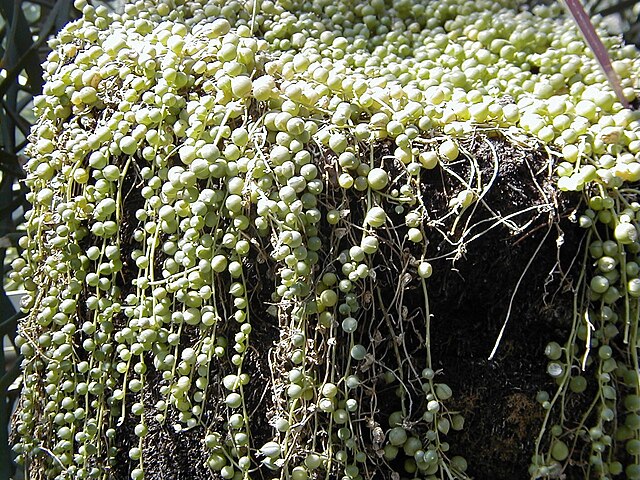
String of Pearls (Senecio rowleyanus, currently classified as Curio rowleyanus), representing the Senecio genus (Curio genus), are succulent plants beloved as indoor greenery for their unique appearance of rounded bead-like leaves strung together. However, many people struggle with "difficult watering" and "shriveled beads," and understanding their growth characteristics is key to long-term cultivation.
Senecio Species: Types and Characteristics
The main trailing succulents in the Senecio group commonly sold include:
String of Pearls (Curio rowleyanus): The standard variety featuring strings of nearly spherical leaves 5–8 mm in diameter. The leaves contain transparent "windows" that allow light to penetrate deep into the leaf tissue. Native to South Africa, it grows naturally in dry rocky areas and beneath low shrubs. A variegated String of Pearls is also available, with white markings that enhance its ornamental value.
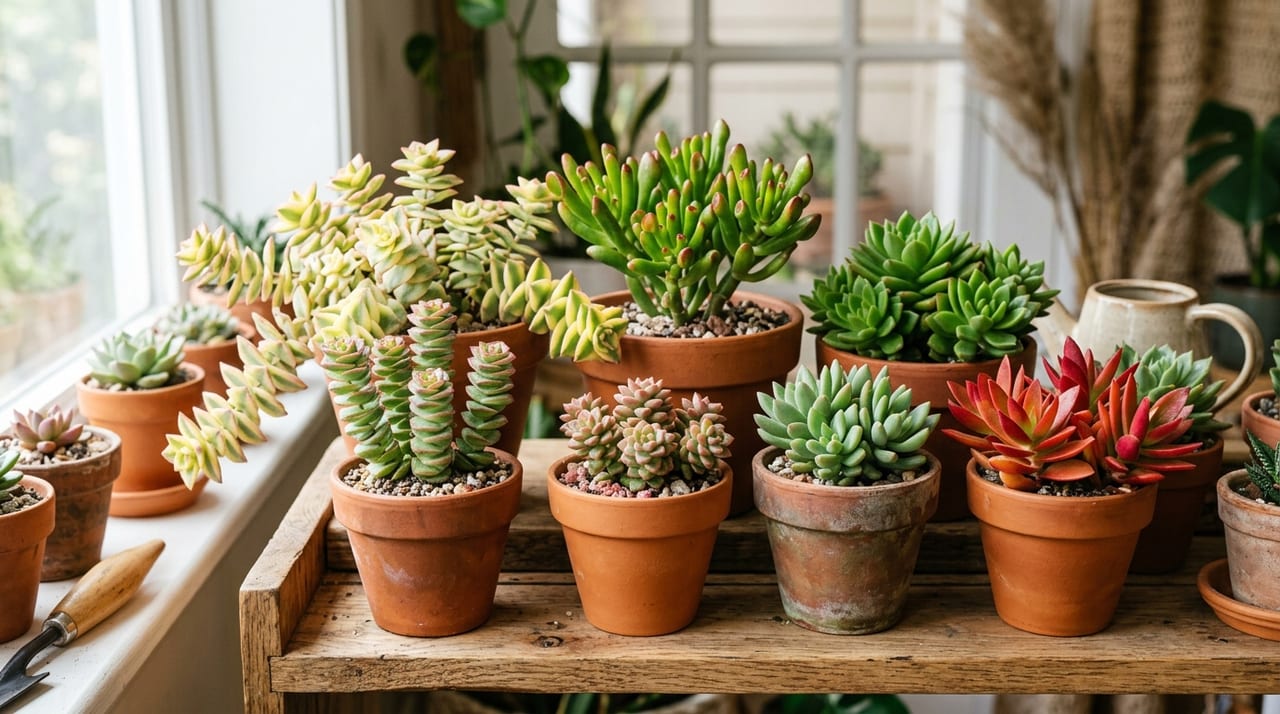
String of Rubies (Curio herreanus × hybrids): Features elliptical to tear-drop-shaped leaves that turn ruby or purple when exposed to bright sunlight. It is reportedly more tolerant of heat and slight humidity than String of Pearls.
String of Bananas (Curio radicans): A species with banana or crescent-shaped leaves. More robust and easier to grow than String of Pearls, making it a good beginner choice.
Why Beads Shrivel and Burst
The most common problems are "bead shrivel" and "bead burst" (splitting). Each has a different cause.
Beads Shriveling (becoming raisin-like): Insufficient water is the primary cause. If the roots are healthy, they will recover within several days of watering. However, root rot can also cause shrivel by preventing water uptake. To distinguish: if the pot feels light when held (soil is dry), the problem is dehydration; if the pot is heavy despite shriveled beads, suspect root rot. In case of root rot, remove damaged roots, let dry, and regenerate via propagation.
Beads Bursting (cracking or splitting): Sudden heavy watering is the cause. When large amounts of water are applied after prolonged dryness, cells expand rapidly and beads split. If the drying period was long, gradually reintroduce water in small amounts.
Rot from Dampness and Overwatering: If the base and stems turn black and rot, it signals excessive humidity. This is especially common during the humid rainy season and hot months, and worsens with poor air circulation, sealed pot covers, or standing water in saucers.
Hanging Pot Management and Summer Humidity Control
String of Pearls thrives best in hanging pots (hanging baskets). Stems trail naturally while maintaining good air circulation.
Choosing a Hanging Pot: Terracotta pots offer excellent air circulation, reducing root rot risk, but dry quickly, requiring more frequent watering. Plastic pots retain moisture better and are easier to manage, but require attention to summer heat buildup. Choose pot size based on root volume—avoid oversized pots.
Summer Management: Senecio succulents slow growth during summer (especially above 30°C/86°F) and enter a dormant-like state. During this period, reduce watering drastically (once or twice monthly), move to bright shade away from direct sun, and ensure good air circulation to prevent pot stagnation.
Propagation: Stem Cuttings and Laid-Down Propagation
Stem cuttings are the easiest way to propagate String of Pearls.
Stem Cuttings: Cut 10–15 cm lengths of stem, allow the cut end to dry for 2–3 days, then insert into dry soil (succulent potting mix or sandy soil). Rooting takes 2–4 weeks. Water only after roots have formed.
Laid-Down Propagation (Stem Laying): Place stems horizontally on soil and press lightly. Roots and shoots emerge from stem nodes, allowing many new plants to develop at once. This is also effective for rejuvenating old plants whose stems have become woody.
Timing for Rejuvenation: When stems become overgrown and sparse at the base, cut back aggressively and propagate from cuttings, or use laid-down propagation to reset. Success rates are highest in spring or autumn (15–25°C) when temperatures are stable.
Soil and Pot Selection
Ideal soil for Senecio species is well-draining succulent or cactus potting mix as a base, amended with 20–30% small pumice or perlite. Commercial succulent mixes work, but avoid peat-heavy soils with high water retention.
Choose pot size appropriate to root volume. For hanging pots, terracotta offers superior air circulation but dries quickly. Plastic hanging pots retain more moisture and suit those preferring reduced watering frequency. Pots with multiple drainage holes or basket-style designs with high air circulation are recommended.
Flowering and Care
String of Pearls blooms with small white flowers (cinnamon-scented) from autumn through winter. Remove spent flowers regularly. If prioritizing plant vigor over blooms, you can pinch buds before flowering.
String of Rubies produces orange to yellow flowers, also fragrant, with more visible blooms than String of Pearls and higher ornamental value during flowering. Blooming requires adequate light and day-night temperature fluctuation, so plants kept at bright indoor windowsills often fail to flower. For abundant blooms, move plants in autumn to a sheltered outdoor spot with greater temperature variation.
Over time, older stems become woody and leaves thin out. This marks the moment for rejuvenation. Cut back the entire plant aggressively, propagate the cuttings, and build multiple young plants. Rejuvenation succeeds best in spring or autumn when temperatures are stable.