Succulent Soil Mix Guide | Types of Growing Media and Optimal Blending Ratios
A detailed explanation of soil blending suitable for succulents. Introduces the characteristics of each growing medium such as akadama soil, kanuma soil, and perlite, blending ratios by variety, and adjustment methods tailored to seasons and growing environments.
Key Takeaways
A detailed explanation of soil blending suitable for succulents. Introduces the characteristics of each growing medium such as akadama soil, kanuma soil, and perlite, blending ratios by variety, and adjustment methods tailored to seasons and growing environments.
Related Species
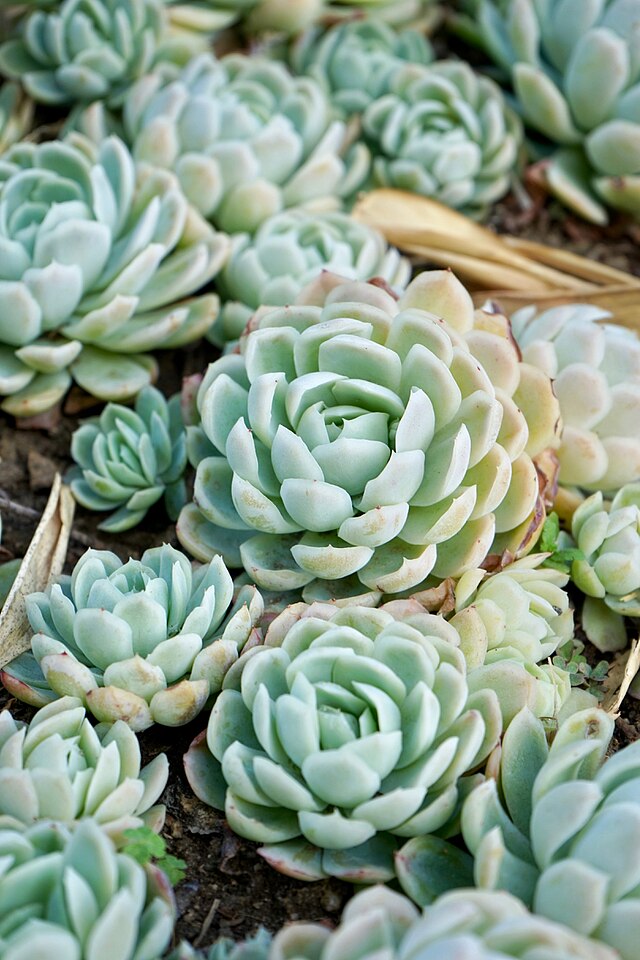
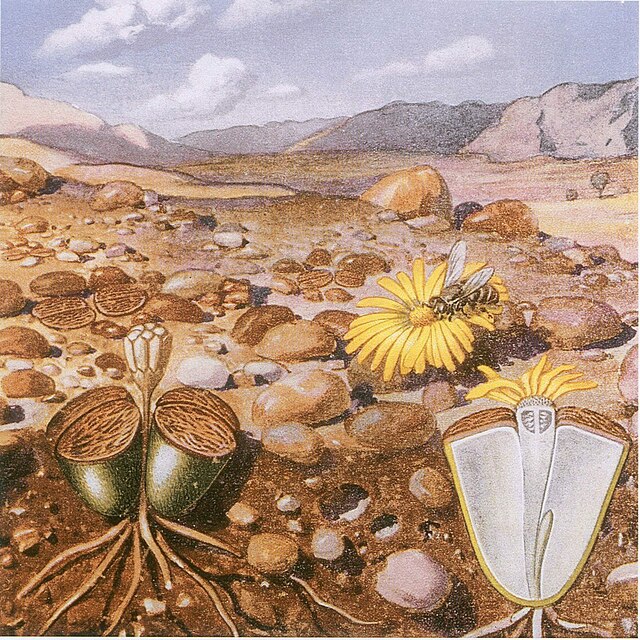
In the cultivation of succulents, the choice of growing medium is one of the most important factors. Succulents have a nature that makes them vulnerable to excessive moisture, so general-purpose flower and herb potting soil has poor drainage and easily leads to root rot. This article explains the types of growing medium best suited for succulents and their optimal blending ratios.
Conditions for Growing Medium Suitable for Succulents
There are three major conditions required of growing medium for succulents.
High drainage Succulents store water in their leaves and stems, so if roots are constantly wet they rot easily. Water should drain quickly and soil should dry appropriately.
Good air circulation Roots need air to breathe. Without air passages in the soil, oxygen deficiency weakens roots and anaerobic pathogens multiply. Using granular soil creates air passages between particles.
Adequate moisture retention If pursuing drainage alone, water flows too quickly and roots don't have time to absorb it. Especially in summer, drying is rapid, so some moisture-retaining components are needed. Balance between drainage and water retention is important.
Types and Characteristics of Major Growing Media
Here are the representative growing media used in succulent soil blends.
Akadama Soil (Small Grade) Akadama soil is granulated Kanto loam and is the basic material for succulent growing medium. It combines adequate moisture retention and drainage, with a pH around 6.0, making it slightly acidic. As time passes, the granules break down and drainage decreases, so repotting every 1-2 years is ideal. Hard-grade akadama soil is resistant to crumbling and longer-lasting, but somewhat pricier.
Kanuma Soil (Small Grade) Kanuma soil is a pumice-based soil produced in the Kanuma region of Tochigi Prefecture. It has higher drainage than akadama soil and superior air circulation. With a pH around 5.0, it is acidic and suitable for varieties that prefer acidic conditions. Its yellowish color becomes pale when dry, which has the advantage of making it easy to judge watering timing by sight.
Perlite Perlite is a white pumice-like material made by heat-treating perlite ore at high temperature to expand it. It excels in drainage and air circulation and is extremely lightweight. It is mixed when you want to lighten the overall soil or increase drainage. Since it has almost no water retention, adding too much causes the soil to dry too quickly.
Pumice (Hyuga Stone) Natural pumice that excels in drainage and air circulation. Its advantage is that granules resist crumbling and can be used long-term. When used alone, it has almost no water retention, so it is used mixed with akadama soil. It is also used as pot drainage material.
Vermiculite Vermiculite is a golden flake-like material made by heat-treating mica at high temperature. It excels in moisture retention and nutrient-holding capacity and is lightweight. It may have somewhat too high moisture retention for succulent growing medium, but mixing a small amount improves nutrient retention.
Charcoal (Rice Husk Charcoal) Charcoal is made by carbonizing rice husks. It improves air circulation, provides sterilizing effects, and adjusts pH (alkaline). Mixing it at about 5-10% of the total helps improve the growing medium.
Basic Blending Ratios
Here are universal blending ratios suitable for most succulents.
Basic Mix (All-Purpose) Akadama soil (small grade) 4 : Kanuma soil (small grade) 3 : Perlite 2 : Charcoal 1
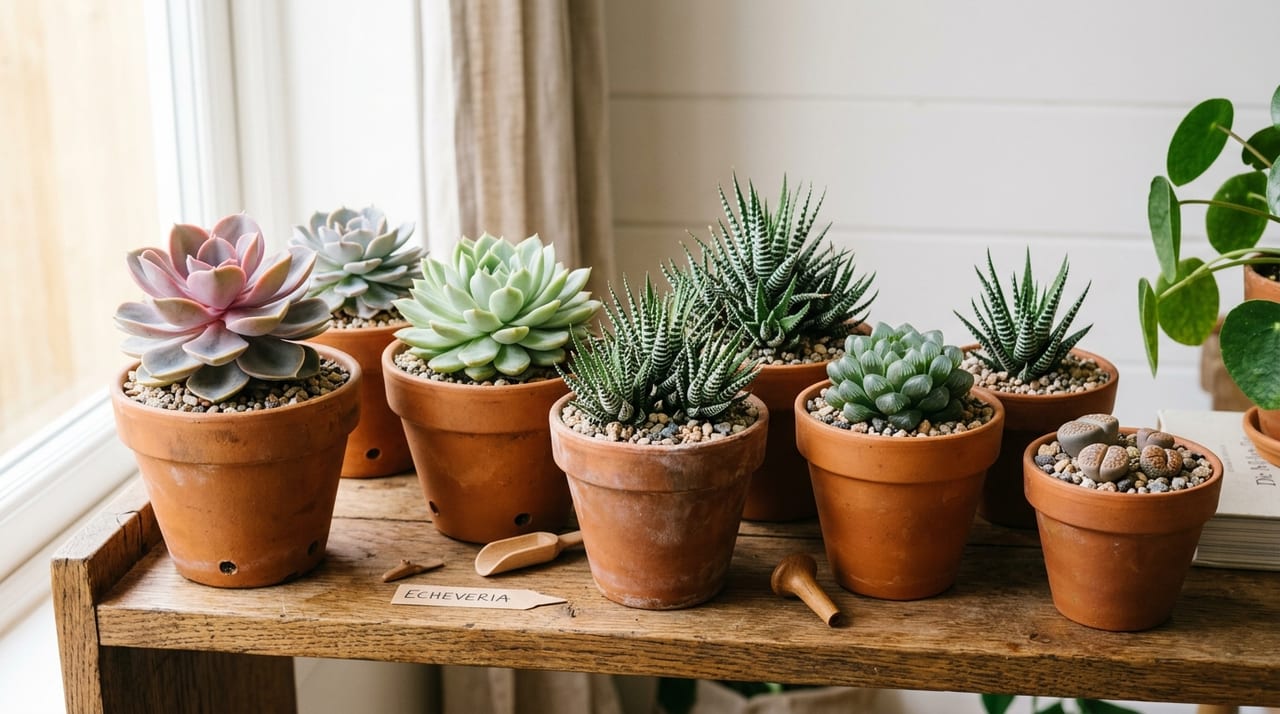
This mix has good balance between drainage and moisture retention and can be used for general succulents such as Echeveria, Sedum, Graptopetalum, and Pachyphytum.
Drainage-Focused (For Varieties That Prefer Dryness) Akadama soil (small grade) 3 : Pumice (small grade) 3 : Kanuma soil (small grade) 2 : Perlite 2
This blend is for varieties that particularly dislike excessive moisture, such as cacti, agave, and hard-leaved Haworthia. It dries quickly after watering, making it effective in preventing rot during humid summers.
Slightly Higher Water Retention (Growth Period-Focused) Akadama soil (small grade) 5 : Kanuma soil (small grade) 2 : Vermiculite 2 : Charcoal 1
This is suitable for varieties that require ample moisture during their growth period or for small pots where drying is too rapid. However, care is needed during winter management, requiring adjustment to reduce watering frequency.
Blending Adjustments by Variety
Succulents prefer different growing media depending on genus and variety. Here are adjustment points for representative varieties.
- Echeveria: No issues with the basic mix. Slightly increasing drainage for assurance is recommended.
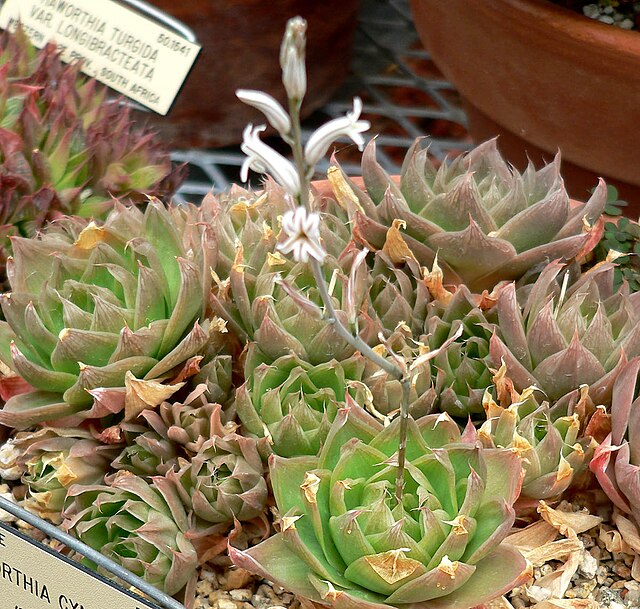
- Haworthia: Use more akadama soil to slightly increase water retention. Since cultivation avoids direct sunlight, drying is slower, making drainage assurance important.
- Sedum: The basic mix is sufficient. Sedum is hardy and not particularly particular about growing medium.
- Lithops: Prioritize drainage. Use a pumice-heavy blend and also spread pumice as decorative sand on the surface.
- Caudex varieties: Emphasize drainage. Mix abundant large-grade pumice to create a chunky texture.
Seasonal and Environmental Adjustments
Even with the same mix, drying speed varies depending on the growing environment.
- Balcony cultivation in windy areas: Drying is rapid, so slightly increase water retention.
- Indoor cultivation in poorly ventilated areas: Drying is slow, so increase drainage.
- Rainy season or summer: Drainage-focused blending is safest. Prevents root rot from dampness.
- Small pots (2-3 size): With less soil and faster drying, slightly increase water retention.
- Large pots (5 size or larger): The center dries slowly, so increase drainage.
About Commercially Available Succulent Growing Media
Commercially available "succulent and cactus soil" sold at garden centers and home improvement stores is convenient to use, but quality varies by manufacturer. Since some products lack sufficient drainage, it is recommended to check the blend contents on the package before purchase and, if necessary, add perlite or pumice to improve drainage.
Get Succulent and Soil Mix Advice from GrowerDirect
At GrowerDirect, you can get advice from succulent growers on soil blends suited to different varieties. Growers often share the actual blends they use, giving you practical information tailored to your growing environment. Feel free to consult with growers about soil mix when purchasing succulents.