【Comprehensive Comparison】Venus Flytrap vs Nepenthes | Differences in Cultivation, Cost, and Characteristics
Compare Venus Flytraps and Nepenthes on insect-trapping methods, growing environments, winter survival, and price ranges. Which is best for your first carnivorous plant?
Key Takeaways
Compare Venus Flytraps and Nepenthes on insect-trapping methods, growing environments, winter survival, and price ranges. Which is best for your first carnivorous plant?
Related Species
When stepping into the world of carnivorous plants, the first two species that catch your eye are the "Venus Flytrap" and "Nepenthes (Pitcher Plant)." Both are unique insect-catching plants, but their appearance and cultivation methods are completely different. This article provides a thorough comparison for everyone from beginners growing carnivorous plants for the first time to advanced collectors looking to expand their collections.
Insect-Trapping Mechanisms——Completely Different Trap Types
The true appeal of carnivorous plants lies in the diverse strategies they employ to catch insects.
Venus Flytrap's "Snap Trap Mechanism"
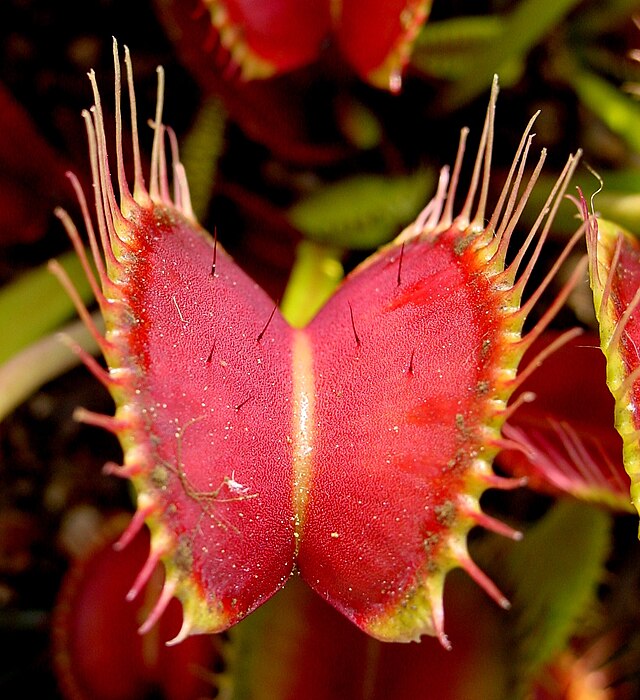
The Venus Flytrap (Dionaea muscipula) is a native of the wetlands of North Carolina in North America and the world's most famous carnivorous plant. The leaf tips open like a clam shell, with three fine sensory hairs (trigger hairs) on the inner surface.
When an insect touches these trigger hairs twice or more, the leaf snaps shut in a remarkable 0.5 seconds. This rapid movement is extremely rare in the plant kingdom and never fails to inspire wonder. After the trapped insect is dissolved by digestive enzymes and its nitrogen is absorbed, the leaf opens again. However, each leaf has a limited number of open-close cycles, so repeatedly touching it with your fingers is strictly forbidden.
Nepenthes' "Pitfall Trap Mechanism"
Nepenthes (Nepenthes spp.) is a tropical carnivorous plant distributed mainly in Southeast Asia, affectionately known as the "Pitcher Plant." The most distinctive feature is the modified leaf tip forming a "pitcher" (trap), which varies in shape depending on the species.
The rim of the pitcher (peristome) is slippery, designed so that insects slip and fall into the trap. Digestive liquid accumulates in the pitcher, where fallen insects are slowly digested. Larger species can even trap small lizards and mice, and this impressive scale is part of their appeal.
Growing Environment——Key Points for Placement and Temperature Management
Cultivating Venus Flytrap
For Venus Flytraps, light is the key. They prefer locations receiving 4–6 hours or more of direct sunlight daily. Insufficient light results in smaller insect-catching leaves and a weak, uniformly green plant.
Watering uses the "semi-aquatic method" as the standard approach. Keep water constantly in a saucer and maintain the soil in a consistently moist state. Because they dislike minerals in tap water, rainwater, distilled water, or reverse osmosis (RO) water is ideal.
In winter, the above-ground portions die back and the plant enters dormancy. This "hibernation" is essential for maintaining a healthy plant, and exposure to low temperatures around 0–5℃ is recommended. With Japan's climate, winter survival is manageable with just frost protection outdoors, making this species relatively easy to care for.
Cultivating Nepenthes
Because Nepenthes originates in the tropics, temperature management is the biggest challenge. Lowland species prefer 20–30℃ year-round, while highland species prefer slightly cooler environments around 15–25℃. They struggle with Japanese winters, so management in a warm indoor location is essential.
Light-wise, bright partial shade is ideal—they tend to prefer soft light over direct sunlight. Watering can be done using the semi-aquatic method or standard pot saucers, but if the soil dries out too much, the pitcher will wither. Therefore, maintaining humidity is critical. Misting the leaves and pitchers with a spray bottle is also effective.
Main Specifications Comparison Table
| Item | Venus Flytrap | Nepenthes |
|---|---|---|
| Insect-trapping method | Snap trap | Pitfall trap |
| Cultivation difficulty | ★★☆☆☆ | ★★★☆☆ |
| Cold hardiness | Down to −5℃ (requires dormancy) | 15℃ and above (tropical) |
| Required light | 4–6 hours direct sunlight | Bright partial shade |
| Watering method | Semi-aquatic (pure water recommended) | Semi-aquatic to pot saucer |
| Repotting frequency | Once every 1–2 years | Once every 2–3 years |
| Typical price range | ¥300–¥3,000 | ¥500–¥30,000+ |
| Number of varieties | Dozens of varieties | 170+ species |
Recommendations for Different Types of People
Venus Flytrap Is Ideal For:
- First-time carnivorous plant growers: Widely available and affordable. Easy to try again if you fail.
- Those who enjoy watching plants move: The joy of observing the moment the leaf snaps shut with your children.
- Those with outdoor space: Direct sunlight and winter cold management are easy to handle on a balcony.
One caution: neglecting dormancy care leads to poor growth the following spring. Many people mistakenly think the plant has "died" during winter and discard it, so understanding the hibernation process beforehand is important.
Nepenthes Is Ideal For:
- Those who want to display them as interior décor: Their hanging appearance is striking and adds an accent to your room.
- Those who enjoy collecting: With 170+ wild species plus numerous hybrids, your collection can expand endlessly.
- Those in warm regions or mainly growing indoors: Can be managed year-round in air-conditioned indoor spaces.
Because pitcher shape, color, and size vary dramatically by species, once you start collecting, you won't be able to stop. For beginners, it's recommended to start with relatively hardy lowland species like N. alata and N. ventricosa.
GrowerDirect's Safe and Reliable System
If you want to enjoy Venus Flytraps and Nepenthes more deeply, try seeking out rare varieties and well-cultivated specimens that are difficult to find at mass retailers. GrowerDirect provides a system where you can purchase directly from growers who specialize in growing carnivorous plants.
- Direct from grower: By eliminating middlemen, you can directly confirm the plant's condition and care methods.
- Shared cultivation information: You can ask the seller about growing techniques, so even beginners can confidently welcome plants into their homes.
- Diverse variety lineup: Rare species and hybrids not commonly seen in retail stores may be listed.
- Reliable transaction guarantee: If any trouble arises, support systems are in place, so you can trade with confidence even on your first transaction.
Carnivorous plants are a unique genre where "the joy of growing" and "the joy of observation" coexist. Learn the basics with a Venus Flytrap, and once you're comfortable, venture into the diverse world of Nepenthes——please try this approach to enjoyment as well.