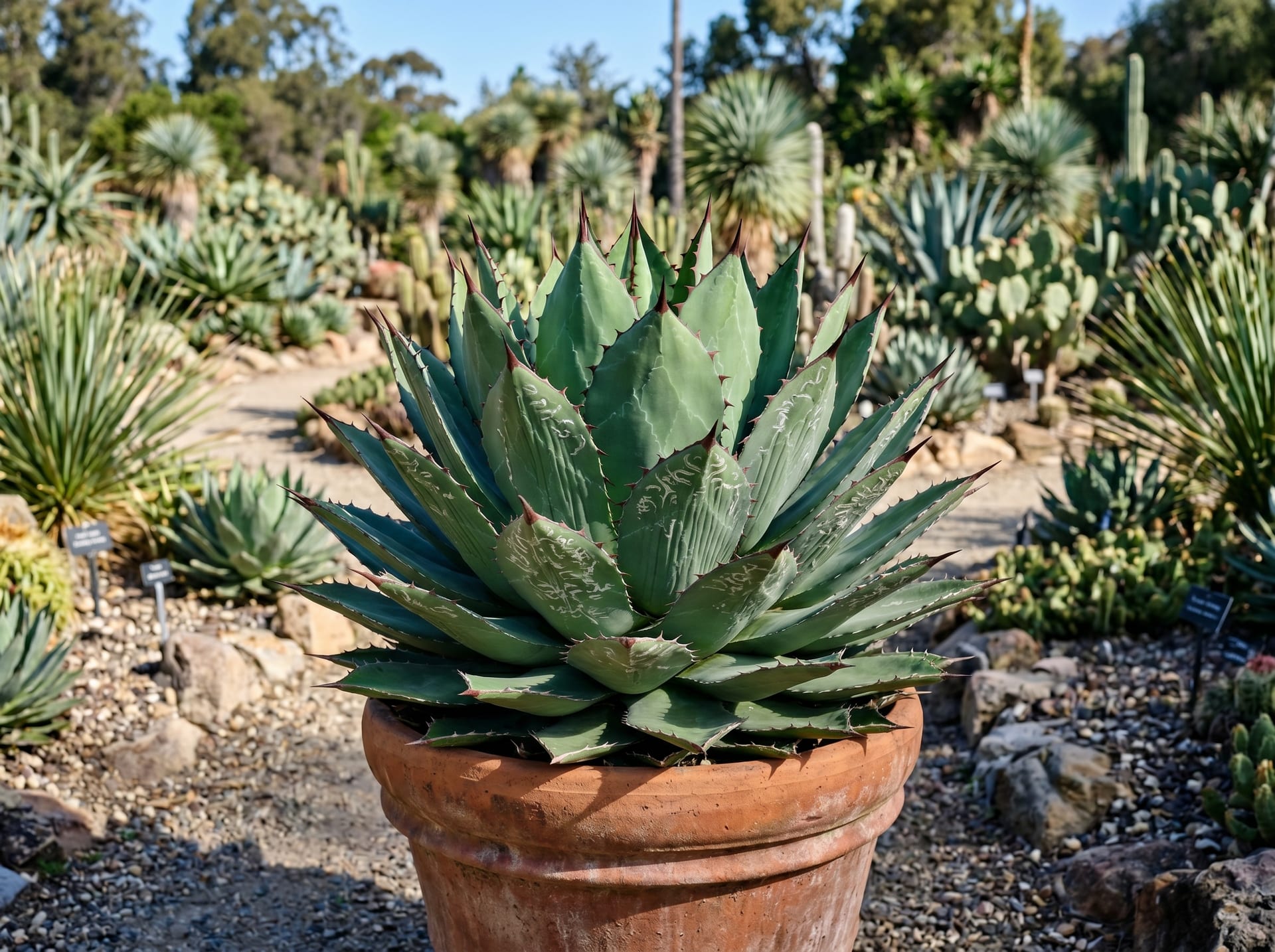
AI-generated image
Agave Gentryi
BeginnerAgave gentryi
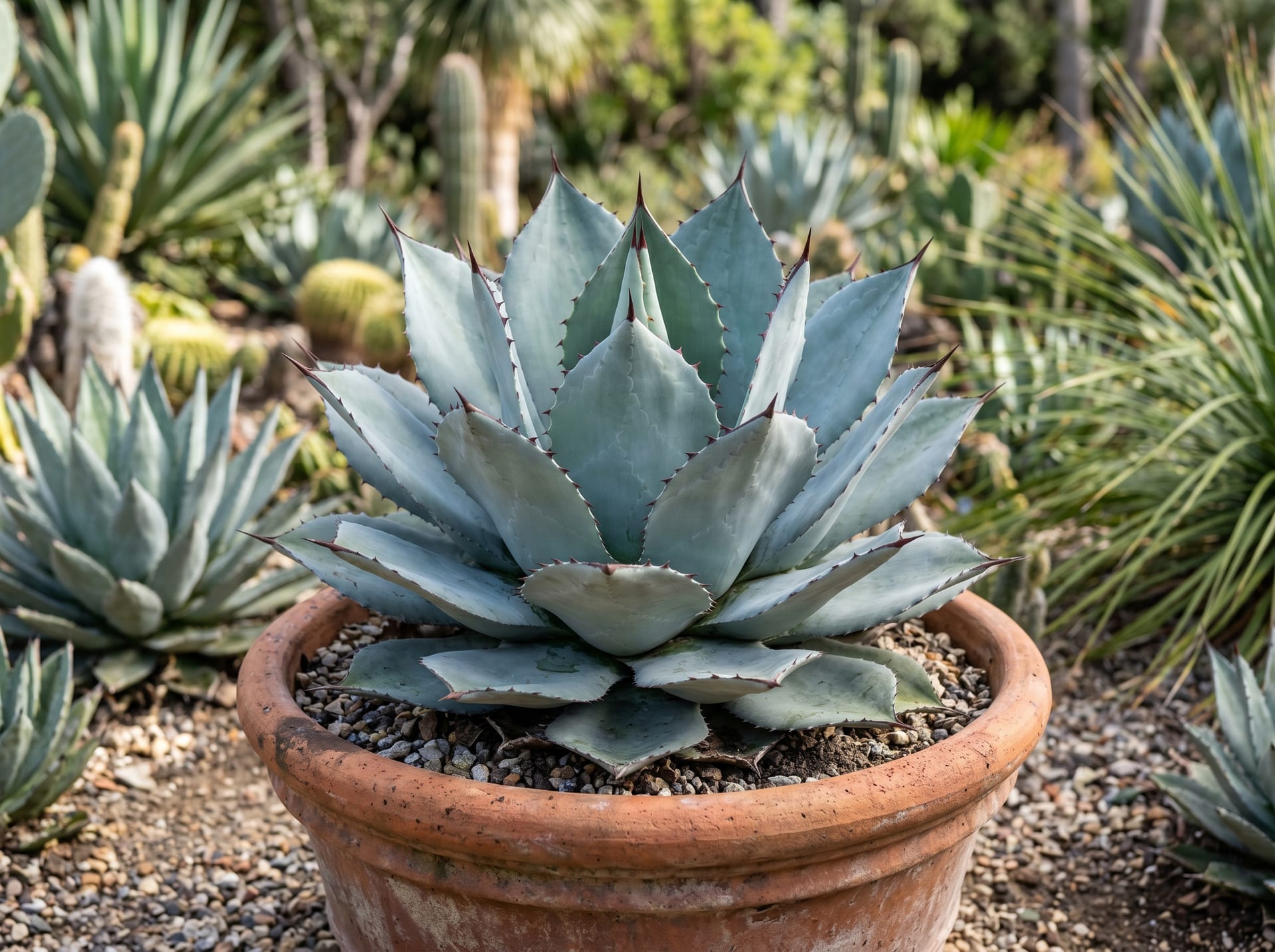
An agave from the Sierra Madre of Mexico. Forms wide green rosettes with finely serrated leaf margins. Relatively large species; monocarpic, dying after flowering.
About
Agave gentryi is a large agave native to the mountain regions of Tamaulipas, Nuevo León, and Coahuila in northeastern Mexico, at elevations of 1,800–3,000 m. Named after American botanist Howard Scott Gentry, this species forms an expansive rosette up to 1.2–1.5 m in diameter with gracefully arching green to gray-green leaves. Small dark marginal teeth are scattered along the leaf edges, and the leaf tip terminates in a long, sharp spine. Growth is relatively fast, producing an impressive specimen within a few years. Widely used in European and American landscapes as a bold focal point.
Lifespan of the Agave Gentryi
The Agave Gentryi lives 15-25 years.
Size of the Agave Gentryi
The Agave Gentryi grows to 80-150cm (rosette diameter).
Temperature & humidity for the Agave Gentryi
The Agave Gentryi tolerates temperatures of -10〜38℃. Ideal humidity is 15〜50%.
Its high-altitude origins confer exceptional cold hardiness down to -10°C and below, making it one of the most suitable agaves for in-ground planting in cold-climate regions.
Basic Info
Origin
Tamaulipas, Nuevo León, and Coahuila, Mexico
Lifespan
15-25 years
Size
80-150cm (rosette diameter)
Temperature
-10〜38℃
Humidity
15〜50%
Growing Tips
Light
Adapts from full sun to bright partial shade
Watering
It likes a bit more water than other agaves; water once the soil dries. Being alpine, ensure good airflow in summer to avoid stuffiness.
Temperature & Overwintering
Being alpine, it is extremely cold-hardy, tolerating below -10°C. It can be planted in the ground even in cold regions.
Soil & Repotting
Use a fast-draining mix. It grows fairly fast into a rosette 1.2 to 1.5 m across, so give it room in the ground or a large pot.
Agave Gentryi FAQ
QWhat is the growing difficulty level for Agave Gentryi?
Beginner. A variety suitable for beginners. No special equipment or experience is required—you can grow it without problems by setting up a basic cultivation environment.
QWhat temperatures can Agave Gentryi tolerate?
Agave Gentryi tolerates temperatures of -10〜38℃. Recommended humidity is 15〜50%. This is the tolerated range, not the ideal growing temperature. Keep conditions well inside it and avoid sudden temperature changes.
QWhat is the lifespan of Agave Gentryi?
The average lifespan of Agave Gentryi is 15-25 years. With proper cultivation environment and nutrient management, you can keep it healthy for a long time.
QHow large does Agave Gentryi get?
The mature size of Agave Gentryi is 80-150cm (rosette diameter). This may vary slightly depending on cultivation environment and individual differences.
QWhat is the typical price for Agave Gentryi?
The price of Agave Gentryi varies significantly by variety, characteristics, size, and lineage. Please check GrowerDirect's price guide for the latest market information.
Last updated: June 24, 2026
References & Sources
Edited & verified by: GrowerDirect Editorial Team
The classifications, regulations, and growing data on this page are created and verified based on the primary information database below.
Taxonomy & Authority
Regulations & Conservation Status
Sources: CITES Appendices (List of species protected by CITES Appendix II) / Ministry of the Environment Designated Invasive Species List (confirmed Agave non-applicable)
Regulations may change. Always verify the latest information with the relevant authorities.
Related Species
Find listings for this species
Related Articles
Preventing Leaf Burn in Agave and Light Management | Transition Strategy from Indoor to Outdoor Cultivation
Light management strategy to prevent agave leaf burn completely while successfully transitioning from indoor to outdoor environments. This article explains practical methods including gradual light intensity adjustment, seasonal placement changes, and UV protection measures.
Tips for Cultivating White Variegated Agave Varieties
Tips for Cultivating White Variegated Agave Varieties
Complete Care Guide for Agave oteroi | Tips for Training Beautiful Large Rosettes
We explain the characteristics and cultivation of Agave oteroi, a large agave native to Oaxaca, Mexico. From placement location and soil to watering and overwintering—a practical guide for those beginning to cultivate this species.
The Deep Connection Between Agave and Tequila | The Secret of a Distilled Spirit Born from Century Plant
Tequila is made from only Agave tequilana among the Agave genus. This essay explains the ecology of century plants, the Jalisco region as a production area, and the differences from ornamental agaves.
🩺 Common diseases
Can't find the plant you're looking for?
Post your wishes for free and growers with matching plants will contact you with introductions.