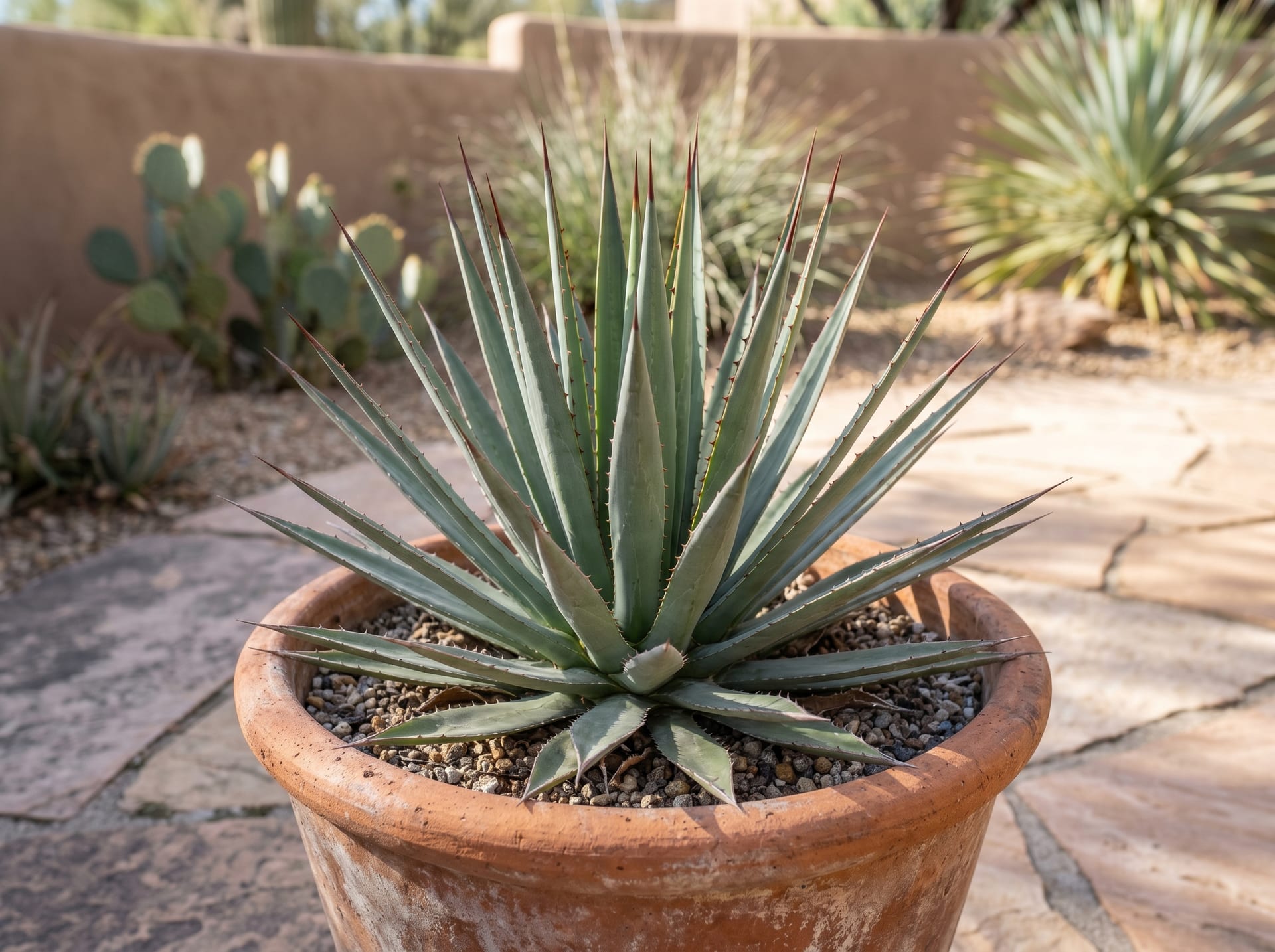
AI-generated image
Agave Palmeri
BeginnerAgave palmeri
A medium-sized agave from southern Arizona to northwestern Mexico. Beautiful gray-green rosette. An important nectar source for bats. Produces many flowers on a tall, straight flower stalk.
About
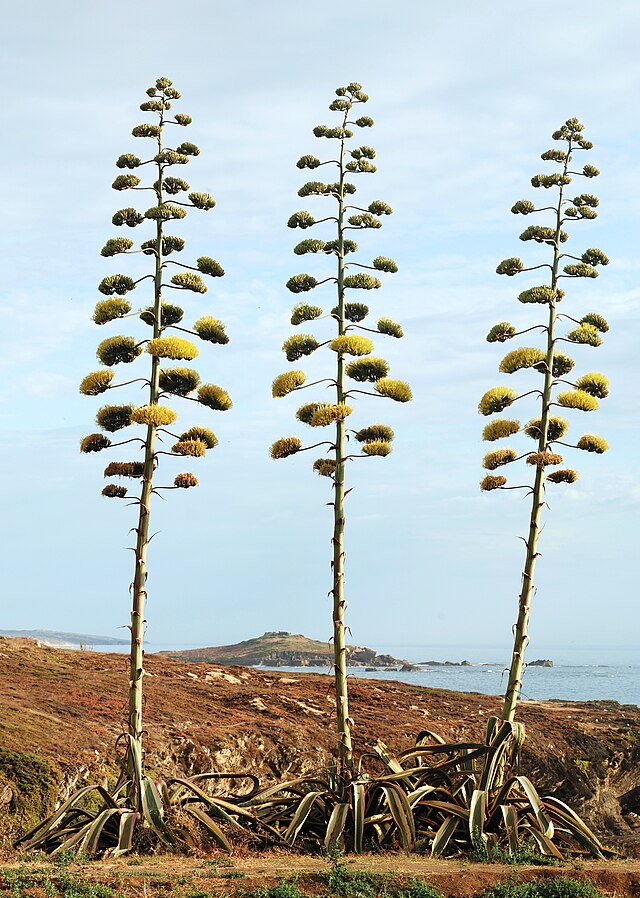
Agave palmeri is a large agave widely distributed across mountain regions from Arizona and southern New Mexico in the USA to Sonora and northern Chihuahua in Mexico, at elevations of 1,000–2,500 m. Its long gray-green to blue-green leaves arch upward, bearing dark marginal teeth at intervals and a long terminal spine. Mature rosettes reach 1–1.5 m in diameter and about 1 m in height, forming an imposing specimen. The flower stalk can reach 4–6 m, producing yellow to yellow-green blooms that serve as a critical nectar source for lesser long-nosed bats in the wild. Tough and adaptable, it excels as a landscape element in dry gardens and rock gardens.
Lifespan of the Agave Palmeri
The Agave Palmeri lives 15-25 years.
Size of the Agave Palmeri
The Agave Palmeri grows to 60-120cm (rosette diameter).
Temperature & humidity for the Agave Palmeri
The Agave Palmeri tolerates temperatures of -10〜40℃. Ideal humidity is 10〜40%.
Exceptionally cold-hardy to -10°C and below, it is well-suited for in-ground planting in temperate regions.
Basic Info
Origin
Arizona and New Mexico (USA) to Sonora and Chihuahua (Mexico)
Lifespan
15-25 years
Size
60-120cm (rosette diameter)
Temperature
-10〜40℃
Humidity
10〜40%
Growing Tips
Light & Placement
It thrives in strong direct sun. Because it grows large, planting out in a dry garden or rock garden with plenty of space is ideal.
Watering
Being drought tolerant, it needs only sparing water after the soil dries. In the ground, rainfall alone is nearly enough.
Temperature & Overwintering
Very cold hardy, tolerating -10°C and below. With a working range of -10 to 40°C, it can overwinter in the ground in temperate regions.
Soil & Repotting
Use a fast-draining mix. The rosette exceeds 1 m across, so move potted plants up to a large container early or plant them out.
Notes
Robust and easy to grow in desert-type climates
Agave Palmeri FAQ
QWhat is the growing difficulty level for Agave Palmeri?
Beginner. A variety suitable for beginners. No special equipment or experience is required—you can grow it without problems by setting up a basic cultivation environment.
QWhat temperatures can Agave Palmeri tolerate?
Agave Palmeri tolerates temperatures of -10〜40℃. Recommended humidity is 10〜40%. This is the tolerated range, not the ideal growing temperature. Keep conditions well inside it and avoid sudden temperature changes.
QWhat is the lifespan of Agave Palmeri?
The average lifespan of Agave Palmeri is 15-25 years. With proper cultivation environment and nutrient management, you can keep it healthy for a long time.
QHow large does Agave Palmeri get?
The mature size of Agave Palmeri is 60-120cm (rosette diameter). This may vary slightly depending on cultivation environment and individual differences.
QWhat is the typical price for Agave Palmeri?
The price of Agave Palmeri varies significantly by variety, characteristics, size, and lineage. Please check GrowerDirect's price guide for the latest market information.
Last updated: June 24, 2026
References & Sources
Edited & verified by: GrowerDirect Editorial Team
The classifications, regulations, and growing data on this page are created and verified based on the primary information database below.
Taxonomy & Authority
Regulations & Conservation Status
Sources: CITES Appendices (List of species protected by CITES Appendix II) / Ministry of the Environment Designated Invasive Species List (confirmed Agave non-applicable)
Regulations may change. Always verify the latest information with the relevant authorities.
Related Species
Find listings for this species
Related Articles
Preventing Leaf Burn in Agave and Light Management | Transition Strategy from Indoor to Outdoor Cultivation
Light management strategy to prevent agave leaf burn completely while successfully transitioning from indoor to outdoor environments. This article explains practical methods including gradual light intensity adjustment, seasonal placement changes, and UV protection measures.
Tips for Cultivating White Variegated Agave Varieties
Tips for Cultivating White Variegated Agave Varieties
Complete Care Guide for Agave oteroi | Tips for Training Beautiful Large Rosettes
We explain the characteristics and cultivation of Agave oteroi, a large agave native to Oaxaca, Mexico. From placement location and soil to watering and overwintering—a practical guide for those beginning to cultivate this species.
The Deep Connection Between Agave and Tequila | The Secret of a Distilled Spirit Born from Century Plant
Tequila is made from only Agave tequilana among the Agave genus. This essay explains the ecology of century plants, the Jalisco region as a production area, and the differences from ornamental agaves.
🩺 Common diseases
Can't find the plant you're looking for?
Post your wishes for free and growers with matching plants will contact you with introductions.