Agave Encyclopedia
Encyclopedia of popular agave varieties with traits, care guides, and pricing.
Featured Agave
Showing 20 of 139 species
Agave applanata 'Cream Spike'
Agave applanata 'Cream Spike'
A small variegated agave whose blue leaves are each framed by a wide cream border. It stays about 25 cm tall and in Japan it is sometimes sold as the same plant as the long-established 'Meriko Nishiki'.
 © cultivar413 from Fallbrook, California / CC BY 2.0
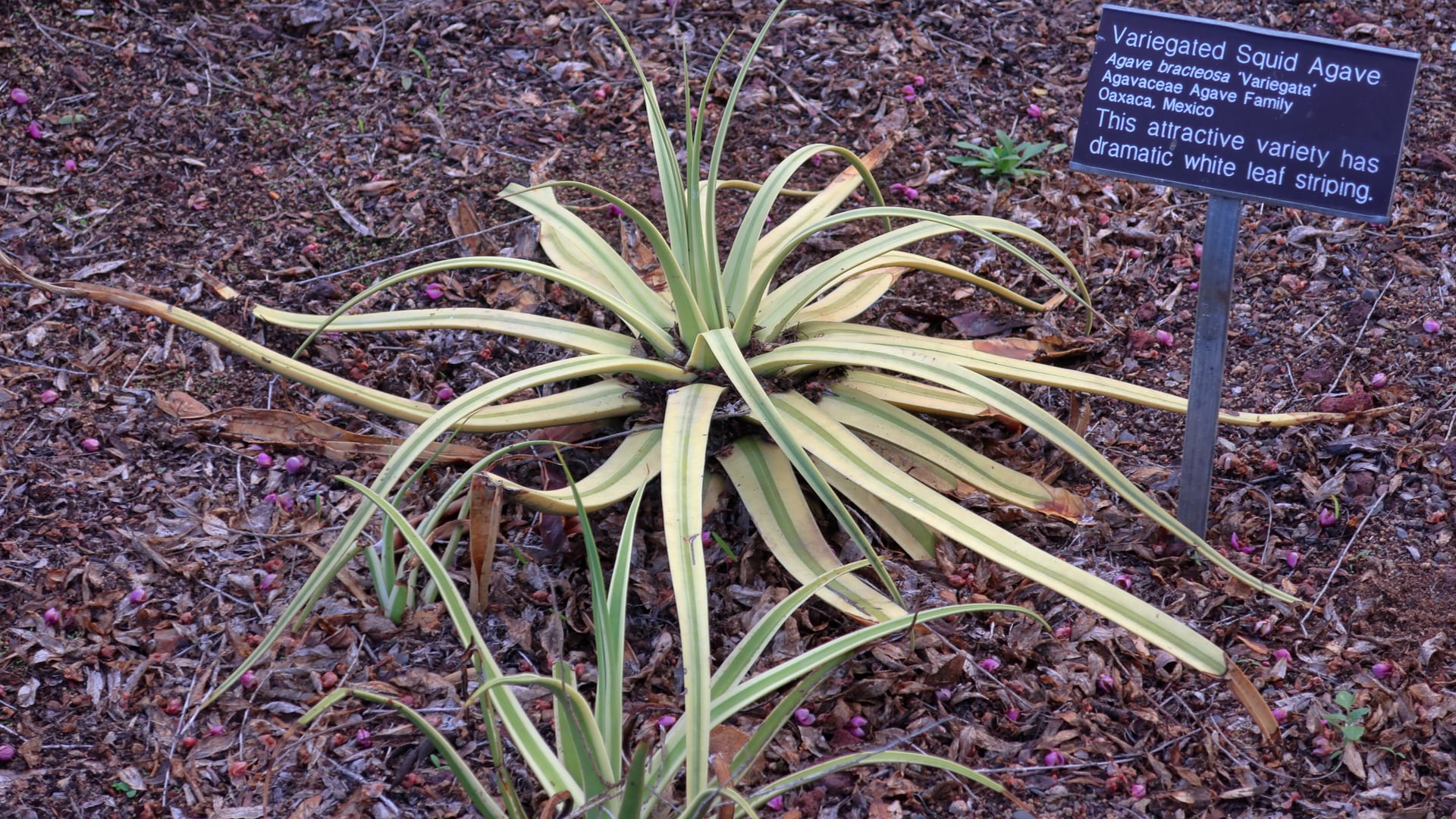
Agave bracteosa 'Monterrey Frost'
Agave bracteosa 'Monterrey Frost'
The variegated squid agave: soft, spineless, arching narrow leaves in pale green with a creamy-white margin. A rare agave you can handle without getting stabbed.
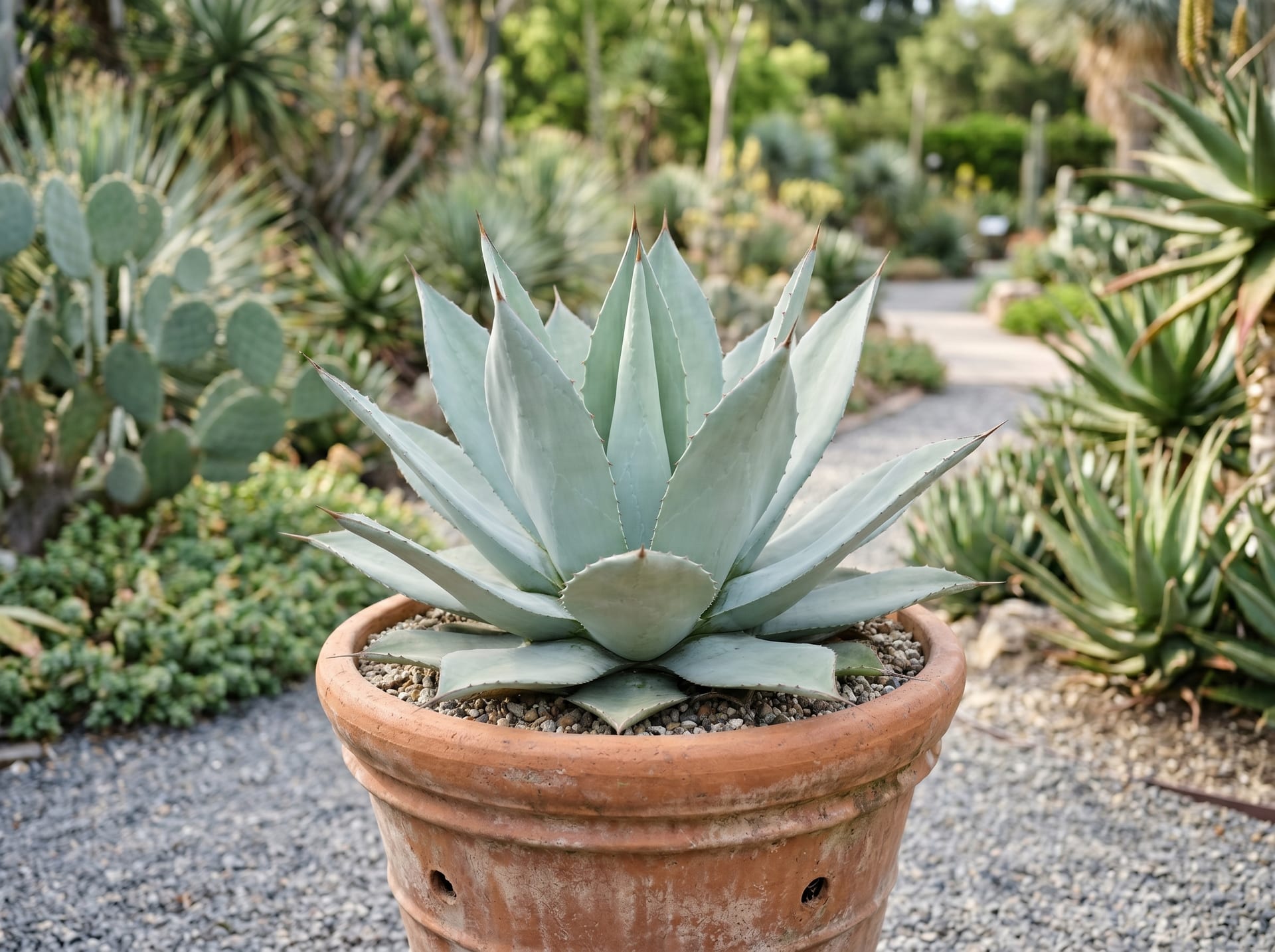
Agave Celsii
Agave mitis
A relatively compact agave with soft leaves. Thin blue-green leaves create elegant atmosphere.
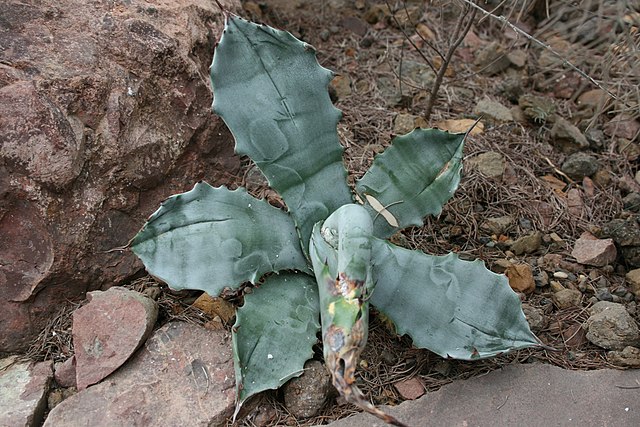 © Cody Hough / CC BY-SA 3.0
Agave Colorata
Agave colorata
Beautiful contrast of blue-grey leaves and reddish-brown spines. From Sonora, Mexico. Compact for pot cultivation.
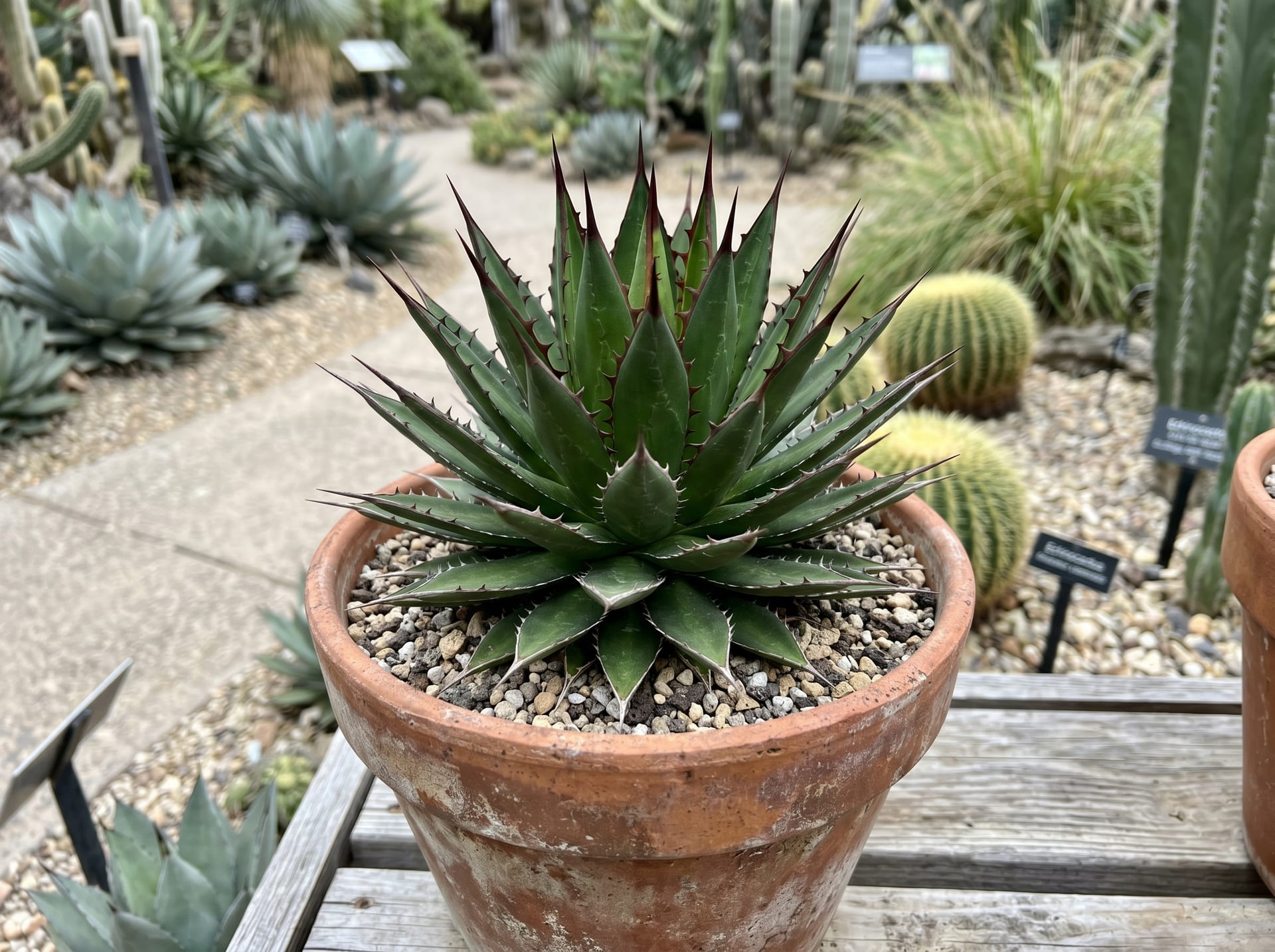
Agave Ghiesbreghtii
Agave ghiesbreghtii
Medium-sized agave from southern Mexico. Dark green leaves contrast beautifully with reddish-brown teeth. Forms compact rosettes ideal for container culture.
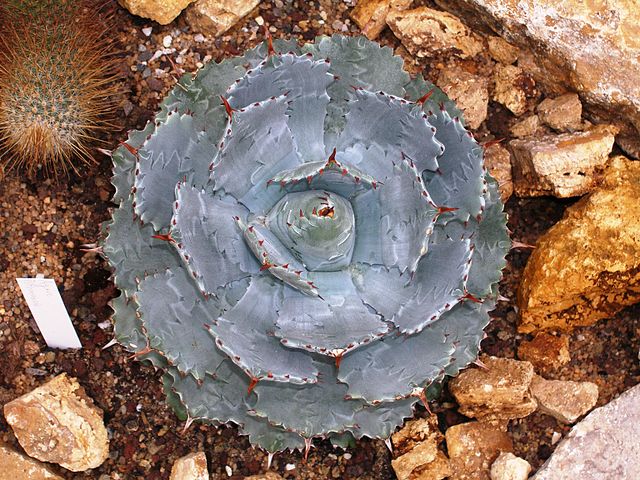 © Dryas / CC BY-SA 3.0
Agave Isthmensis
Agave isthmensis
A small agave from Oaxaca, Mexico. Attractive for its compact rosette and thick leaves.
Agave isthmensis 'Kabutogani'
Agave isthmensis 'Kabutogani'
A selection of Agave isthmensis with broad, thick leaves like a horseshoe crab's shell and adjacent teeth fused into continuous bands. Unvariegated silver-green leaves give a small but weighty look.
Agave isthmensis 'Ohi Kabutogani' variegated
Agave isthmensis 'Ohi Kabutogani Nishiki'
A small variegated isthmensis: short, thick blue-green leaves edged in cream, with reddish-brown teeth running along the margins. Palm-sized, with leaves shaped like a horseshoe crab's shell.
Agave isthmensis 'Yookihi'
Agave isthmensis 'Yookihi'
A variegated isthmensis with radiating stripes in white, cream, yellow or lime, sometimes several colours on one leaf. Its leaves are thinner and slimmer than usual for the species, with modest teeth.
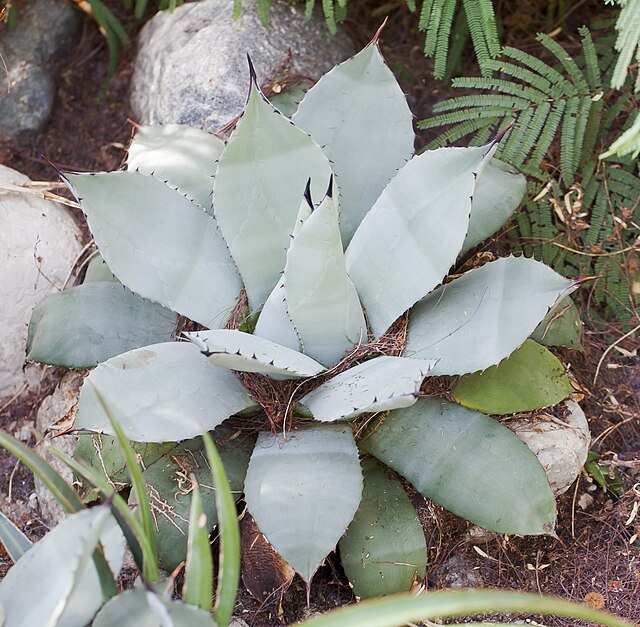 © Diego Delso / CC BY-SA 3.0
Agave Parryi
Agave parryi
Compact rosette with densely layered blue-grey leaves. Extremely cold-hardy, suitable for year-round outdoor planting.
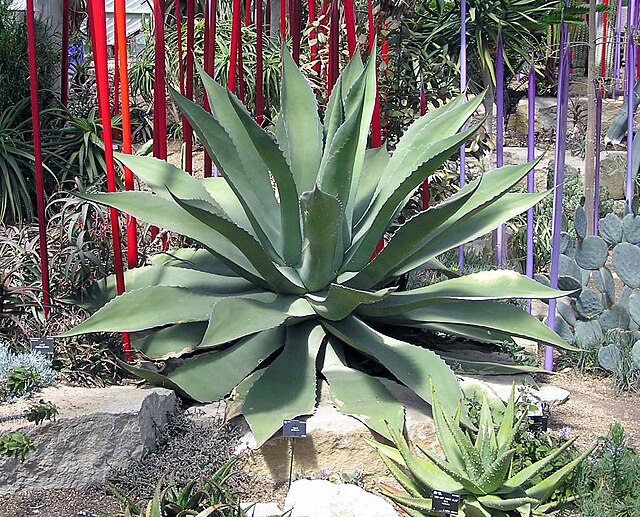 © Arpingstone / Public domain
Agave Potatorum
Agave potatorum
Also known as Kisshoukan in Japanese. Beautiful contrast of rounded leaves and red spines. Compact and suited for pots.
Agave potatorum 'Kisshoukan' variegated
Agave potatorum 'Kisshoukan Nishiki'
The variegated form of Kissho Kan: short blue-grey leaves edged pale yellow to creamy white, with spines that emerge reddish and age to brown. A small, dome-shaped agave long grown in Japan.
Agave titanota 'Black and Blue'
Agave titanota 'Black and Blue'
A compact titanota with thick, pale bluish-grey leaves and near-black teeth, selected by Kelly Griffin in the US from seed collected in Oaxaca. Often abbreviated to 'B&B'.
Agave titanota 'Seiou'
Agave titanota 'Seiou'
A very compact titanota selection with broad white teeth, said to stay around 15 cm across even when mature, with a finely crafted look. Read 'Seiou'; also written with a simplified character.
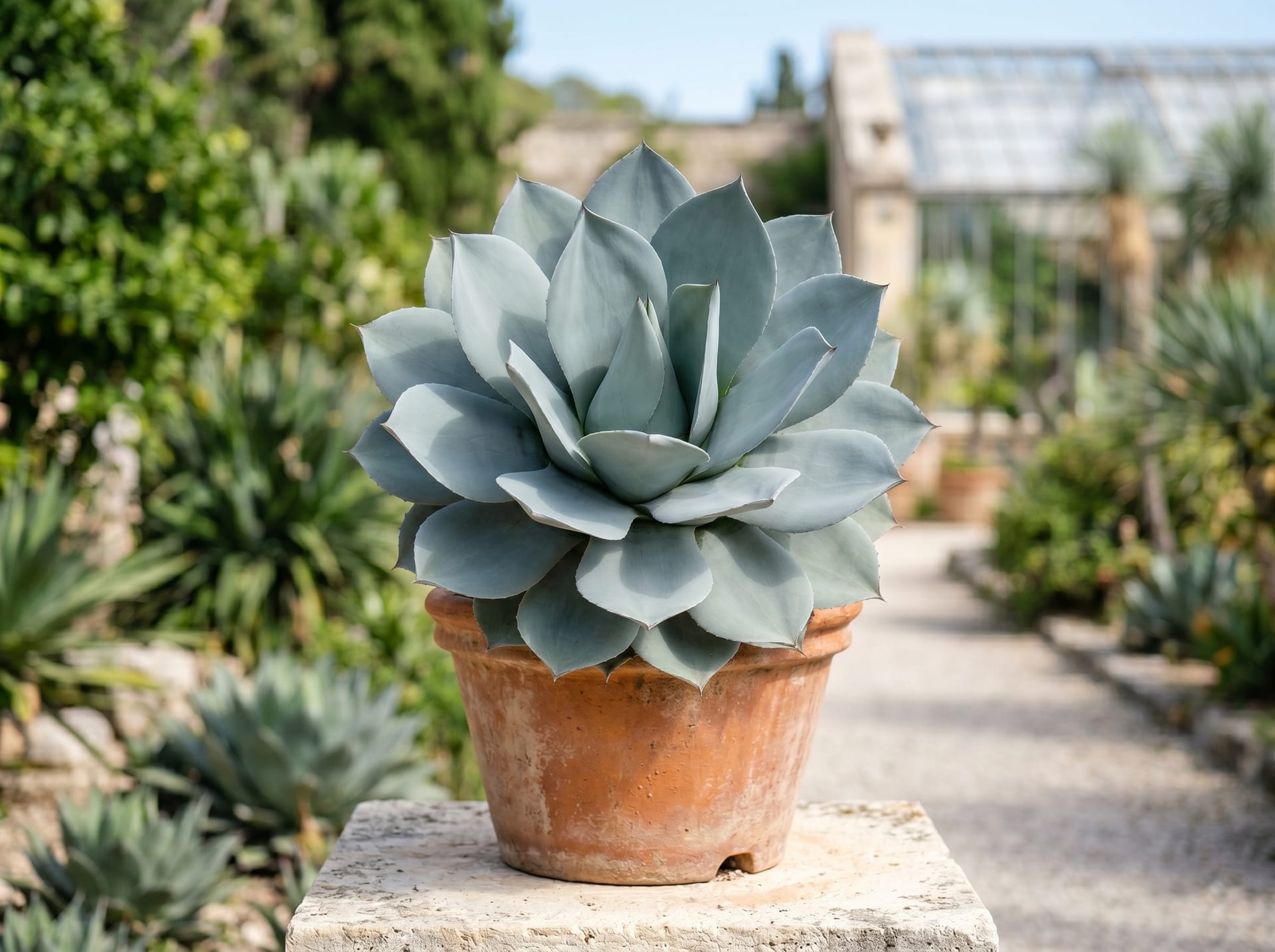
Agave Truncata
Agave truncata
A Mexican agave with distinctively compact rosette of short, thick leaves. Dense, wide leaves create an impressive sculptural form. Drought tolerant and beginner-friendly.
 © NasserHalaweh / CC BY-SA 4.0
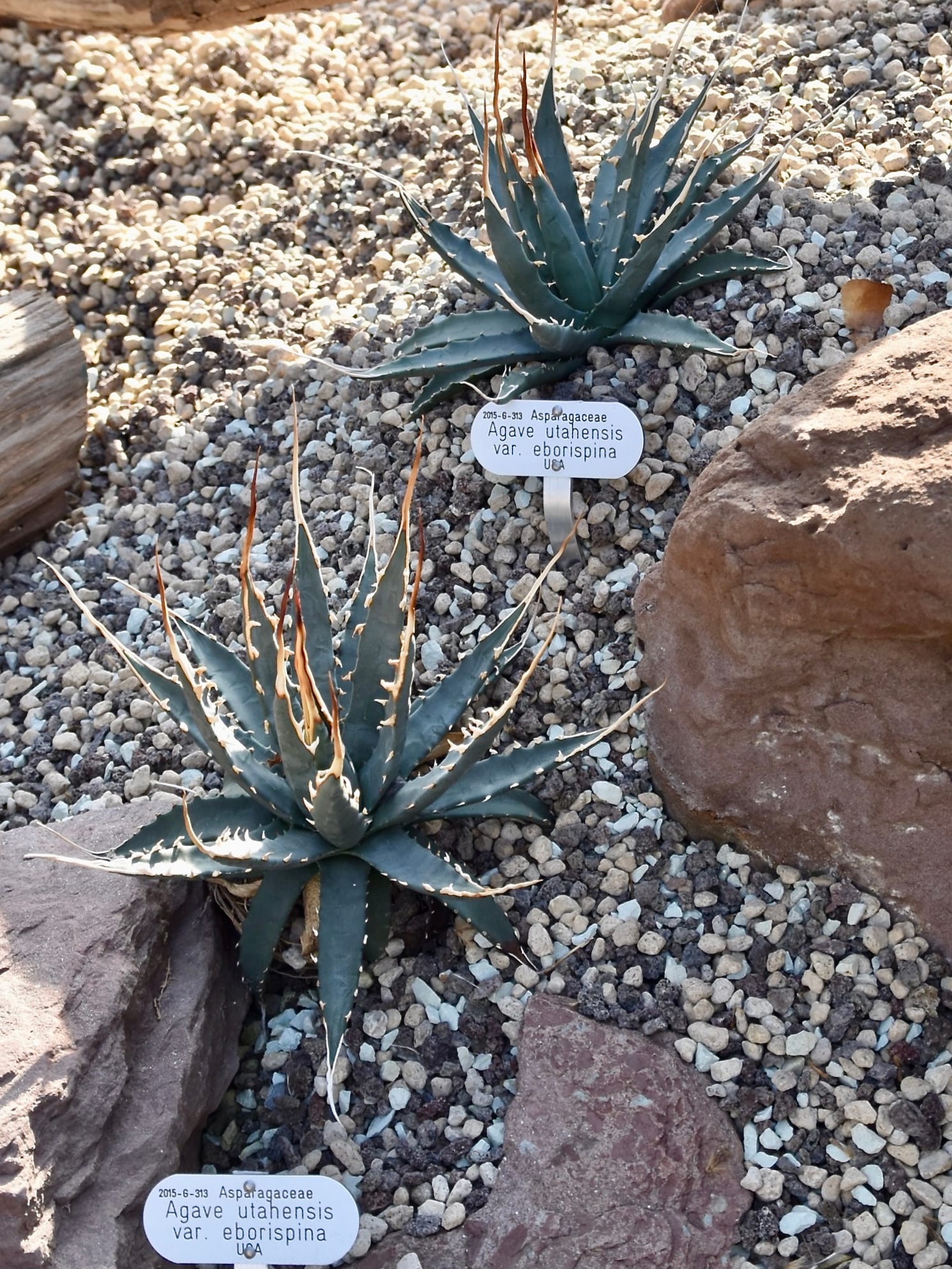
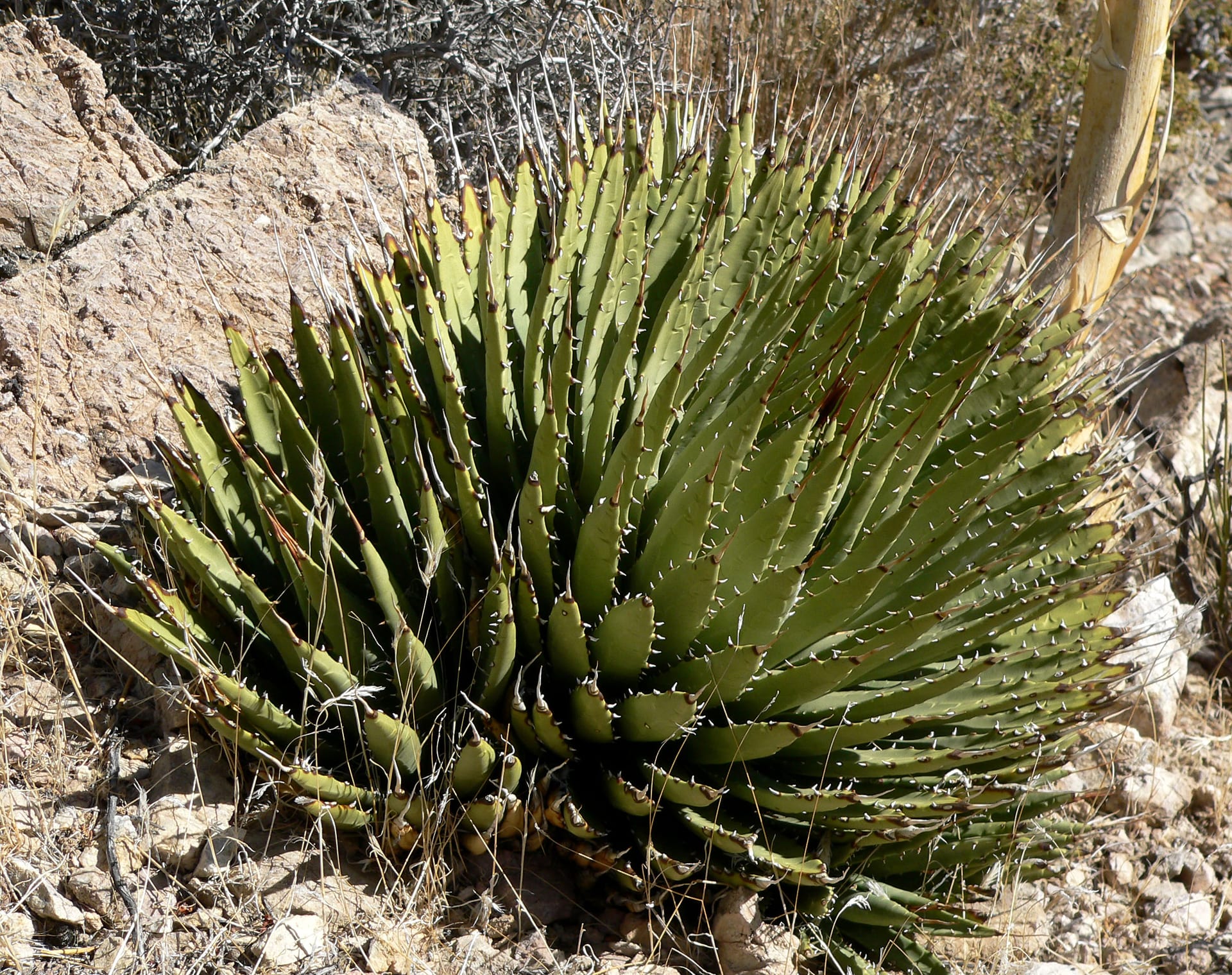
Agave utahensis var. eborispina (Ivory-spined agave)
Agave utahensis var. eborispina
A variety of Agave utahensis whose small rosette of narrow leaves carries stout, ivory-white tip spines 10-20 cm long. Plants with wavy spines are also sold as 'Kagerou'.
 © Stan Shebs / CC BY-SA 3.0
Agave utahensis var. nevadensis (Clark Mountain agave)
Agave utahensis var. nevadensis
A variety of Agave utahensis forming small rosettes 15-25 cm across with slender, sharp tip spines, thinner and shorter than those of eborispina, and slightly shorter, denser-looking leaves.
 © Brian Gratwicke / CC BY 2.0
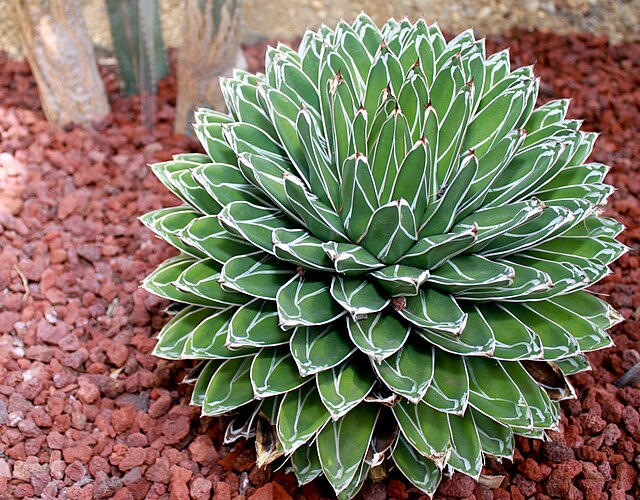
Agave Victoriae-Reginae
Agave victoriae-reginae
A beautiful compact agave with white markings, slow-growing but artistically perfect.
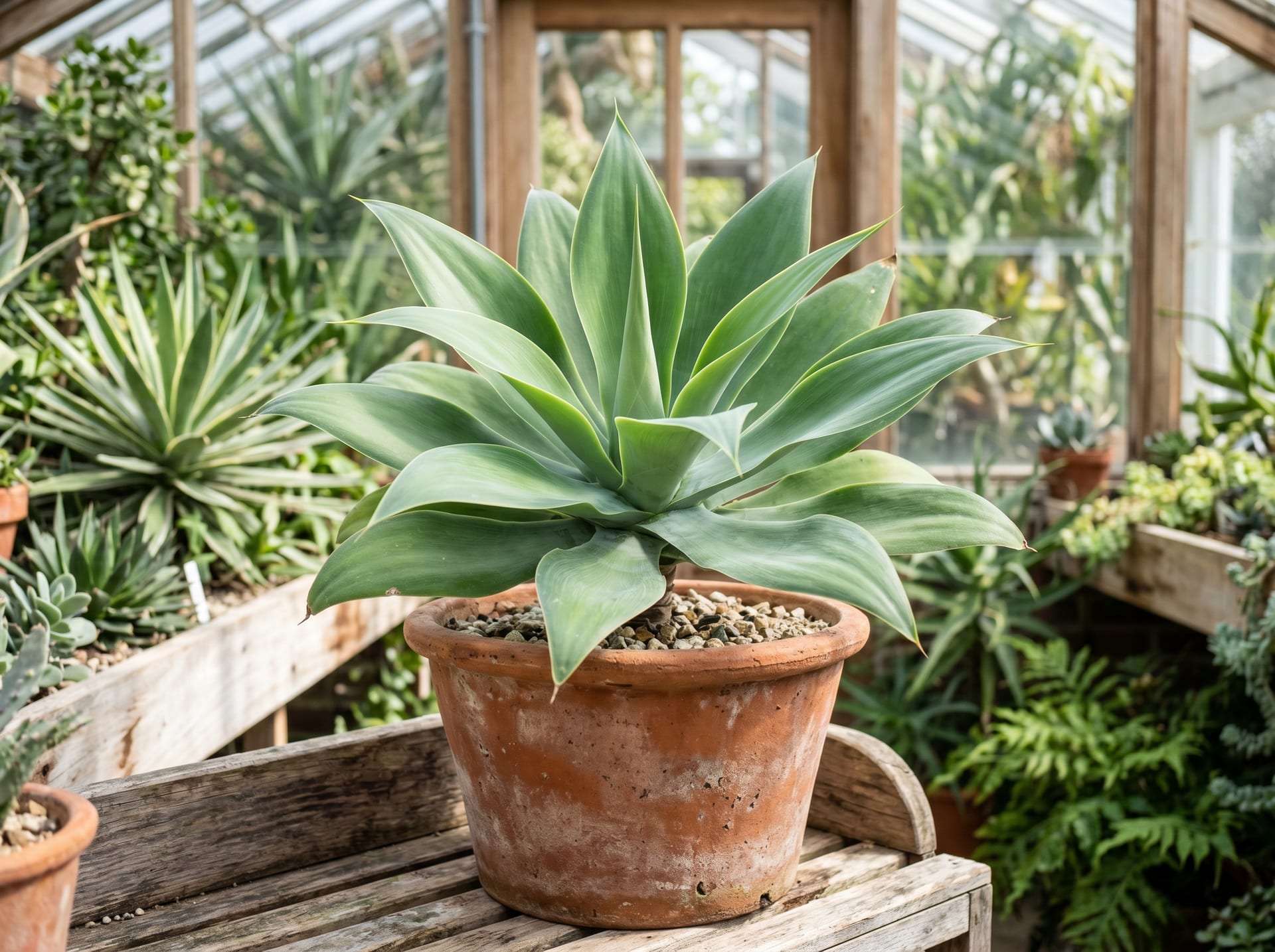
Agave Warelliana
Agave warelliana
Small to medium agave from Mexico. Blue-green leaves with delicate teeth. Less commonly available but compact and ideal for container culture. Hidden gem for collectors.
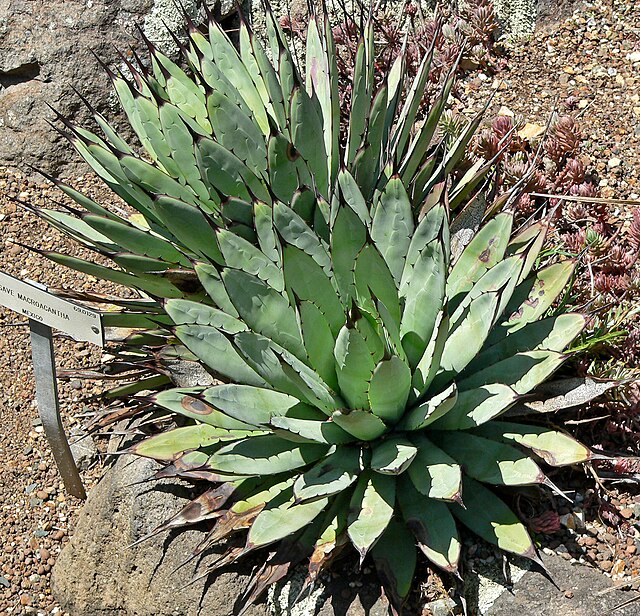 © Stan Shebs / CC BY-SA 3.0
Large-Thorned Agave
Agave macroacantha
A sharp agave with blue-gray leaves and long black terminal spines. Compact, ideal for balcony growing.
Related Content
Agave FAQ
- How much do agave cost?
- Small Titanota seedlings cost 2,000-10,000 yen, medium plants 10,000-50,000 yen, and select or rare varieties like Hakugei and Caesar can exceed 100,000 yen. Prices vary greatly by variety and condition.
- Can beginners grow agave?
- Agaves are drought-tolerant and hardy, making them easy for beginners. Place in a sunny spot with well-draining soil, and they're quite hard to fail with.
- What are the key points for growing agave?
- Sunlight, airflow, and drainage are the three essentials. Provide direct sunlight, use pumice or akadama-based soil, and water only when the pot is completely dry.
- What should I check when buying agave?
- Check whether it's rooted, leaves are developing healthily, and lower leaves aren't excessively dried. Imported bare-root plants require root establishment, so beginners should start with rooted domestically grown seedlings.
- How long do agave live?
- Agaves grow over decades and bloom only once in their lifetime before dying. However, they produce offsets, so with proper care you can enjoy them across generations.