Source: Wikimedia Commons
Rock fig
IntermediateFicus petiolaris
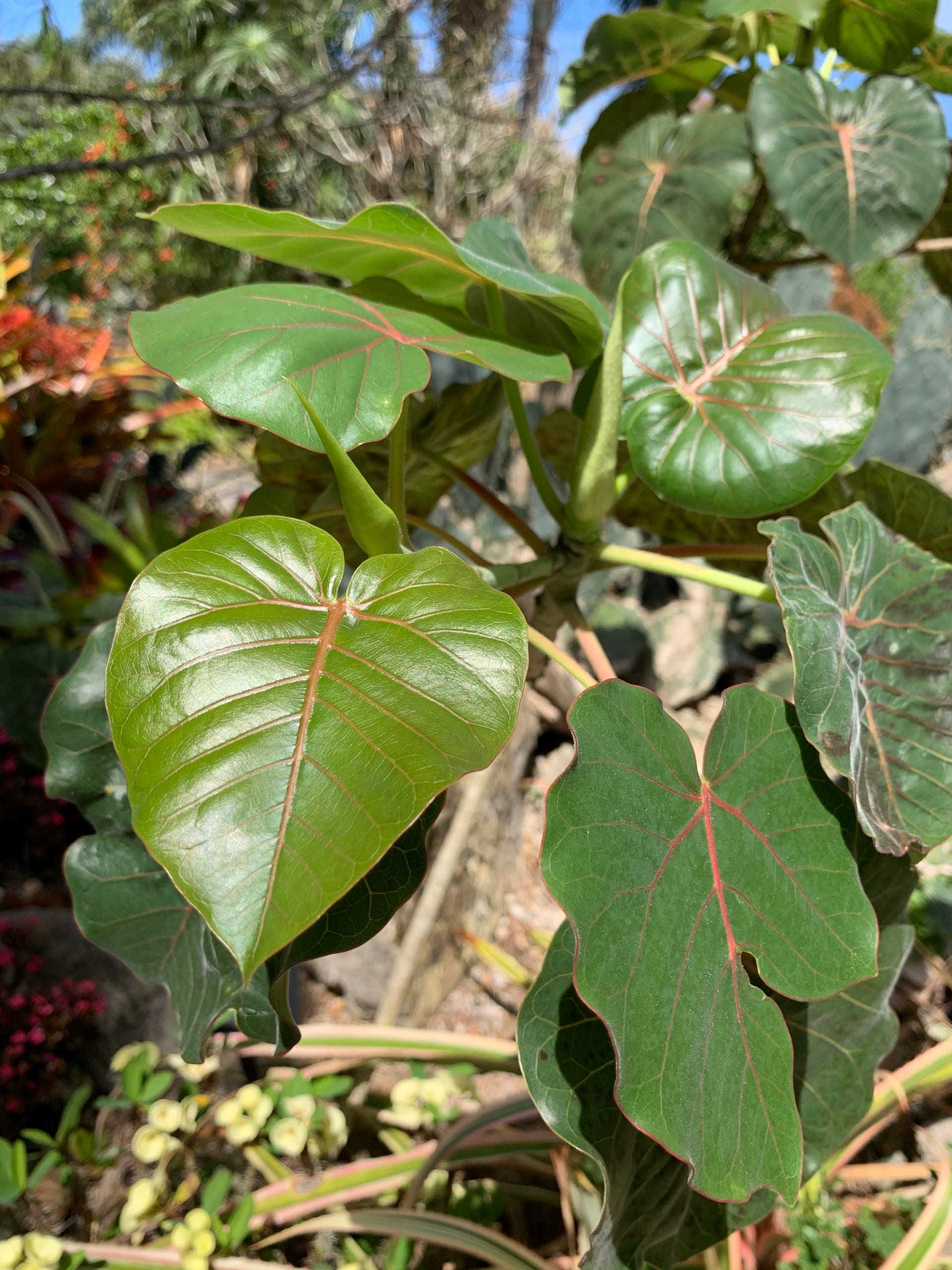
A fig endemic to Mexico with a yellowish-green trunk and bright green heart-shaped leaves. White tufts of hair in the vein axils on the leaf underside help identify it; in Japan, potted plants with swollen bases are sold as caudiciforms.
About
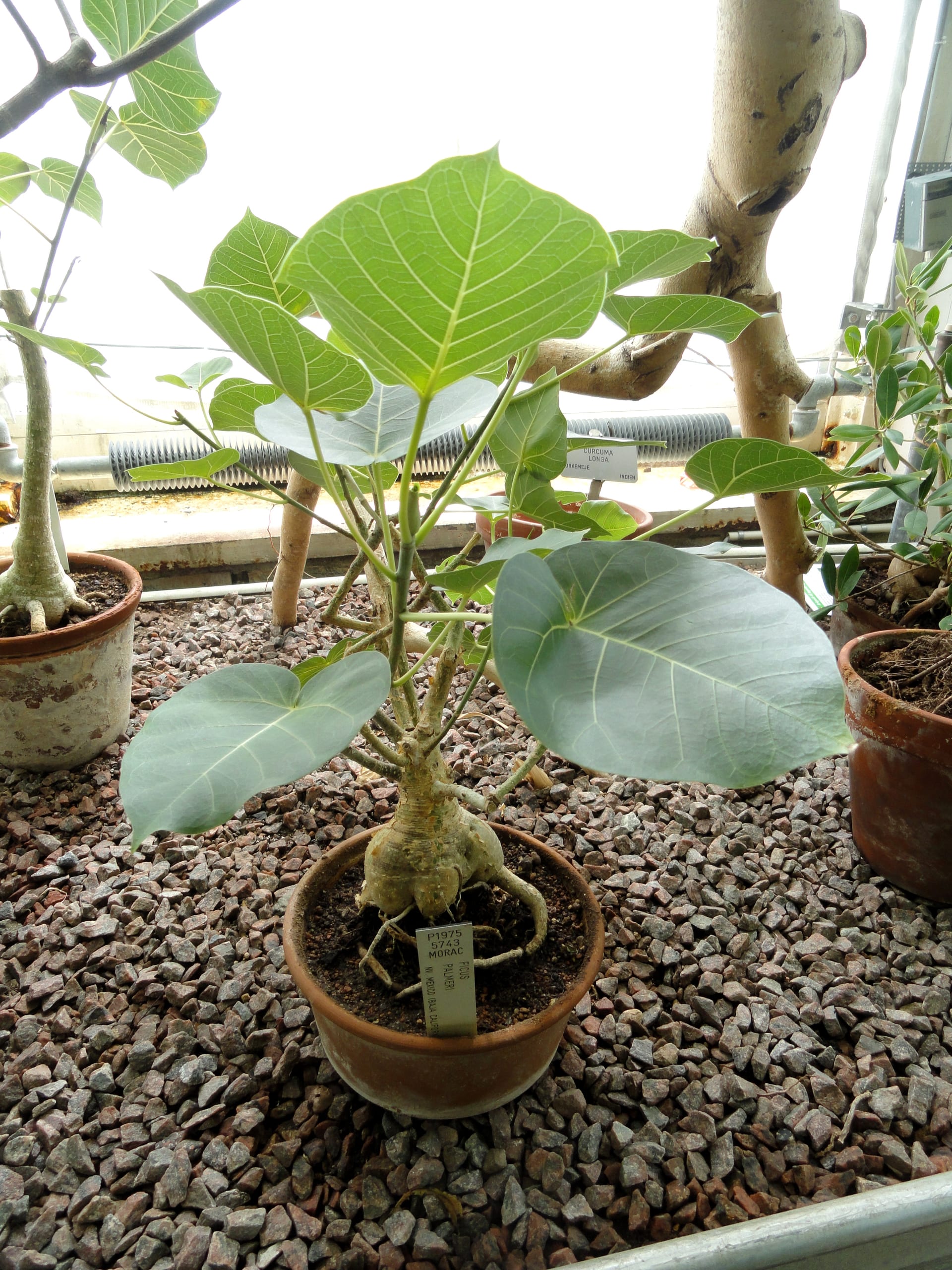
Ficus petiolaris is a tree in the fig genus (Moraceae) endemic to Mexico, ranging from the Baja California peninsula and Sonora south to Oaxaca. It grows at 550–1,200 m in deciduous and semi-deciduous tropical forest, thorn forest, montane cloud forest and oak and pine woodland. Wild trees are recorded up to 30 m tall, but potted plants stay far smaller. The trunk has a distinctive yellowish-green tone; the leaves are heart-shaped, bright green above, with tufts of whitish hairs in the vein axils underneath. The figs are green and spherical with red, velvety spots and are pollinated by fig wasps of the genus Pegoscapus. The bark was used by the Aztecs to make amate paper, on which many surviving Aztec codices were written. It is also known in English as rock fig. In cultivation it is said to do best with moderate water and partial shade. The IUCN Red List category is Least Concern. In Japan it is sold online as a foliage and caudiciform plant, as potted plants with swollen bases and as seed. Plants sold separately as "Ficus palmeri" belong to a subspecies of this species (F. petiolaris subsp. palmeri).
Source: Wikipedia (CC BY-SA 4.0)
Size of the Rock fig
The Rock fig grows to Recorded up to 30 m tall in the wild; stays small in a pot.
Basic Info
Origin
Mexico (Baja California peninsula and Sonora to Oaxaca)
Lifespan
Long-lived woody plant (little published data)
Size
Recorded up to 30 m tall in the wild; stays small in a pot
Temperature
10〜35℃
Watering & Fertilizer
Light feeding in the growing season
Growing Tips
Light & Placement
It is said to grow best in partial shade; keep it bright but out of harsh afternoon sun.
Watering
It prefers moderate water: in the growing season water thoroughly once the pot dries, without keeping it constantly wet.
Temperature & Overwintering
A tree from warm parts of Mexico with little published data on cold tolerance; overwinter it indoors in a bright spot and water sparingly.
Soil & Repotting
Use a free-draining mix. To show off the swollen base, grow it in a shallow pot with the base slightly raised.
Pruning & Shaping
It becomes a large tree in the wild, so keep it compact with pot size and pruning.
Rock fig FAQ
QWhat is the growing difficulty level for Rock fig?
Intermediate. A variety suitable for intermediate growers. Requires some cultivation experience and knowledge of environment management. Pay careful attention to temperature and humidity control.
QHow large does Rock fig get?
The mature size of Rock fig is Recorded up to 30 m tall in the wild; stays small in a pot. This may vary slightly depending on cultivation environment and individual differences.
QHow should I water and fertilize Rock fig?
Rock fig: watering & fertilizer — Light feeding in the growing season. Aim for appropriate frequency and amount.
QWhat is the typical price for Rock fig?
The price of Rock fig varies significantly by variety, characteristics, size, and lineage. Please check GrowerDirect's price guide for the latest market information.
Last updated: September 23, 2026
References & Sources
Edited & verified by: GrowerDirect Editorial Team
The classifications, regulations, and growing data on this page are created and verified based on the primary information database below.
Taxonomy & Authority
Regulations & Conservation Status
Not listed in CITES (checked on Species+). No special procedure is needed for transfers within Japan.
Sources: Species+ (CITES): Ficus petiolaris / IUCN Red List category via GBIF: Ficus petiolaris
Regulations may change. Always verify the latest information with the relevant authorities.
Related Species
Find listings for this species
Related Articles
Complete Guide to Growing Ficus lyrata (Fiddle Leaf Fig) | Placement, Watering, Pruning, and Leaf Drop Solutions
A practical care guide to Ficus lyrata (Japanese common name: oak-leaf rubber plant) covering placement, light, watering, soil, pruning, pest management, and troubleshooting leaf drop and yellowing.
Complete Guide to Ficus Species and Care Methods | Management and Leaf Drop Prevention for Umbellata, Rubber Plant, and Benjamin Fig
Detailed explanation of the characteristics, cultivation methods, causes of leaf drop, and countermeasures for each variety of Umbellata, Rubber Plant (Ficus elastica), and Benjamin Fig. A complete guide to growing the popular Ficus genus healthily for the long term.
Ficus (Rubber Plant) Care Guide | Umbellata, Bengalensis, and Altissima Care
Learn how to care for popular Ficus species by variety. We introduce daily care, pruning, and tips for winter survival.
How to Grow Uncarina | Differences Between the Madagascar Endemic Species Grandidieri and Roeoesliana
An explanation of the appeal and cultivation methods of the Madagascar endemic caudex plant Uncarina genus. We introduce the differences between Uncarina grandidieri and roeoesliana, seedling cultivation, and repotting timing.
🩺 Common diseases
Can't find the plant you're looking for?
Post your wishes for free and growers with matching plants will contact you with introductions.