Complete Guide to Ficus Species and Care Methods | Management and Leaf Drop Prevention for Umbellata, Rubber Plant, and Benjamin Fig
Detailed explanation of the characteristics, cultivation methods, causes of leaf drop, and countermeasures for each variety of Umbellata, Rubber Plant (Ficus elastica), and Benjamin Fig. A complete guide to growing the popular Ficus genus healthily for the long term.
Key Takeaways
Detailed explanation of the characteristics, cultivation methods, causes of leaf drop, and countermeasures for each variety of Umbellata, Rubber Plant (Ficus elastica), and Benjamin Fig. A complete guide to growing the popular Ficus genus healthily for the long term.
Related Species
Ficus Genus | The Kings of Interior Plants
The Ficus genus (Ficus) is a large group of plants belonging to the Moraceae family, with over 800 species distributed worldwide. Many species are native to tropical and subtropical regions, and the genus is one of the most widely distributed as houseplants in the country. The representative varieties are three species: Umbellata (Ficus umbellata), Rubber Plant (Ficus elastica), and Benjamin Fig (Ficus benjamina), each differing significantly in leaf shape, texture, and tree form. A common characteristic is that they contain "milky sap (latex)." Care should be taken not to let this contact the skin when pruning.
Due to their high interior aesthetics, their popularity continues in recent years, and they are often adopted as symbolic trees in cafes and residential spaces. However, they have a delicate side despite appearing easy to grow, and leaf drop often occurs during the adaptation period to environmental changes. With correct knowledge, they can maintain a beautiful tree form for an extended period. Please also refer to the Ficus (Rubber Plant) Care Guide for detailed characteristics of each variety.
Caring for Umbellata | Maintaining Healthy Large Heart-Shaped Leaves
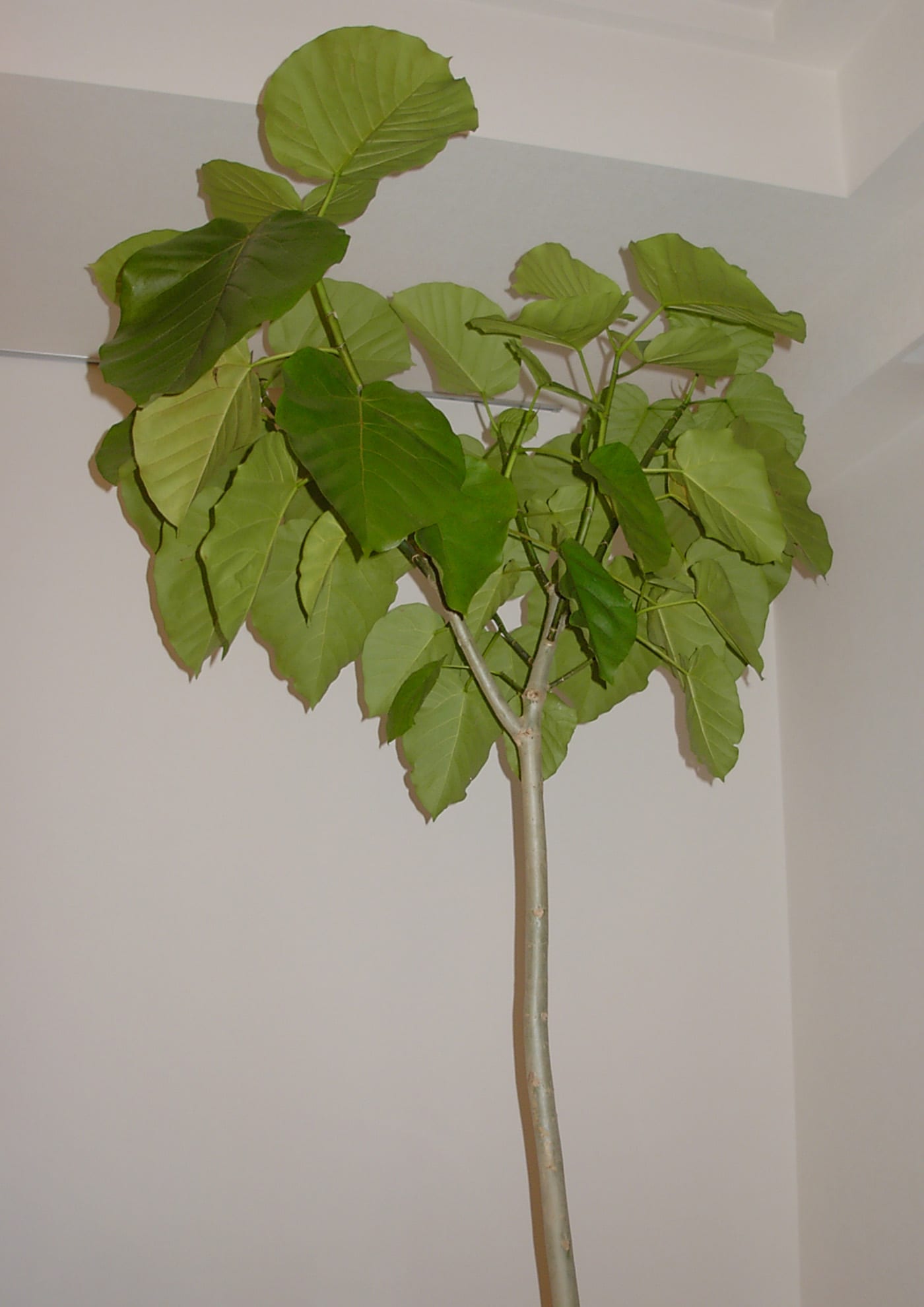
Umbellata is characterized by thin, heart-shaped leaves that can reach 20-30 cm in diameter, creating a bright and natural atmosphere. Its native habitat is the tropical rainforests of Africa, where it prefers warm, humid conditions.
Location and Light: Bright indirect light is optimal. Direct sunlight can cause leaf burn, so a window with sheer curtains is ideal. In dark places, it tends to become leggy with smaller leaves. In rooms with insufficient light, consider using a grow light as a supplement.
Watering and Humidity: During the growing season (spring to autumn), water thoroughly when the soil surface dries out. In winter, reduce watering frequency until the soil is dry throughout. Since the leaves are thin and transpire easily, regular misting helps keep the plant vigorous. Be careful as spider mites can develop with prolonged dryness. The basics of watering are summarized in the Houseplant Watering Guide.
Temperature Management: Maintain a minimum temperature of 10°C or above. If it drops below 5°C, leaf drop will accelerate rapidly. In winter, move it to a location away from direct heating vents.
Caring for Rubber Plants | How to Maintain Glossy, Thick Leaves
Rubber plants are native to India and Southeast Asia, characterized by glossy, thick leaves that are deep green or reddish. Recently, demand for colored-leaf varieties such as Burgundy (black rubber) and Tineke (variegated) has been increasing.
Location and Light: While adaptable to a wide range of light levels and can tolerate somewhat dark places, variegated varieties will lose their variegation if light is insufficient. An east- to south-facing windowsill is optimal, with shade cloth during summer direct sunlight.
Watering and Fertilizer: More drought-tolerant than Umbellata. A cycle of watering after the soil dries thoroughly is fine. Over-watering and root rot are more problematic, so use well-draining soil. Applying liquid fertilizer about twice a month during the growing season (May-September) increases leaf luster.
Leaf Care: Thick leaves tend to accumulate dust. Regularly wiping the leaf surface with a damp cloth increases photosynthetic efficiency and helps prevent pests. Commercial leaf shine products or diluted milk applied to a cloth provides a glossy finish.
Caring for Benjamin Fig | Dealing with Delicate Branches and Leaf Drop
Benjamin Fig is attractive for its delicate branching structure with countless small, oval leaves, and is the most sensitive to environmental changes among the three varieties. It frequently drops large numbers of leaves after purchase or relocation, making it a variety beginners often struggle with initially.
Importance of Location: Once you decide on a location, the golden rule is to move it as little as possible. Rotating the pot is fine, but moving between rooms increases the risk of leaf drop. Ideally, keep it in a bright, south-facing location.
Watering Tips: During the growing season, water when the soil surface dries out. However, both over-watering and under-watering cause leaf drop, so water thoroughly until it drains from the pot bottom and never let water accumulate in the saucer.
Managing Excessive Leaf Drop: Leaf drop after relocation is often a "physiological adaptation response to environmental change." If new growth begins within 2-4 weeks, it's a sign of recovery. Even if all leaves fall, if the stem is green and flexible, the plant is alive. During this period, reduce watering and wait for root recovery.
Common Care Points | Repotting, Pruning, and Pests
Repotting Timing: When roots begin to emerge from the pot bottom, it's time to repot. Move to a pot one size larger during the vigorous growth period of May-July. Improve drainage by mixing volcanic soil (Kanuma) or pumice at 20-30% into standard houseplant potting soil. The procedure is detailed in the Houseplant Repotting Guide.
Pruning and Shape Management: Ficus species tolerate pruning well, and overgrown plants can be cut back boldly. The best time to prune is May-August. Since white sap emerges from cuts, wipe it away with damp paper towels and keep clean. Disinfecting dried cuts with alcohol prevents disease. Branches from pruning can also be used for propagation following the Houseplant Air Layering (High Layering) Guide.
Major Pests and Controls:
- Spider Mites: Develop on leaf undersides during dry periods. Prevent with regular misting and leaf wiping
- Scale Insects: White cottony masses attach to stems. Remove physically with a toothbrush, then spray with pesticide
- Fungus Gnats: Develop in overly moist soil. Address by repotting with insecticide-treated soil or managing to keep the soil surface drier
For identification and control of pests in general, please refer to the Houseplant Pest Control Guide.
Overwintering and Leaf Drop Prevention | Growing Plants Resilient to Seasonal Changes
Winter management is the most critical period of the year for Ficus species. Three factors—temperature, light, and watering—must be reviewed simultaneously.
Temperature Management: Maintain an environment where temperature doesn't drop below 10°C. Since windowsills accumulate cold air at night, move the pot to the center of the room in the evening or insulate the pot with bubble wrap.
Supplementing Light: Winter has shorter daylight hours and lower light intensity from windows. Place the plant in a bright, south-facing windowsill as much as possible, and consider using a plant LED light as supplementary lighting. Providing 6-8 hours of light daily can promote new growth even during overwintering.
Adjusting Watering: Growth slows in winter, so water uptake is also slower. Reduce watering to about 3-5 days after the soil dries thoroughly. Water in the morning on warm days so excess water evaporates from the pot by evening, reducing root rot risk.
When spring arrives and minimum temperatures exceed 15°C, resume sunbathing on the balcony or in the garden. Outdoor UV light and breeze will firm up the leaves and help the plant recover into a sturdy specimen. Ficus species actually increase their environmental adaptability with each successful overwintering experience. The longer you care for them, the more stable and beautiful their form becomes—they're truly rewarding houseplants to cultivate.