Source: Wikimedia Commons
Kudu Lily
BeginnerPachypodium saundersii
Known in Japan as Hakubajo. A southern African Pachypodium whose ball-shaped base sends up densely spiny branches and bears large white flowers flushed purple in autumn. It is easy and relatively fast-growing.
About
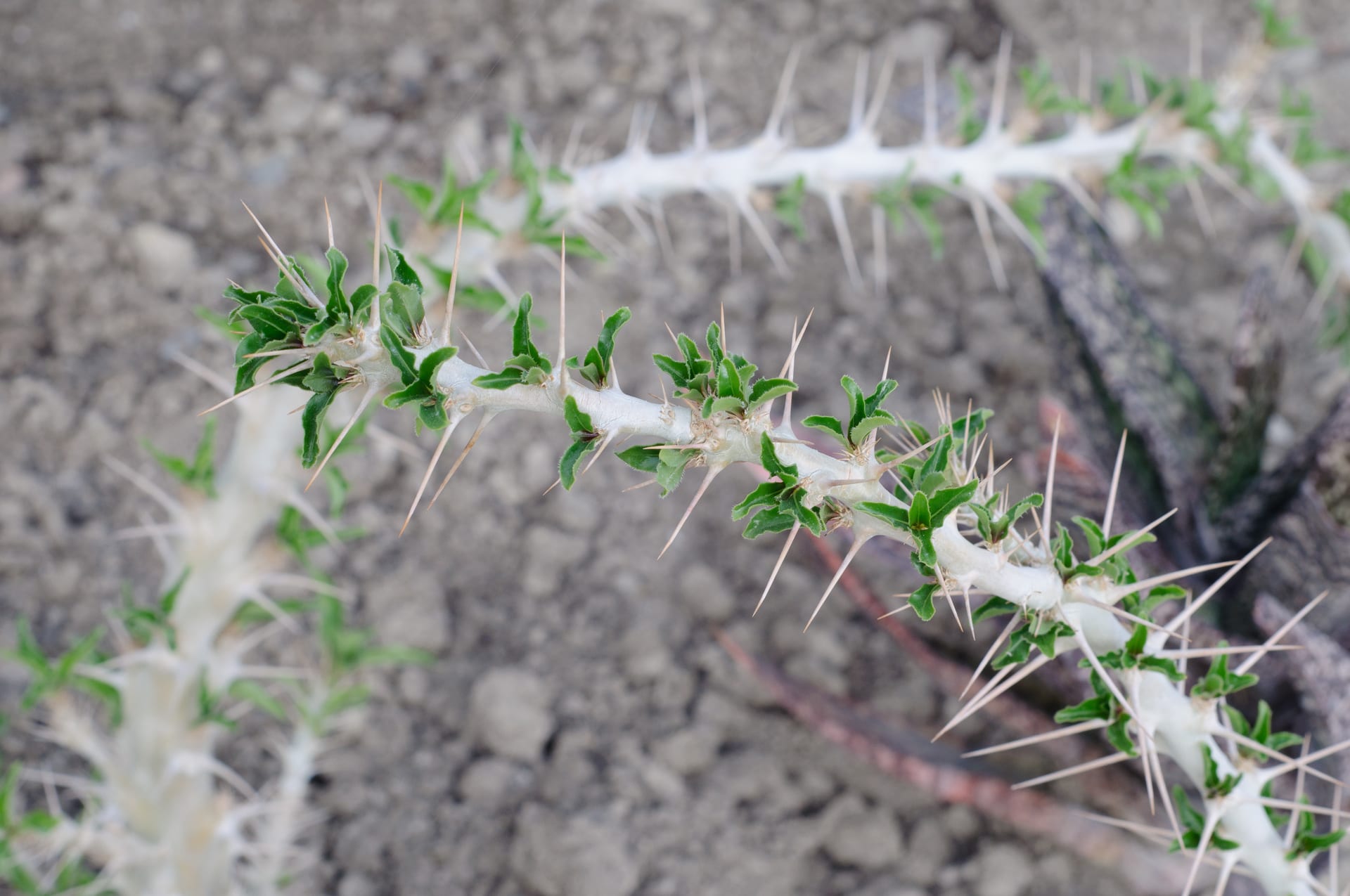
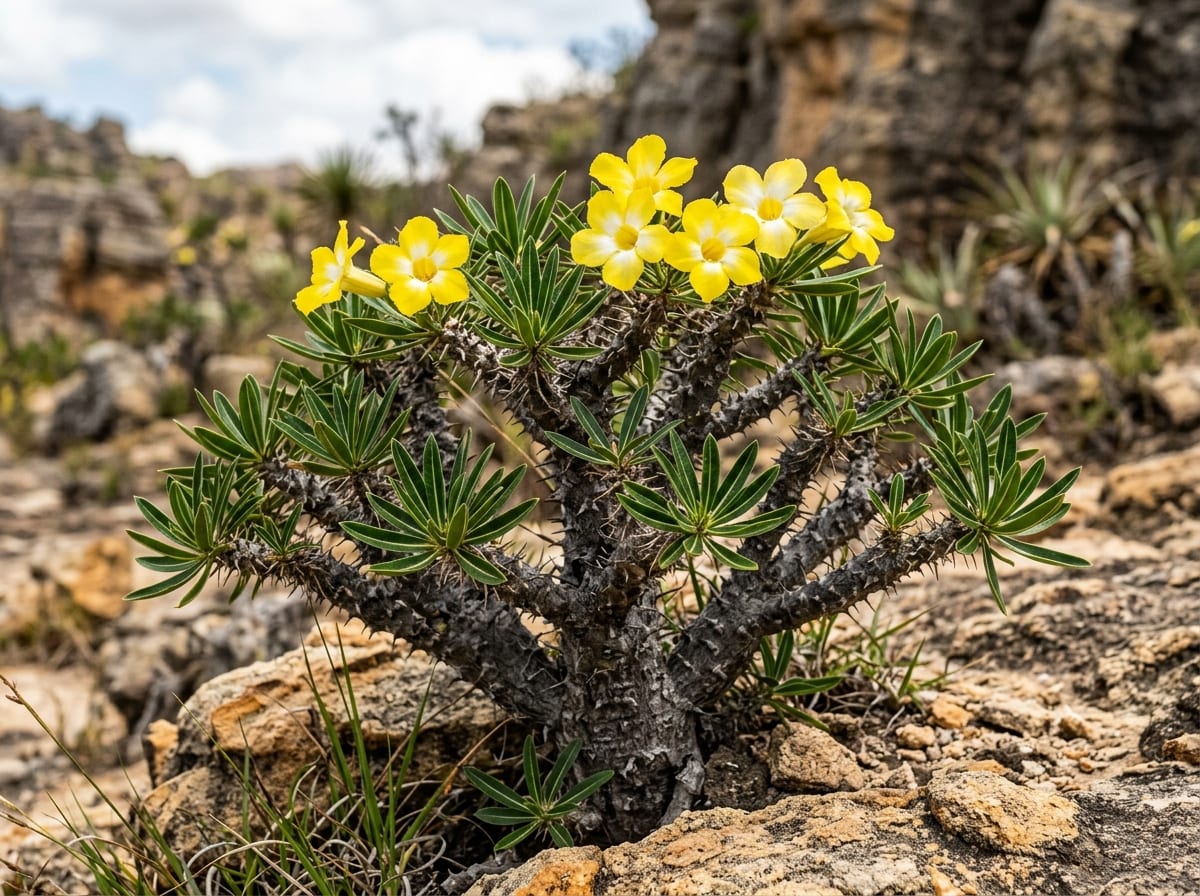
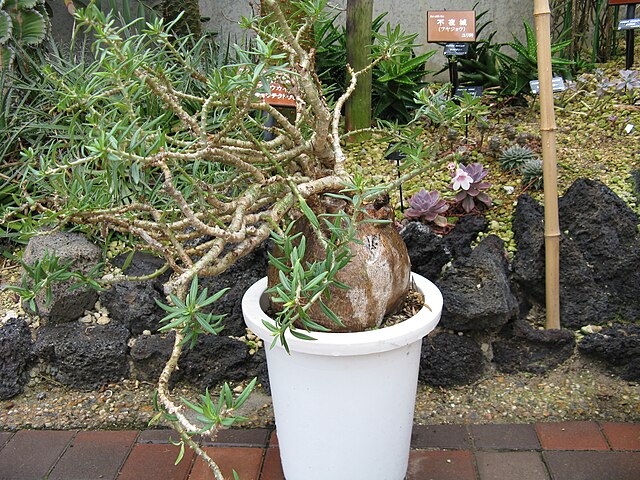
Pachypodium saundersii is a caudiciform member of the Apocynaceae, known in Japan as Hakubajo. It occurs in Mozambique, Zimbabwe, South Africa (KwaZulu-Natal, Mpumalanga) and Eswatini, in lowveld open woodland on stony, sunny ground and in crevices of granite rock sheets. Its English name is kudu lily, and the epithet honours Charles Saunders, a Natal civil servant and plant collector. A ball-shaped base up to 1 m across in the wild rises little above the ground and bears densely spiny branches, forming a shrub 1-2 m tall. Spines are 2-3.7 cm long in spreading pairs with a smaller third spine. Leaves are thin, oblanceolate, 2.5-8 cm long and sometimes strongly wavy. The large, long-tubed flowers are white flushed pink to purple and open in autumn at the end of the summer growing season, often on plants only four or five years old. It has been treated as a subspecies of P. lealii, but GBIF accepts it as a separate species. In Japan seed-raised plants are widely sold through online shops and auction sites.
Size of the Kudu Lily
The Kudu Lily grows to 1-2 m in the wild with a base up to 1 m across; about 1 m in cultivation.
Basic Info
Origin
Mozambique, Zimbabwe, eastern South Africa and Eswatini
Lifespan
Long-lived perennial (little published data)
Size
1-2 m in the wild with a base up to 1 m across; about 1 m in cultivation
Temperature
10〜35℃
Watering & Fertilizer
Sparingly in the growing season
Growing Tips
Light & Placement
It grows on sunny rocks in the wild, so give it full sun in the growing season.
Watering
Water when dry in the summer growing season. It is dormant and leafless in winter; keep it completely dry then.
Dormancy Care
A cooler winter rest is said to help it flower well. Resume watering when new growth appears in spring.
Temperature & Overwintering
Keep it dry and frost-free over winter.
Soil & Repotting
Use a free-draining mix and repot at the start of the growing season.
Pests & Cautions
Pachypodium sap is toxic and the spines are sharp. Wear thick gloves or wrap the trunk in several layers of newspaper when repotting or moving it.
Kudu Lily FAQ
QWhat is the growing difficulty level for Kudu Lily?
Beginner. A variety suitable for beginners. No special equipment or experience is required—you can grow it without problems by setting up a basic cultivation environment.
QHow large does Kudu Lily get?
The mature size of Kudu Lily is 1-2 m in the wild with a base up to 1 m across; about 1 m in cultivation. This may vary slightly depending on cultivation environment and individual differences.
QHow should I water and fertilize Kudu Lily?
Kudu Lily: watering & fertilizer — Sparingly in the growing season. Aim for appropriate frequency and amount.
QWhat is the typical price for Kudu Lily?
The price of Kudu Lily varies significantly by variety, characteristics, size, and lineage. Please check GrowerDirect's price guide for the latest market information.
Last updated: September 23, 2026
References & Sources
Edited & verified by: GrowerDirect Editorial Team
The classifications, regulations, and growing data on this page are created and verified based on the primary information database below.
Taxonomy & Authority
Regulations & Conservation Status
Listed in CITES Appendix II (covered by the genus listing for Pachypodium). International trade needs an export permit, but no registration is required for transfers within Japan.
Sources: Species+ (CITES): Pachypodium saundersii
Regulations may change. Always verify the latest information with the relevant authorities.
Related Species

Find listings for this species
Related Articles
Pachypodium gracillis Care Guide | Growing Thick Caudex from Seed
A practical guide to caring for Pachypodium gracillis, a popular caudex plant. Covers seed propagation and cultivation, choosing the right soil and pots, summer growing season and winter dormancy management, and secrets to watering and fertilization for developing thick caudexes.
Pachypodium Species Guide | Characteristics and Differences of Gracilis, Brevicaule, and Baronii
A detailed introduction to the most popular Pachypodium species. This guide explains the characteristics and differences of Gracilis, Brevicaule, Baronii, Lamerei, and Horombense, along with cultivation tips for each.
Pachypodium Seed Propagation Guide | From Sowing to Germination and Growth
This guide explains how to grow Pachypodium from seed. We cover everything from sourcing seeds and sowing to managing germination, caring for seedlings, and the unique joys of seed propagation.
Rooting and Initial Care of Pachypodium Gracilius
Methods for encouraging root development in imported bare-root Pachypodium gracilis. Explains the preparation of pots, soil media, and temperature conditions; watering practices during rooting (maintaining primarily dry conditions); how to confirm successful rooting and interpret key indicators; initial post-rooting care; and seasonal management guidelines.
🩺 Common diseases
Can't find the plant you're looking for?
Post your wishes for free and growers with matching plants will contact you with introductions.