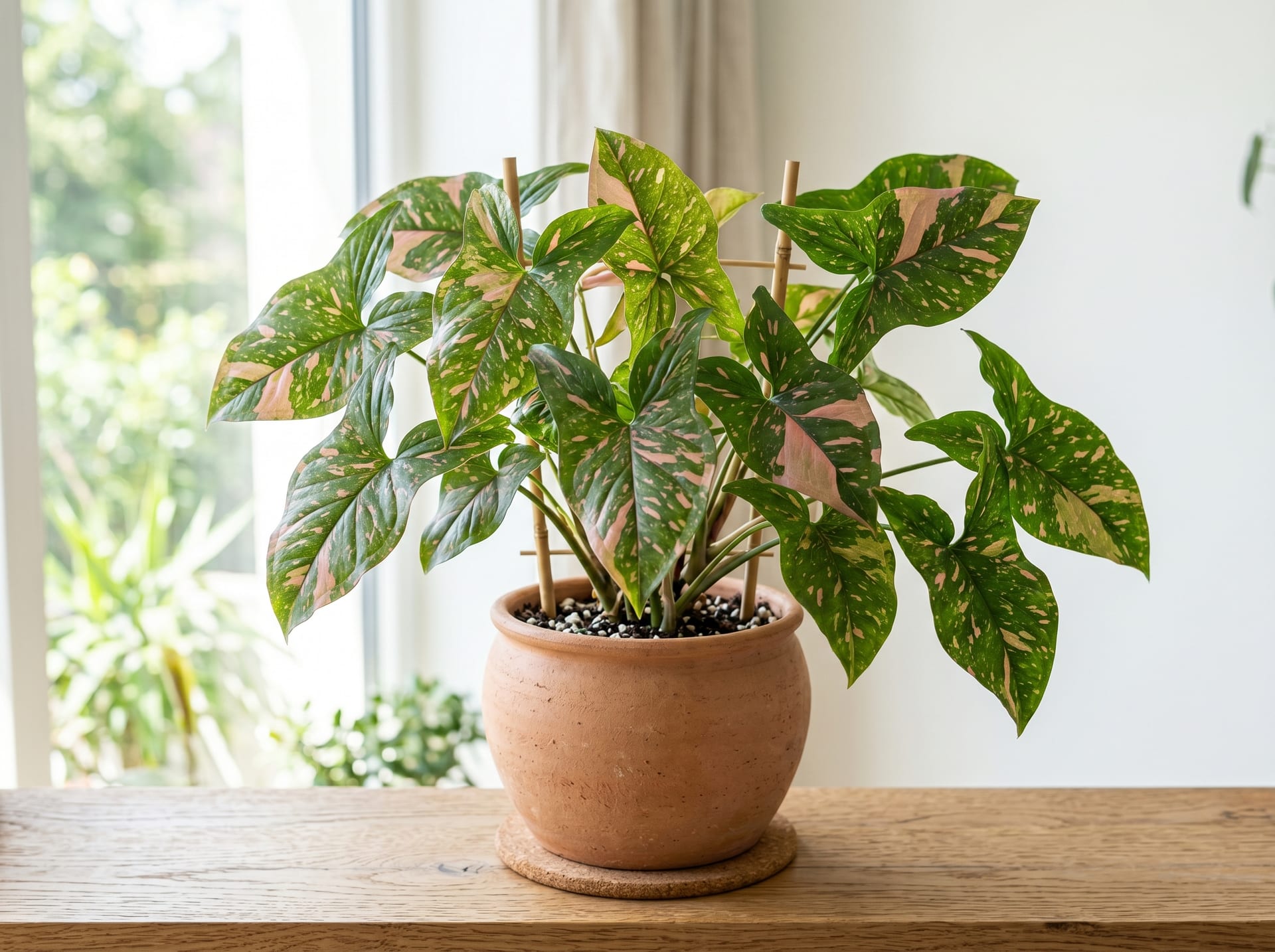
AI-generated image
Syngonium Pink Splash
BeginnerSyngonium podophyllum 'Pink Splash'
A syngonium with beautiful pink splash-like variegation. Leaf shape changes with growth.
Overview
Syngonium podophyllum 'Pink Splash' is a cultivar of arrowhead plant prized for its leaves speckled and splashed with varying amounts of pink variegation against a green background. Each leaf is unique in the distribution of its pink colouring — some are almost entirely pink, others more subtly marked — giving the plant ongoing visual interest. Leaf shape evolves from simple arrowheads in juvenile plants to more deeply lobed forms as the plant matures. Bright indirect light maintains and enhances the pink variegation; lower light causes it to fade toward green. Water when the soil surface dries, avoiding overwatering. As a vining plant, it can be trained up a support or left to trail. Propagation from stem cuttings with a node is straightforward. Maintaining adequate light is the key to preserving its attractive pastel-pink colouring — a highly popular choice for collectors of coloured-leaf houseplants.
Size of the Syngonium Pink Splash
The Syngonium Pink Splash grows to 20-50cm.
Temperature & humidity for the Syngonium Pink Splash
The Syngonium Pink Splash tolerates temperatures of ≥15℃.
Basic Info
Origin
Garden cultivar (species native to Mexico and Central/South America)
Lifespan
Perennial
Size
20-50cm
Temperature
≥15℃
Humidity
50〜70%
Growing Tips
Light & Placement
Bright indirect light keeps the splashes vivid. Direct sun causes leaf burn, so place it behind a sheer curtain.
Watering
Water once the surface has dried. Overwatering causes root rot, so never leave water in the saucer.
Temperature & Overwintering
Tropical and cold-sensitive. In winter keep it in a warm room, away from cold windows and direct heater drafts.
Propagation
Propagates easily from stem cuttings with a node. Root in water or moist mix, then pot up once roots appear.
Pruning & Shaping
As a vine, train it on a pole or let it trail from a hanging pot. Cut back stems that grow too long.
Notes
Pink variegation fades in low light
Syngonium Pink Splash FAQ
QWhat is the growing difficulty level for Syngonium Pink Splash?
Beginner. A variety suitable for beginners. No special equipment or experience is required—you can grow it without problems by setting up a basic cultivation environment.
QWhat temperatures can Syngonium Pink Splash tolerate?
Syngonium Pink Splash tolerates temperatures of ≥15℃. This is the tolerated range, not the ideal growing temperature. Keep conditions well inside it and avoid sudden temperature changes.
QHow large does Syngonium Pink Splash get?
The mature size of Syngonium Pink Splash is 20-50cm. This may vary slightly depending on cultivation environment and individual differences.
QWhat is the typical price for Syngonium Pink Splash?
The price of Syngonium Pink Splash varies significantly by variety, characteristics, size, and lineage. Please check GrowerDirect's price guide for the latest market information.
Last updated: October 2, 2026
Growing Specifications
- USDA Zone
- 10–12
Sources: Missouri Botanical Garden Plant Finder - Syngonium podophyllum
References & Sources
Edited & verified by: GrowerDirect Editorial Team
The classifications, regulations, and growing data on this page are created and verified based on the primary information database below.
Taxonomy & Authority
Regulations & Conservation Status
Not listed in the CITES (Washington Convention) Appendices. Also not designated as an invasive alien species.
Sources: CITES Appendices (official) / Ministry of the Environment List of Specified Invasive Alien Species
Regulations may change. Always verify the latest information with the relevant authorities.
Related Species
Find listings for this species
Related Articles
Syngonium Varieties and Care Guide | A Beginner-Friendly Introduction to Aroids
A guide to Syngonium varieties and care techniques. Features of popular pink and white variegated varieties, watering and light management, and how leaves change through growth stages and styling methods.
Growing Philodendron Pink Princess from Seed | From Sowing to Mature Plant, Pink Variegation Development Conditions and Artificial Pollination
Explaining how to grow Pink Princess Philodendron from seed, the conditions for pink variegation development, and the procedure for artificial pollination.
Optimizing Foliage Plant Leaf Shine | Humidity Management to Achieve Gloss and Plant Health
Environmental management techniques to bring out glossy shine on foliage plant leaves. Techniques to achieve healthy and beautiful leaf expression through optimizing light, humidity, and water quality.
Why New Leaves on Foliage Plants Are Smaller — Practical Solutions for Light, Humidity, and Nutrition
We analyze the causes behind stunted growth and smaller new leaves on foliage plants. From light environment and humidity management to fertilization strategy and root health, we explain each factor and introduce methods to restore new leaf size.
🩺 Common diseases
Can't find the plant you're looking for?
Post your wishes for free and growers with matching plants will contact you with introductions.