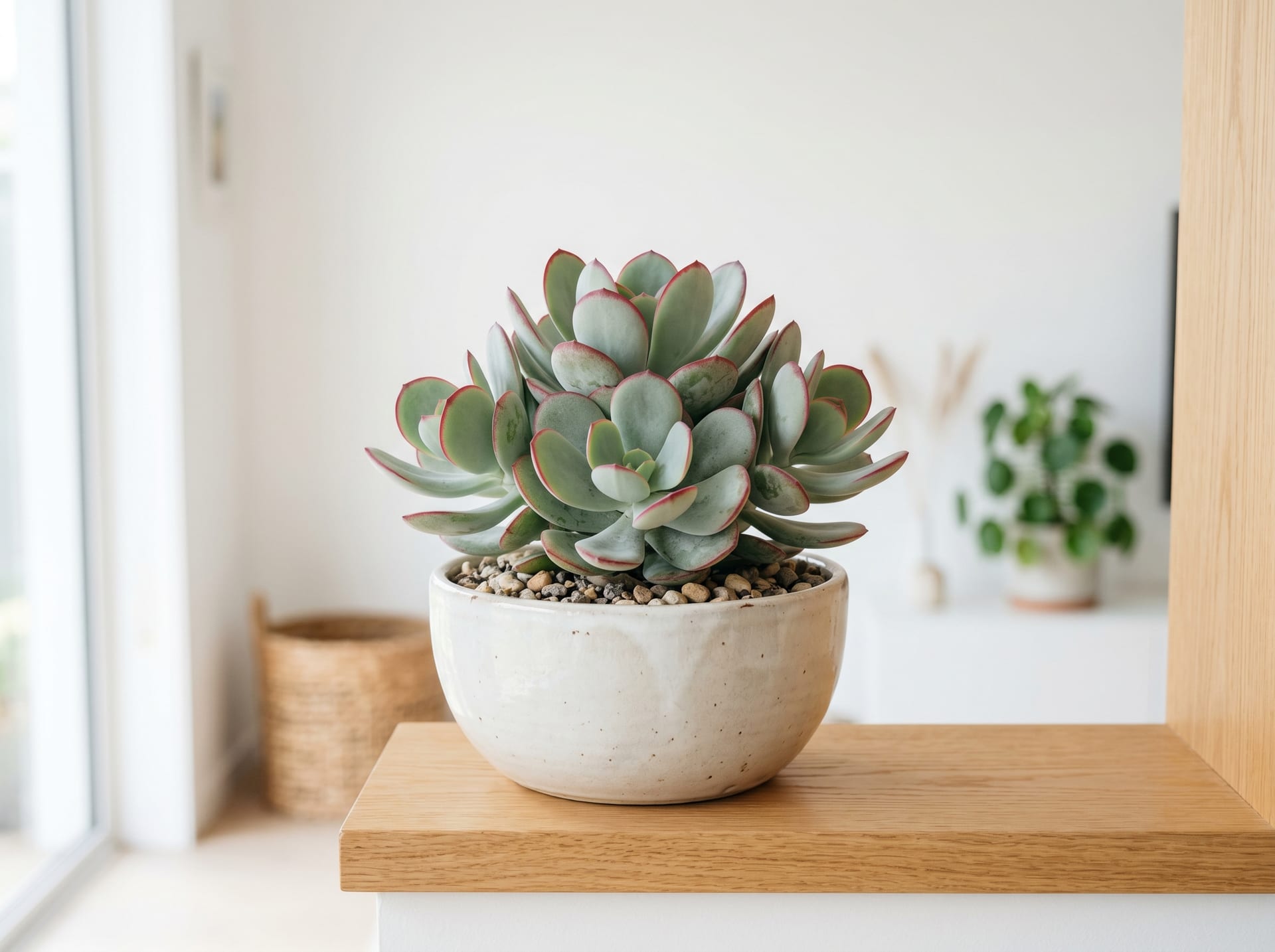
AI-generated image
Cotyledon
BeginnerCotyledon spp.
South African succulent with bear-paw-like leaves inspiring its common name. Thick, soft foliage forming compact rosettes. Fast-growing with minimal care requirements, ideal for succulent beginners.
Overview
Cotyledon is a genus of about ten species of succulent plants in the family Crassulaceae, native chiefly to the arid regions of southern Africa extending to the Arabian Peninsula. Plants bear thick, fleshy, opposite leaves whose shape, color, and surface texture vary considerably between species. The cultivar widely loved in Japan as 'Kuma-douji' (Cotyledon tomentosa, bear's paw) has plump, downy leaves tipped with tooth-like reddish margins that resemble a bear's paw. Cotyledons grow during the cooler spring and autumn months and dislike excessive moisture and the heat and humidity of midsummer. They prefer bright light and good air circulation, and should be watered only after the soil has dried; watering is reduced in summer and winter. Cold hardiness is limited, so plants should be protected from frost and kept indoors or under cover in winter. Propagation is by stem cuttings, and by leaf cuttings in some species. Many species contain toxic compounds and should be kept away from pets and children.
Source: Wikipedia (CC BY-SA 4.0)
Basic Info
Origin
southern Africa, centered on South Africa, extending to the Arabian Peninsula
Temperature
5〜35℃
Humidity
30〜50%
Growing Tips
Light & Placement
Likes a sunny, airy spot. It dislikes hot humid summers, so keep it somewhere cool and ventilated in summer.
Watering
A spring-and-autumn grower: water once the soil dries during the growing seasons. Cut back in summer and winter.
Temperature & Overwintering
Somewhat frost-tender; never expose it to frost. Move it indoors or under sunny eaves for winter and water less.
Soil & Repotting
Sensitive to wet soil and hot humid summers, so use a well-draining succulent mix and a pot that dries quickly.
Propagation
Propagate by stem or leaf cuttings. Some species root poorly from leaves, so stem cuttings are more reliable.
Pests & Cautions
Many species contain toxic compounds, so guard against children and pets chewing them. Keep the plant out of reach.
Cotyledon FAQ
QWhat is the growing difficulty level for Cotyledon?
Beginner. A variety suitable for beginners. No special equipment or experience is required—you can grow it without problems by setting up a basic cultivation environment.
QWhat is the typical price for Cotyledon?
The price of Cotyledon varies significantly by variety, characteristics, size, and lineage. Please check GrowerDirect's price guide for the latest market information.
Last updated: June 23, 2026
References & Sources
Edited & verified by: GrowerDirect Editorial Team
The classifications, regulations, and growing data on this page are created and verified based on the primary information database below.
Primary sources
Regulations & Conservation Status
Sources: CITES Appendices — taxon not listed
Regulations may change. Always verify the latest information with the relevant authorities.
Related Species
Find listings for this species
Related Articles
Complete Care Guide for Cotyledon (Bear's Paw) | Protecting Fine Hairs, Summer Care, and Leaf Propagation Methods
A detailed guide to caring for Cotyledon tomentosa (Bear's Paw). This practical guide for beginners covers how to maintain the fleshy, claw-like leaves covered in silvery fine hairs, summer care strategies for winter-type succulents and proper watering timing, gentle watering methods that protect delicate hairs, and propagation through stem and leaf cuttings.
Autumn Preparation Management for Summer-Type Succulents
A guide to autumn care for summer-type succulents, covering plant changes from September to November, timing for gradual watering reduction, placement and temperature management for transitioning plants indoors, autumn fertilizing and pest control, variety-specific care checkpoints, and preparation for winter dormancy.
Mealybug Control on Succulents | Complete Guide to Early Detection, Removal, and Prevention
Mealybugs hide easily at the base of succulent leaves and on new growth. This guide covers their characteristics, the environments where they thrive, tips for early detection, removal methods using cotton swabs and alcohol, and daily care practices to prevent recurrence.
Summer and Winter Type Succulents: Growth Cycles and Watering Management Strategy
This article explains the differences in growth types of succulent plants, their annual growth cycles, seasonal watering management strategies, common failures, and countermeasures.
🩺 Common diseases
Can't find the plant you're looking for?
Post your wishes for free and growers with matching plants will contact you with introductions.