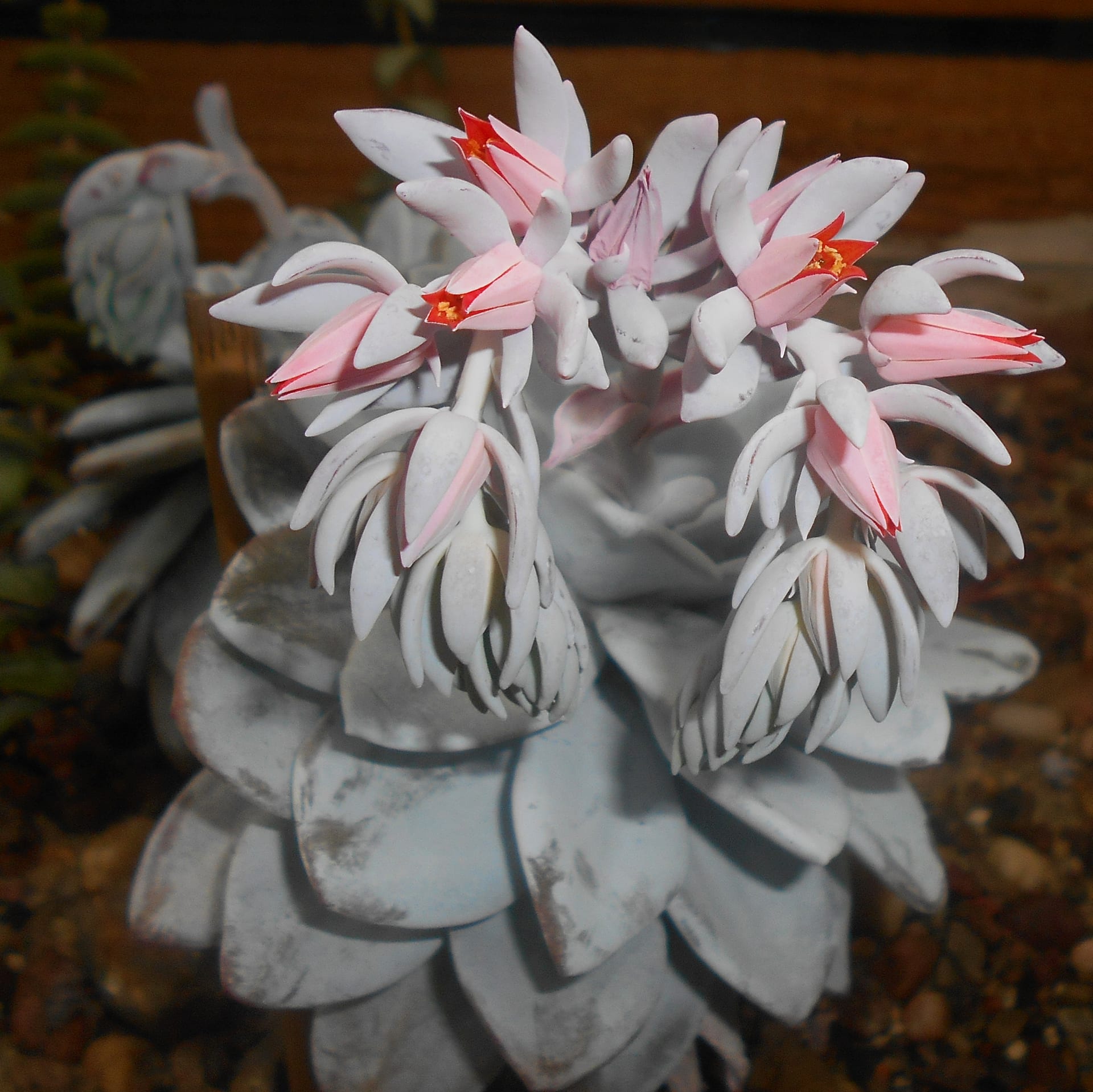
Source: Wikimedia Commons
Echeveria laui
IntermediateEcheveria laui
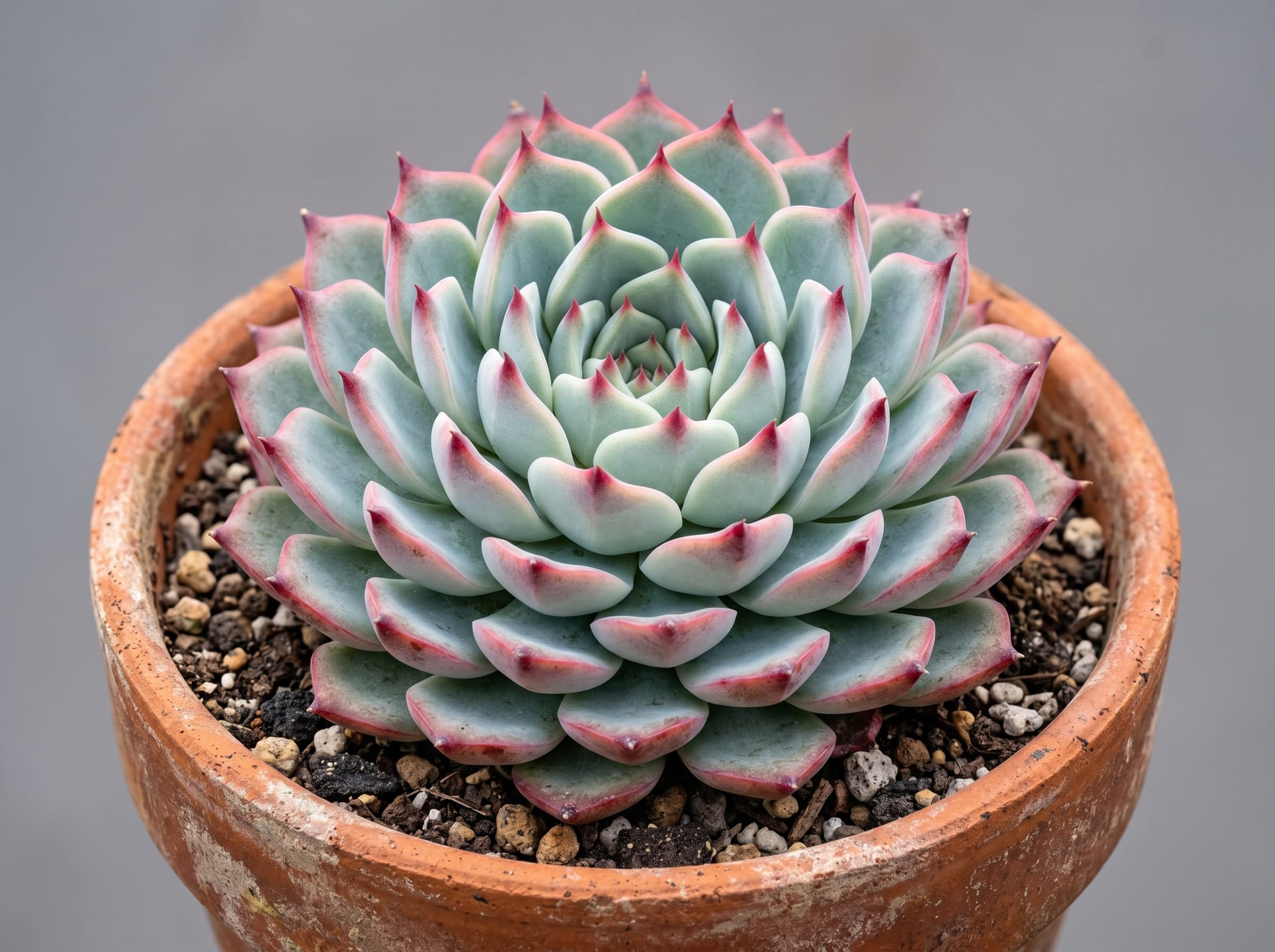
A species with plump, rounded leaves thickly coated in white powder, forming snow-white rosettes. Native to Oaxaca, Mexico, and slow-growing; the bloom rubs off easily.
About
Echeveria laui is a species from Oaxaca in southern Mexico, known for one of the thickest white coatings in the genus. Plump, fleshy leaves form rosettes about 15 cm across; their blue-grey surface is covered in a waxy white bloom that makes them look almost pure white, sometimes tinged pink. It grows slowly. The pink-orange flowers are freely produced and attractive. The bloom limits water loss and protects against strong light; it rubs off at a touch and does not regrow, so the leaves should be handled as little as possible. Japanese growers class it as a spring–autumn grower that dislikes humid summers and cold winter winds, with winter care needing particular attention. Slightly more fertiliser is said to make the leaves shorter, thicker and rounder, and the plant looks whitest during its summer rest. It rarely offsets but self-pollinates readily, so leaving the flower stalk to ripen seed is the recommended way to propagate; leaf cuttings are possible, but many dry out before producing a plantlet. In Japan it is a popular species sold by specialist nurseries.
Source: Wikipedia (CC BY-SA 4.0)
Size of the Echeveria laui
The Echeveria laui grows to Rosette about 15 cm across.
Basic Info
Origin
Mexico (Oaxaca)
Lifespan
Perennial; slow-growing
Size
Rosette about 15 cm across
Temperature
5〜35℃
Humidity
30〜50%
Watering & Fertilizer
Slightly more than usual; gives thicker, rounder leaves
Growing Tips
Light & Placement
Give full light; too little light makes the leaves shrivel and drop. In summer use bright, airy shade out of the rain; in winter frost-free sun or a sunny room.
Watering
A spring–autumn grower. From March to September water moderately once the mix dries, never over the leaves. Give very little in humid summer heat, and keep it cool, airy and dry in winter.
Temperature & Overwintering
Overseas sources give hardiness to -3°C; a Japanese reference gives 0°C as its minimum. Take particular care in winter.
Fertiliser
Slightly more fertiliser than usual gives shorter, thicker, rounder leaves and a shapely rosette.
Propagation
It rarely offsets but self-pollinates readily, so leave the flower stalk to ripen seed. Leaf cuttings from lower leaves are possible but often fail.
Pests & Cautions
The white bloom rubs off permanently; avoid touching the leaves and handle the plant by its root ball when repotting.
Echeveria laui FAQ
QWhat is the growing difficulty level for Echeveria laui?
Intermediate. A variety suitable for intermediate growers. Requires some cultivation experience and knowledge of environment management. Pay careful attention to temperature and humidity control.
QHow large does Echeveria laui get?
The mature size of Echeveria laui is Rosette about 15 cm across. This may vary slightly depending on cultivation environment and individual differences.
QHow should I water and fertilize Echeveria laui?
Echeveria laui: watering & fertilizer — Slightly more than usual; gives thicker, rounder leaves. Aim for appropriate frequency and amount.
QWhat is the typical price for Echeveria laui?
The price of Echeveria laui varies significantly by variety, characteristics, size, and lineage. Please check GrowerDirect's price guide for the latest market information.
Last updated: September 23, 2026
References & Sources
Edited & verified by: GrowerDirect Editorial Team
The classifications, regulations, and growing data on this page are created and verified based on the primary information database below.
Taxonomy & Authority
Regulations & Conservation Status
Not listed in the CITES Appendices and not regulated under Japan's Invasive Alien Species Act.
Sources: Species+ (CITES) query for Echeveria laui: not listed / Ministry of the Environment: list of Invasive Alien Species
Regulations may change. Always verify the latest information with the relevant authorities.
Related Species
Find listings for this species
Related Articles
Complete Guide to Echeveria Types | Characteristics of Popular Varieties and How to Choose Plants for Arrangements
A comprehensive explanation of Echeveria variety classification, differences in characteristics, and how to combine plants for arrangements among popular succulents. We introduce tips for choosing varieties that both beginners and advanced growers can enjoy.
Popular Echeveria Varieties and Care Guide | Complete Guide for Beginners
Explains the characteristics of popular Echeveria varieties, basic care methods, and tips for watering, lighting, and repotting for beginners.
Propagation and Leaf-Cutting Techniques for Echeveria
A practical guide to leaf-cutting specialized for the Echeveria genus. Covers everything from selecting healthy leaves to callus formation and root management, species-specific failure factors for powder-coated varieties, and when to use pup division or stem cuttings instead.
Echeveria subsessilis Offset Propagation — Separation from Parent Plants, Root Promotion, and Parent Plant Recovery Management
Detailed guide on safely separating Echeveria subsessilis offsets from parent plants, promoting root development, and managing parent plant recovery after offset removal.
🩺 Common diseases
Can't find the plant you're looking for?
Post your wishes for free and growers with matching plants will contact you with introductions.