Complete Guide to Echeveria Types | Characteristics of Popular Varieties and How to Choose Plants for Arrangements
A comprehensive explanation of Echeveria variety classification, differences in characteristics, and how to combine plants for arrangements among popular succulents. We introduce tips for choosing varieties that both beginners and advanced growers can enjoy.
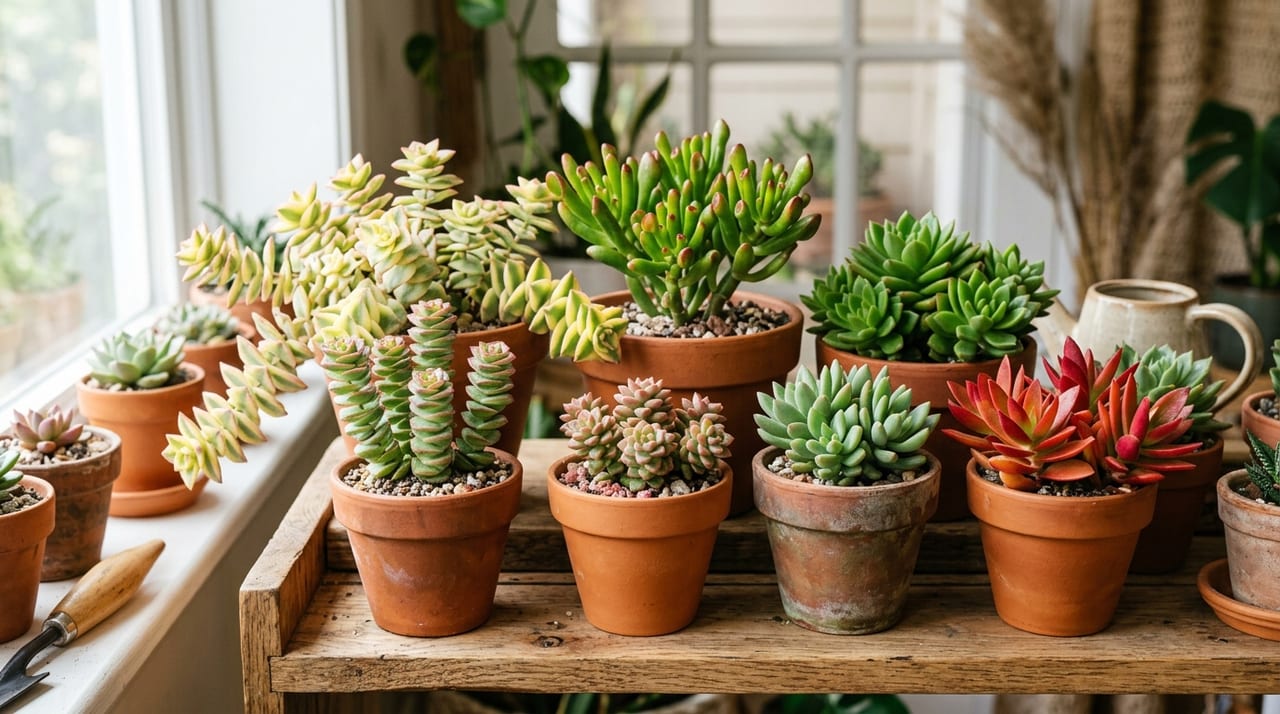
Key Takeaways
A comprehensive explanation of Echeveria variety classification, differences in characteristics, and how to combine plants for arrangements among popular succulents. We introduce tips for choosing varieties that both beginners and advanced growers can enjoy.
Related Species
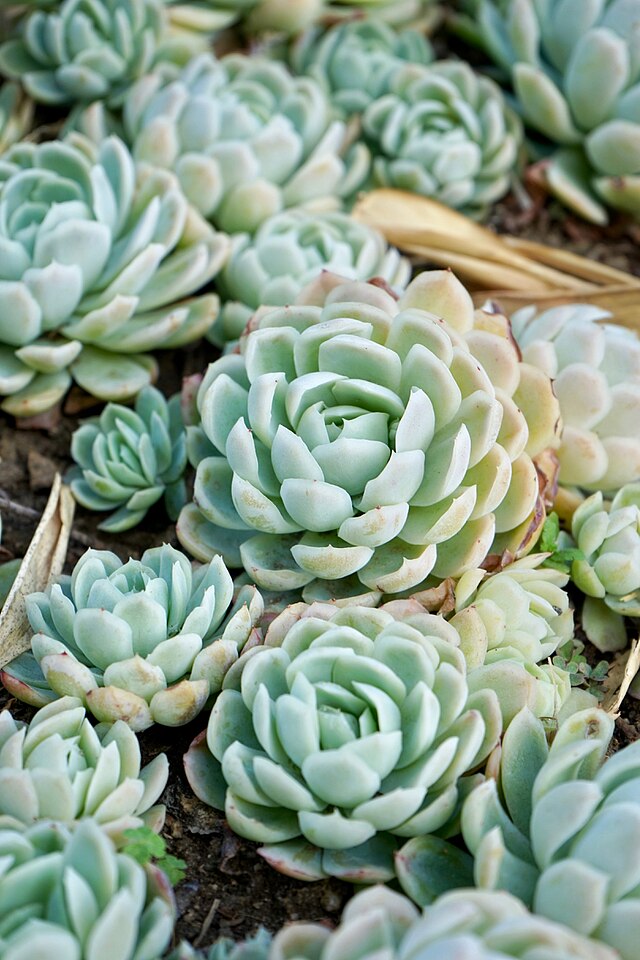
What is Echeveria | Why It's Called the Queen of Succulents
Echeveria is a succulent plant of the Crassulaceae family native to Central and South America, particularly Mexico. It is called the "Queen of Succulents" because of its beautiful rosette-shaped form that spreads like a flower. Over 180 species are known in the wild, and when including hybrids, thousands of varieties exist. It is a genre that has led Japan's succulent boom and is a popular group that combines both collectibility and ornamental value.
The greatest appeal of Echeveria is its abundant color variation. The leaf colors are diverse—green, blue-green, gray, pink, red, purple, and white powder (a coating called bloom)—and many varieties change color and develop autumn tones by season, allowing you to enjoy different expressions throughout the year. The key to displaying beautiful autumn colors is also influenced by temperature differences and light management. You can enjoy deeper coloration by also referring to how to manage autumn colors in succulents. Also, most varieties have relatively compact plants, making them easy to grow both indoors and outdoors, which is another reason for their enduring popularity.
Popular Varieties by Category
Echeveria can be broadly divided into "small types," "medium types," "large types," and "Korean nursery varieties (Korean hybrids)."
Small varieties (5–10 cm diameter)
- Shichifukujin (Setaciculata type): A classic variety long cultivated in Japan. Hardy, propagates easily, and has high success rates with leaf propagation, making it ideal for beginners.
- Moranensis: Compact with leaves that develop vibrant red tips—a beautiful variety. Sub-rosettes emerge easily, creating an impressive display when clustered.
- Humifuse: Characterized by fine white hairs covering silvery-green leaves. With a unique texture, this small type is popular with collectors.
Medium varieties (10–15 cm diameter)
- Laui: A beautiful white variety uniformly covered in white powder. Management requires careful attention because fingerprints remain when touched, but its pure white presence is unmatched.
- Mexican Giant: A large-type beauty with thick blue-green leaves tipped in pink. Vigorous growth creates a substantial and striking rosette.
- Elegans: A popular variety with beautiful blue-white leaves, hardy and easy to propagate. It is also recommended as an "introductory succulent" for beginners.
Large varieties (15 cm diameter or larger)
- Party Dress: A Korean hybrid variety characterized by a large rosette and pink-to-orange leaf colors. Just one plant creates the brightness of a bouquet.
- Raindrops: An unusual variety featuring water-drop-like protrusions (caluncula) at the center of the leaves. Its unique form is highly sought after by collectors.
Korean Nursery Varieties (Kdus, KD varieties) In recent years, Echeveria varieties produced in Korea through mass hybridization have become widely available in the Japanese market. They have excellent color and quality, with stable distribution, but adaptation to Japan's climate environment may vary by individual plant. When purchasing, it is important to choose a trusted seller where you can confirm the plant's origin and producer information.
How to Combine Varieties for Arrangements and Soil Selection
Echeveria greatly increases its ornamental value when multiple varieties are planted together in one pot in what is called an "arrangement." Success depends on "combining varieties with similar characteristics" and "designing aesthetic balance." Specific arrangement tips are detailed in how to create succulent clusters and arrangements, so please refer to it as well.
Be aware of color contrast: Beautiful combinations use complementary colors, such as green tones with pink tones, or gray tones with red tones. Placing white-powder varieties (Laui, Elegans) at the center and outlining with small varieties showing deep autumn tones creates an elegant finish.
Vary the size: Placing a large variety at the center with small and medium varieties around it creates dimension and depth. Differences in height also serve as accents.
Match watering preferences: Grouping drought-resistant varieties together or grouping varieties that need more moisture together allows you to standardize watering frequency and greatly reduces failures. White-powder varieties are especially sensitive to excess moisture, so grouping similar types makes management easier.
For soil, prioritize drainage. The basic approach is to use commercial succulent-specific soil mixed with about 30–40% pumice and small-grain red volcanic soil. For details on choosing pot size, material, and drainage, see succulent pot selection guide if you want to promote healthy root growth. Shallow terracotta or unglazed clay pots with a diameter of 20–30 cm excel in both breathability and appearance.
Seasonal Care Tips | Points to Note for Summer and Winter Survival
For Echeveria, the basic cycle is "spring (March–May) and autumn (September–November) are growing seasons, while summer and winter are dormant periods." While there are differences by variety, remember these key points for seasonal management that apply to all varieties.
Spring and Autumn (growing seasons): Water thoroughly 3–5 days after the soil dries completely. During this period, applying dilute liquid succulent fertilizer 1–2 times per month promotes growth and improves color. Spring is also a good time for repotting; repotting roughly every two years is effective for preventing root-bound conditions.
Summer (high-temperature, high-humidity period): Temperatures exceeding 35°C can cause leaves to rot from excess moisture. Use 30–50% shade cloth to protect from direct sunlight and manage the plants in a well-ventilated partial shade. Reduce watering to about 2–3 times per month, applied in the cool evening hours. White-powder varieties especially need care, as they are sensitive to excess moisture.
Winter (low-temperature period): Echeveria generally tolerates temperatures around 5°C, but in regions where temperatures drop below 0°C, bring plants indoors or wrap them with fabric for insulation. Varieties with strong white powder like Laui and Mexican Giant are especially sensitive to cold and frost, so indoor management is safest in winter. Winter watering should be reduced to about once per month, done on sunny, warm mornings.
Propagation Methods: Leaf Cuttings and Stem Cuttings
Echeveria can be easily propagated using two methods: "leaf propagation" and "stem cutting." For detailed steps and tips to increase success rates, see Echeveria propagation and leaf-cutting techniques for more information. If you're considering trying it, please refer to it.
Leaf propagation involves gently twisting off a healthy lower leaf from the base and placing it in a dry, shaded location. Roots appear in 2–3 weeks, and small new plants begin to grow. Shichifukujin and Moranensis have particularly high success rates with leaf propagation. Conversely, some white-powder varieties (such as Laui) and Korean hybrids are difficult to propagate from leaves.
Stem cutting is effective for resetting excessively stretched plants or obtaining multiple plants from a large specimen. Cut the stem with a clean blade, let the cut surface dry thoroughly for 3–5 days, then insert it into soil. If the cut lower section is left alone, multiple new plants will emerge from the sides.
Get Rare Echeveria Varieties on GrowerDirect
Popular Echeveria varieties, Korean hybrids, and rare original species are almost impossible to find at home centers or general garden shops. GrowerDirect connects you directly with growers specializing in succulents who list domestically grown stock and imported varieties. You can confirm the plant's origin, cultivation history, and growing advice before purchasing. Because it comes directly from the source, distribution costs are reduced, making it easier to obtain healthy plants. Whether you're starting a collection or adding rare varieties to an existing one, please use GrowerDirect.