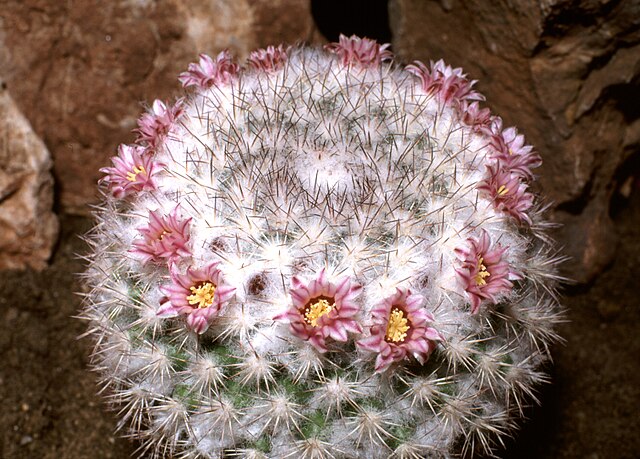
Source: Wikimedia Commons
Mammillaria
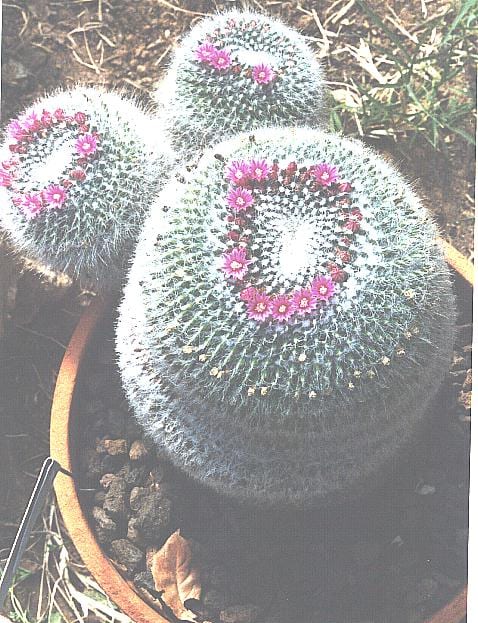
BeginnerA cactus blooming cute ring-shaped flowers on small globes. Very many species, ideal for collecting.
About
Mammillaria is one of the largest genera in the cactus family (Cactaceae), with approximately 200 recognized species and varieties, most native to Mexico and extending into the southwestern United States, Caribbean, and northern South America. Commonly called pincushion cacti, they are characterized by globe-shaped to cylindrical bodies covered in spirally arranged tubercles, each bearing a cluster of spines. A distinctive ring of small flowers, ranging from white and pink to red and yellow, forms around the crown in spring. Mature plants are compact, typically 3–15 cm in diameter. Full sun promotes dense spine development and prolific flowering. Watering two to three times monthly during the growing season and near-total drought in winter, combined with very fast-draining soil, are the keys to success. Mammillarias are among the most beginner-friendly cactus genera and are propagated by seed or offsets.
Source: Wikipedia (CC BY-SA 4.0)
Lifespan of the Mammillaria
The Mammillaria lives Perennial (decades).
Size of the Mammillaria
The Mammillaria grows to 3-15cm.
Basic Info
Origin
Mexico, while some come from the Southwestern United States, the Caribbean
Lifespan
Perennial (decades)
Size
3-15cm
Temperature
5〜35℃
Humidity
30〜50%
Watering & Fertilizer
Minimal
Growing Tips
Light & Placement
Loves direct sun; with plenty of light both spine color and flowering improve. Keep it in a sunny, well-ventilated spot.
Watering
2-3 times monthly in growth season. No water in winter
Temperature & Overwintering
Tolerates lows of about 5°C, though this varies by species. Keeping it dry by withholding water in winter helps it cope with the cold.
Soil & Repotting
Use a very fast-draining mix. For clumping species, repot during the growing season once the pot gets crowded, removing offsets as you go.
Propagation
Propagate from seed or by dividing offsets. Let the base of a removed offset dry before setting it on soil.
Mammillaria FAQ
QWhat is the growing difficulty level for Mammillaria?
Beginner. A variety suitable for beginners. No special equipment or experience is required—you can grow it without problems by setting up a basic cultivation environment.
QWhat is the lifespan of Mammillaria?
The average lifespan of Mammillaria is Perennial (decades). With proper cultivation environment and nutrient management, you can keep it healthy for a long time.
QHow large does Mammillaria get?
The mature size of Mammillaria is 3-15cm. This may vary slightly depending on cultivation environment and individual differences.
QHow should I water and fertilize Mammillaria?
Mammillaria: watering & fertilizer — Minimal. Aim for appropriate frequency and amount.
QWhat is the typical price for Mammillaria?
The price of Mammillaria varies significantly by variety, characteristics, size, and lineage. Please check GrowerDirect's price guide for the latest market information.
Last updated: September 18, 2026
References & Sources
Edited & verified by: GrowerDirect Editorial Team
The classifications, regulations, and growing data on this page are created and verified based on the primary information database below.
Regulations & Conservation Status
The family Cactaceae is listed in its entirety in CITES Appendix II. However, Mammillaria pectinifera (including subspecies solisioides) is in Appendix I.
Sources: CITES Checklist — Cactaceae spp. (Appendix II, whole family)
Regulations may change. Always verify the latest information with the relevant authorities.
Related Species
Find listings for this species
Related Articles
Complete Guide to Growing Mammillaria | Enjoying the Charm of Small Cacti Through Multi-headed Plants
This guide explains how to grow Mammillaria, a small cactus that readily clusters. It covers soil, watering, spring blooming in flower-ring formations, and propagation using offsets—introducing in detail how to enjoy growing multi-headed plants.
Autumn Preparation Management for Summer-Type Succulents
A guide to autumn care for summer-type succulents, covering plant changes from September to November, timing for gradual watering reduction, placement and temperature management for transitioning plants indoors, autumn fertilizing and pest control, variety-specific care checkpoints, and preparation for winter dormancy.
Mealybug Control on Succulents | Complete Guide to Early Detection, Removal, and Prevention
Mealybugs hide easily at the base of succulent leaves and on new growth. This guide covers their characteristics, the environments where they thrive, tips for early detection, removal methods using cotton swabs and alcohol, and daily care practices to prevent recurrence.
Summer and Winter Type Succulents: Growth Cycles and Watering Management Strategy
This article explains the differences in growth types of succulent plants, their annual growth cycles, seasonal watering management strategies, common failures, and countermeasures.
🩺 Common diseases
Can't find the plant you're looking for?
Post your wishes for free and growers with matching plants will contact you with introductions.