Source: Wikimedia Commons
Pachypodium Lamerei
IntermediatePachypodium lamerei
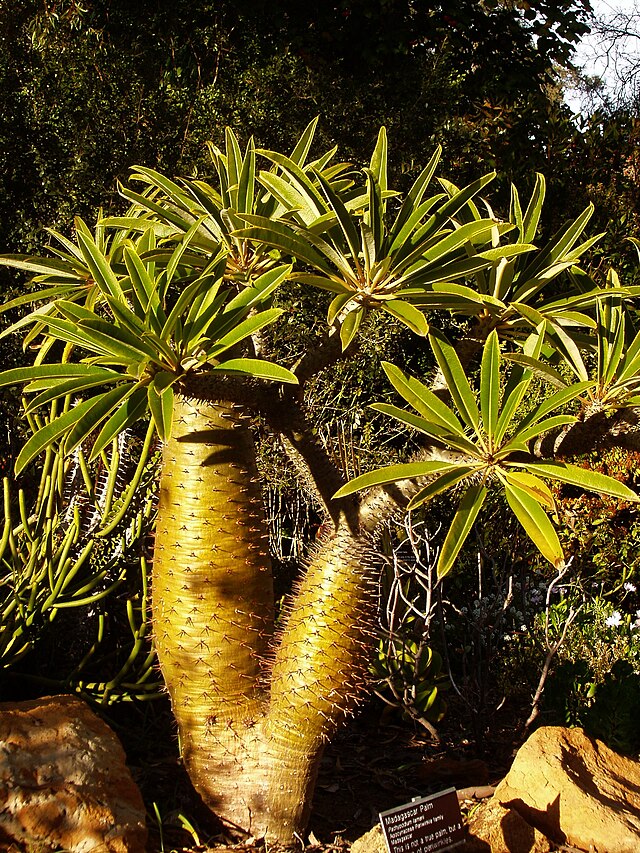
A spiny caudex plant from Madagascar. Popular as 'Madagascar Palm Tree'.
About
Pachypodium lamerei (Madagascar Palm) is a spiny succulent tree from Madagascar, belonging to the family Apocynaceae rather than the palm family despite its common name. It features a silvery-grey, columnar trunk densely armed with long spines and crowned with a tuft of strap-like leaves at the growing tip. In the wild, plants can exceed 6 m; container specimens reach 50–200 cm over many decades. During the warm growing season, full sun and generous watering are necessary to sustain active growth. As temperatures drop in autumn, plants shed their leaves and enter dormancy; watering should be drastically reduced or stopped until spring. A minimum winter temperature of around 10°C is required, making indoor overwintering essential in most temperate climates. The distinctive silhouette—no two plants are exactly alike—contributes strongly to collector appeal.
Basic Info
Origin
Madagascar
Lifespan
20+ years
Size
50-200cm
Temperature
10〜35℃
Humidity
30〜50%
Watering & Fertilizer
None
Growing Tips
Light
Prefers direct sunlight
Watering
Plenty during growth. Dry to minimal in winter
Temperature
Overwinter above 10°C
Notes
Sharp spines, caution. Winter leaf drop is normal
Pachypodium Lamerei FAQ
QWhat is the growing difficulty level for Pachypodium Lamerei?
Intermediate. A variety suitable for intermediate growers. Requires some cultivation experience and knowledge of environment management. Pay careful attention to temperature and humidity control.
QWhat is the ideal temperature for Pachypodium Lamerei?
The ideal temperature for Pachypodium Lamerei is 10〜35℃. Recommended humidity is 30〜50%. Avoid sudden temperature changes and maintain a stable environment.
QWhat is the lifespan of Pachypodium Lamerei?
The average lifespan of Pachypodium Lamerei is 20+ years. With proper cultivation environment and nutrient management, you can keep it healthy for a long time.
QHow large does Pachypodium Lamerei get?
The mature size of Pachypodium Lamerei is 50-200cm. This may vary slightly depending on cultivation environment and individual differences.
QHow should I water and fertilize Pachypodium Lamerei?
Pachypodium Lamerei: watering & fertilizer — None. Aim for appropriate frequency and amount.
QWhat is the typical price for Pachypodium Lamerei?
The price of Pachypodium Lamerei varies significantly by variety, characteristics, size, and lineage. Please check ボタちょく's price guide for the latest market information.
Last updated: July 5, 2026
Growing Specifications
- Hardiness (RHS)
- H1a
Sources: RHS Find a Plant
References & Sources
Edited & verified by: BoTachoku Editorial Team
The classifications, regulations, and growing data on this page are created and verified based on the primary information database below.
Primary sources
Taxonomy & Authority
Regulations & Conservation Status
Sources: CITES — Pachypodium spp. Appendix II
Regulations may change. Always verify the latest information with the relevant authorities.
Related Species
Find listings for this species
Related Articles
Complete Pachypodium Species Comparison Guide | Characteristics and Care for Gracilius, Rosulatum, Densiflorum, Brevicaule, and Baronii
Comprehensive comparison of all major Pachypodium species (Gracilius, Rosulatum, Densiflorum, Brevicaule, Baronii, Lamerei, etc.). Detailed overview of stem form, flower color, growth rate, cold tolerance, difficulty level, and price range for each species. Use this as a guide for choosing your ideal variety.
Pachypodium gracilis Care Guide | Management Methods for Growing Large Caudex from Seed
Learn how to cultivate Pachypodium gracilis, a popular caudex plant species. This guide covers practical methods for obtaining and raising plants from seed, selecting the right soil and pots, managing the summer growth phase and winter dormancy, and the secrets of watering and fertilizing to build a thick, impressive caudex.
Complete Pachypodium Gracilis Care Guide | From Root Development to Regular Cultivation
A comprehensive guide to the king of caudex plants, Gracilis (*Pachypodium rosulatum* var. *gracilius*), covering root development management, soil preparation, watering, light management, and winter care. Practical introduction to every step from establishing bare-root specimens to cultivating healthy plants.
Pachypodium Seedling Second-Year Management | Creating an Environment to Accelerate Growth
The second year of Pachypodium seedling growth is a critical period when development can accelerate dramatically. This guide covers soil switching, fertilizer, light, and repotting tips tailored to species-specific characteristics (gracilis, brevicaule, succulentum, etc.).