Pachypodium Seedling Second-Year Management | Creating an Environment to Accelerate Growth
The second year of Pachypodium seedling growth is a critical period when development can accelerate dramatically. This guide covers soil switching, fertilizer, light, and repotting tips tailored to species-specific characteristics (gracilius, brevicaule, succulentum, etc.).
Key Takeaways
The second year of Pachypodium seedling growth is a critical period when development can accelerate dramatically. This guide covers soil switching, fertilizer, light, and repotting tips tailored to species-specific characteristics (gracilius, brevicaule, succulentum, etc.).
Related Species
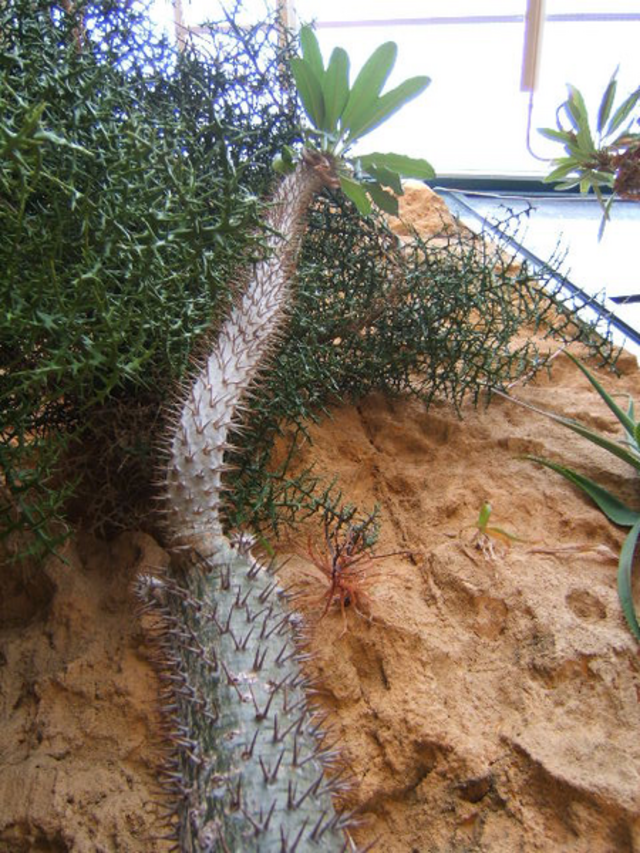
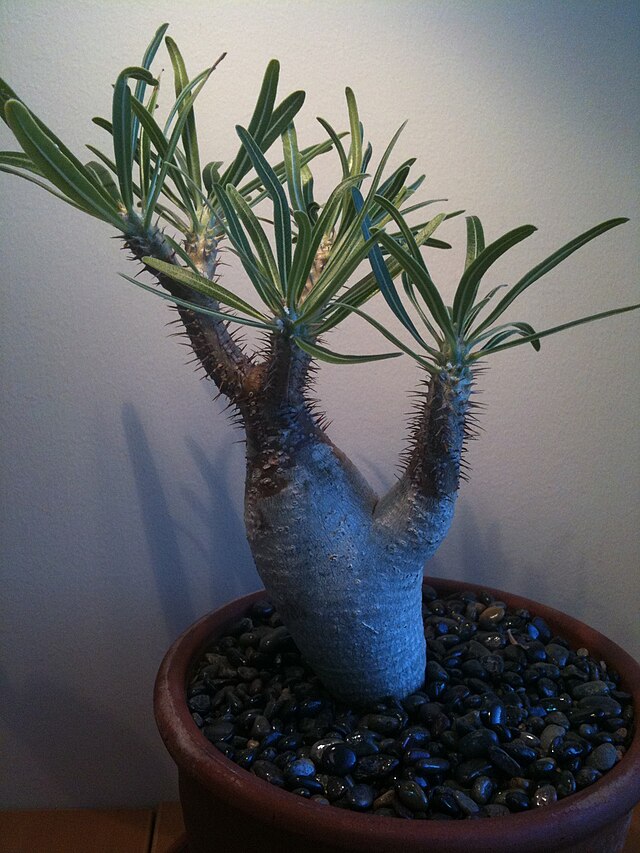
The Second Year Determines Caudex Thickness
Pachypodium seedlings (cultivation from seed) are a special joy for caudex plant enthusiasts. In particular, "Pachypodium gracilius" stands at the center of Japan's caudex boom, and seedling plants are widely available in commerce. The first year after seeding is the germination and early growth phase, but the second year is actually said to be the critical period that "determines how thick the caudex becomes." First-year management from seeding is detailed in Tips for Successful Caudex Plant Seedlings, but this article focuses on the next step: second-year management. Whether you carefully manage this second year will significantly affect how your plant looks in 10 years. Here, we systematically explain the essential care points for Pachypodium seedlings in their second year.
Growth Characteristics in the Second Year
The first year of seedling growth is the early development phase after germination, focused on root development and true leaf expansion. At this stage, the caudex is still slender and resembles an ordinary tree seedling in appearance.
By the second year, most Pachypodium begin to show visible caudex thickening. In the case of gracilis particularly, it's not uncommon for the caudex to grow from 2–3 cm in year one to 5–8 cm in year two. To maximize this rapid thickening, you need to provide the following conditions:
- Adequate light intensity
- Proper moisture (neither too dry nor waterlogged)
- Fertilizer during the growing season
- Repotting to prevent root-bound conditions
- Appropriate temperature (15–35°C)
Potting Medium and Repotting Timing
If you've grown plants in fine seed-starting soil during year one, repot in early spring of year two and switch to a more airy, free-draining medium.
Recommended Mix
- Akadama (small grain): 3
- Kanuma soil (fine grain): 2
- Pumice (small grain): 3
- Berabon (coconut husk chips): 1
- Charcoal: 1
This mix provides good drainage while retaining adequate moisture retention needed for young seedlings. Mixing in Magamp K allows slow-release nutrient supplementation.
Choose a pot size that is "slightly larger" to accommodate root expansion. However, a pot that is too large keeps the soil around the roots constantly moist, causing root rot. A pot about 2–3 cm larger than the seedling is recommended.
Watering and Fertilizer Management
Second-year Pachypodium seedlings need slightly more frequent watering than in year one. Excessive drying slows growth, so follow a rhythm of "water thoroughly 2–3 days after the surface soil dries." During the peak growing season when temperatures exceed 25°C, watering 2–3 times per week may be necessary.
Fertilizer needs can be met with liquid fertilizer once monthly (Hyponex or similar, diluted 2–3 times the recommended strength) or by mixing in Magamp K at repotting. Excess fertilizer causes root burn or excessive growth, so start with a lighter hand and observe the response.
Light Intensity and Quality
Pachypodium prefers bright light, but seedlings are sensitive to rapid light changes, so caution is needed.
- Spring growth phase onset: Gradually acclimate from bright indirect light through sheer curtains to direct sun
- Peak summer: Direct morning sun + afternoon partial shade
- Early fall: Full direct sunlight for compact growth
- Winter dormancy: Bright indoor windowsill
Providing sufficient light is paramount to prevent excessive leggy growth. Indoor light through glass often falls short, so consider supplementing with grow lights (PAR 100–200 μmol/m²/s).
Species-Specific Management Tips
Gracilis (Pachypodium gracilius)
The most popular species in Japan. Growth is relatively slow, but caudex thickening is beautiful. Water sparingly and allow complete dormancy in winter. More detailed care instructions are in Complete Pachypodium gracilius Care Guide.
Brevicaule (Pachypodium brevicaule)
Known by the nickname "Ebisu's Smile," this ultra-slow-growing species may take over 10 years to reach 10 cm in diameter. In year-two management, avoid extreme watering or fertilizing and maintain a stress-free environment.
Succulentum (Pachypodium succulentum)
Growth is relatively fast and noticeably larger by year two. Water generously; during the growing season, twice weekly or more is acceptable.
Lamerei (Pachypodium lamerei)
Native to Madagascar and sensitive to cold. Winter temperatures must remain above 10°C. Growth is fast; even from seed, height increases year after year.
Bispinosum (Pachypodium bispinosum)
Native to South Africa and relatively cold-hardy. A slow-growing species similar to brevicaule but more beginner-friendly.
Preparing for Dormancy
As fall deepens and temperatures drop, gradually reduce watering. Once temperatures drop below 15°C, move plants indoors and switch to dormancy management. During dormancy, water about once monthly in small amounts. Many species drop all leaves, which is natural dormancy, not death. Giving too much water out of worry actually causes root rot.
Beyond Year Two
Seedlings that successfully complete their second year grow even more vigorously from year three onward. The way the caudex clearly thickens and the plant develops its unique character is a special joy unique to seedling cultivation. With patience and consistent care, the plant you grow becomes one-of-a-kind in the world. A seedling-grown specimen after 10 or 20 years has a depth of character that no purchased import can match. Why not commit fully to your seedling journey starting today?