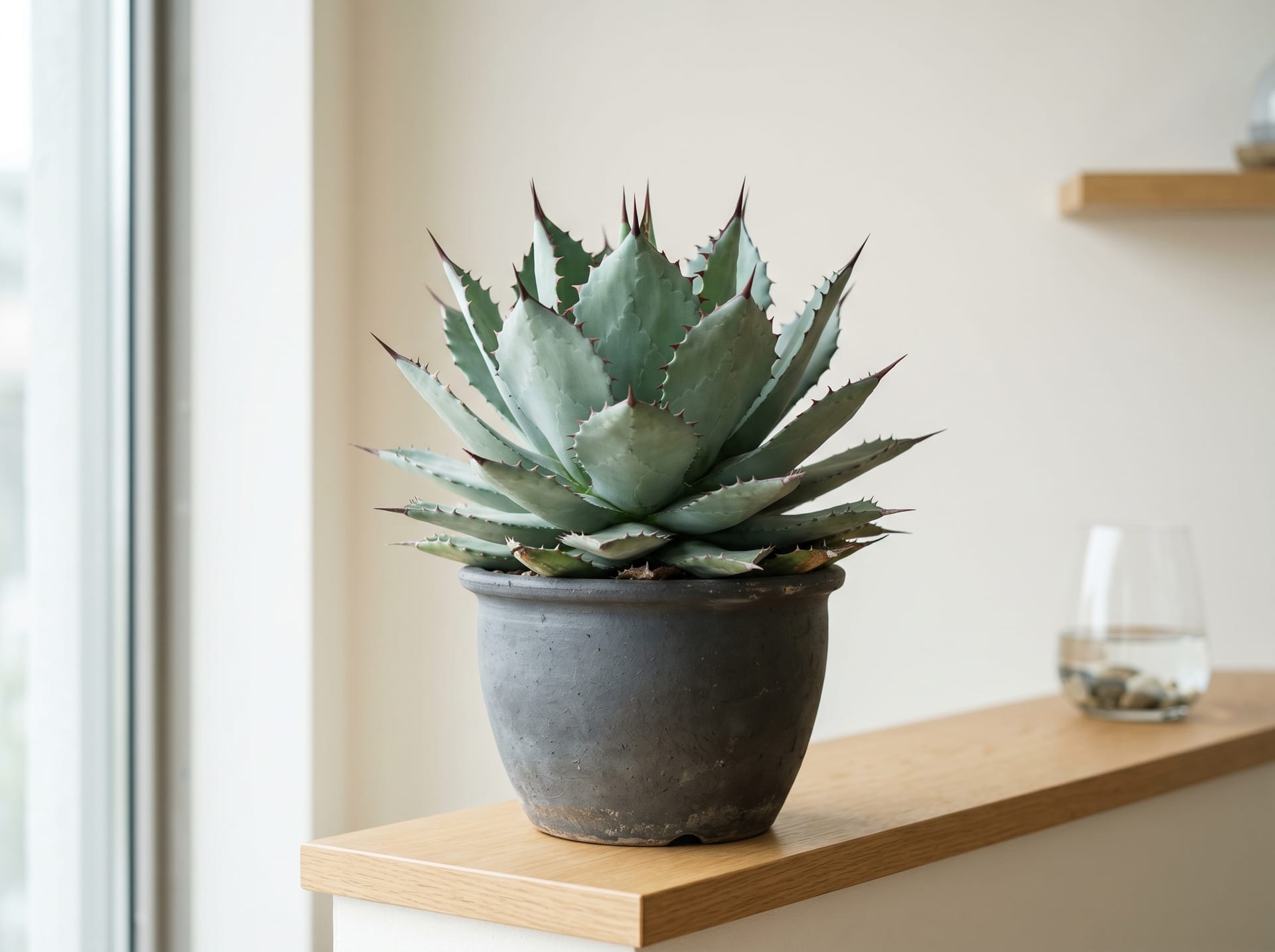
Parryi
Agave parryi is a cold-hardy agave native to the southwestern United States and northern Mexico, forming a striking rosette of blue-gray leaves. It features sharp terminal spines and toothed leaf margins, maturing into a compact clump about 60–90 cm wide. Its drought tolerance and relatively low-maintenance nature make it a popular choice for beginners in succulent gardening.
View Parryi encyclopedia →Grower Wanted!
List your plants on GrowerDirect and sell directly to customers nationwide!
6 Transparency Commitments from GrowerDirect
Every Agave from our Grower includes full transparency: variety, origin, light requirements, and care difficulty.
- Variety Disclosed
- Real Plant Photos
- Color Details
- Origin Disclosed
- Light Requirements
- Care Difficulty
Browse all 141 varieties
Light Requirements
Difficulty Level
No listings match your filters
Adjust your filters, or get notified when new listings arrive.
Getting alerts is free with a member account. When new listings match your saved search, we'll notify you by email and in-app.
Browse other categories
Verified growers (preview)
Parryi key facts
- Growing Difficulty
- Beginner-friendly
- Lifespan
- A rosette usually lives 10–15 years (sometimes 20–30) before flowering once and dying, but it leaves offsets behind
- Size
- 40–60 cm tall, 60–90 cm wide (rosette)
- Temperature
- -15〜40℃
- Light & Placement
- It loves direct sun and is best grown outdoors year-round. It is robust enough for garden beds and public plantings.
- Watering
- Outdoors, rainfall is usually enough and plants in the ground need almost no care. In pots, water sparingly after the soil dries.
- Temperature & Overwintering
- Extremely cold hardy to about -15°C and tolerant of snow. However, this assumes the cold is endured while the plant is dry; avoid waterlogging from long winter rains or snowmelt.
- Soil & Repotting
- Use a fast-draining mix. Growth is slow and the rosette stays around 60-90 cm across, so repotting is rarely needed.
- Growth
- Slow growth — enjoy gradually
- Notes
- Watch overwatering — shelter from rainy season
About Parryi
Agave parryi is native to the dry high-altitude and mountainous lands from Arizona and New Mexico in the United States to Sonora and Chihuahua in northern Mexico, typically found at roughly 1,000 to 2,500 meters above sea level. Its most distinctive visual feature is the orderly rosette of broad, blue-silver-gray leaves, each tipped with a firm dark brown spine that anchors the plant's bold silhouette. Fine teeth line the leaf margins, adding a rugged, sculptural texture. Mature plants form a compact clump 60–90 cm wide, making them equally suited to ground planting and container gardening. Its combination of drought tolerance and cold hardiness has earned it growing recognition in low-water gardens and regions experiencing shifting rainfall patterns.
7 things to know before growing Parryi
1Cold-Hardy but Watch Winter Wetness
Agave parryi is very cold-hardy, tolerating temperatures down to about -15°C, and can be grown outdoors year-round almost anywhere in Japan. However, prolonged wet cold can damage the plant, so good drainage in winter is essential. Container-grown specimens are best moved under eaves during long spells of rain or snow.
2Water Sparingly
Agave parryi is adapted to dry conditions, and overwatering is the leading cause of root rot. Outdoors, rainwater is usually enough, and plants in the ground need almost no attention. For potted plants, water sparingly only after the soil has completely dried out, and even less in winter. A slightly drier approach than you might expect is usually ideal.
3Handle Spines with Care
The terminal spines are extremely hard and sharp, posing a puncture risk if handled carelessly. Always wear thick leather gloves when working around the plant, and consider placing it away from children and pets. Some growers trim the tips for safety, though this alters the plant's natural appearance.
4Sunlight and Airflow Are Key
Agave parryi thrives in full sun and is ideally grown outdoors with plenty of direct light. Insufficient sunlight can cause etiolation, disrupting the symmetrical rosette shape. Good air circulation is equally important, as it helps prevent pests and fungal issues caused by excess humidity.
5Choose Fast-Draining Soil
A fast-draining mix works best — commercial succulent soil blended with pumice or coarse sand is a good starting point. Avoid clay-heavy or moisture-retentive soils, which promote root rot. Always use pots with drainage holes and add a layer of gravel at the bottom.
6Blooms Once in a Lifetime
Agave parryi is monocarpic — once fully mature it sends up a tall flower stalk, blooms, and then the main rosette dies. The flowering event can be spectacular, but growers should plan for the eventual loss of the parent plant. Offsetting pups before flowering allows you to continue growing the lineage.
7Propagate via Offsets (Pups)
As Agave parryi matures, it may produce offsets (pups) around its base. Once a pup has grown large enough to survive on its own, it can be separated with a clean knife, allowed to callous for several days, and then potted in fresh fast-draining mix. Water sparingly until roots establish, which typically takes a few weeks.
Frequently asked questions about Parryi
- Q.Can Agave parryi be grown indoors?
- A.It can be grown indoors near a bright south-facing window, but insufficient direct sunlight tends to cause etiolation. Because it is very cold-hardy and ideally grown outdoors year-round, keep it in a sunny outdoor spot whenever possible.
- Q.How do you propagate offsets (pups)?
- A.Agave parryi occasionally produces offsets at the base as it matures. Once a pup has grown reasonably large, detach it from the parent with a clean knife, allow the cut to dry for a few days, and then plant it in fresh, well-draining soil.
- Q.Why are the leaves turning yellow?
- A.Overwatering is the most common cause. Stop watering temporarily and wait until the soil has dried out completely before resuming. If the pot lacks adequate drainage, consider replacing the soil mix or switching to a pot with better drainage.
- Q.How often does it need repotting?
- A.Due to its slow growth, repotting is needed only infrequently. Repot when roots emerge from the drainage holes or the plant has clearly outgrown its pot. Spring to early summer is the best time, as roots recover more readily during the active growing season.
- Q.How can I prevent agave snout weevil damage?
- A.The agave snout weevil lays eggs in the growing point, and its larvae destroy the plant from the inside, causing it to collapse suddenly. Regular inspection of the base is the key to prevention. If you use a pesticide, check the label to confirm it is registered for the target pest and follow the label directions.
Handy Growing Tools for Parryi
Learn more about Parryi in the encyclopedia
View Parryi encyclopedia entry →
Care difficulty, size, origin and light needs — all basics covered.
Parryi related articles
Comprehensive Identification Guide to 100 Popular Agave Species | In-Depth Explanation of Titanota, Horrida, Parryi, and Geminiflora
Comprehensive explanation of characteristics and identification methods for 100 popular agave species. Detailed introduction to identification points and selection criteria from Titanota, Horrida, Parryi, and Geminiflora to rare species.
What is the Cold Hardiness Temperature of Agave? | Cold Hardiness Guide by Variety (Horrida, Titanota, etc.) and Winter Care
We've compiled agave cold hardiness temperatures by variety. This guide covers 13 varieties including Horrida (−5 to −7°C), Titanota (−2 to 0°C), and Parryi (−15 to −20°C), plus optimal growth temperatures, frost protection, and criteria for bringing plants indoors.
Agave Encyclopedia | Popular Varieties and How to Choose
A curated selection of popular Agave varieties including Titanota, Oteroi, Horrida, Parryi, and Utahensis. Detailed explanations of each variety's characteristics, visual appeal, cold hardiness, growth rate, and price range.
Agave Growth Rate and Size | Guide to Variety-Specific Expectations
Agave growth rate is almost entirely determined by variety. This guide compares growth speed and final rosette diameter of popular varieties like Titanota, Horrida, Parryi, and Americana in a comparison table, and explains the differences between outdoor and indoor growth as well as why selected cultivars such as 'Hakugei' and 'Kegon' do not grow large.
More in this category
Can't find the plant you're looking for?
Post your wishes for free and growers with matching plants will contact you with introductions.