Agave Titanota Popular Clones and How to Distinguish Them | FO-076, White Whale, Caesar
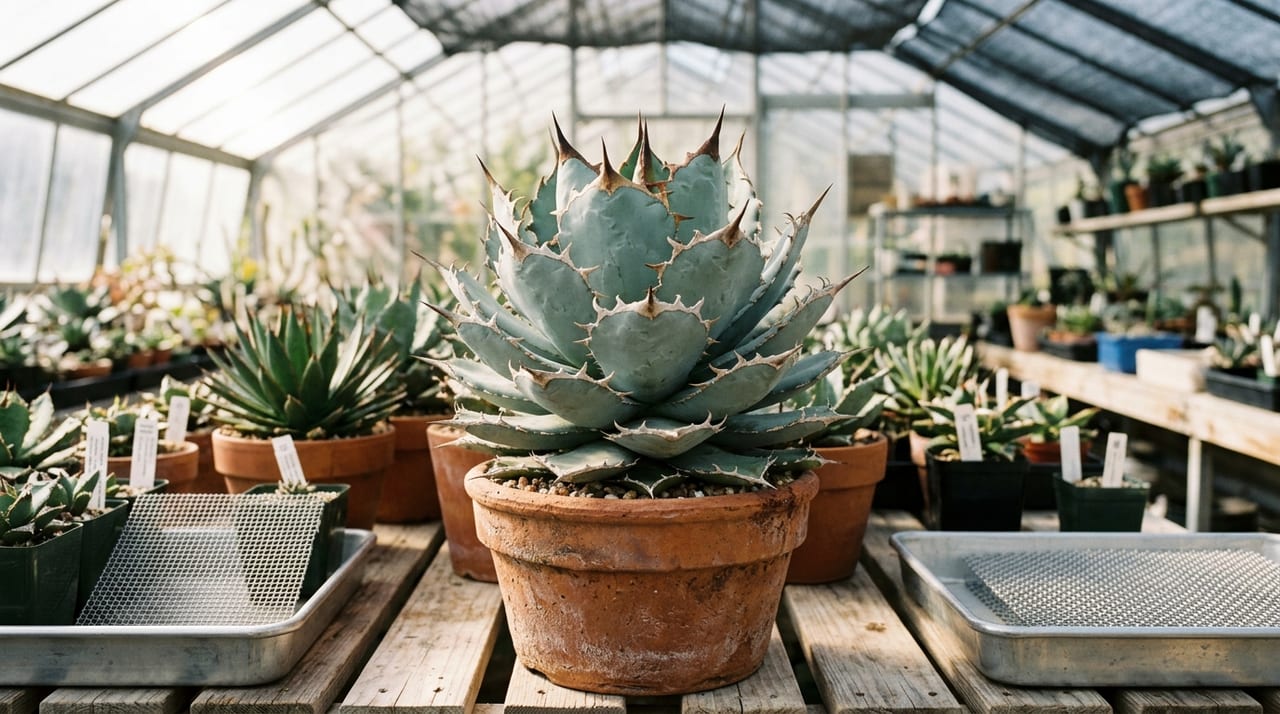
We explain how to distinguish the popular Agave titanota clones FO-076, White Whale, Caesar, and Hades. White Whale is identified by thick white spines, Caesar by long spines, and Hades by black spines. You will also learn the difference between seed-grown plants and offsets, and the price range from a few thousand yen to several hundred thousand yen.
Key Takeaways
We explain how to distinguish the popular Agave titanota clones FO-076, White Whale, Caesar, and Hades. White Whale is identified by thick white spines, Caesar by long spines, and Hades by black spines. You will also learn the difference between seed-grown plants and offsets, and the price range from a few thousand yen to several hundred thousand yen.
Related Species
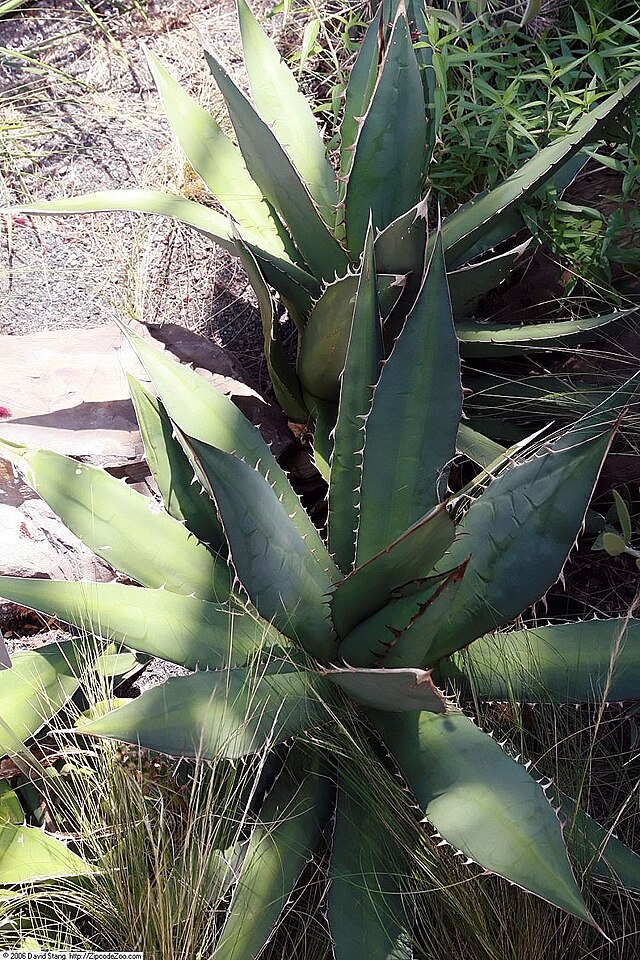
Agave titanota is currently one of the most popular agave species. There are numerous clone names derived from collection sites and selected specimens, each with different characteristics. Here we explain how to distinguish popular clones and precautions when acquiring them.
Basic Knowledge of Titanota
Titanota is an agave native to Oaxaca State, Mexico, with an appeal that lies in its rugged appearance—a compact rosette bearing formidable spines. While there is taxonomic discussion surrounding the scientific name "titanota" itself, it is widely distributed in the horticultural world as Agave titanota. If you are confused about the differences from closely related species, please also refer to Titanota vs. Horrida Growth Differentiation Guide.
Clone names are primarily derived from the following:
- Field numbers from collection sites (such as FO-076)
- Nicknames based on appearance characteristics (such as White Whale, Princess Dragon)
- Names of namers or nurseries (such as Caesar, Hades)
Characteristics and How to Distinguish Popular Clones
FO-076 (Philip Olgaard 076) This clone is derived from a specimen collected in Mexico by Philip Olgaard. It is characterized by wide, thick leaves with white, sturdy spines. As it grows, it becomes relatively large, with a good balance between leaf volume and spine strength. Many seedlings are also in circulation, and although there is individual variation, overall the spines tend to be thick and white.
White Whale This is the most well-known Titanota clone in Japan. True to its name, white and thick spines are its greatest feature, and as it grows, the spines cluster densely as if overlapping. It grows compactly and displays a striking appearance even in a pot. Because of its popularity, there are many counterfeits and mislabeled specimens, so choosing a trustworthy source is important.
Caesar This clone is derived from a Taiwan collector and is characterized by sharp, long spines and a tight rosette. The leaves are deep blue-green, and the variety is beautiful with spines that transition in color from black to white. It is often traded at high prices, and counterfeits are common, so caution is necessary.
Hades This clone is characterized by blackish spines. True to its name, it evokes a dark atmosphere reminiscent of the underworld. The spines are black at the base and become slightly lighter toward the tip. It can be easily confused with Red Cat, but Hades tends to have darker spines.
Princess Dragon It is characterized by a compact size and relatively short spines. Even as it grows, it tends to remain small, and is popular because it does not take up much space. Specimens with densely-packed spines that create a dense impression are preferred.
Red Cat Weasel (Red Cat) This is a distinctive variety with reddish spines that curl like a cat's claw. As it grows, the red tones of the spines intensify, creating a unique atmosphere.
No-Name (Selected Seedling Specimens) Even seedling specimens without a specific clone name can be sold as "selected specimens" if they are superior individuals. One way to enjoy collecting is to select specimens purely based on the appearance of the plant in front of you, without being bound by clone names. If you want to grow your own unique specimen from seed, you can check care from sowing through the first year in Agave Seed Growing Complete Guide.
Key Points for Distinguishing Clones
The reality is that distinguishing Titanota clones is extremely difficult, especially when plants are small seedlings.
Observe spine characteristics Spine thickness, length, color, and curvature tend to vary by clone. White Whale has white, thick spines; Caesar has sharp, long spines; and Hades has black spines as a rough guide. However, these characteristics can change depending on growing conditions, so they are not absolute standards.
Look at leaf shape Leaf shape also has clone-specific characteristics, such as whether leaves are broad or narrow, thick or thin, and how tightly the rosette is formed.
Understand changes at different growth stages The appearance differs greatly between seedling stage and mature plants. White Whale has thin spines when small, and they become thicker as it grows. Checking the growth progression of the same clone on social media and other platforms can help with clone identification.
Precautions When Acquiring
Purchase from trustworthy sellers Unfortunately, misrepresenting clone names is not uncommon. Purchasing from established specialty shops or growers is the safest option.
Understand the difference between seedlings and pups Pups are genetically identical to the parent plant, so they can inherit the clone name as-is. Seedlings (plants grown from seed), by contrast, are genetically different and strictly speaking cannot claim a clone name. The procedure for taking and rooting pups is summarized in Agave Pup Management Guide. Understand that "FO-076 seedling" and "FO-076 pup" are different things.
Understand price ranges Popular clone prices range from several thousand yen to several hundred thousand yen. Extremely cheap listings carry the risk of counterfeits, so be cautious about prices that deviate significantly from market rates.
Enjoying Titanota Without Being Bound by Clone Names
The Titanota clone market becomes increasingly complex each year, and debates about name reliability are ongoing. What is important is the attitude of evaluating the beauty and appeal of the plant in front of you rather than the name itself.
Among seedling specimens, individuals are sometimes born that rival famous clones in quality. Even without a name, specimens with excellent serrated leaf shape and leaf balance have considerable appreciation value. The joy of cultivating "an unnamed good specimen that only you discovered" brings a different kind of satisfaction than purchasing a famous clone.
While valuing clone names as information indicating plant provenance, ultimately selecting specimens that you personally find "beautiful" or "cool" is the key to enjoying agave collecting for the long term. The value of a collection lies not just in money, but also in the experience and attachment gained through growing it.
Among advanced enthusiasts, the practice of selecting superior individuals from seedlings and creating one's own original clone is becoming more widespread.
Understanding the Difference in Value Between Clone Plants and Seedlings
When enjoying a Titanota collection, it is important to correctly understand the difference in value between clones (pups) and seedlings.
Clone plants (pups) are genetically identical to the parent plant, so they are expected to develop into plants with characteristics similar to the parent in the future. Pups of famous selected specimens can formally bear that clone name, and their value as bloodline is recognized.
Seedlings are individuals grown from seed, representing new individuals with a combination of both parents' genes. Even sibling plants from the same parent have different characteristics from specimen to specimen, so strictly speaking, they cannot claim a specific clone name. The correct notation is to explicitly state that the plant is a seedling, such as "○○ seedling."
In the market, "FO-076 seedling" and "FO-076 pup" should be clearly distinguished, but there are cases where they are sold confusingly. Always confirm whether a specimen is a seedling or pup when purchasing.
Find Authentic Titanota at GrowerDirect
At GrowerDirect, you can directly purchase authentic clone plants and high-quality seedling selected specimens grown by specialist Titanota growers. A major advantage is that you can directly confirm provenance and parent plant information with the grower, ensuring peace of mind when acquiring plants.