Types and Methods for Creating Aquatic Plant Carpets | Complete Guide to Glosso, Hair Grass, and Moss
A complete guide to types of carpet-forming aquatic plants that cover tank bottoms with green carpet, including planting methods, CO2 supplementation, lighting conditions, and trimming techniques. Introduces beginner-friendly moss through advanced Glosso.
Key Takeaways
A complete guide to types of carpet-forming aquatic plants that cover tank bottoms with green carpet, including planting methods, CO2 supplementation, lighting conditions, and trimming techniques. Introduces beginner-friendly moss through advanced Glosso.
Related Species
Hairgrass
View species details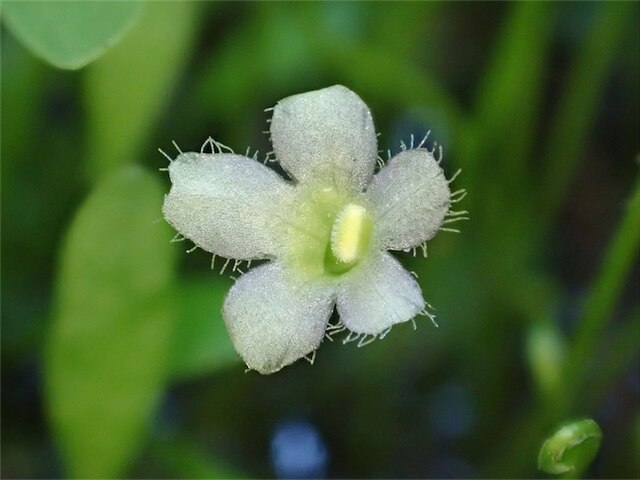
Glossostigma
View species details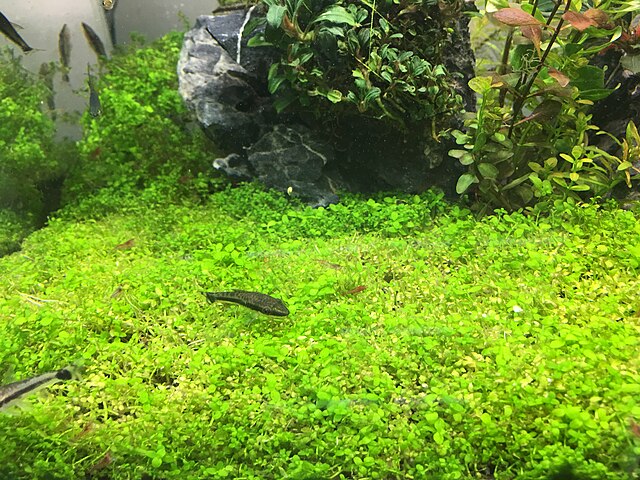
Hemianthus callitrichoides
View species detailsNew Large Pearl Grass
View species detailsPearl Grass
View species detailsSouth American moss
View species details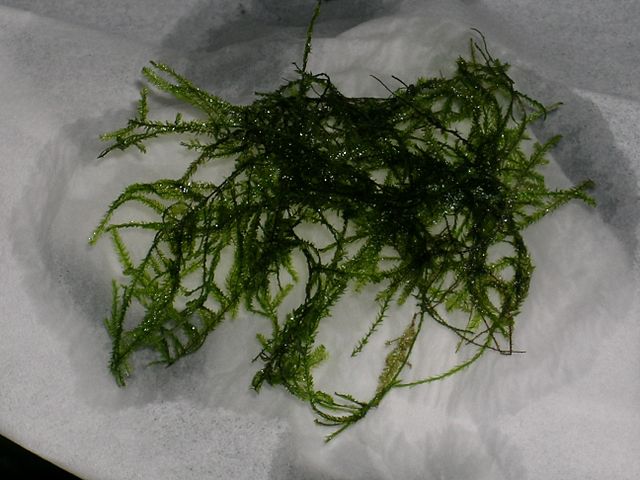
Willow Moss
View species detailsCreating Aquatic Plant Carpets to Cover Tank Bottoms in Green
One of the highlights of aquatic plant tanks is "carpet aquascaping (carpet style)" that covers the bottom with a solid green carpet. Glosso and hair grass spread across the bottom as if crawling, creating a scene like an underwater meadow—the ultimate layout that many aquarists aspire to as the culmination of aquascaping. But behind this beauty lies multiple interconnected factors: proper species selection, substrate design, light intensity management, CO2 supplementation, and trimming technique. This article provides a systematic explanation of the knowledge needed to realize carpet aquascaping.
What Are Foreground Plants — Conditions for Plants That Create Carpets
Foreground plants are a collective term for small aquatic plants that grow crawling along the front and bottom of the tank. They have a low height and creeping nature that spreads horizontally, playing the role of creating depth and three-dimensionality in the tank.
The common conditions for plants suited to carpets are the following three points.
- Creeping nature or runner propagation: Extending roots or stems horizontally to fill the surface
- Low-growing habit: Staying within 5 cm in height
- Ability to densify: Leaves densely overlap to cover the ground without gaps
Representative species that meet these conditions are Glosso, Dwarf Pearl Grass, Cuba Pearl Grass, Short Hair Grass, and South American Willow Moss. Each has different difficulty levels and finishing textures, so it's important to choose according to your tank environment and experience level.
Characteristics and Selection of Representative Foreground Plants
Glosso
The standard of standards for aquatic plant carpets. Small round leaves 5-10 mm in diameter spread crawling across the ground. It grows quickly, and when conditions are met, it completely covers the bottom of a 60 cm tank in 1-2 months.
The biggest concern is "upturn"—if light is insufficient, it stretches vertically instead of creeping horizontally and doesn't form a carpet. A high-brightness LED of 30W or more is essential for a 60 cm tank, and CO2 supplementation (1-2 drops per second) is also nearly essential. Adjust the creeping direction daily with tweezers immediately after planting, and suppress new shoots trying to grow upward through trimming to establish the creeping habit.
Dwarf Pearl Grass
Leaves are somewhat larger than Cuba Pearl Grass (3-5 mm diameter), and if choosing for ease of cultivation, it's the most well-balanced foreground plant. It can be cultivated with high light even without CO2, and the beautiful "pearlescent bubbling" with oxygen bubbles densely covering the leaves creates a photogenic aquascape.
Since it spreads via runners, planting spacing should be about 3-5 cm apart. As it grows, it sometimes lifts up in a mat-like form, so anchoring it lightly with moss cotton or stones in the early growth stage keeps it stable.
Cuba Pearl Grass
It has extremely small round leaves 1-2 mm in diameter—the world's smallest-class foreground plant. It can create a precise and detailed carpet, but weakly acidic water (pH 6.0-6.8) with soft water (around TDS 80-150) and CO2 supplementation are essential, and the cultivation difficulty is somewhat high. It fails easily in older tanks where the substrate's water quality adjustment ability has declined, so starting up with fresh substrate right after a reset is recommended.
Short Hair Grass (Hair Grass Short)
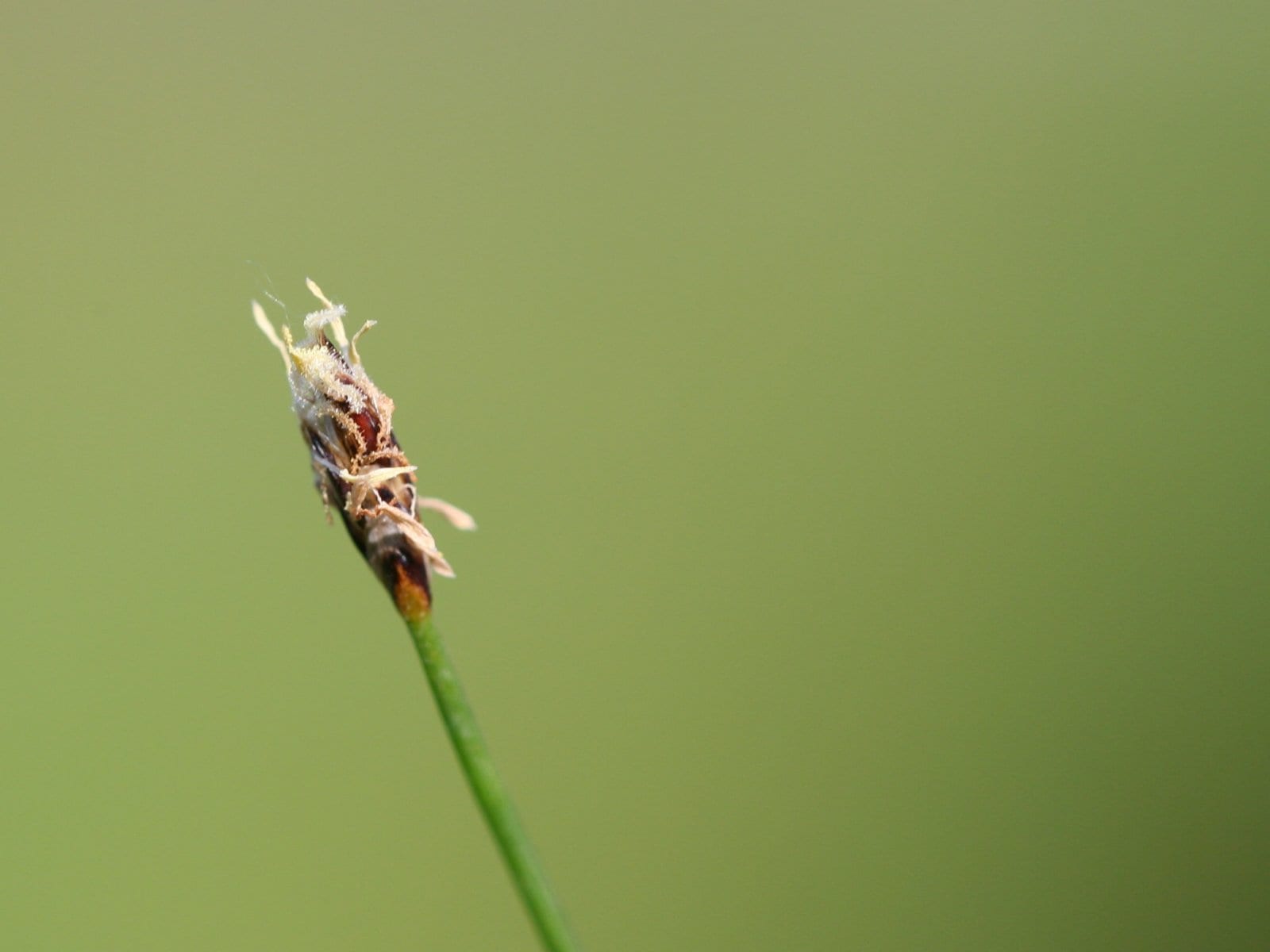
A foreground plant with thin leaves spreading like turf that can create a natural meadow-like feel. It multiplies via runners and is a relatively hardy variety that can be cultivated without CO2. Growth is somewhat slow, but once established, it's strong against trimming and easy to maintain long-term. It pairs exceptionally well with mountain or rocky layouts.
South American Willow Moss (Moss Carpet)
An improved variety of Willow Moss that attaches to rocks and driftwood and spreads in a carpet-like form. Unlike other foreground plants, it doesn't require rooting into substrate, and the standard method is to create a carpet by securing it to thin boards with fishing line or adhesive. Both CO2 and high light are unnecessary, and it's nearly the only "carpet plant" that can be grown in low-light, CO2-free environments. If prioritizing ease of cultivation, South American Willow Moss carpet is the optimal solution.
Which Carpet Plant Should Beginners Start With?
To put it simply, for your first tank without CO2 supplementation, "South American Willow Moss mat" or "Short Hair Grass" are less likely to fail, and with CO2 supplementation, "Dwarf Pearl Grass" or "Monte Carlo" are safer choices. Glosso and Cuba Pearl Grass only form carpets when both CO2 supplementation and high light are present.
| Equipment | Suitable Foreground Plants | Time to Carpet Completion |
|---|---|---|
| No CO2 · Standard LED | South American Willow Moss (mat), Short Hair Grass | 3-6 months. Growth is slow but unlikely to grow upright |
| No CO2 · High-output LED | Dwarf Pearl Grass, Monte Carlo | 2-4 months. Stable with liquid fertilizer supplementation |
| With CO2 · High-output LED | Glosso, Cuba Pearl Grass | 1-2 months. Requires the most trimming effort |
Monte Carlo (Micranthemum monte carlo) is an additional foreground plant beyond the five in this article that's easy to recommend to beginners. Its leaves are larger and hardier than Cuba Pearl Grass, it grows quickly with CO2, and with high light alone it also thrives. Specific procedures from planting to trimming are compiled in Complete Guide to Monte Carlo Cultivation.
Can You Create a Carpet with "Aquatic Plant Seeds"?
Most "aquatic plant seeds" and "carpet seeds" seen in online stores are not seeds of true aquatic plants. They germinate on moist soil and look like a green carpet for a few weeks, but when submerged, they dissolve and break down in 1-2 months and water quality deteriorates. Genuine foreground plants are obtained as seedlings (potted seedlings or tissue-cultured cups), and the basic method is to divide them with tweezers and plant them. When purchasing from GrowerDirect growers, they arrive as seedlings, not seeds.
Substrate, Water Quality, and Equipment for Creating Carpets
Substrate Selection and Thickness
Nutrient-rich substrate is strongly recommended for creating foreground plant carpets. ADA Aqua Soil Amazonia, Project Soil, Master Soil Next, etc. are standards. Adding a slope with 5-6 cm thickness in the foreground and 8-10 cm in the background creates more depth. If it's too thin, roots won't establish sufficiently and the carpet becomes prone to peeling.
Choosing a CO2 Supplementation System
- Fermentation method: Uses fermentation gas from yeast and sugar. Low initial cost and convenient, but lacks stability in supplementation amount. Suited for small tanks (30 cm or less)
- Pressurized method (cylinder system): Can be precisely controlled with a solenoid valve and timer. Essential for serious aquascapes 60 cm or larger
- CO2 supplementation guideline: 1-2 drops per second for a 60 cm tank. Adjust while monitoring pH and diffusion rate
Choosing Lighting
Strictly maintain 8-10 hours of lighting per day on a timer. By keeping the on/off times fixed daily, photosynthesis rhythm becomes stable and explosive algae growth can also be suppressed. For Glosso and Cuba Pearl Grass, high-brightness LEDs like ADA Solar RGB or Chihiros WRGB II are ideal for 60 cm tanks.
From Planting to Carpet Completion
- Substrate setup: Lay substrate with a slope and level it
- Water addition: Plant in a misted or lightly flooded state
- Planting: Insert foreground plants 1-2 shoots at a time with 2-3 cm spacing using tweezers. The more densely planted, the faster completion
- CO2 and lighting start: Run at full capacity from the day of planting
- Water changes: Early in setup, perform 1/3 water changes daily to every other day to dilute ammonia and nitrite
- Trimming: Once new shoots begin appearing 1-2 weeks after planting, actively cut upward-growing shoots
Maintenance and Trimming Tips
Maintenance after the carpet is complete determines its long-term beauty.
Glosso should be trimmed horizontally every 2-3 weeks. By cutting 2-3 mm from the base, lateral shoots increase and density improves. Always remove trimmed plant debris with a siphon or tweezers, as decay worsens substrate water quality.
Hair Grass should be cut to 2 cm height uniformly once it reaches 3-4 cm tall. Trimming uniformly like a lawn mower maintains the beautiful meadow-like appearance.
Dwarf Pearl Grass easily lifts up and may detach entirely from the substrate. In that case, remove it, add substrate beneath the roots, and re-establish it by weighting it down.
Liquid fertilizer (nitrogen, phosphorus, potassium, and trace elements) should be added 1-2 times weekly for stable coloration and growth rate. However, over-supplementation causes algae, so adjust appropriately based on plant consumption.
Get Aquatic Plants from GrowerDirect
GrowerDirect allows you to source quality foreground plants directly from growers knowledgeable about aquatic plants. Questions like "Which is better for my tank, Glosso or Dwarf Pearl Grass?" are answered with careful advice based on actual cultivation experience. A major advantage of grower-direct sales is that by communicating your water quality, light, and CO2 environment in advance, failure risk is greatly reduced. Please make GrowerDirect your first step toward creating a beautiful carpet aquascape.