Can Carnivorous Plants Control Fruit Flies? Real Effectiveness and Tips for Outdoor Growing and Indoor Use
Can carnivorous plants truly capture fruit flies and other small insects? We explain the real effectiveness, indoor applications, and natural pest control benefits of outdoor growing in detail. A practical guide to using carnivorous plants effectively.
Key Takeaways
Can carnivorous plants truly capture fruit flies and other small insects? We explain the real effectiveness, indoor applications, and natural pest control benefits of outdoor growing in detail. A practical guide to using carnivorous plants effectively.
Related Species
Have you ever heard that "keeping carnivorous plants reduces fruit flies"? At first glance, it seems like an ideal solution, but what is the reality? In this article, we explain the insect-catching ability of carnivorous plants, their fruit fly control effectiveness indoors, and how to use them outdoors—all from a scientific perspective.
How Carnivorous Plants Capture Insects
The methods by which carnivorous plants consume insects vary greatly depending on species. Understanding this insect-catching mechanism is the first step to evaluating their real effectiveness.
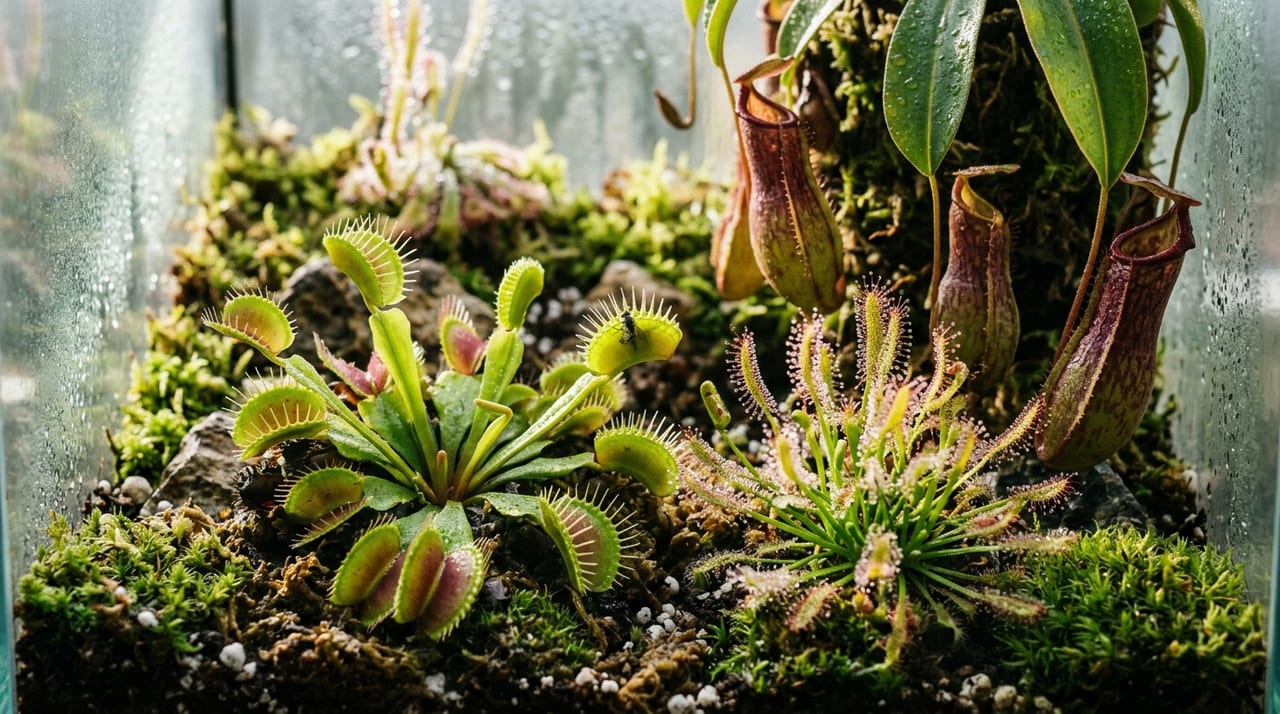
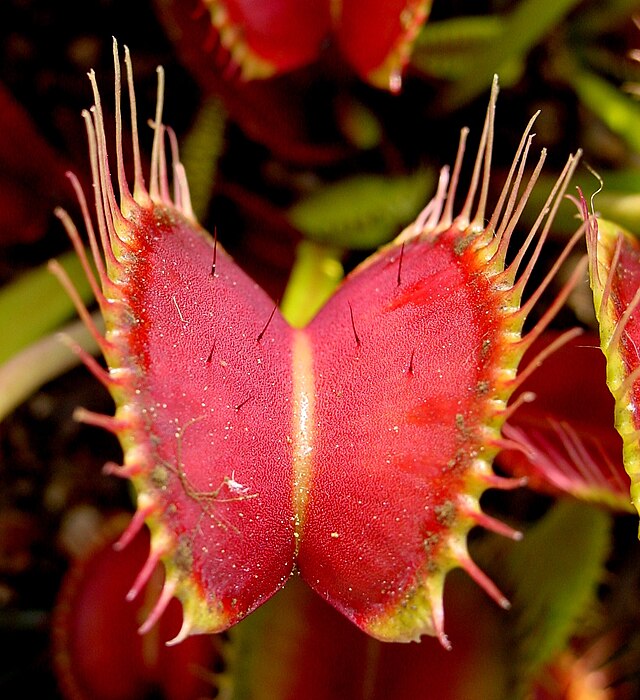
Venus Flytrap's Trap The Venus Flytrap captures insects by snapping its two leaves closed with remarkable speed, leaving no time for the insect to escape. Trigger hairs on the inside of the leaf generate electrical signals when touched, triggering the leaf closure.
Nepenthes (Pitcher Plant) Pitfall Trap Nepenthes lures insects with sweet nectar and drops them into a pitcher-shaped pouch. Once inside the pouch, insects are unable to escape due to slippery walls and digestive fluids.
Sundew (Drosera) Sticky Trap This plant's leaves are covered entirely with a sticky substance. Small insects that land on them become stuck and unable to move. The leaf then gradually wraps around the insect and breaks it down with digestive fluid.
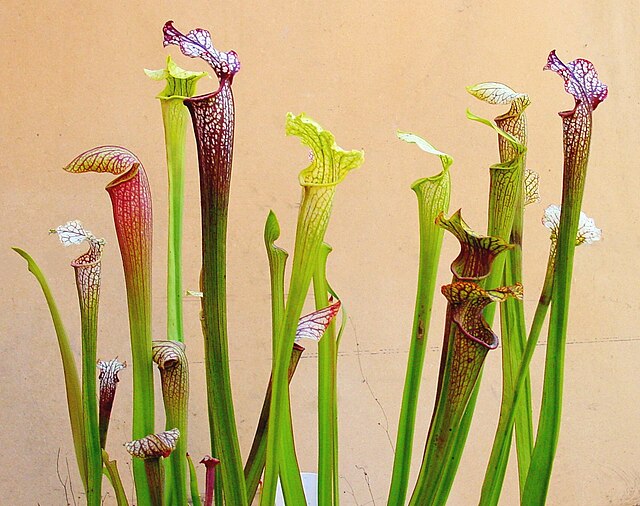
Sarracenia (Trumpet Pitcher) Tubular Trap Sarracenia has tube-shaped leaves that guide insects inside and prevent them from escaping.
Real Fruit Fly Control Effectiveness Indoors
In theory, carnivorous plants can capture fruit flies. However, the practical reality is that their effectiveness indoors is lower than expected.
Why Effectiveness is Limited Carnivorous plants grown indoors tend to have low insect-catching efficiency. The reasons include:
- Insufficient Light: The light levels in most indoor environments suppress the activity of carnivorous plants, reducing their catching ability.
- Temperature Management: If temperatures are not appropriate, the response of the trapping mechanism becomes sluggish.
- Encounter Rate with Insects: In the limited space of an indoor environment, there are fewer opportunities for insects to approach the carnivorous plant.
- Cultivation Period: It takes time for carnivorous plants to mature fully, during which their insect-catching ability remains low.
Real-World Effectiveness The number of fruit flies captured by Venus Flytraps or Nepenthes grown indoors is negligible compared to those generated from kitchen areas or houseplant pots. You should not expect that "just having them there will get rid of them."
Natural Pest Control Effectiveness with Outdoor Growing
In contrast, when carnivorous plants are grown outdoors, their insect-catching effectiveness increases dramatically.
Advantages in Outdoor Environments Outdoors, abundant sunlight, appropriate temperature fluctuations, and frequent insect encounters allow carnivorous plants to demonstrate their full insect-catching potential. In particular, when placed around vegetables in planter cultivation, pest control effects have been reported.
Effectiveness with Tomato Growing Placing Venus Flytraps or Sundews around tomatoes will capture some whiteflies and flies that come to visit, but the effect is not as dramatic as pesticides and should be considered supplementary. It is ineffective against pests like aphids that attach to leaves and remain stationary.
Placement Limitations Sarracenia and Sundews are wetland plants that need to be grown in trays with standing water, so they cannot be planted directly in the soil of orchards or fields. For outdoor use, they should be placed in a well-lit location tray and all.
Fruit Fly Effectiveness Varies by Species—Fungus Gnats, Vinegar Flies, and Drain Flies
"Fruit flies" are not a single species, and their sources and flight patterns differ. The effectiveness of carnivorous plants depends almost entirely on which type of fruit fly you're dealing with.
| Fruit Fly Type | Origin | Carnivorous Plant Effectiveness |
|---|---|---|
| Fungus Gnats | Moist soil of houseplants, leaf litter | ◎ Body length 2–3 mm and poor fliers. Commonly stick to sticky traps (Sundew, Butterwort) |
| Vinegar Flies | Food waste, ripened fruit | ○ Will be attracted to nectar if placed near the source, but won't come to plants in distant locations |
| Drain Flies | Drains, bathroom mold | × Cannot be controlled by carnivorous plants. Cleaning the drain is the only solution |
An important caveat: carnivorous plants themselves can become a source of fungus gnats. The constant moisture required for growing carnivorous plants in moss and peat with standing water trays creates an ideal environment for fungus gnat larvae. If you find that fruit flies have increased after adding a carnivorous plant, try keeping the soil surface drier or inserting a sticky sheet into the soil to check.
Carnivorous Plants Suited to Fruit Fly Control—and Those That Aren't
| Carnivorous Plant | Effectiveness Against Fruit Flies | Reason |
|---|---|---|
| Sundew (Drosera) | ◎ | Small insects often stick to the mucus. Cape Sundew (D. capensis) is hardy and suitable for indoors |
| Butterwort (Pinguicula) | ◎ | The entire leaf surface is sticky, easy to grow on a bright windowsill. A standard choice for fruit fly control |
| Sarracenia | ○ (Outdoor use) | Captures medium to large flies and wasps well outdoors. Few captures indoors |
| Nepenthes | △ | Mainly captures medium to large insects in the pitcher |
| Venus Flytrap | △ | Too small for fruit flies—the trap may not close |
If your goal is fruit fly control, Sundew or Butterwort is your only real choice. For growing instructions, see the Complete Sundew Growing Guide and How to Grow Butterwort.
Practical Indoor Applications
While complete fruit fly elimination cannot be expected, using carnivorous plants indoors does have merit.
Function as a Fruit Fly Trap The carnivorous plant itself acts as a small insect trap. Keep in mind, however, that Venus Flytraps use the red color and nectar inside their leaves to lure insects, but small fruit flies often escape before touching the trigger hairs twice and are not caught.
Synergistic Effects from Multiple Placements Rather than a single carnivorous plant, placing multiple different species in multiple locations increases catching effectiveness. For example, placing Sundew near fruit fly sources (houseplant pots or food waste disposal areas) and Venus Flytraps or Nepenthes by the window divides species and location to increase the catch number.
Secondary Benefits from Humidity Management Most carnivorous plants require a humid environment. By maintaining humidity while growing carnivorous plants, the overall humidity of the indoor environment rises, which may suppress fruit fly breeding as a secondary effect.
Fundamental Fruit Fly Control Measures
To control fruit flies effectively without relying on carnivorous plants, the following methods are recommended.
Removing the Source Since fruit flies usually originate from rotting plants or moist soil, the most important measure is to avoid overwatering and promptly remove dead leaves.
Drainage Management Always check that water is not pooling in saucers and prevent root rot and excessive humidity.
Physical Traps Using sticky traps or commercial fruit fly products in combination provides more reliable fruit fly control.
Summary: Carnivorous Plants Play a Supplementary Role
Carnivorous plants certainly can capture fruit flies, but their pest control effectiveness indoors is limited. Rather, the cultivation of carnivorous plants themselves becomes the purpose, and the primary value lies in the biological interest and joy of growing them that comes with the process. Outdoors, supplementary pest control effects can be expected, and indoors, combined with other measures, comprehensive fruit fly control can be achieved.