Named Clones and Selected Lines of Caudex Plants: How Hybridizers Select Individuals and Why Price Differences Arise
How are named clones and selected lines of caudex plants created? This article clearly explains the differences between seedlings and clones, the criteria hybridizers use to select individuals, and the background behind price differences.
Key Takeaways
How are named clones and selected lines of caudex plants created? This article clearly explains the differences between seedlings and clones, the criteria hybridizers use to select individuals, and the background behind price differences.
Related Species
What "Named Clones" and "Selected Lines" Mean
In sales listings of caudex plants and collector conversations, the terms "named clone" and "selected line" appear frequently. Even with the same species like Pachypodium or Adenium, seedling individuals and named selected individuals can have prices that differ by many times over. Where does this price gap come from, and what specifically does "selection" refer to? This article explains the nature of named clones and selected lines from the perspective of plant hybridization.
Understanding the Difference Between Seedlings and Clones
There are two main methods of propagating caudex plants: "seedlings (growing from seed)" and "clones (propagating through cuttings, grafting, division, etc., preserving the exact genetics of the parent plant)."
Seedlings are grown from seed, so they do not necessarily carry the same genetics as the parent plant. Depending on the combination of pollen and seed parent, each seedling shows variation in appearance. Caudex shape, leaf color, branch growth pattern, growth rate—even seeds from the same pod display significant individual differences, which is characteristic of seedlings.
Clones, by contrast, inherit the parent plant's genetics exactly as-is, making them highly reproducible in form and appearance. Most "named clones" are individuals selected from seedlings specifically for their superior traits, which are then propagated through cloning and distributed in the market.
The Actual Process of "Selection"
When hybridizers select from seedling plants, they evaluate many criteria.
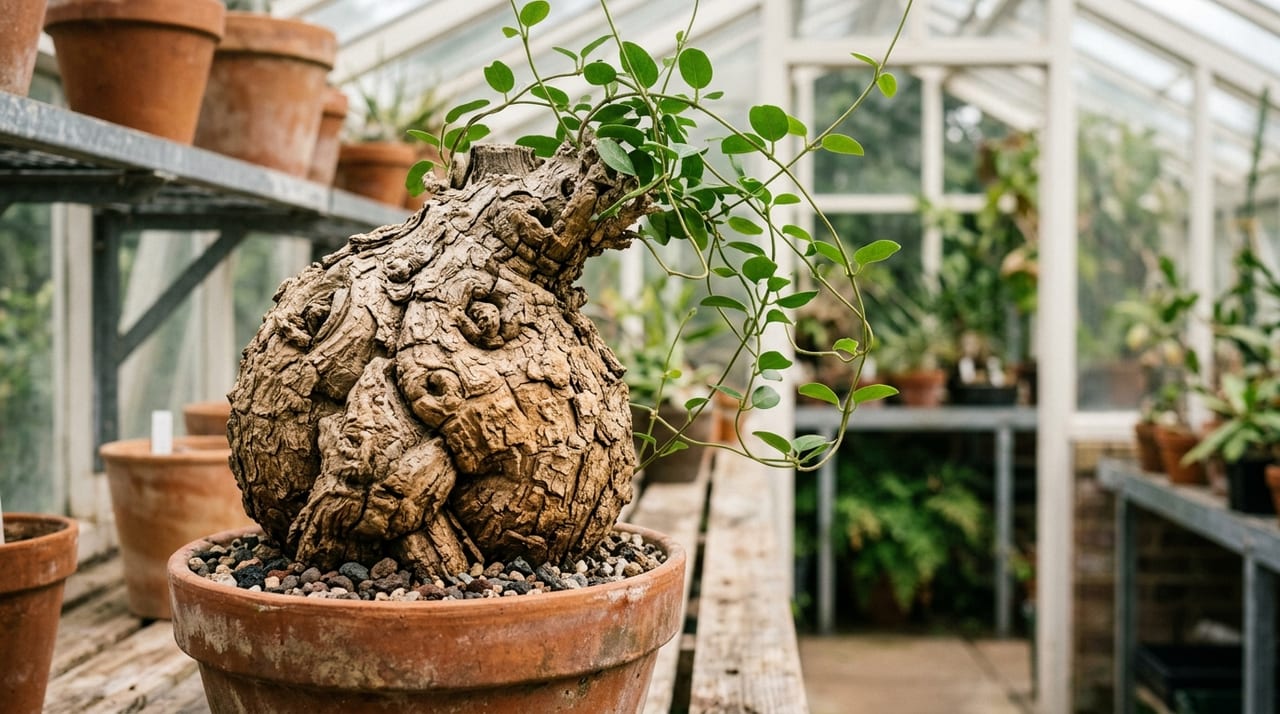
- Caudex shape and texture: Rounded caudexes, caudexes that spread horizontally, bark texture and coloration—individuals that showcase the species' characteristic features are selected.
- Balance of branches and leaves: How leaves and branches are arranged relative to the trunk significantly impacts the plant's ornamental value. Some individuals form compact shapes, others spread dramatically; each has different evaluation standards.
- Growth stability: Plants that are resilient to environmental changes and disease-resistant are valued for their ease of cultivation.
- Fixation of rare characteristics: Individuals displaying distinctive traits that appear spontaneously—such as variegation, unusually deep coloration, or distinctive branching patterns—attract special attention.
Individuals selected by these criteria receive names (clone designations) from hybridizers or growers, and are then propagated through cuttings or grafting and sold as "named clones." For a detailed comparison of trait differences based on propagation methods, see Caudex Plants: Seedlings vs. Air Layering.
Why Price Differences Arise
Several factors converge behind the high prices of named clones and selected lines.
First, propagation requires time. Many caudex species grow slowly, and developing a selected clone to marketable size requires cultivation over years. This growing period itself represents a cost reflected in the price.
Second, individual rarity. Selected lines with superior traits make up only a small fraction of the seedling population from which they're sourced. An individual passing through this narrow selection gateway gains a rarity premium.
Third, the value of reproducibility. Seedling plants carry the uncertainty of "you won't know until you grow it," whereas named clones, being clones, allow buyers to form a sense of the finished appearance at purchase. This very predictability carries recognized value.
Fourth, the grower's brand. A clone selected and named by a particular grower becomes associated with that grower's track record and reputation. The knowledge that a trustworthy grower chose it provides confidence in the price.
Seedlings Also Have Their Own Appeal
While I've explained the value of named clones, seedlings are not inferior. Seedlings offer the charm that "how they'll develop is uncertain." The process of watching an individual you've cultivated yourself take on its own unique form over time holds an appeal distinct from named clones that arrive with their shape already established.
Moreover, discerning individuals with potential from seedlings using your own eye—a kind of "connoisseurship"—is considered one of the greatest pleasures of caudex cultivation. Understanding the hybridization perspective expands your choices at purchase and also cultivates a long-term vision for how to grow your own plants.
Tips for Identifying a Selected Line at Purchase
When viewing sales listings or product information, checking for the following details makes it easier to gauge the circumstances under which the plant was created.
- Presence or absence of clone name or lineage designation
- Clear indication of whether it's a seedling or clone (cutting, graft, or division)
- Information about the grower or hybridizer
- Rooting status—rooted or bare root (unrooted)
Listings with clearly stated information demonstrate transparency about hybridization background and make it easier to form post-purchase cultivation plans. The world of caudex plants runs deep; enjoying the uncertainty of seedlings and savoring the refinement of selected named clones are both legitimate ways to appreciate them. Once you understand which appeal draws you, comparing sales listings from this perspective will let you choose plants with an insight you never had before.
Selection Culture Is Driving Caudex Plant Popularity
The recent surge in caudex plant popularity owes much to active information sharing on social media. As photos and growth records of hybridizer-selected individuals become visible, the very criteria—"which individual is valued and why"—became shared among collectors. This has increased the number of enthusiasts who possess the eye not only to collect rare species but to discern "which individual" within the same species.
This trend is deepening the dimensionality of the caudex field as a whole. As focus extends to individual differences beyond species names alone, understanding of and respect for the hybridizers' work itself continues to grow. Learning the time and effort behind selected lines is an opportunity to reconsider price differences not merely as numbers but as value placed on the work of hybridization. The latest trends in featured species such as Pachypodium and Adenium can also be found in Caudex Plants: Complete Guide to Featured Species in 2026.